AUDI's European Presence: Sparking Anxiety and Redefining Global Market Strategies
 09/30 2026
 364
364
Lead | Introduction
Domestic discussions have arisen over whether Audi acknowledges the AUDI brand. However, beneath this surface debate lies a deeper unease among European traditional automakers regarding the rise of Chinese new energy vehicles (NEVs).
This article is produced by | Heyan Yueche Studio
Written by | Zhang Dachuan
Edited by | He Zi
Full text: 2,880 characters
Reading time: 4 minutes
Recently, the AUDI brand has become a hot topic of public discourse in China.
The catalyst for this attention is straightforward: Auto China, a German parallel import automaker, introduced two AUDI models—the E5 Sportback and E7X, developed exclusively for the Chinese market—into Germany through parallel imports.
Since these vehicles did not enter the German market via Audi's officially sanctioned export channels, Audi's German headquarters took legal action against the importer. They argued that Audi's authorized dealer network in Europe would be unable to provide the necessary after-sales and technical support for vehicles imported through unofficial channels.
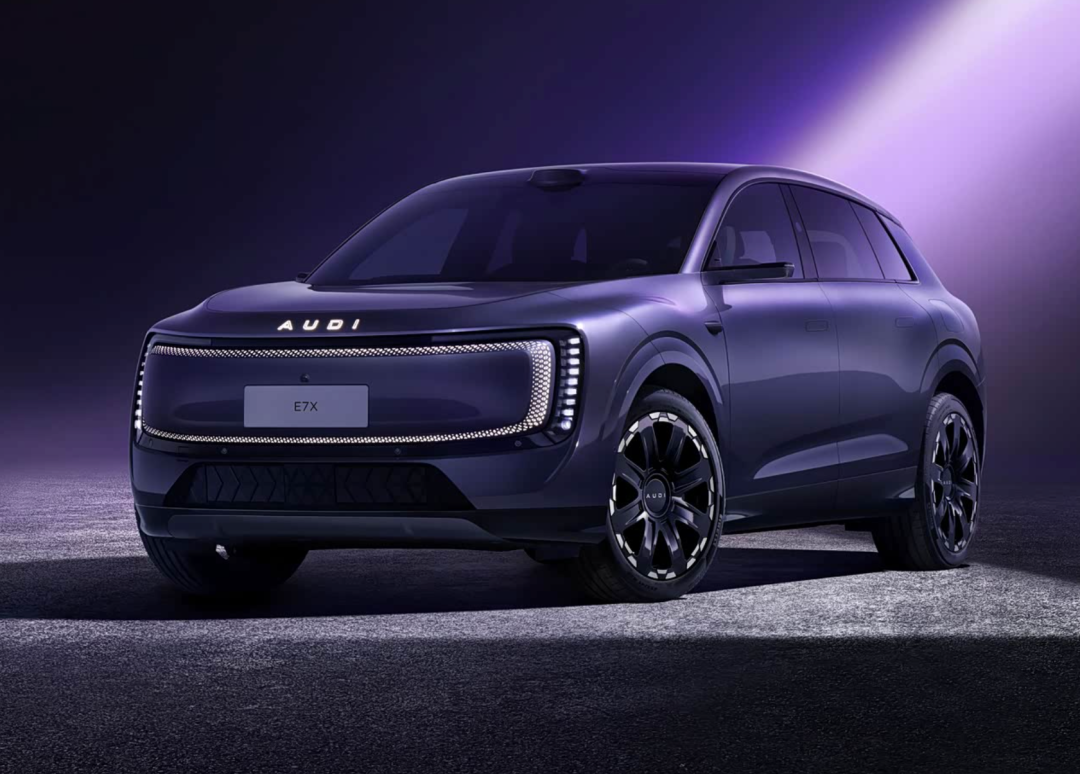
△ The parallel import sales of the AUDI E7X in the European market have sparked significant controversy.
The Debate Over AUDI's Affiliation with Audi: Unnecessary
Some domestic media outlets misconstrued the incident, suggesting that "Audi's German headquarters is preventing the AUDI brand from entering the German market" and even implying that "Audi headquarters does not recognize the AUDI brand." However, a closer look at the incident reveals that such interpretations confuse two separate issues: Audi headquarters is targeting unauthorized parallel imports and the resulting after-sales service challenges, not the AUDI brand itself.
From a commercial standpoint, this incident can be viewed from a different perspective. If AUDI brand models enter the European market through unofficial parallel import channels and reach a significant scale, they could indeed disrupt Audi's existing product sales, dealer network, and after-sales service system in Europe. Therefore, Audi headquarters' legal actions against unauthorized parallel imports are primarily aimed at safeguarding its existing market channels, brand management, and after-sales service system, rather than signaling a rejection of the AUDI brand.
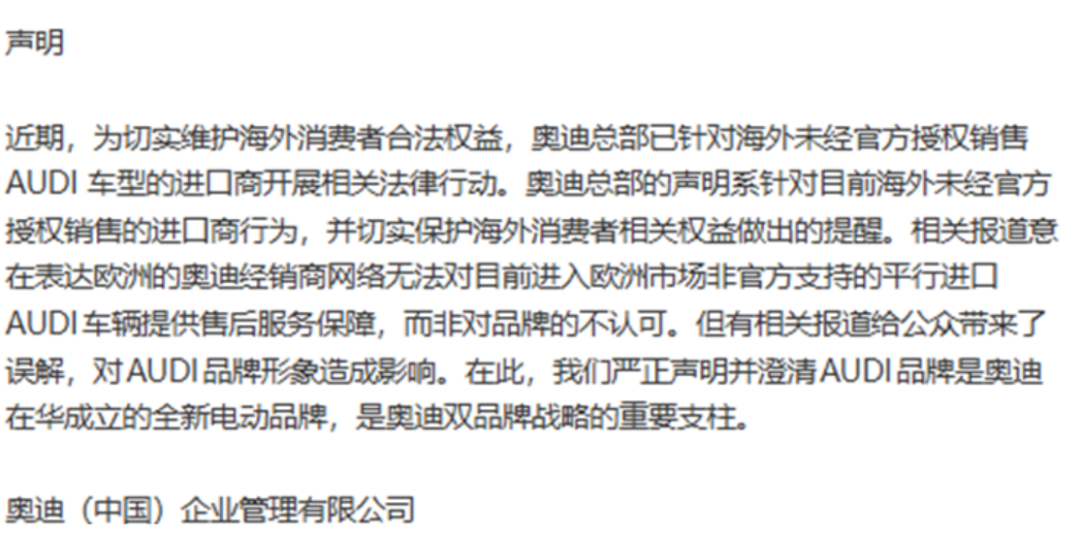
△ Audi headquarters is addressing unauthorized parallel imports and after-sales service issues, not the AUDI brand itself.
Subsequently, Audi China and SAIC Audi issued statements further clarifying this point: Audi headquarters' actions are directed at unauthorized parallel imports and the resulting after-sales service issues, not a denial of the AUDI brand. SAIC Audi also emphasized that Audi's global headquarters consistently supports the AUDI brand, viewing it as a vital component of Audi's electrification and intelligent transformation strategy.
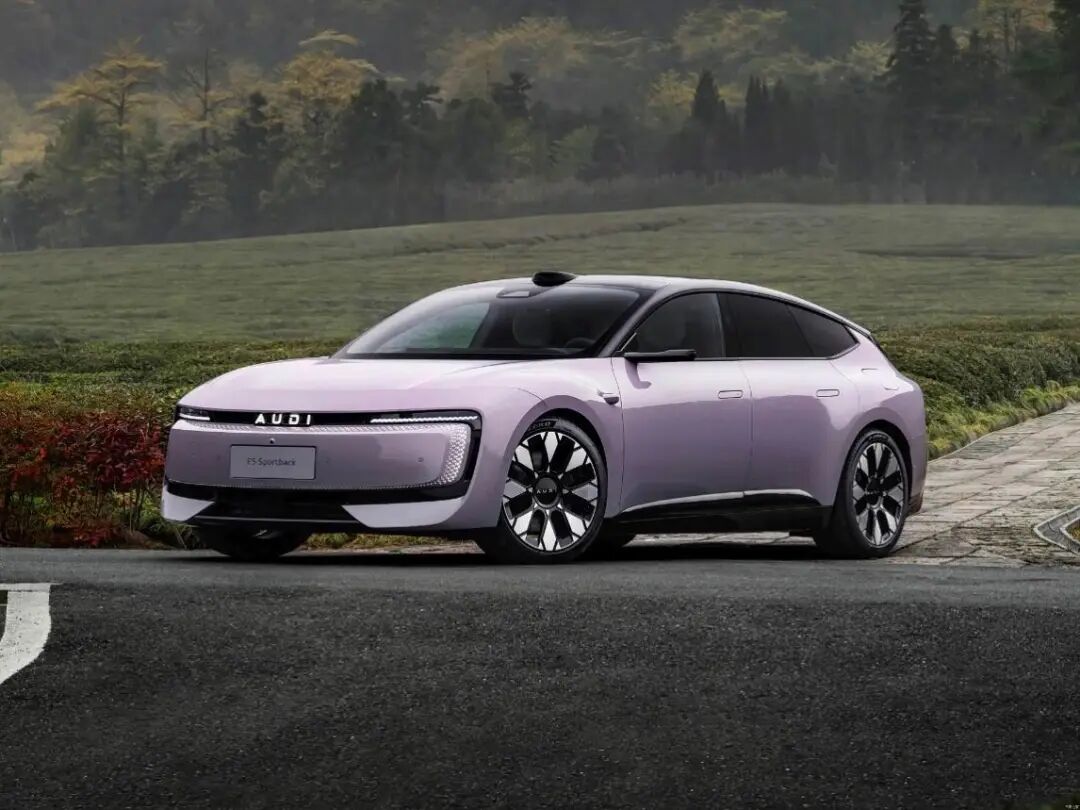
△ AUDI is an important sub-brand for Audi in the Chinese market.
Parallel Imports: Disrupting Europe's Pricing System
Auto China is an independent German automaker specializing in introducing Chinese NEVs into the European market through parallel imports. 'Parallel imports' refer to the practice where third-party organizations or individuals independently procure vehicles and introduce them into target markets for sale, bypassing the official dealer network of the automotive brand.
Auto China's current lineup extends beyond the AUDI brand, encompassing Chinese NEVs such as the Xiaomi SU7/YU7, Zeekr 009, and ZEEKR S800. Auto China also offers customers a comprehensive suite of services, including procurement from China, international transportation, European certification, vehicle registration, and after-sales support.
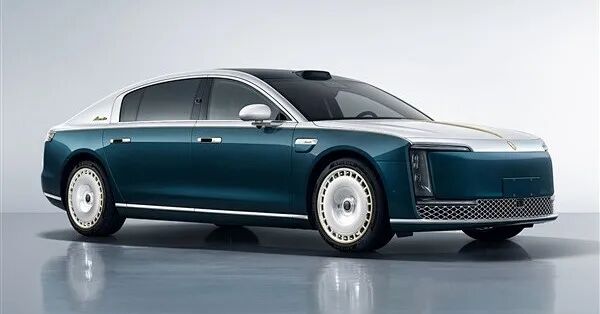
△ Auto China operates sales for multiple Chinese NEV brands in Europe.
From a commercial perspective, one key reason Audi headquarters took a firm stance against unauthorized parallel imports of the AUDI brand is the potential significant impact on Audi's existing product pricing system and dealer network in Europe.
According to public data, the parallel-imported AUDI E7X, after accounting for transportation, registration, and value-added tax costs, is priced at approximately €86,800 (around RMB 670,000). In contrast, the smaller Audi Q6 e-tron sold in the German market has an official starting price of approximately €93,800 (around RMB 737,000), including tax.
In the Chinese market, the similarly positioned FAW-Audi SUV Q6 L e-tron currently has an official starting price of just RMB 279,800. This means that even after factoring in additional costs such as cross-border transportation, certification, registration, and taxes, relevant models sold in the Chinese market could still create a significant price differential when imported into Europe via parallel channels.
More notably, the Q6 L e-tron's sales performance in the Chinese NEV market has been unremarkable. Public data shows that the model sold only around 3,447 units in the first eight months of this year. Amid intensifying competition and ongoing price wars in the domestic NEV market, further price adjustments for relevant models remain possible in the future.
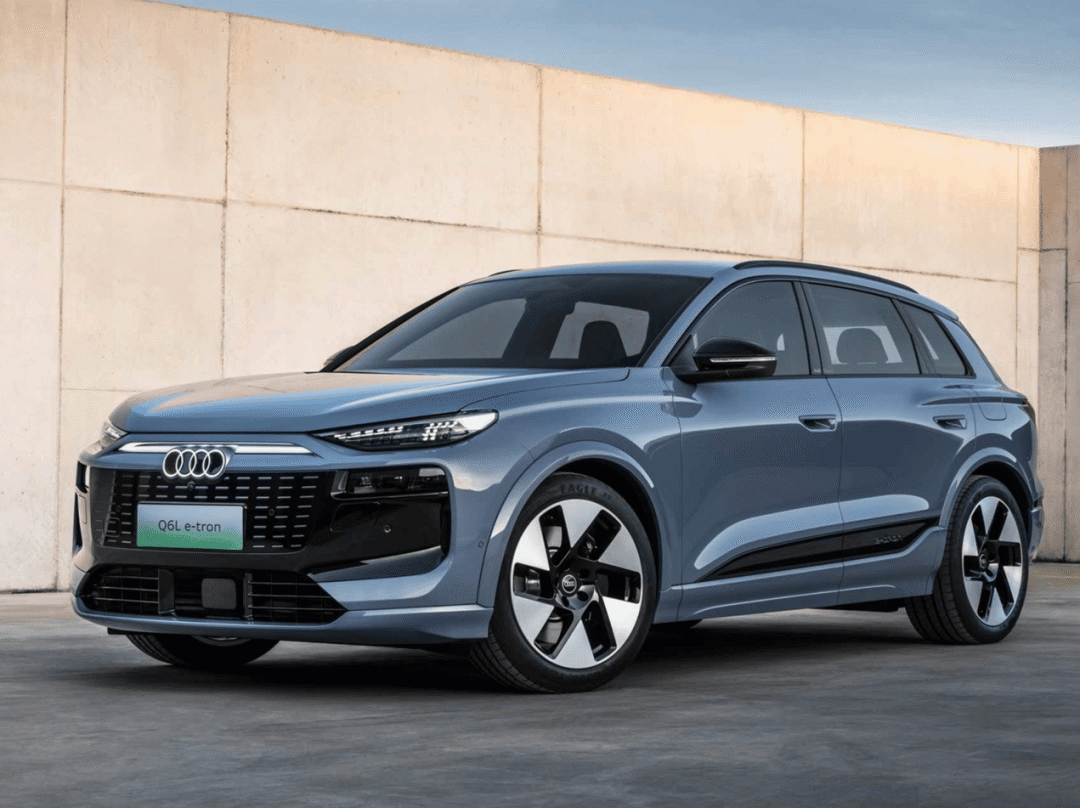
△ The domestic price of the Q6 L e-tron is significantly lower than that of its European counterpart, the Q6 e-tron.
Given this price disparity, parallel importers introducing Audi models sold in the Chinese market into Europe hold clear commercial appeal. For Audi, the primary concern is not just the parallel import of a single model but the potential disruption to Europe's existing product pricing system and official dealer network if such a model becomes widespread.
Of course, parallel imports also face a very practical issue: after-sales service and warranty. Since vehicles are not sold through official Audi channels in Europe, parallel importers typically cannot offer consumers the same factory warranty and after-sales service as official channels. Although Auto China claims to provide a two-year warranty, consumers may need to bear repair costs and risks independently if complex or high-cost technical issues arise after the warranty period.
△ Auto China claims to offer users a two-year warranty.
Nevertheless, Auto China's ability to introduce Chinese NEVs into Europe through parallel imports and attract local consumers underscores the growing international appeal of Chinese NEVs in terms of price, configuration, and electrification and intelligent driving experiences. While this does not mean all Chinese NEVs have fully proven their quality or reliability in the European market, it indicates that, driven by factors such as price, product configuration, and user experience, some European consumers are willing to accept the after-sales and warranty risks associated with parallel imports in exchange for more competitive products and prices.
The Unstoppable Tide of Chinese NEV Exports
For Chinese automakers, parallel importers like Auto China can serve as 'outposts' for entering the European market.
Building a distribution network in Europe requires substantial capital and time investment. Leveraging parallel importers to introduce products into Europe first can reduce upfront market investment while allowing European consumers to familiarize themselves with Chinese brands and helping automakers gauge local market demand. If parallel importers identify stable market demand and profit potential for a brand, they may further invest resources, transitioning from pure parallel imports to formal brand representation and sales.
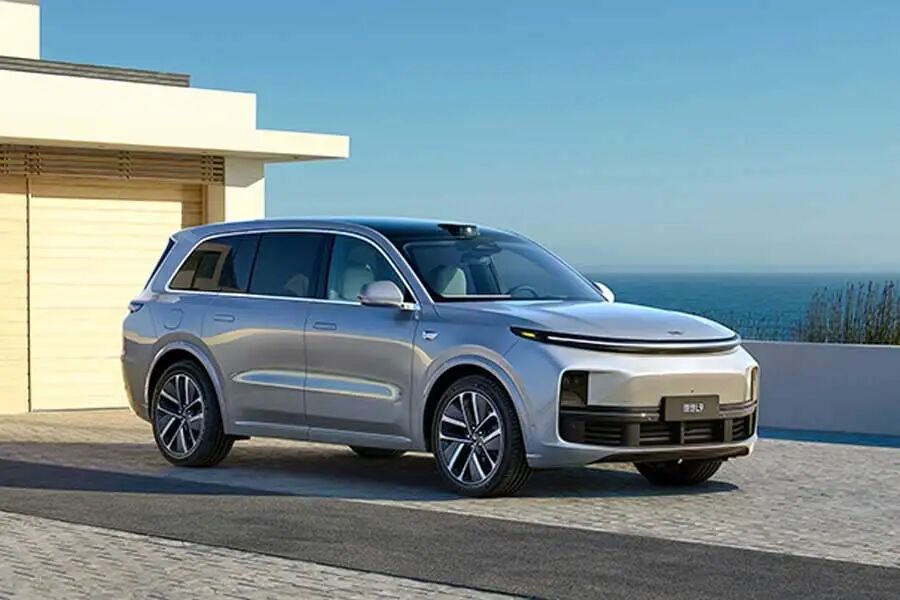
△ For Chinese automakers unable to independently expand into the European market in the short term, parallel importers offer a viable option.
Therefore, for Chinese automakers, if parallel importers can effectively help cultivate the market, manufacturers could consider providing certain support—such as parts supply, software updates, technical documentation, and after-sales training—within regulatory compliance, enabling these importers to gradually evolve into potential formal channel partners.

△ Chinese automakers could consider offering greater technical support to parallel importers.
However, Auto China's act of introducing AUDI brand vehicles into the European market via parallel imports without Audi's authorization does necessitate Audi's intervention to protect its existing pricing system and dealer network. Yet, this primarily addresses short-term channel issues. In the long run, the entry of Chinese-made NEVs into Europe and even the global market is an inevitable trend. Audi must also consider how to leverage the advantages of China's NEV industry chain in electrification, intelligence, and supply chain efficiency to continuously enhance the competitiveness of its products, ultimately enabling the AUDI brand to secure a foothold in the European market through its own or authorized channels. After all, even if AUDI does not enter Europe, other Chinese NEV brands will.
Commentary
Audi's intervention in response to AUDI brand models being brought into the European market via unofficial parallel import channels helps maintain short-term channel and pricing stability. However, for Audi, the global expansion of Chinese-made AUDI brand NEVs is a likely scenario. Chinese NEVs are accelerating their globalization and enhancing their competitiveness in the intelligent electric vehicle sector. In this race, time is of the essence for Audi or any established brand. In the future, Audi may proactively open channels for its Chinese-made NEVs to reach global markets, albeit with export control remaining in its own hands.
(This article is original to Heyan Yueche and may not be reproduced without authorization.)
-
![]()
Dongfeng's Independent Brands Make Significant Strides
-
![]()
Breaking News: Next-Gen AI Model Release Scrapped! OpenAI Pulls the Plug
-
![]()
Two Chinese Women Close a $55 Billion Deal, with Employees Set to Share in $5.5 Billion
-
![]()
Geely Acquires 30% Stake in NIO Energy: NIO and Geely Strike a Deal on Charging and Battery Swap Transaction Restructuring, Paving the Way for Industry-Wide Standardization?
-
Hongmeng Zhixing Launches a Vehicle Directly Targeting Xiaomi YU7!
-
![]()
AUDI's European Presence: Sparking Anxiety and Redefining Global Market Strategies
-
![]()
Ideal i9: Is It the "Fireman" for Ideal?
-
Pharmaceutical Giant Doubles Down on AI