Ideal i9: Is It the "Fireman" for Ideal?
 09/30 2026
 512
512
Introduction | Lead
Following two attempts with the MEGA and i8 models, Ideal is now making its third foray into the pure electric six-seater market with the all-new i9. This new model has achieved a more remarkable initial performance compared to its predecessors. However, behind this positive market reception lies a highly contentious issue: the i9's aggressive pricing and superior configuration, while effective in quickly driving orders, also directly squeeze the existing internal product lineup, posing challenges to the brand's pricing system and user reputation.
This article is produced by Heyan Yueche Studio
Written by Cai Yan
Edited by He Zi
Full text: 1,818 characters
Reading time: 3 minutes
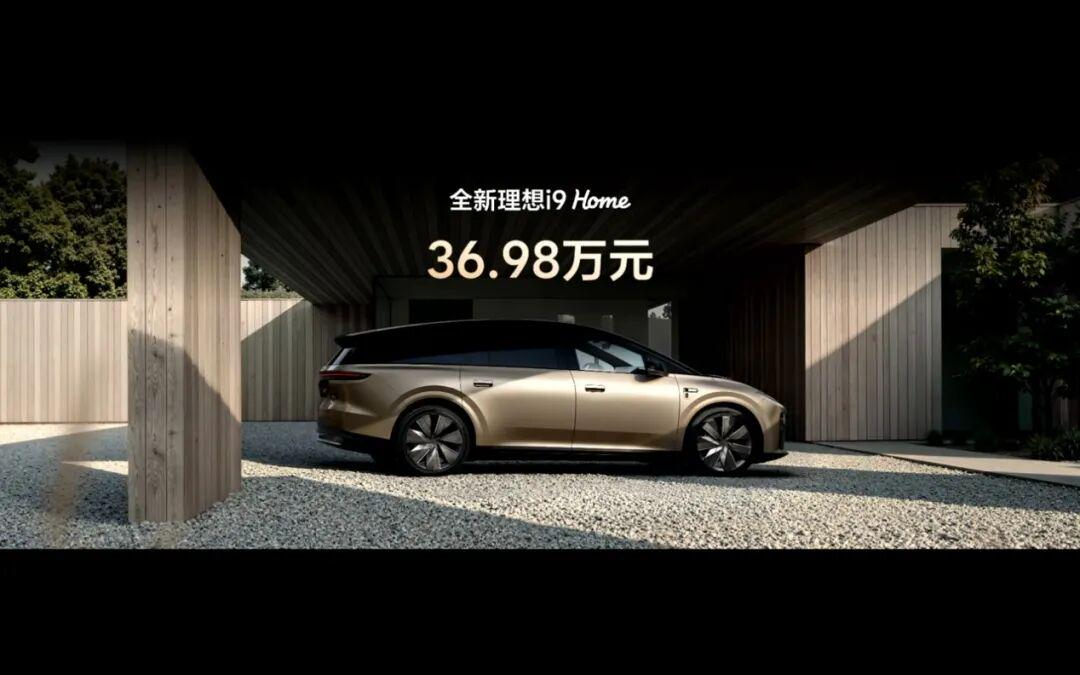
The Ideal i9 secured over 18,000 locked-in orders within just 48 hours of its launch, a remarkable achievement for any pure electric six-seater SUV priced from 350,000 yuan. Within Ideal's product lineup, however, the i9 serves more as a "gap-filler" than a "flagship," a distinction that becomes clearer when compared to the pricing of the Ideal L9 and MEGA. Priced from 369,800 yuan, the Ideal i9 is 90,000 yuan cheaper than the Ideal L9, which starts at 459,800 yuan, and 140,000 yuan cheaper than Ideal's flagship MPV, the MEGA, which is priced at 509,800 yuan.
Furthermore, considering Ideal's market performance this year, with cumulative deliveries of 262,000 units from January to August—a slight year-on-year decrease of 0.6% and an annual target completion rate of only 47.6%—the Ideal i9 represents not only Ideal's third attempt to penetrate the high-end market after the setbacks of the MEGA and the lukewarm reception of the i8 but also Ideal's first implementation of a "game-changing" market strategy in response to market pressure.
From a positive standpoint, Li Xiang, the head of Ideal, stated in a post that "the arrival of the Ideal i9 signifies that Ideal Automotive has overcome three major hurdles: first, transitioning from relying solely on extended-range technology to embracing both extended-range and pure electric capabilities; second, adhering to in-house development of core technologies and achieving mass production; third, maintaining its own design direction in product development."
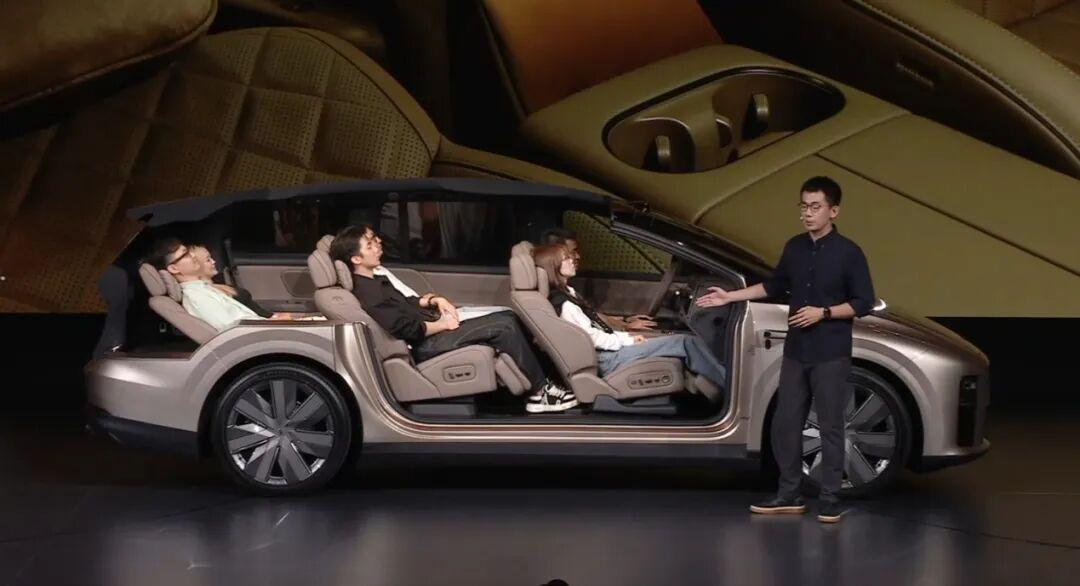
This is why the Ideal i9 has achieved a "punching above its weight" performance in terms of price and configuration. It features an 800V high-voltage platform, 5C ultra-fast charging, an in-house developed Mach M100 chip, steer-by-wire, rear-wheel steering, a full steer-by-wire chassis, multiple zero-gravity seats, and in-house developed models, among other advanced technologies. These technologies, which were previously fully implemented in the L9, i8, and MEGA, are now also applied to the i9. Ideal views these technologies as the foundation for the next decade.
Ideal i9's Game-Changing Strategy
Can the i9 truly help Ideal turn the tide?
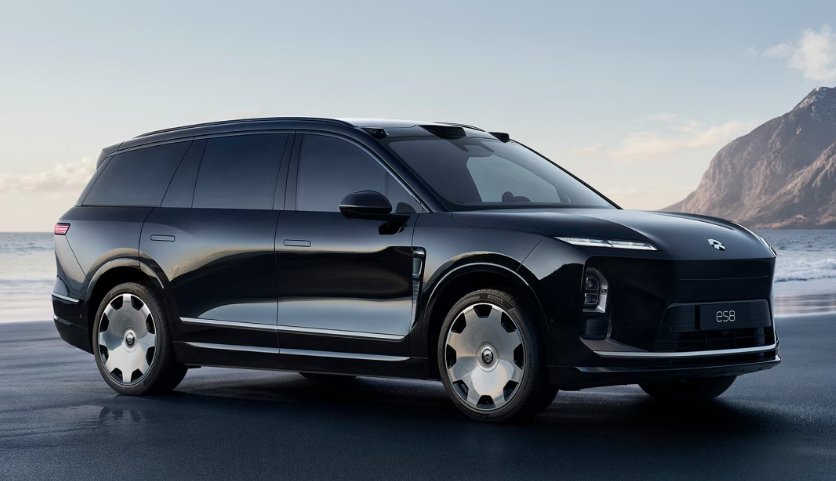
Firstly, compared to its competitors, the Ideal i9's game-changing pricing strategy makes it nearly 80,000 yuan cheaper than the top-spec ES8 in the pure electric segment and places it in the same price range as the ES8 BaaS version. It is also about 100,000 yuan cheaper than the pure electric version of the Seres M9. In terms of budget alone, the i9 holds a nearly decisive advantage.
However, a price advantage does not fully equate to market competitiveness, and the Ideal i9 still faces three major variables.
Firstly, the NIO ES8 has already accumulated 150,000 deliveries in its first year on the market, with 10,900 units sold in August this year, ranking first in sales among large SUVs and models priced over 400,000 yuan. Coupled with NIO's battery swap system and a lower entry threshold for the ES8 BaaS at 298,800 yuan, NIO holds market reputation and battery swap infrastructure advantages that Ideal cannot surpass in the short term. Moreover, Ideal has clearly stated that the i9 requires an 8-10 week delivery period, meaning new orders will likely not be fulfilled until November-December. If Ideal's production capacity does not meet expectations, orders may be diverted to competitors such as the ES8/9 and Seres M8/9.
Secondly, the entry of Xiaomi Pengcheng has become a competitor that Ideal cannot ignore across its entire lineup. With similar "family-oriented" branding, meticulous craftsmanship, and diverse layouts, combined with the price advantages of the N90/N70, Pengcheng may also dilute the i9's target user base.
Thirdly, the adoption of in-house developed batteries has become the biggest variable for the Ideal i9. Within two days of the i9's launch, the initial batch of CATL battery versions sold out, and Ideal has clearly stated that all subsequent orders will switch to in-house developed batteries. Although the Ideal L series has long used a mix of CATL and Sunwoda batteries, and Ideal is already Sunwoda's second-largest shareholder, at the actual user level, consumer acceptance of "Ideal batteries" remains an unknown. Even though Li Xinyang, the head of Ideal's product line, emphasized that "Ideal batteries are guaranteed by Ideal" and personally locked in an order for an in-house battery version of the i9, this move is unlikely to fully eliminate user hesitation.
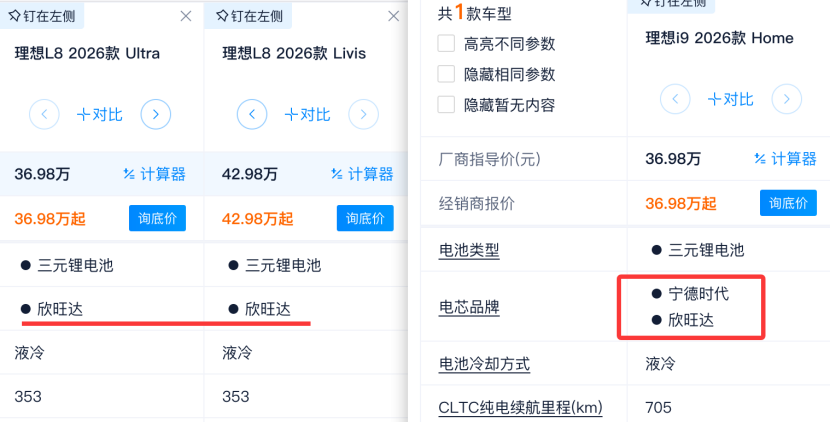
After all, Chinese new energy vehicle consumers, highly influenced by the internet, have developed the habit of prioritizing "battery brand" when purchasing electric vehicles. Therefore, consumer trust in the "Ideal brand" and "Ideal batteries" inevitably exists on two different dimensions. Taking Seres as an example, what consumers want is "Huawei-enabled Seres," not just a Seres brand with Huawei's intelligent driving technology.
Ideal Still Enduring the Pain of Transformation
Transitioning from extended-range to pure electric, from family-oriented to "embodied AI," and from procurement to in-house development of chips and battery cells, even though Li Xiang stated that "Ideal Automotive has overcome three major hurdles," actual market sales, reputation, and brand labeling still require a long recovery period.
On the one hand, Ideal faces higher explanation and experience costs in its in-house development of chips, battery cells, and embodied AI. The return on investment time for these efforts cannot be compared to the immediate results seen with configurations like "refrigerators, TVs, and sofas" in the past. Similarly, taking Pengcheng as an example, most consumers' impressions of the N90 will focus on features like the rooftop tent and interior seat layout rather than deeper elements like craftsmanship and materials.
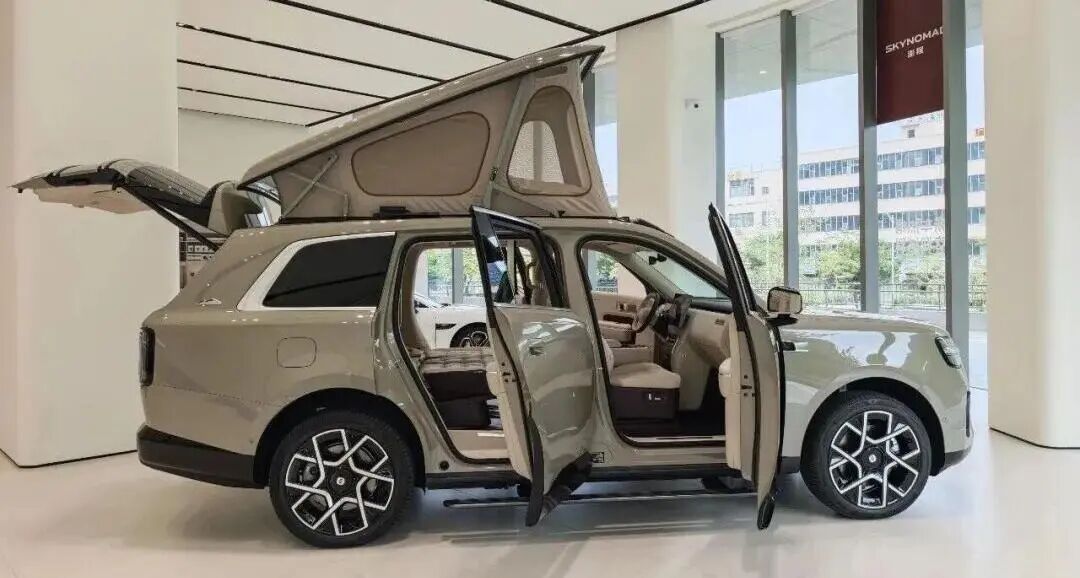
On the other hand, Ideal's "family-oriented" label, under the current competitive landscape, will struggle to demonstrate sufficient differentiation and uniqueness if it merely cascades flagship configurations to more products in the future. With the i9, Ideal seems to have recognized this point, offering a solution that involves using a lower-than-expected price to attempt to change the brand's average product pricing structure and balance the scales between brand transformation and sales.
Review
The all-new i9 is Ideal's model to accelerate its penetration into the pure electric market. However, in such a fiercely competitive landscape, whether it can truly break through remains to be seen based on its future market performance. Nevertheless, Ideal's transformation is not limited to vehicle and brand direction; it is also betting on data flow architecture and advancing joint designs for chips, in-vehicle large models, and operating systems, attempting to transform its in-house developed computing capabilities from internal technical assets into externally outputtable technological products. This demonstrates that Ideal is accelerating its transformation from an "automotive company" to a "tech company."
(This article is original to Heyan Yueche and may not be reproduced without authorization.)
-
![]()
Dongfeng's Independent Brands Make Significant Strides
-
![]()
Breaking News: Next-Gen AI Model Release Scrapped! OpenAI Pulls the Plug
-
![]()
Two Chinese Women Close a $55 Billion Deal, with Employees Set to Share in $5.5 Billion
-
![]()
Geely Acquires 30% Stake in NIO Energy: NIO and Geely Strike a Deal on Charging and Battery Swap Transaction Restructuring, Paving the Way for Industry-Wide Standardization?
-
Hongmeng Zhixing Launches a Vehicle Directly Targeting Xiaomi YU7!
-
![]()
AUDI's European Presence: Sparking Anxiety and Redefining Global Market Strategies
-
![]()
Ideal i9: Is It the "Fireman" for Ideal?
-
Pharmaceutical Giant Doubles Down on AI