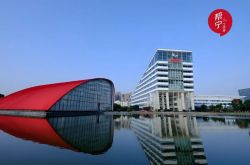
Dongfeng's Independent Brands Make Significant Strides
 09/30 2026
 386
386
"Greater Efforts Required for Intelligence and Global Expansion"
At the age of 57, Dongfeng Motor has firmly established itself in the realm of independent brands.
On September 28th of this year, Dongfeng Motor celebrated its 57th anniversary. In a fitting tribute to this milestone, Dongfeng's independent division unveiled a slew of new passenger vehicle models. From summer to autumn, a major new model was launched nearly every month, including the LanTu Taishan X8, Yijing X9, Yipai M8, and the Mengshi X700, which commenced pre-sales just the day before.
"Dongfeng's independent passenger vehicle division has truly picked up momentum," observed a media representative at the Mengshi X700 pre-sale event.
A decade ago, during the anniversary celebrations of a central state-owned automaker, social media would have been abuzz with phrases like "reaching new heights" or "pressing ahead." However, this year was different. A Dongfeng Group employee noted that many Dongfeng staff spontaneously took to social media platforms such as Xiaohongshu to celebrate Dongfeng Motor's 57th birthday and promote its new offerings.
"I've been with Dongfeng for exactly 30 years," said Wang Wen (a pseudonym), a deputy department head at Dongfeng Group. "My most direct impression of Dongfeng's 57th anniversary is that our employees now exude greater confidence than ever before."
Performance data bolsters this sense of confidence. Official figures reveal that in 2025, Dongfeng Motor's annual sales of new energy vehicles surpassed 1.05 million units for the first time, marking a 22.6% year-on-year increase. Independent brand sales exceeded 1.5 million units, accounting for over 60% of total sales.
Yang Yanding, Secretary of the Party Committee at Dongfeng Motor's R&D Headquarters, stated in early January this year, "Dongfeng's transformation has transitioned from the investment phase to the harvest phase, shifting from a focus on scale expansion to a balance of scale and efficiency."
At 57, the phrase "Dongfeng's independent brands have made significant strides" carries real weight. Yet, progress does not equate to complacency. The next five years will present challenges: whether new and established brands can coexist harmoniously and whether Dongfeng can surmount the hurdles of intelligence and global expansion.
▍01 Independent Brands Take the Lead
Wang Wen joined Dongfeng in 1996. When he first started, Dongfeng Motor was predominantly an independent entity, with its most thriving business being commercial vehicles, whose trucks were a common sight across the nation. "At that time, Dongfeng relied on its independent capabilities, and commercial vehicles were its mainstay," he recalled.
However, commercial fortunes are unpredictable, and Dongfeng's performance soon plummeted. A year after Wang Wen joined, Dongfeng's operations hit rock bottom, prompting a round of profound reforms. Entering the new millennium, Dongfeng Motor vigorously developed its joint venture business.
In 2003, Dongfeng Motor Co., Ltd. was established, incorporating a significant portion of Dongfeng's R&D capabilities and commercial vehicle business into the joint venture. This was an era when the Chinese automotive industry sought to exchange market access for technology. Dongfeng Nissan surged to million-unit sales, and Dongfeng Honda's products were in high demand, becoming veritable "cash cows" for Dongfeng Motor.
Looking back, this was a period when Dongfeng's independent brands were sidelined.
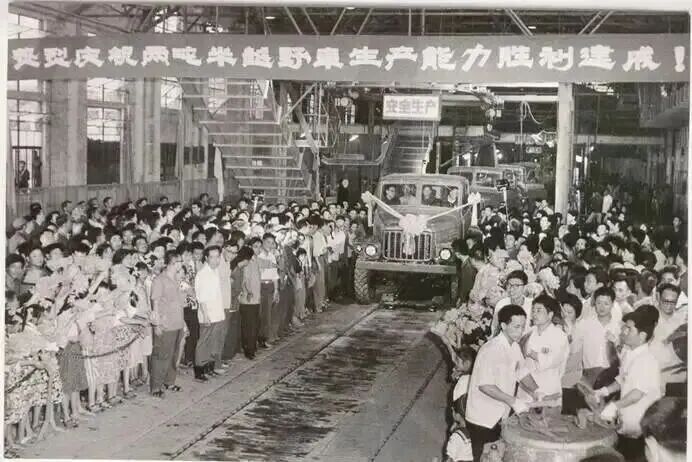
Dongfeng truly began to refocus on its independent brands with the development of the Mengshi military vehicle around 2002. Wang Wen recalled, "After the joint venture company took away a large portion of R&D resources, Dongfeng had to return to its roots in military vehicles."
In the civilian market, Dongfeng began planning the Fengon brand in 2005, nearly simultaneously with Besturn under FAW and Trumpchi under GAC. "Everyone realized that relying solely on market exchange for technology was unsustainable, and independent development was imperative," Wang Wen said.
However, initiation did not guarantee momentum. Over the following decade, Fengon remained lackluster in the fuel-powered vehicle market, and Dongfeng's independent brands long occupied a secondary position in consumers' minds, with their sales and influence eclipsed by joint venture brands.
That is, until the advent of the new energy vehicle era. This time, Dongfeng Motor chose a different path and started anew.
For a veteran central state-owned enterprise burdened with hundreds of billions in internal combustion engine vehicle assets, shifting focus to new energy passenger vehicles and building an entire group's new energy industrial chain was a daunting challenge.
One of Dongfeng Motor's bold moves for the new energy era was the LanTu brand, initiated at the end of 2018.
The turning point arrived sooner than expected.
In 2021, Dongfeng Motor unveiled its "Eastern Wind Rises" plan; in 2023, it announced the "Three-Year Transformation and Upgrading Action," clarifying two shifts: from primarily internal combustion engines to a coexistence of internal combustion and electric vehicles, and from a joint venture-dominated approach to a balance between independent and joint venture brands.
In August 2025, LanTu was listed on the Hong Kong Stock Exchange through an introduction, while Dongfeng Group shares were simultaneously privatized and delisted, a move described by outsiders as "replacing the old with the new." Dongfeng directly connected its high-quality new energy assets to the capital market, divested itself of traditional internal combustion engine vehicle asset shells, and paved the way for subsequent in-depth reforms and asset optimization within the group.
At the 2026 Beijing Auto Show, Dongfeng Motor launched its "Eastern Wind Rises 2030" plan, centered around the "13343" strategic framework, with the goal of achieving global sales of 5 million units by 2030, with new energy vehicles accounting for over 70%, overseas sales striving for 40%, and R&D intensity maintaining above 7%.
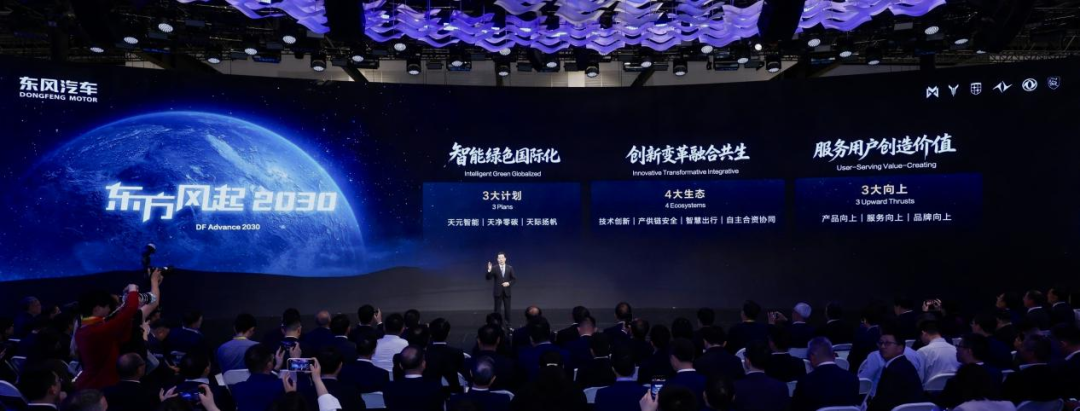
A little over a month later, Dongfeng released its first-half results: total sales reached 1.021 million units, outpacing the industry's growth rate by 1.1 percentage points. Among them, new energy vehicle sales were 493,000 units, up 27.5% year-on-year, outpacing the industry by 21.2 percentage points; independent brand sales were 725,000 units, outpacing the industry by 13.2 percentage points, accounting for over 70% of group sales.
Furthermore, its R&D investment intensity reached 7.9%, and the number of invention patents granted ranked first among China's independent vehicle groups for four consecutive years.
Another quarter has passed, and Dongfeng Motor's product mix has undergone fundamental changes, with the sales ratio of independent to joint venture brands long surpassing the 1:1 mark. More importantly, Dongfeng has accumulated a technological system capable of supporting its joint venture segment's transition to new energy—a scenario unimaginable a decade ago when joint venture foreign partners taught Dongfeng how to build cars.
▍02 Two Major Hurdles
When Dongfeng Motor is viewed within the transformation landscape of the three central state-owned automakers, its distinct path becomes clearer.
All three have reaped the benefits and felt the pains of joint ventures.
Changan was the first to experience the sharp decline of its joint ventures. Changan Suzuki, Changan Peugeot Citroën (DS), and Changan Volvo were terminated, while sales of Changan Ford, Changan Mazda, and Changan Lincoln plummeted, forcing Changan to take the lead in focusing on its independent brands. Having started early, Changan has now completed its basic layout and achieved economies of scale.
China FAW Group once proposed "mobilizing the entire group" to develop Hongqi. However, in recent years, facing the decline of its joint venture segment, FAW chose to break through with strategic investments, acquiring stakes in Leapmotor, Zhuoyu, GAC Group, and others, aiming to supplement its intelligence and electrification shortcomings through equity cooperation. However, the self-sufficiency of its independent segment still requires time.
Dongfeng Motor's independent division awakened later than Changan's but earlier than FAW's. It has quietly formed a tiered brand matrix: LanTu, Mengshi, and Yijing positioned upwards, focusing on luxury new energy; Yipai, Fengon, and Forthing positioned downwards, covering the mass family market.
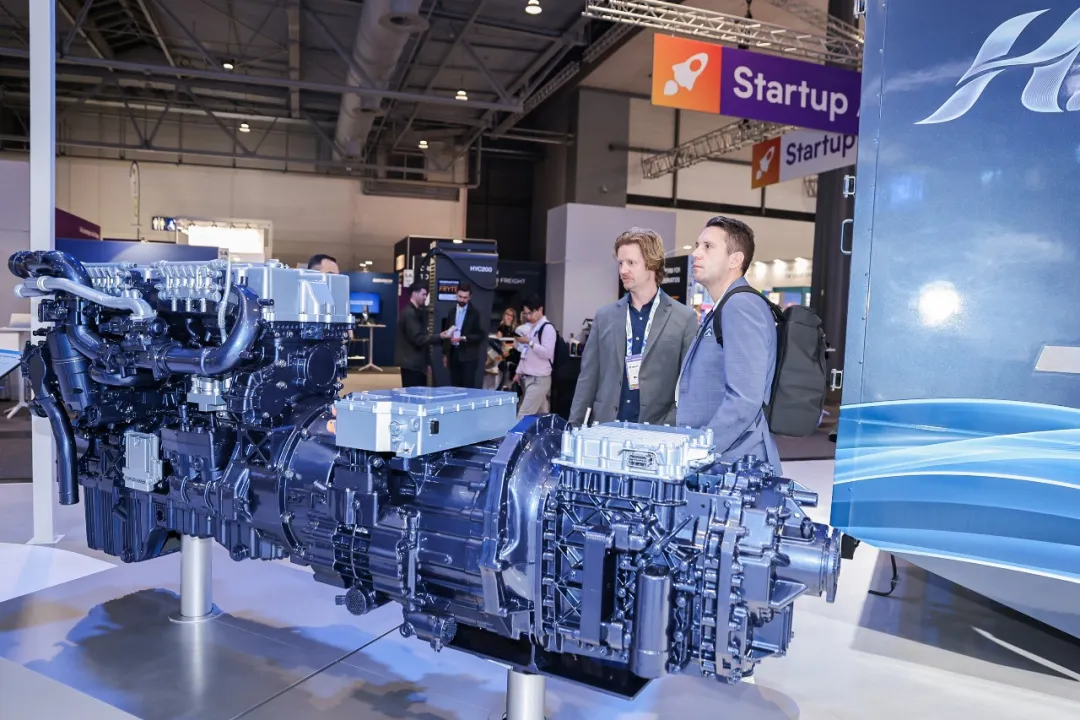
This matrix translates into distinct product roles for the six brands.
Mengshi pursues a luxury intelligent off-road route. Starting with the 917, positioned as a professional toy for off-road enthusiasts, Mengshi entered the luxury intelligent off-road SUV segment, focusing on high-end new energy vehicles. The latest pre-sold X700 represents a crucial step for Mengshi to move from the professional off-road circle to the mainstream market—it opens the channel for Mengshi to increase sales volume.
LanTu delves deep into the high-end intelligent new energy field. From a product layout perspective, its "Three Flagships + SUV Twin Stars" matrix has taken shape, with its MPV, the LanTu Dreamer, remaining its cornerstone. On August 27th, LanTu released its 2026 interim report, revealing total revenue of 18.16 billion yuan, up 42.4% year-on-year; gross profit of 3.22 billion yuan, up 17.7% year-on-year; and an average transaction price per vehicle of 216,000 yuan—clearly establishing a foothold in the high-end market.
Yijing is a new brand jointly incubated by Dongfeng and Huawei, with its first model, the X9, launched on September 24th, receiving 9,157 orders within 24 hours. Coincidentally, this occurred as Huawei's consumer business stepped back from leading Aito, only participating in empowerment. Many believe that Yijing X9 has an opportunity to replace Aito M9 and become the protagonist of the "Chinese Large Six-Seater Flagship SUV."
Without prior strategic planning, Dongfeng would not have this opportunity now. Of course, it remains just an opportunity; whether Yijing X9 can seize it depends on its performance in the upcoming market battles.
The other three independent brands focus on volume. Among them, Yipai targets the mainstream family market, Fengon defends the 100,000-yuan mainstream family market, and Forthing enters the mass consumption segment, pursuing a cost-effectiveness route.
These six independent passenger vehicle brands each play their roles, striving to launch new models and increase sales in their respective segments.
Although some media representatives believe that "Dongfeng's independent passenger vehicle division has gained significant momentum," this does not mean Dongfeng Motor has already won.
"In the new energy era, we cannot say we are leading; we can only say we have kept up and made contributions among central state-owned enterprises, securing a certain market position," Wang Wen candidly admitted to Bangning Studio. "Next, Dongfeng must overcome two major hurdles: intelligence and global expansion."
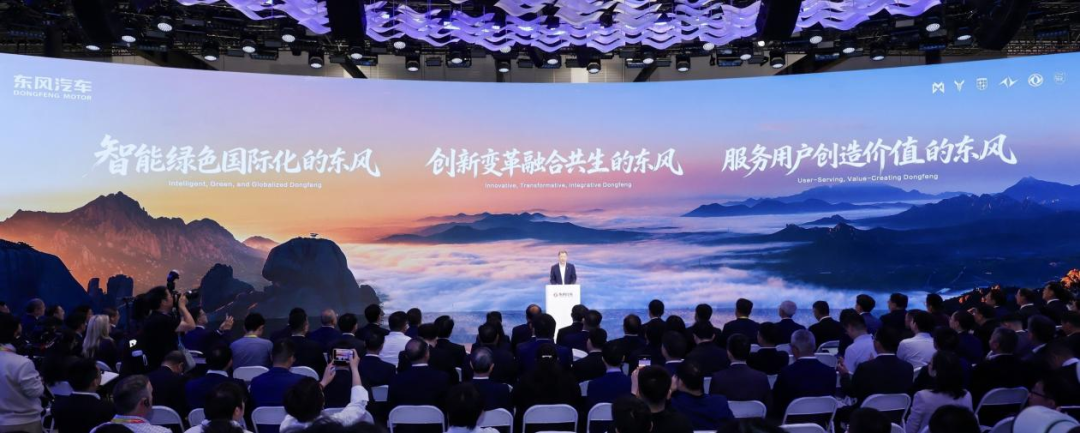
In his view, intelligence involves interdisciplinary and cross-industrial chain resource integration and management system connectivity, representing a true tough challenge for a traditional automaker.
In terms of global expansion, although Dongfeng Motor has been catching up in recent years, with exports surging 97% year-on-year in the first half, there is still a considerable gap in scale compared to peers. It urgently needs to catch up in global business coordination and international management systems.
Observing from the vantage point of its 57th anniversary, Wang Wen said what impressed him most was the spirit and energy of Dongfeng's people, "somewhat reminiscent of the reform drive in the late 1990s." The entire organization knows where the problems lie, where the direction is, and what needs to be done. They are also discussing second-growth curves, with low-altitude economy, embodied intelligence, and vehicle-road-cloud integration all being strategically deployed.
At 57, Dongfeng has opened its independent brand umbrella, largely able to meet its own needs without relying on its former "cash cows." However, opening the umbrella is just the first step; the six independent brands under it urgently need to withstand the storms of intelligence and global expansion—for Dongfeng Motor, which has been reforming all along, this will mark the starting point of another self-revolution.
-
![]()
Dongfeng's Independent Brands Make Significant Strides
-
![]()
Breaking News: Next-Gen AI Model Release Scrapped! OpenAI Pulls the Plug
-
![]()
Two Chinese Women Close a $55 Billion Deal, with Employees Set to Share in $5.5 Billion
-
![]()
Geely Acquires 30% Stake in NIO Energy: NIO and Geely Strike a Deal on Charging and Battery Swap Transaction Restructuring, Paving the Way for Industry-Wide Standardization?
-
Hongmeng Zhixing Launches a Vehicle Directly Targeting Xiaomi YU7!
-
![]()
AUDI's European Presence: Sparking Anxiety and Redefining Global Market Strategies
-
![]()
Ideal i9: Is It the "Fireman" for Ideal?
-
Pharmaceutical Giant Doubles Down on AI