AI Influences New Trends in Mobile Phones, Foldable Screens May Become Mainstream
 10/12 2026
 347
347
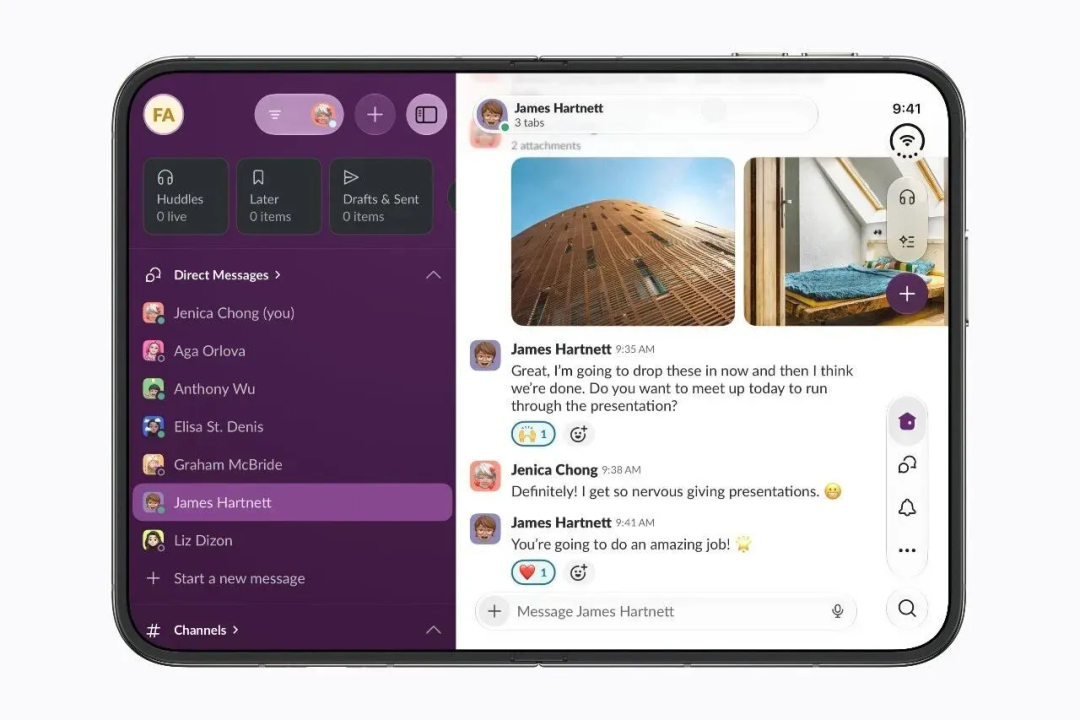

Foldable Screens May Become the Future Trend in Mobile Phones
Image Source | Internet (Please contact for deletion if infringement occurs) Partially Generated by AI
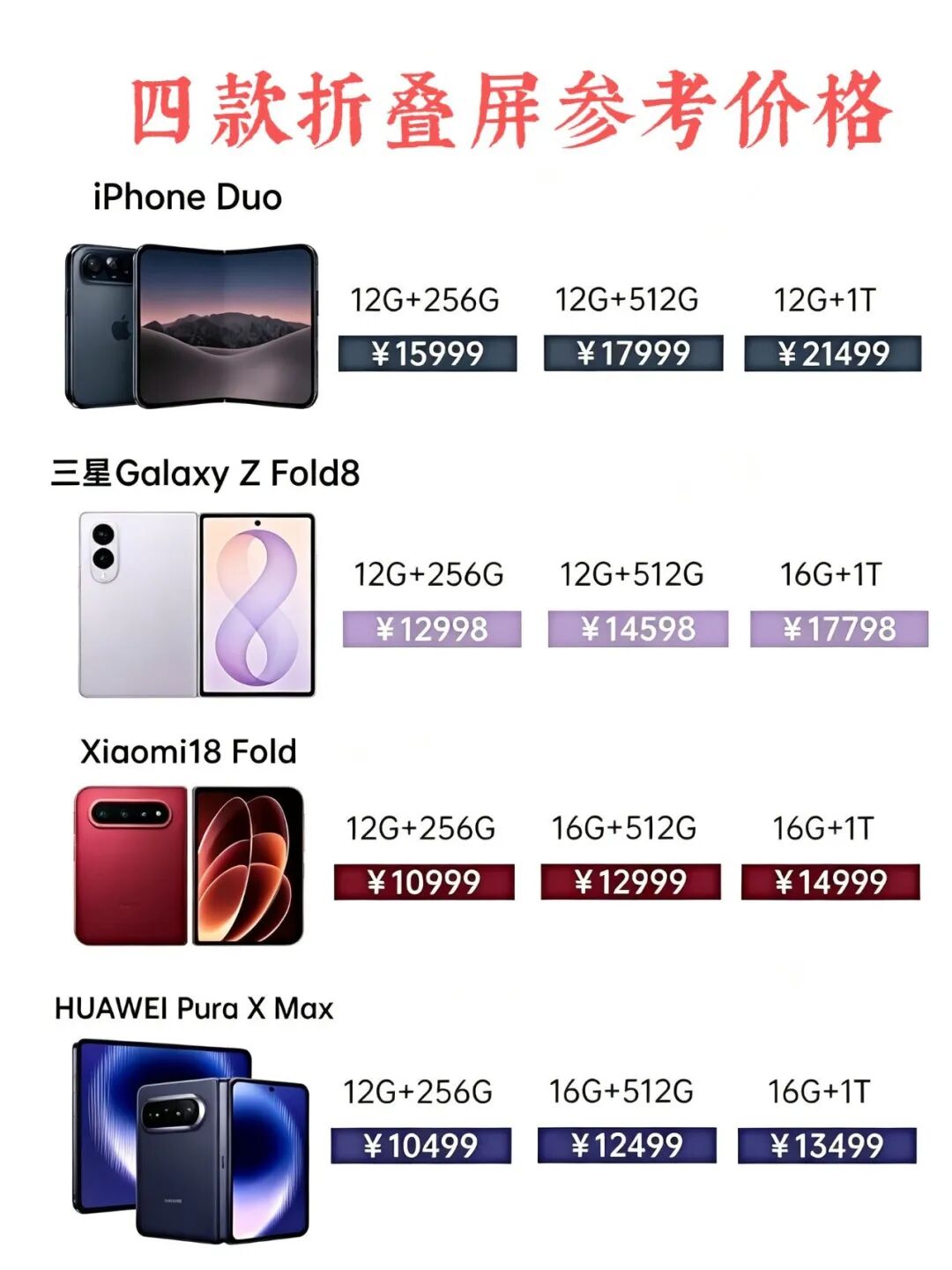
In September 2026, the mobile phone industry welcomed its most intense round of "super launch seasons" in recent years. Huawei launched the triple-folding Mate XT 2, Xiaomi unveiled its first "medium-fold" 18 Fold, and Apple introduced its first foldable iPhone Duo...
Three launch events took place within 72 hours, with pricing ranging from 10,999 yuan to 19,999 yuan.
Three years ago, this scenario would have been almost unimaginable.
Foldable screens were once considered "flashy toys" with fragile hinges, noticeable creases, and prohibitive prices.
But this year, everything has changed.
What has changed is not the folding mechanism itself, but rather that foldable screens have finally found a compelling reason for their existence—AI.

The Ceiling for Bar Phones, the Ticket for Foldable Screens
According to IDC data, smartphone shipments in the Chinese market reached approximately 284 million units in 2025, a year-on-year decrease of 0.6%. Back in 2019, this figure stood at 370 million units, with an average annual compound decline exceeding 4%.
Against this backdrop of stagnant growth, mobile phone manufacturers urgently need to find new growth anchors.
Foldable screens are currently the only product form that can simultaneously meet two conditions: supporting high unit prices in the tens of thousands of yuan and offering differentiated hardware recognition.
In 2025, foldable phone shipments in China reached approximately 10.01 million units, a year-on-year increase of 9.2%, achieving growth against the overall market decline.
Counterpoint Research predicts that by the end of 2026, cumulative global shipments of foldable phones will exceed 100 million units, with the next 100 million units potentially taking only three years.
While the numbers are impressive, what truly deserves attention is not the growth rate but the intrinsic changes occurring within foldable screens.
In previous years, manufacturers competed on "whether it can fold, how many times it can fold, and how deep the creases are." Now, this arms race has largely concluded. For example, vivo has reduced the weight of its large foldable phone to 217 grams, lighter than many bar phones; Honor's Magic V6 has compressed the folded thickness to under 8.8mm while packing in a 7150mAh battery.
At the hardware level, the "passing grade" for foldable screens has been raised sufficiently high, and the marginal benefits of continuing to compete on thinness and creases are diminishing.
The new battleground has shifted to AI.
An interesting question arises: How did AI phones and foldable screens, seemingly two independent trends, come together?
The answer lies in usage scenarios. In a June 2026 report, Counterpoint made a straightforward judgment: The 7.8 to 8.3-inch inner screen of book-style large foldables, capable of multi-window parallel operation, is better suited for presenting "original content + AI results + operation interface" on the same screen, reducing the need for cross-app switching.
The agency expects global foldable shipments to increase by approximately 20% year-on-year in 2026, with book-style models rising from 51.5% to 75.7% of the market share.
Simply put, the tasks AI needs to handle no longer fit on the screens of bar phones.
In the past, we handled tasks on phones by "opening an app, finishing, closing it, and then opening the next one."
However, the workflow in the AI era is entirely different. When you ask AI to summarize a document, you need to refer to the original text simultaneously; when planning a trip with AI, you need to view maps, flights, and hotel information concurrently; while in a video conference, you need AI to transcribe in real-time and generate meeting minutes.
These tasks inherently require "multitasking," and the 6.1-inch screens of bar phones simply cannot support this level of interaction density.
The nearly tablet-sized display space of unfolded foldable screens provides AI with a "workbench," achieving a precise match between form and demand.
The vivo X Fold6 is a prime example in this regard. It features the industry's first operating system, OriginOS 6 Fold, deeply customized for large foldable screens. Its core function, the "Atomic Workbench," supports both serial and parallel modes. The serial mode allows up to five windows to be displayed in layers, while the parallel mode supports four windows tiled for simultaneous operation.
Paired with AI cross-window drag-and-drop functionality, text, tables, and images can be dragged and transferred between different apps. The system AI also actively recommends app combinations based on user habits.
As vivo's vice president clearly stated at the launch event: The first evolution of foldable screens was achieving hardware maturity for large screens, and the second evolution should rely on AI interaction to form complete task-handling capabilities.
This judgment directly points out that foldable screens are no longer just "larger phone screens" but are evolving into "AI task platforms."
Samsung's approach is equally clear. The Galaxy Z Fold8 series fully integrates the Galaxy AI system, optimized for the foldable form factor, focusing on productivity scenarios.
More notably, MiniCPM series on-device large models from MiniMax deeply empower Samsung's Galaxy AI, marking the first time a Chinese on-device large model has entered the global flagship product line of an international leading mobile phone manufacturer.
This signal indicates that the integration of on-device AI and foldable screens has moved beyond the stage of "manufacturers creating demos" and has begun to enter standardized collaboration at the industrial chain level.

The Dawn of a "System-Level" War
If foldable screens are the hardware canvas for AI, then chips are the paintbrushes.
Nearly every flagship foldable phone released in 2026 has made significant investments in chips.
The Huawei Mate XT 2 is powered by the Kirin 9050 Pro chip, the first high-performance chip to adopt logical folding technology, supporting the operation of a total of 30 billion-parameter MoE full-modal large models on the device side for AI.
The Xiaomi 18 Fold integrates the self-developed 3nm Xuanjie O3 chip, HyperOS 4, and MiMo on-device large model, marking the first time Xiaomi's three major self-developed technologies—chips, AI, and OS—have come together in a single device.
The NPU architecture of the Xuanjie O3 is deeply optimized for large language models, delivering a tensor computing power of 200TOPS.
Apple's approach, while slightly different, follows the same underlying logic.
The iPhone Duo is equipped with a 2nm Pro chip, working with Apple Intelligence to enable split-screen summaries and cross-screen task flow. Its advantage lies not in aggressive parameters but in the seamless integration of inner and outer screens, system, and model scheduling.
Although the three manufacturers take different routes, their directions are largely aligned. The hardware redundancy of foldable screens is now serving on-device AI inference rather than existing "for the sake of folding."
As a professional media outlet pointed out: Leading mobile phone companies are no longer focusing on competing over single-point parameters but are advancing competition to the "system-level" of foldable form factors, self-developed chips, and intelligent agents.
Renowned analyst Ming-Chi Kuo previously noted that the mass production cost of hinges for Apple's foldable iPhone is expected to drop to $70–80, significantly lower than the market expectation of $100–120, primarily due to optimized assembly design and Foxconn's involvement.
The substantial reduction in hinge costs not only provides Apple with greater pricing flexibility but also indicates that core components of foldable screens are transitioning from "custom scarcity" to "mass production."
When supply chains are no longer a bottleneck, manufacturers can allocate more resources to building AI capabilities, creating a positive cycle.

User Hesitation and Industry Bets
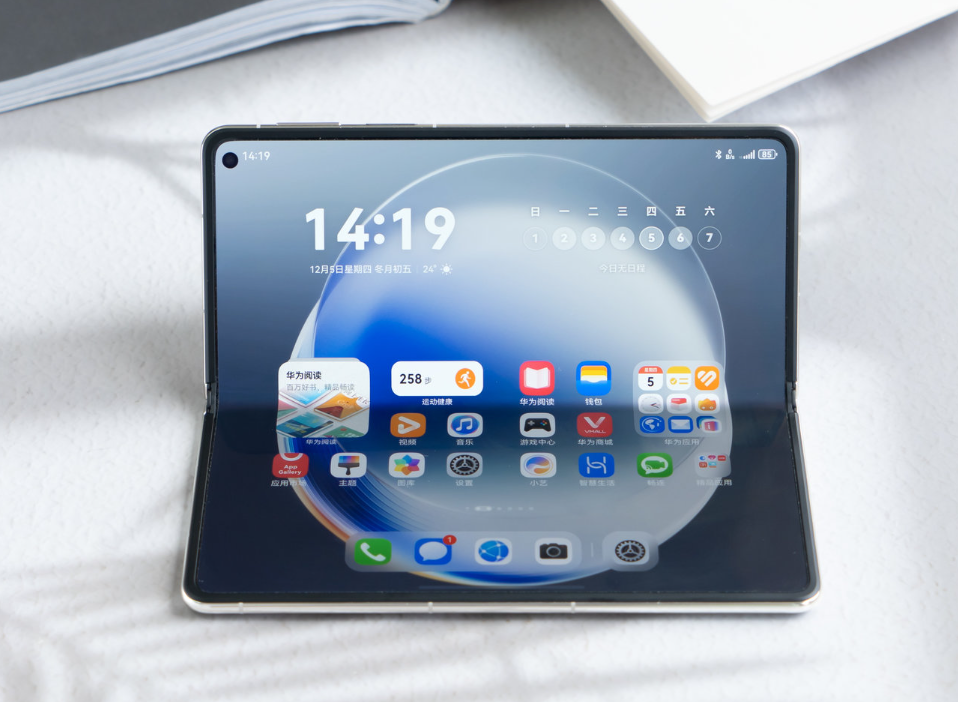
Of course, foldable screens are still far from becoming "mainstream."
From the user perspective, according to a 2025 survey by iiMedia Research, among the most unsatisfactory aspects of foldable screens, "creases affecting aesthetics" ranked first at 58.75%, followed by "short battery life" (43.27%) and "lack of portability" (37.21%).
Foldable screens currently account for only about 2% of the global smartphone market and remain approximately three times more expensive than traditional bar phones. Widespread adoption will take time.
These data indicate that foldable screens still have clear shortcomings in user experience that need to be addressed.
While new materials and processes, such as UTG ultra-thin flexible glass and titanium alloy hinges, continue to improve the crease issue, yield rate challenges still constrain production capacity.
In terms of battery life, although high-silicon anode battery technology has allowed foldable screens to accommodate 7000mAh-class batteries, the higher power consumption of large screens limits the actual improvement in battery life experience.
However, from the industry's actions, manufacturers' attitudes are already clear.
IDC expects global smartphone shipments to decline by 16.7% year-on-year in 2026, with foldable screens being the only bright spot in the market. Foldable shipments are projected to reach 22.9 million units in 2026, a year-on-year increase of 12.6%.
Amidst a general downturn, foldable screens represent a rare growth market.
More critically, Apple's entry into the foldable market carries dual significance. First, it serves as market education—when Apple users start discussing "whether to buy a foldable phone," the category truly enters the mainstream consciousness.
Second, it drives the supply chain. According to TrendForce, Apple's high standards for displays, UTG, hinges, and overall device structure are expected to accelerate supply chain technology maturity and mass production scale while prompting other brands to enhance technical specifications and reduce costs.
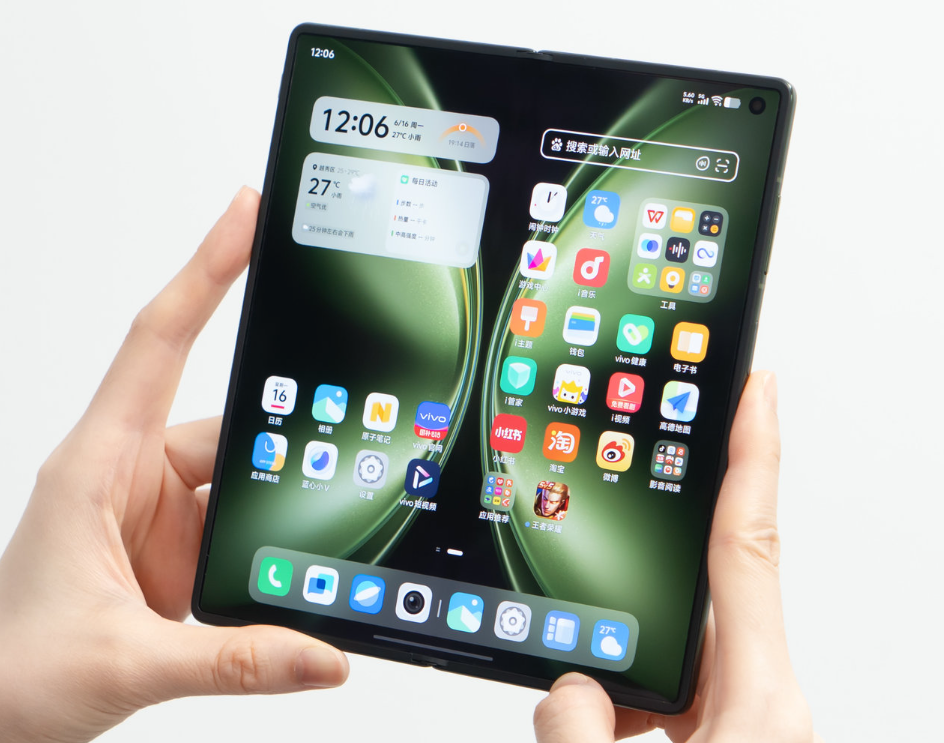

What's Missing for Foldable Screens' "iPhone Moment"?
Given this, could foldable screens become mainstream soon?
Frankly, it's too early to conclude.
It took eight years for foldable screen shipments to surpass 100 million units, and Counterpoint predicts the next 100 million units will take only three years. The inflection point in growth rate is indeed approaching.
However, between the "growth inflection point" and "mainstream adoption" lies a price barrier and a qualitative leap in user experience.
My personal judgment is that AI is the final piece of the puzzle for foldable screens to go mainstream, but the puzzle is not yet fully assembled.
At the hardware level, foldable screens have nearly reached "good enough" levels in terms of thinness, crease control, and battery life. The next step is to further reduce costs through economies of scale, bringing prices down from the "starting at ten thousand yuan" range to more mainstream levels.
At the software level, the integration of AI and foldable screens is still in its early stages. Features like the Atomic Workbench, AI meeting assistants, and cross-window drag-and-drop are already taking shape, but they are still a step away from a "killer experience" that "can't be done without a foldable screen."
A quote from TrendForce is worth pondering: Beyond being thinner, lighter, and having fewer creases, the next phase of competition for foldable phones will hinge on creating AI usage experiences that differ from traditional bar phones, which will be key to further market expansion.
In other words, the future of foldable screens depends not on how many times they can fold but on whether the AI on the unfolded large screen can truly change how we use our devices.
Chip computing power is surging, on-device large models are maturing, and operating systems are Refactoring (reconstructing) interaction logic for the foldable form factor. All elements are converging in the same direction.
Perhaps in two years, when we become accustomed to using foldable screens to run AI assistants, video conferences, and document editing simultaneously, we will look back at the autumn of 2026 and recognize it as the turning point when foldable screens transitioned from "niche novelty" to "mainstream choice."
-
![]()
GAC Serves as a Mediator: FAW Toyota and GAC Toyota to Jointly Unlock New Growth Potential for Joint Venture Automakers
-
From Global 'Best' to Continuous Decline: The Systematic Exodus Amid South Korea's Stock Market Plunge
-
![]()
AI Influences New Trends in Mobile Phones, Foldable Screens May Become Mainstream
-
![]()
AI Drives New Smartphone Trends: Foldable Screens Poised for Mainstream Adoption
-
![]()
Surge in 'Cloud Usage' by Agents Prompts Cloud Providers to Shift Strategies
-
![]()
OpenAI and Anthropic Kick Off the 'Model War'
-
![]()
Double 11 Growth Strategies Amidst Fading Tax Breaks and Scaled-Back Subsidies
-
![]()
Revenue Surges to 2.621 Billion with Growth, Yet Profit Slides 15% to 200 Million: How Does Electric Connector Technology Steer Between Consumer Electronics and Automotive Sectors?