GAC Serves as a Mediator: FAW Toyota and GAC Toyota to Jointly Unlock New Growth Potential for Joint Venture Automakers
 10/12 2026
 472
472
Lead | Introduction
Recently, China FAW Group, Toyota Motor Corporation, and GAC Group inked a new strategic cooperation framework agreement. Consequently, FAW Toyota and GAC Toyota are anticipated to progress towards comprehensive collaboration across research and development (R&D), procurement, production, and sales. This development signifies a shift in the automotive industry's competitive landscape: amidst the dual challenges of market saturation and the shift towards electrification, resource integration and cost optimization have emerged as vital strategies for automakers to sustain their competitiveness.
This article is produced by Heyan Yueche Studio.
Written by Zhang Dachuan.
Edited by He Zi.
Full text: 2,698 characters.
Estimated reading time: 4 minutes.
A profound transformation is underway in the realm of joint venture automakers.
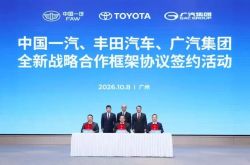
On October 8, China FAW Group, Toyota Motor Corporation, and GAC Group convened a signing ceremony for a new strategic cooperation framework agreement in Guangzhou. Under this agreement, the three entities will deepen their cooperation, jointly fostering the coordinated development and mutual advancement of FAW Toyota and GAC Toyota, thereby bolstering their market competitiveness. Simultaneously, the three parties will capitalize on their respective strengths to facilitate the accelerated electrification and intelligent transformation of the two joint ventures, propelling sustained business growth.
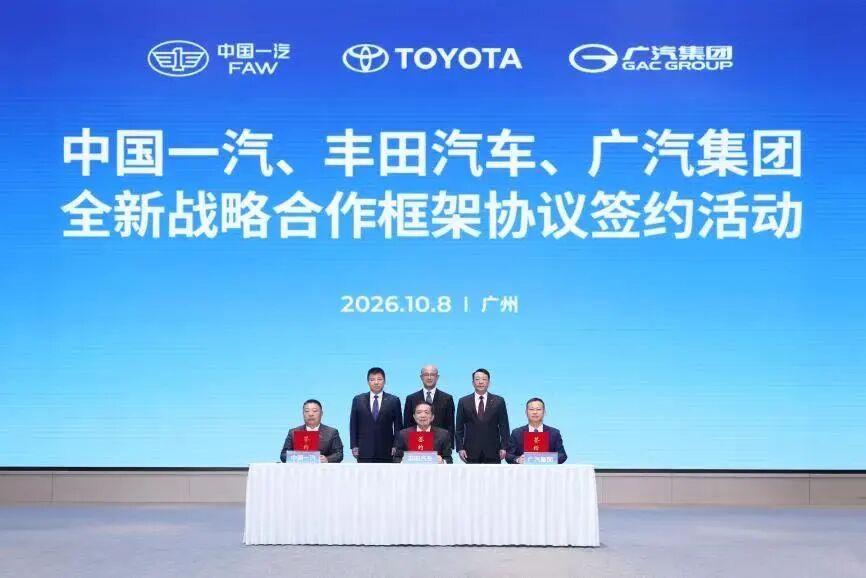
△ China FAW Group, Toyota Motor Corporation, and GAC Group hold a signing ceremony for a new strategic cooperation framework agreement in Guangzhou.
GAC to Acquire 50% Stake in FAW Toyota
Within the new cooperation framework, GAC Group intends to acquire a 50% stake in FAW Toyota from China FAW Group through share issuance. Post-transaction, FAW Toyota will continue to operate as an independent entity, while China FAW Group will become a significant strategic shareholder of GAC Group. The formal signing of the new strategic cooperation framework agreement by the three parties has dispelled various unfounded rumors circulating online regarding FAW Toyota's future development and equity changes.
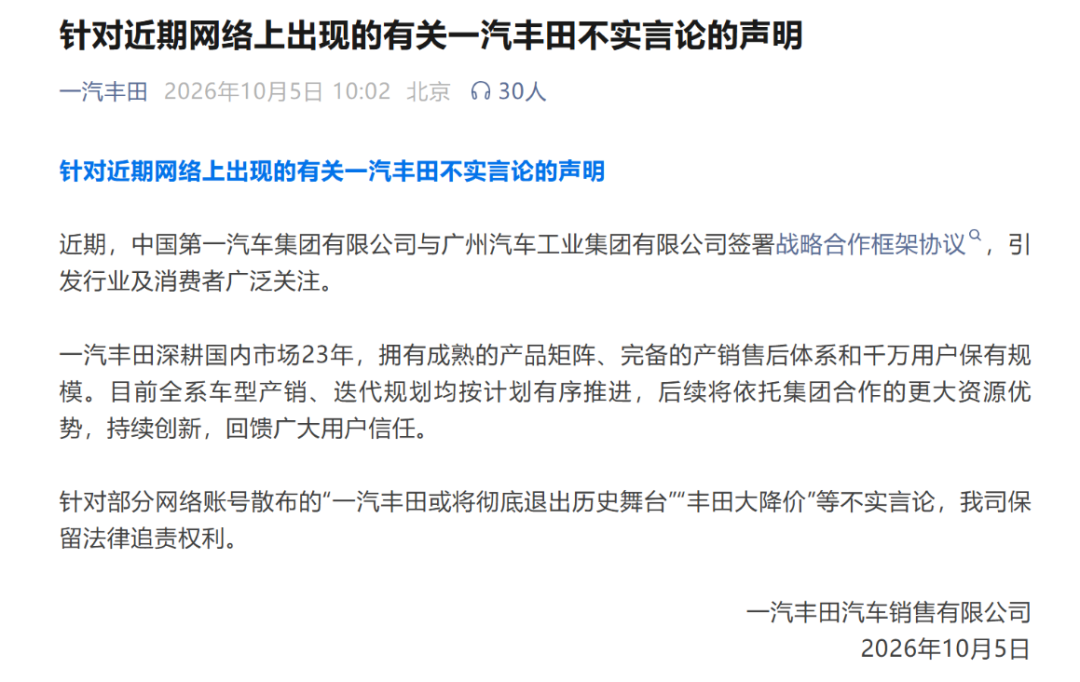
△ Unfounded rumors about FAW Toyota come to an abrupt end.
FAW Toyota has long been a mainstream joint venture automaker in the Chinese automotive market, with models such as the Corolla, Corolla Cross, RAV4, and Avalon constituting its core sales portfolio. However, in the new energy sector, FAW Toyota's performance has been relatively muted, particularly concerning the market presence of its pure electric products, with monthly sales of models like the bZ3 and bZ5 remaining around the thousand-unit mark.
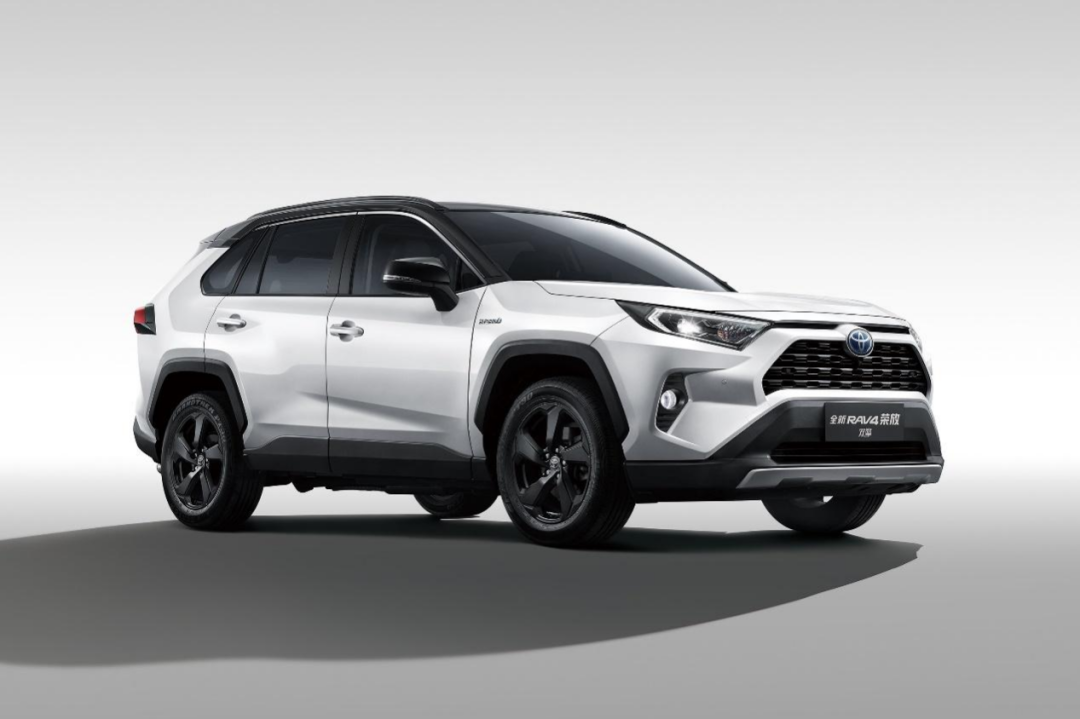
△ FAW Toyota boasts a highly complete product lineup in China.
According to CPCA wholesale data, from January to August 2026, FAW Toyota's cumulative sales reached 394,774 units. Unaudited financial data indicates that FAW Toyota achieved net profits of approximately RMB 4.717 billion and RMB 4.234 billion in 2024 and 2025, respectively. Despite the pressure of electrification transformation, FAW Toyota remains on a solid operational footing in terms of sales scale and profitability. Compared to some overseas automotive brands that have exited the Chinese market, FAW Toyota is poised to remain a significant player in China's automotive market for the foreseeable future.
Synergistic Effects Expected to Amplify
The automotive industry is inherently reliant on economies of scale. During the period of rapid growth in China's automotive market, automakers vied for market share by establishing multiple brands and diversifying product lines. The strategy of "having more children to fight better" was indeed an effective means to swiftly expand market presence. However, as the market gradually transitions from growth competition to competition for existing market share, the model of relying solely on increasing the number of brands and products to expand scale has become increasingly unsustainable. Through strategic cooperation, resource integration, and complementary strengths, maximizing synergistic effects is becoming a crucial avenue for automakers to reduce costs, enhance efficiency, and achieve long-term survival and development.
Toyota itself exemplifies this approach. Through its TNGA (Toyota New Global Architecture) platform, Toyota has integrated its chassis, powertrain, and vehicle development systems. The core of this strategy is not to homogenize all models but to reduce redundant investments by sharing foundational architectures, consolidating R&D resources, and optimizing production methods, thereby allocating more resources to enhance product performance, quality, and user experience. This underscores that economies of scale in the automotive industry stem not only from sales growth but also from the efficient integration of underlying technologies and resources.
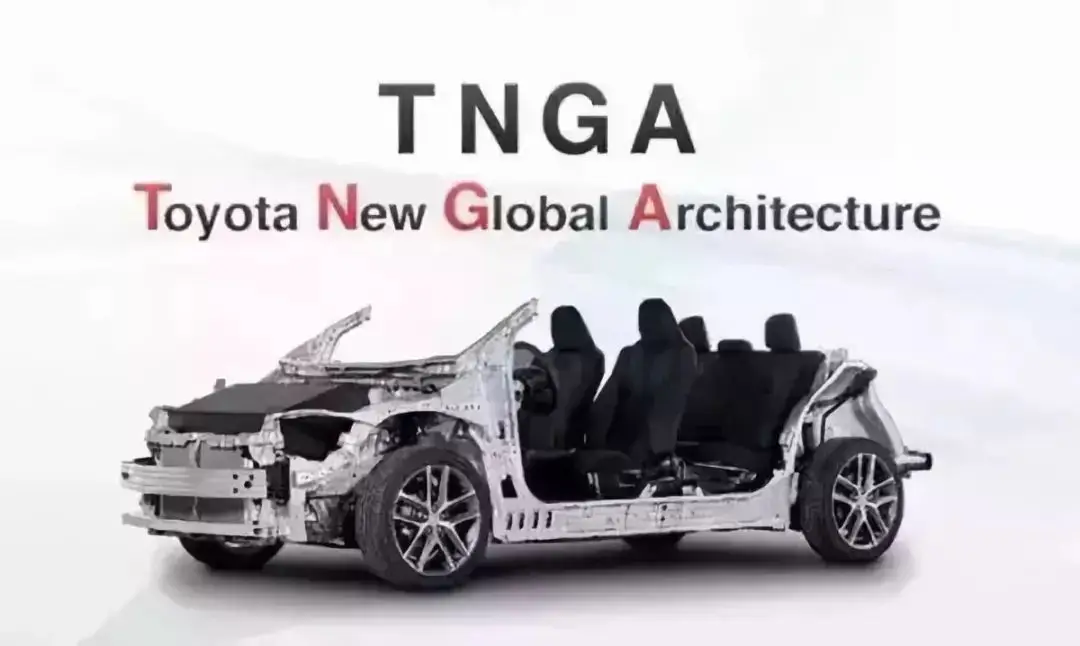
△ Toyota's TNGA architecture is a successful example of scalable synergistic effects.
With the signing of the new strategic cooperation framework and the progression of related equity adjustments, "FAW Toyota and GAC Toyota" are expected to transition from relatively independent operational models to a new phase of comprehensive coordination across R&D, procurement, production, and sales. According to Toyota's disclosure, FAW Toyota and GAC Toyota have a combined user base of over 23.56 million in the Chinese market. This vast user base provides ample space for further resource integration between the two entities. The value of synergy extends far beyond organizational and personnel optimization; it lies in reducing redundant R&D and capital expenditures, enhancing supply chain bargaining power, optimizing production capacity layout, and improving overall operational efficiency.
If FAW Toyota and GAC Toyota can establish an effective collaborative mechanism, its significance may extend beyond Toyota itself. For multinational automotive groups such as Volkswagen, Honda, Nissan, General Motors, Hyundai, BMW, and Ford, which also have multiple joint venture automakers in China, this provides a research-worthy approach: while preserving the brand positioning and market differentiation of each joint venture, further integrating underlying technologies, R&D resources, supply chains, and production systems.
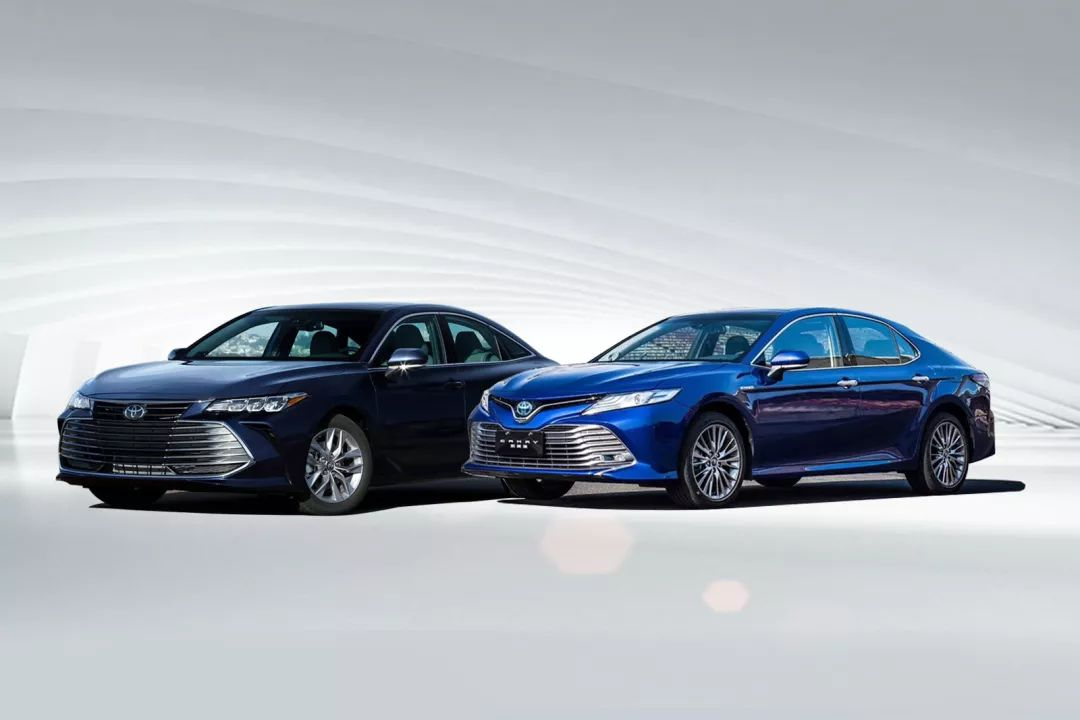
△ Business collaboration between FAW Toyota and GAC Toyota may set the stage for similar collaborations among other joint venture automakers in China.
Different automakers have varying equity structures and governance mechanisms, making it unlikely that all can replicate Toyota's model. However, as industry competition increasingly shifts toward a comprehensive contest of cost, technology, and efficiency, the key to an automaker's competitiveness no longer lies solely in the number of brands and factories it possesses but in its ability to invest limited resources in the most valuable areas through collaboration.
How Will GAC Act as a Mediator?
With the advancement of this plan, GAC is poised to play a more pivotal role in the collaborative landscape of both FAW Toyota and GAC Toyota. According to data from the China Association of Automobile Manufacturers, in 2025, the combined sales of FAW Toyota and GAC Toyota accounted for 17.03% of the total sales of joint venture passenger vehicles, representing a significant position among joint venture brands. In the future, as FAW Toyota and GAC Toyota further deepen their collaboration in R&D, procurement, and production, GAC is expected to leverage this opportunity to enhance its strategic position in the joint venture business and provide new support for the company's long-term and stable development.
More notably, the collaboration between GAC and Toyota may no longer be confined to traditional joint venture production and sales but could extend further into technological R&D and industrial chain synergy. In the past, Chinese automakers primarily provided localized production capabilities, supply chain resources, and market channels in joint ventures. Today, with the rapid development of China's automotive industry in electrification and intelligentization, cooperative relationships are gradually shifting toward bidirectional technological empowerment, with Chinese companies even exporting technological and product development capabilities to their foreign partners. For instance, SAIC Motor and Audi collaborated to launch models under the AUDI brand, while Geely's technological and platform resources have been applied in models from Volvo, Lotus, and Smart. XPENG and Volkswagen, as well as Leapmotor and Stellantis, have established technological cooperation relationships, respectively. These cases demonstrate that Chinese automakers are evolving from traditional manufacturing and market partners in joint ventures to exporters of technological and product capabilities.
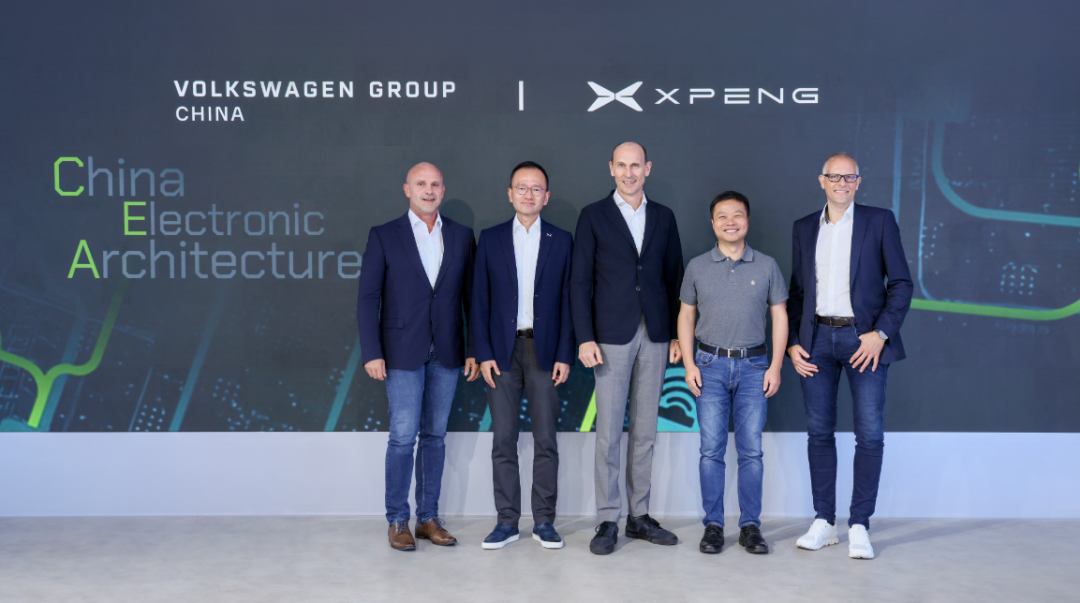
△ GAC and Toyota may follow the collaboration model seen between other domestic and foreign automaker groups in China.
These cases offer instructive insights for the collaboration between GAC and Toyota. It is worth observing whether GAC's accumulated capabilities in new energy vehicle development, intelligent cockpits, intelligent driving, and industrial chain integration can be further applied to Toyota's products in the Chinese market. For instance, the two parties could explore joint development of certain intelligent features, electronic-electrical architectures, or localized new energy products by GAC, while leveraging Toyota's global quality systems, supply chains, and overseas sales networks to expand collaborative outcomes to more markets. Of course, these remain potential areas of cooperation and do not indicate that the two parties have already reached relevant technological export or export cooperation agreements.
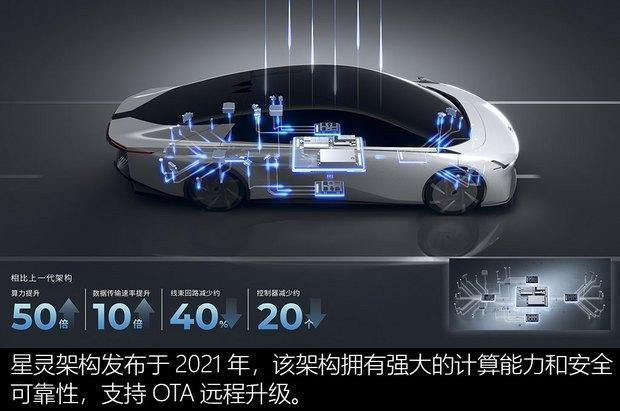
△ GAC's accumulated new energy and intelligent connected vehicle technologies hold certain reference value for Toyota.
From a longer-term perspective, GAC's real opportunity may not just lie in acquiring a larger scale of joint venture business through equity transactions but in leveraging Toyota's global industrial network to connect its technological capabilities with international resources. If future cooperation can extend beyond capital and operational collaboration to encompass joint technological research, product development, and overseas market expansion, GAC will gain not only the scale advantages of its joint venture business but also an opportunity to enhance its value in the global automotive industrial chain.
Commentary
The collaboration between FAW Toyota and GAC Toyota offers a reference for traditional joint venture automakers exploring new development models. With sustained increases in R&D investment for electrification and intelligentization, sharing technological platforms and integrating supply chain and production resources to reduce redundant investments have become essential directions for improving efficiency. Meanwhile, the technological accumulation of Chinese automakers in new energy and intelligentization has also created the possibility for joint venture cooperation to evolve from one-way technological introduction to bidirectional empowerment. In the future, the key to automaker competition will lie not only in brand and scale but also in achieving underlying capability synergy while maintaining product differentiation.
(This article is original to Heyan Yueche and may not be reproduced without authorization.)
-
![]()
The Comeback of AITO? Huawei and Seres Revitalize Their Alliance
-
![]()
GAC Serves as a Mediator: FAW Toyota and GAC Toyota to Jointly Unlock New Growth Potential for Joint Venture Automakers
-
From Global 'Best' to Continuous Decline: The Systematic Exodus Amid South Korea's Stock Market Plunge
-
![]()
AI Influences New Trends in Mobile Phones, Foldable Screens May Become Mainstream
-
![]()
AI Drives New Smartphone Trends: Foldable Screens Poised for Mainstream Adoption
-
![]()
Surge in 'Cloud Usage' by Agents Prompts Cloud Providers to Shift Strategies
-
![]()
OpenAI and Anthropic Kick Off the 'Model War'
-
![]()
Double 11 Growth Strategies Amidst Fading Tax Breaks and Scaled-Back Subsidies