MiniMax is set to tell a new story
 10/13 2026
 361
361
The open-sourcing of H3 represents a pivotal shift for the entire company. In a short period, it must meet capital market expectations while also capturing market share.
Author|Xiao Wei
Editor|Jiang Lan
On August 3, the weights of the MiniMax H3 model, previously promised to be open-sourced, were officially released on HuggingFace. Sixteen domestic and international chip manufacturers, including Huawei Ascend, Moore Threads, Biren Technology, AMD, and Intel, completed adaptations on the same day. Meanwhile, on July 31, H3 and its competitor ByteDance's video generation model Seedance 2.5 were released simultaneously.
There was a three-day gap between the two announcements. This gap represents the most significant strategic divergence in China's video model sector this year: ByteDance continues to keep Seedance within a closed-source system, Alibaba has validated the diffusion capabilities of open-source video models with HappyHorse, and MiniMax, caught between internet giants, has chosen a third path—freely releasing its most valuable full-modal video model.
MiniMax is going through its toughest phase since going public. Its stock price has plummeted from a high of HK$1,330 to a low of HK$186, and product pricing has sparked controversy. To stabilize morale and launch a counterattack, the founder even announced a zero-salary policy in July. Meanwhile, MiniMax has just completed HK$16 billion in financing, with ample ammunition but time running out.
The open-sourcing of H3 represents a pivotal shift for the entire company. In a short period, it must meet capital market expectations while also capturing market share. This is no easy task.
The Gap in Performance Metrics
On July 31, MiniMax announced the open-sourcing of the H3 video model. On the same day, ByteDance released Seedance 2.5.
When comparing the two models, the gap (gap) is comprehensive: Seedance 2.5 natively generates 30-second videos, while H3's upper limit is 15 seconds; Seedance supports 50 reference material inputs, whereas H3 supports 12, including 9 images, 3 videos, and 3 audio clips; Seedance 2.5 offers 4K output, while H3 maxes out at 2K. In core video generation parameters, H3 does not outperform in any category.
The reasons for these gaps stem from two different technical architectures. Seedance employs a unified audio-visual joint generation architecture optimized for video generation, allowing single-modal peaks to reach higher levels. In contrast, H3 uses the H3-Omni Transformer unified architecture—text, images, videos, and audio enter the same pre-training framework, sharing a single set of parameters. The cost of sharing is dilution: parameters and computational resources allocated to each single modality are reduced, resulting in gaps in video duration, resolution, and instruction-following precision compared to single-architecture video models.
This architecture was not chosen arbitrarily for H3. Founded in 2021, MiniMax has used the same underlying architecture across all products, from the Hailuo video model to the M2 text large model and now H3. The direction of product upgrades has focused on training data and parameter scale, with the main architectural line remaining unchanged.
Although the unified architecture's technical route concedes single-modal peaks, it reduces costs. This time, H3-VAE compressed video sequences by 4x, and sequence length directly determines memory usage and inference time—compressing by 4x significantly lowers unit inference costs. In-context Regeneration replaces traditional super-resolution modules, allowing the base model to directly regenerate 2K images based on the original context, eliminating the need for a separate post-processing computational layer. Combined, these factors set H3's API pricing at 0.8 yuan/second, significantly lower than Seedance 2.5's minimum price of over 2 yuan/second. After open-sourcing, its local deployment marginal cost approaches zero.
Why are costs important? Sora already provided an answer. OpenAI's Sora shut down in March 2026 after burning $5.4 billion annually, with only a 5% to 10% video usability rate and a 60-day retention rate approaching zero. If costs cannot be reduced, the business model fails. After Sora's shutdown, video model pricing has trended downward—from several dollars per second to Seedance's approximately 1 yuan per second, and now H3's 0.8 yuan. Each price reduction unlocks new usage scenarios.
Clearly, H3 does not outperform its competitors in performance metrics, but its different technical architecture makes it suitable for the open-source model path. However, it is important to note that the timing of MiniMax's open-source announcement also reflects more urgent objectives.
A New Story
The timing is driven by the capital market.
MiniMax went public on the Hong Kong Stock Exchange on January 9, pricing its shares at HK$165 and closing up 109% on its debut. By March 18, the stock price had surged to HK$1,330, giving the company a market capitalization of HK$410 billion—the highest valuation the market had assigned to the story of "China's strongest video model company."
Then, the narrative began to spiral out of control.
First, on April 7, Alibaba's HappyHorse arrived at the Artificial Analysis video arena: with 15 billion parameters, 8-step inference, 38.4 seconds to generate 1080p video, open-source and free, it scored 1357 points in pure visual quality, 84 points higher than the second-place Seedance 2.0. A free model surpassed all closed-source flagships in image quality, stripping the "strongest video model" label from MiniMax.
Then, on June 1, MiniMax released its new flagship model, M3, and simultaneously changed its billing method from per-call to per-token consumption, raising the lowest subscription tier from 29 yuan/month to 49 yuan/month without prior notice. Under the new billing model, the number of tokens consumed per conversation far exceeded user expectations. What exacerbated the conflict was the pricing disparity—8.5 yuan per billion tokens domestically versus 6.6 yuan per billion tokens overseas, making the domestic price 28% higher.
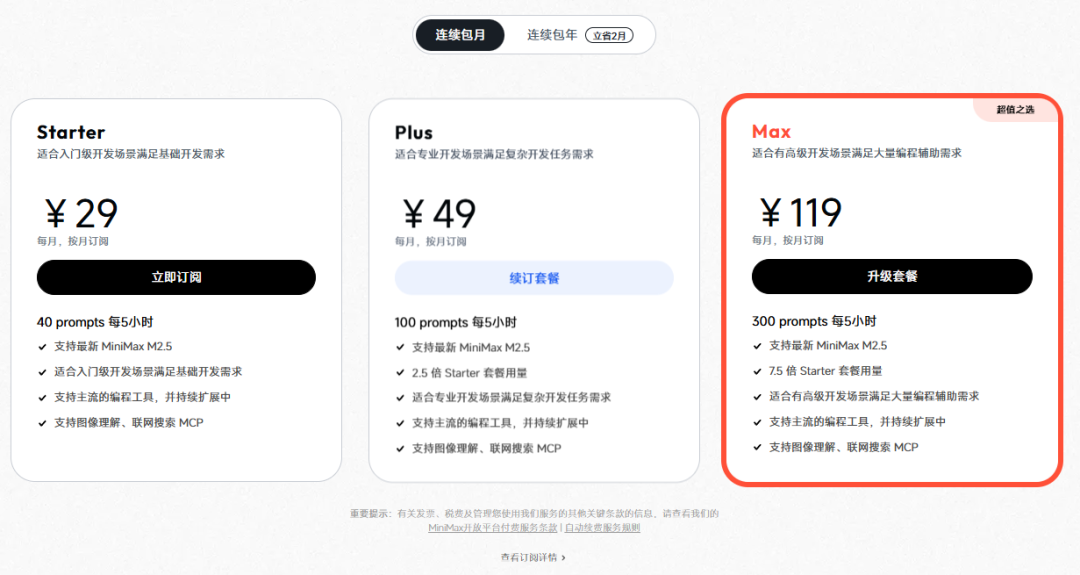
Horizontally, DeepSeek V4-Flash costs only $0.14 per million input tokens (about 1 yuan), while M3's standard pricing is $0.60 per million input tokens (about 4.2 yuan), several times more expensive than domestic competitors.
On the day of the product release, MiniMax's stock price closed down 15.71%. From June 1 to 5, it fell 37.44% over five trading days.
Then, on July 9, MiniMax's first round of 153 million restricted shares unlocked, representing 48.9% of the total share capital. On the unlocking day, the stock price fell 17.98%, closing at HK$297.40. Although over 80% of Pre-IPO and cornerstone investors had previously committed to lock-ups, the selling pressure from financial investors still caused the largest single-day drop since the company's listing.
From brand positioning to pricing structure to capital market sentiment, MiniMax's old narrative faced comprehensive challenges. However, finding a new story was not an easy answer.
Before H3, MiniMax conducted an open-source experiment with its text large model, M2. On the OpenRouter platform, the daily token consumption of M2 series models grew sixfold in two months, surpassing 50 billion and ranking first among Chinese models. The token growth from open-sourcing showed MiniMax's management a clear path: free models do not generate revenue directly but can serve as a frontend entry point for API income.
On July 10, the day after MiniMax's locked-up shares caused a stock plunge, founder Yan Junjie sent an all-staff letter announcing he would not take a salary until AGI was achieved and would allocate 5% of the total share capital under his name—4% to incentivize the team and 1% to establish an open-source community fund.
This move, combined with the completion of HK$16 billion in financing, was seen as a package of measures to stabilize market confidence. However, by the end of July, with the announcement of H3's open-sourcing, the contours of a new narrative finally became visible.
After Open-Sourcing
MiniMax aims to achieve many goals through its open-source narrative, but the most immediate one is competitive defense.
Compared to ByteDance's Seedance 2.5, which boasts strong parameter performance, H3's open-sourcing shifts the comparison framework: it competes on cheaper deployment, more complete toolchains, and broader connections with domestic chips. These are dimensions ByteDance is unlikely to pursue—ByteDance's core asset is its traffic distribution pipeline, and H3 has secured a competitive position that Seedance cannot match.
However, achieving competitive defense requires something else: an ecosystem. The moat of an open-source model lies not in the model itself but in the ecosystem that grows around it. H3 had a strong start, with 16 chip manufacturers and platforms like ComfyUI completing the most basic inference adaptations on the first day. The next levels—fine-tuned versions, vertical scenario plugins, and workflow templates—are what truly retain developers, and these must grow organically within the community.
Yet, compared to its competitors, MiniMax's ecosystem gap is more pronounced. ByteDance's Seedance is backed by Douyin, allowing generated content to directly enter short-video distribution without requiring creators to change their workflows—the ecosystem is built-in. Alibaba's HappyHorse packages models, computing power, and deployment into a single service, freeing developers from infrastructure concerns—the ecosystem is attach (included). MiniMax lacks both: it has no content distribution outlet nor a cloud service foundation. It must invest in documentation, tutorials, community operations, and partner programs over years, with a return curve that starts low and rises later.
Moreover, ecosystem development revolves around technological innovation, but the work itself must align with MiniMax's team DNA. MiniMax's founding team hails from SenseTime Research, with CEO Yan Junjie being a technologist by background. The company's core strength has always been in model development. This DNA explains why it could create H3 but also why operational issues have arisen.
The M3 pricing incident on June 1 is a prime example. Whether M3's price hike was related to computing costs remains undisclosed by MiniMax. However, the pricing method revealed a structural issue: pricing decisions were driven by the technical team's logic—the new model is stronger and consumes more GPU, so it should cost more—without analyzing the customer base or implementing expectation management. ByteDance's Seedance uses multi-million-dollar annual prepayment framework contracts with 50% deposits, tiered pricing superposition ( superposition means "combined with") legal risk transfer, reflecting a design by the business team. Alibaba uses free models to drive traffic to its paid cloud services, an ecosystem-based pricing strategy reflecting a platform mindset. MiniMax's pricing history lacks such layered design, with price hikes driven by cost logic rather than customer structure logic.
From this perspective, after open-sourcing, MiniMax faces even higher demands on its comprehensive capabilities. If these capabilities are not synchronize (synchronized) and bolstered, ecosystem development could repeat the M3 pricing fiasco—technically correct but market-handling flawed.
In August, MiniMax will release its 2026 interim report. This will be the first official financial report after H3's open-sourcing and the capital market's first test of this new narrative. The time for MiniMax to provide answers is indeed running short.
(The images and public data materials in this article are sourced from the internet and public industry platforms. If there is any infringement, please contact us promptly for corrections.)
-
![]()
Global Market Share of Pure Gasoline Vehicles Dips Below 50%: Is the Gasoline Car Era Nearing Its End?
-
![]()
The Whole Story of the 2026 'Rushed Vehicle' Controversy: From a Live Stream Joke to a Public Naming by People's Daily
-
![]()
V4 Flash Scores Impressively, But DeepSeek Hasn't Revealed All Its Cards Yet
-
![]()
MiniMax is set to tell a new story
-
![]()
Feishu’s Strategic Shift: Is Doubling Down on Entry Points for China’s AI-Powered Office Tools the Right Call?
-
Toyota’s North and South China Operations Merge, GAC Toyota Appoints New Chinese Executive
-
![]()
Zunjie V800 Brake Pedal Third-Party Test Results Unveiled: Withstands 3000N Longitudinal Force Without Damage
-
Domestic Mobile Phone Brands in Disarray as Market Slides 20%: Samsung and Apple Surge Amidst Domestic Decline!