Zunjie V800 Brake Pedal Third-Party Test Results Unveiled: Withstands 3000N Longitudinal Force Without Damage
 10/13 2026
 376
376
Farsight, October 13 – Zunjie has issued a statement regarding the third-party testing of the V800 brake pedal. According to the statement, a nationally recognized third-party testing institution carried out inspections on October 11, 2026, and the results complied with the requirements stipulated in the QC/T 788-2018 industry standard. Under more rigorous testing conditions, the samples exhibited no cracks or damage even after being subjected to a longitudinal force of up to 3000N.
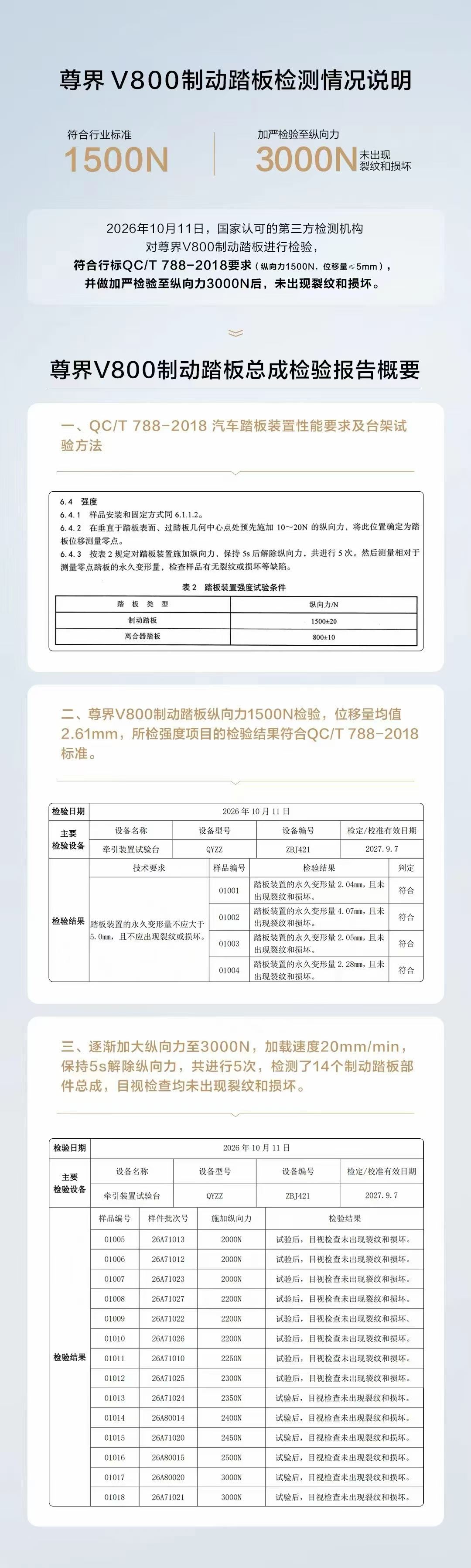
As per the summary of the published report, the 1500N strength test involved four samples. The measurements of permanent deformation for these samples were 2.04mm, 4.07mm, 2.05mm, and 2.28mm, respectively, with an average of 2.61mm. None of the four samples showed any signs of cracks or damage, and all instances of permanent deformation were within the specified limit of no more than 5mm.
The more stringent testing involved a loading speed of 20mm/min. The force was maintained for 5 seconds before being released, and this process was repeated five times. The summary listed 14 brake pedal assemblies that were subjected to loads ranging from 2000N to 3000N. Upon visual inspection, no cracks or damage were observed. It should be noted that among these, only two samples were tested at 3000N, not all 14 samples.
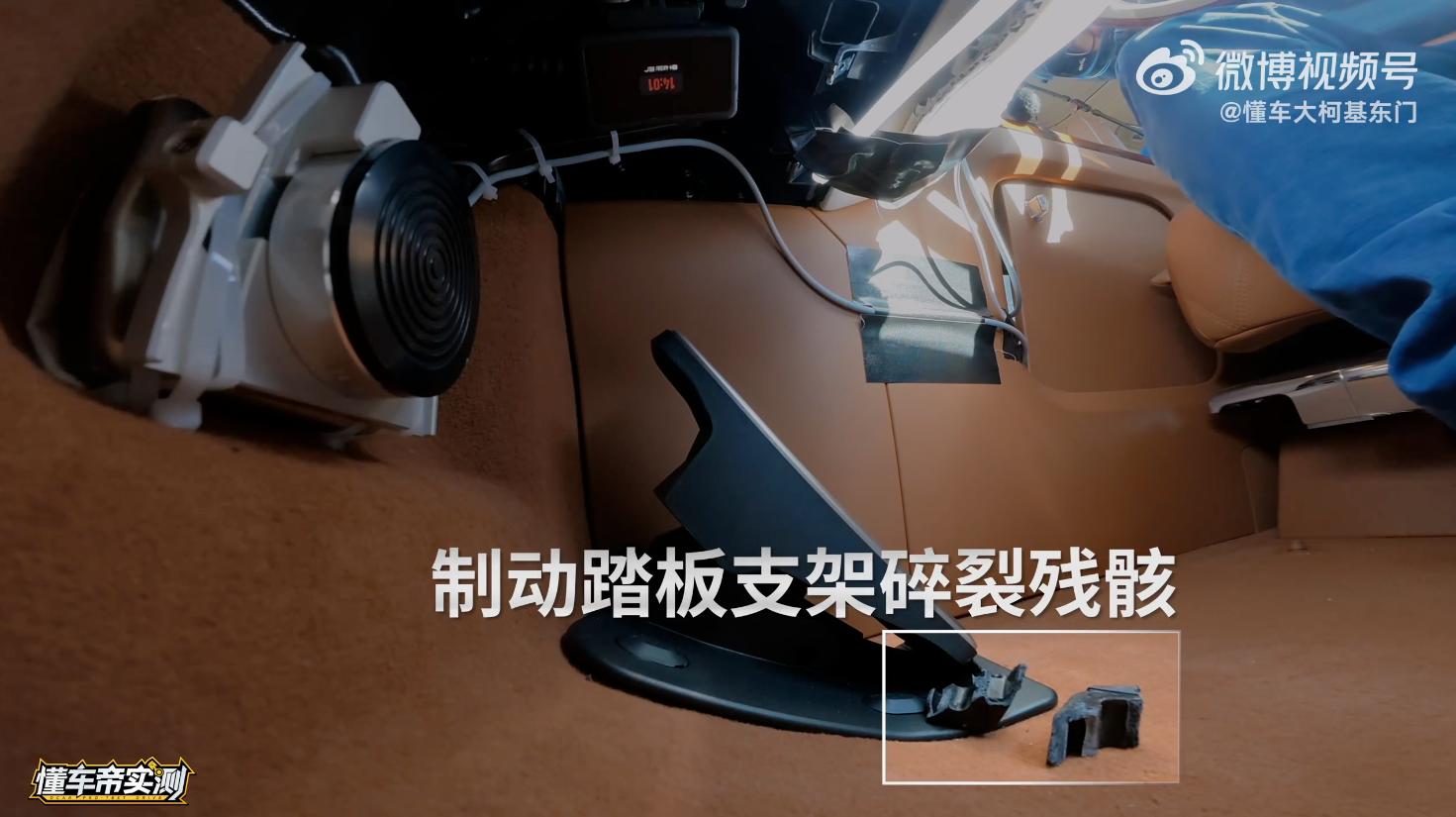
Previously, on October 8, Dongchedi released an actual test video. According to the video, during emergency braking from 100km/h to 0 in a closed testing area, the pedal brackets of three Zunjie V800 vehicles fractured on the third, fourth, and second braking attempts, respectively. The first braking distance of the third vehicle was 38.44 meters. After the second failure, the tester used the P-gear emergency brake to bring the vehicle to a stop. The video also listed distances of 140 meters and a maximum pedal force of 1612N.
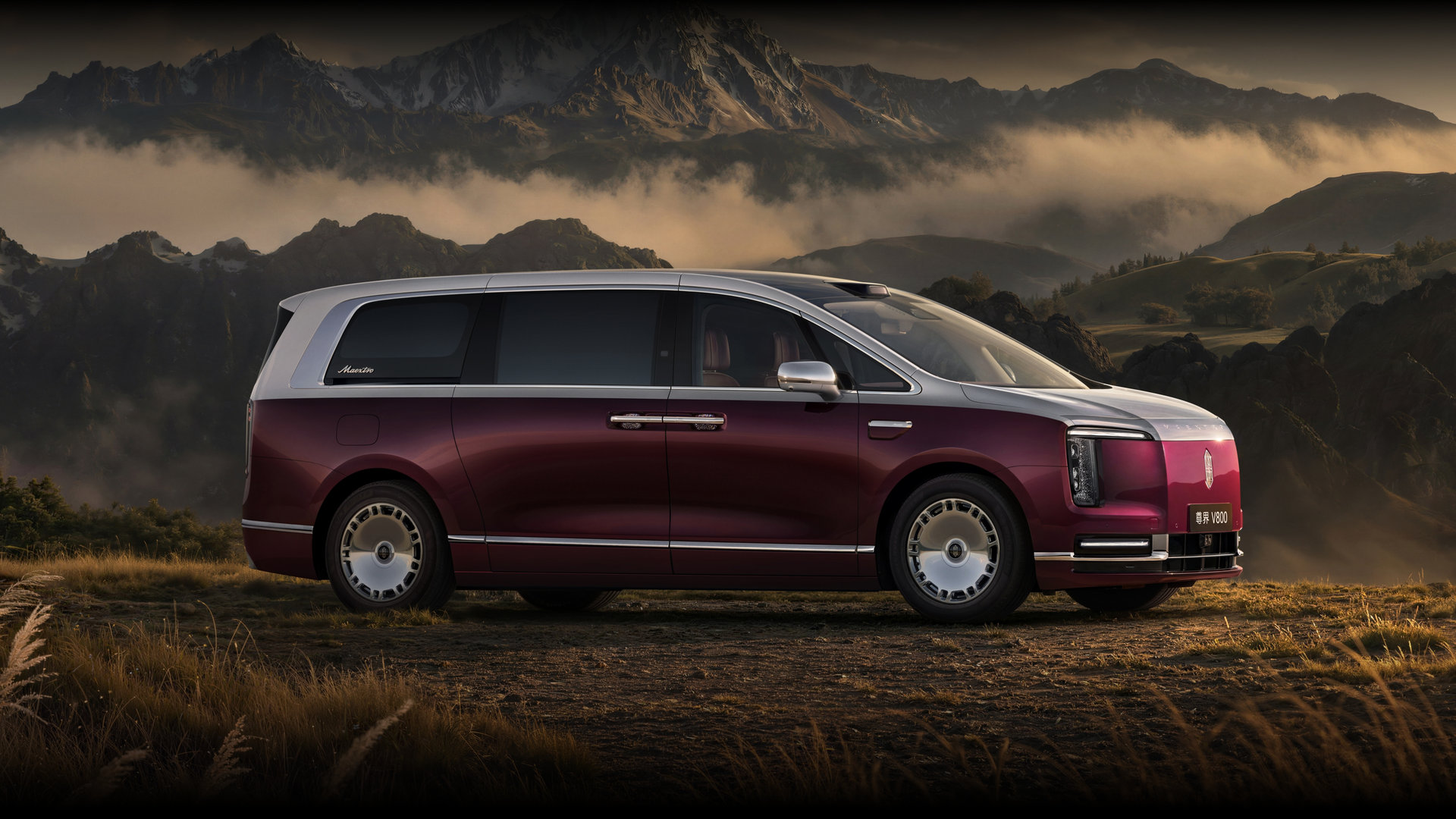
On the evening of October 8, Zunjie officially responded, stating that its brake system had been developed and validated to standards that surpass national and industry requirements, and no similar failures had occurred in real-world user scenarios. They referred to the tests shown in the video as being conducted under "non-standard extreme testing conditions." Zunjie pledged to further optimize the design of the brake pedal bracket base, offer free upgrades to users who had already received their vehicles, and review and strengthen design validation, testing boundaries, and production quality management.
Bench testing provides a foundation for assessing the load-bearing capacity of samples under specified conditions. However, it's important to note that the 20mm/min loading method used in the tests differs from the way the emergency pedal is applied in real vehicles. Moreover, the 3000N force cannot be directly compared to the 1612N force mentioned in the video based solely on numerical values. Additionally, the report summary did not disclose the name of the testing agency, the full report, or whether the samples used in the tests incorporated the upgraded design.
For consumers, several key questions remain to be clarified: How can the differences between the two sets of test results be explained? What caused the fractures in the sample vehicles that experienced failures? What structural changes will be made in the free upgrade? And does the upgraded validation cover relevant emergency braking conditions? Only by publicly disclosing the fault analysis and upgrade validation results can further responses be made to address the safety concerns of vehicle owners.
-
![]()
Global Market Share of Pure Gasoline Vehicles Dips Below 50%: Is the Gasoline Car Era Nearing Its End?
-
![]()
The Whole Story of the 2026 'Rushed Vehicle' Controversy: From a Live Stream Joke to a Public Naming by People's Daily
-
![]()
V4 Flash Scores Impressively, But DeepSeek Hasn't Revealed All Its Cards Yet
-
![]()
MiniMax is set to tell a new story
-
![]()
Feishu’s Strategic Shift: Is Doubling Down on Entry Points for China’s AI-Powered Office Tools the Right Call?
-
Toyota’s North and South China Operations Merge, GAC Toyota Appoints New Chinese Executive
-
![]()
Zunjie V800 Brake Pedal Third-Party Test Results Unveiled: Withstands 3000N Longitudinal Force Without Damage
-
Domestic Mobile Phone Brands in Disarray as Market Slides 20%: Samsung and Apple Surge Amidst Domestic Decline!