QianWen Go Ventures into Personal Assistant Space, Revealing Another Side of Alibaba's Ecosystem Strengths
 10/14 2026
 504
504
On October 13, Alibaba's QianWen officially announced the launch of its personal AI assistant, 'QianWen Go!' and opened up applications for beta testing within the QianWen App. In contrast to previous releases boasting hundreds of features, two seemingly unremarkable numbers caught the eye this time: 70 yuan and 52 yuan.
One beta user only remembered a delayed flight but couldn't recall the specifics. QianWen Go autonomously queried historical orders, verified delay information, and attempted to contact both the airline and platform customer service. When the hotline went unanswered, it sought out text-based customer service; when offered compensation in vouchers, it continued negotiating, ultimately securing 70 yuan in cash for the user.
Another user wanted to apply for Taobao's price protection but was unsure of the process. QianWen Go reviewed historical orders, identified eligible items, and secured a 52-yuan refund for the user. Additionally, car maintenance inquiries, sports venue reservations, price comparisons, and even job applications were included in the demonstrated capabilities.
These scenarios, lacking the grand narratives typical of tech launches, closely align with everyday expectations for a personal assistant: remembering needs, finding information, contacting service providers, and persisting when issues arise.
QianWen Go is beginning to take on the communication, search, and coordination costs long borne by users in internet services.
Over the past year, QianWen has rapidly built its user base through shopping, travel, and lifestyle services. In September, Meta launched Muse, and companies like OpenAI also entered the personal Agent market, accelerating the shift from conversational AI to action-oriented AI.
Compared to agile overseas startups, Alibaba has its own strengths and more complex tasks. It must not only make the personal Agent a standalone product with sustained use but also coordinate models, computing power, payments, consumption, and external service ecosystems.
Completing a task for AI tests execution capability; having users continuously entrust their personal affairs tests a tech company's product, organizational, and commercial systems.
Chapter 1: Capable of Handling Tasks, But Also of Ensuring Stability
On January 15 this year, the QianWen App underwent a major upgrade. Alibaba integrated services like Taobao, Taobao Deals, Alipay, Fliggy, and Gaode Maps into QianWen, launching over 400 AI-powered task functions. Users could now order food, purchase goods, book flights and hotels, and even have AI make restaurant reservations via natural language.
Wu Jia, President of QianWen's Consumer Business Group, stated that QianWen's unique advantage lies in the combination of the Qwen model and Alibaba's ecosystem. In his view, few AI applications will serve as standalone entry points in the future; comprehensive Agents will be more competitive.
This judgment has shaped QianWen's subsequent product direction: enabling users to complete diverse tasks within a single entry point, reducing the need to switch between apps repeatedly.
However, the January upgrade primarily relied on pre-existing service ecosystems. Food delivery, flights, and hotels have relatively clear product structures, booking processes, and transaction interfaces. The model needed to understand user needs, invoke tools, and sequence different operations.
The flight claim process demonstrated by QianWen Go introduces greater uncertainty. Such capabilities typically involve planning, tool invocation, environment observation, and failure recovery in Agent technology, with each step potentially introducing new decisions for the model.
For example, identifying a delayed flight only indicates that the task can proceed; whether it qualifies for compensation depends on the specific order, airline policies, and protection agreements. After customer service offers vouchers, AI cannot assume cash compensation is always the optimal solution for users.
While Agents can autonomously find operational paths, they do not have the authority to decide all transaction terms for users.
Traditional internet applications have relatively deterministic operations, where clicking a button usually corresponds to a clear business process. Personal Agents, however, may face constantly changing web pages, customer service scripts, verification mechanisms, and business rules. Page updates, network interruptions, login failures, or external platform permission adjustments can all cause a previously successful task to suddenly fail.
Moreover, complex tasks often consist of multiple steps. Even if the reliability of individual steps is high, the entire process may accumulate failure risks due to continuous operations.
This is why the industry continues to research Agent reliability.
The τ-bench evaluation framework, proposed in 2024, specifically simulates multi-round interactions in retail, aviation, and other service scenarios, introducing the pass^k metric to observe success consistency when repeating the same task. Early findings revealed that even if some models perform well in single tests, their stability may significantly decline across multiple executions.
There remains a considerable gap between a successful demonstration and a scalable service capability.
This means that the most valuable data for QianWen Go in its next phase may not be the total amount saved for users but should include task completion rates, average execution times, failure recovery rates, human intervention ratios, and abnormal operation counts.
For a company with a large consumer user base, these metrics directly relate to product costs and user trust.
Chapter 2: User Base Established, QianWen Aims for Long-Term Trust
The launch of QianWen Go can also be understood within the context of Alibaba's adjustments to its consumer-facing AI products over the past year.
In November 2025, the QianWen App was officially rolled out to the public, emphasizing AI-powered task capabilities. Alibaba swiftly advanced model upgrades and ecosystem integration, leveraging its consumer service scenarios to evolve QianWen from a chat tool into a comprehensive assistant.
QuestMobile data shows that as of March 2026, the QianWen App had 166 million monthly active users, ranking second among domestic AI-native applications, behind only Doubao's 345 million.
QianWen has rapidly acquired a large user base but now needs to further establish sustained usage habits, making the Personal Agent route a priority for Alibaba.
Ordinary chat tools largely rely on users initiating interactions. Whether searching for information, generating documents, or asking questions, interactions typically end once the current need is met. Personal Agents, however, may operate over longer cycles, continuously monitoring flight prices, waiting for appointment availability, managing schedules, or resuming previously assigned tasks when conditions are met.
These tasks may not require frequent app openings but could increase user dependence on the product.
For Personal Agents, the frequency of app openings may not adequately measure user engagement; effectively managed ongoing tasks and user-retained authorizations are equally important.
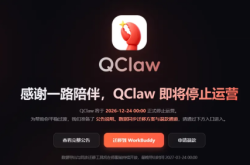
However, Alibaba did not continue along the path of traditional intelligent agents. On July 4 this year, QianWen announced the discontinuation of anthropomorphic interactive agents and user-built agent functions, with web-based features closing on July 10 and App announcements affecting July 15.
At the same time, Doubao also announced adjustments to its original agent functions, with anthropomorphic interactions, role-playing, and user-built agents undergoing product and compliance reviews across the industry.
This was not abandonment. The old form focused on custom roles, knowledge bases, and conversational experiences, while the new Personal Agent emphasizes comprehensive task execution, with clear differences in product objectives.
From a product strategy perspective, this adjustment is noteworthy. Previously, platforms encouraged users to create multiple agents for different purposes; now, QianWen hopes a single comprehensive assistant will understand user needs and deploy different specialized capabilities to complete tasks.
This involves redistributing product complexity and usage habits. Users no longer need to decide which agent to choose first, but QianWen must handle more task identification, capability scheduling, and cross-scenario collaboration.
This direction became clearer at the Cloud Town Conference on September 22 this year, when Zheng Sishou, QianWen's product leader, announced accelerating the development of Personal Agents. Leveraging the Agentic capabilities of the Qwen 3.8 series models, QianWen aims to provide sustained, personalized intelligent services to 300 million users.
Simultaneously announced progress included accessing personal health and fitness data after authorization, introducing professional financial data and institutional agents, with some users able to connect personal portfolios. The QianWen Open Platform now covers over 20 domains, with more than 1,000 partner applications.
The significance of these developments far exceeds single purchases or reservations. Health, fitness, portfolios, consumption preferences, and life arrangements all relate to long-term personal well-being. As this information gradually integrates, QianWen has the opportunity to reduce the cost of users repeatedly describing their needs and offer more personalized advice.
In comparison, when Meta launched Muse on September 8, it explicitly introduced the design of dedicated cloud virtual machines. Each user has a relatively independent operating environment where personal data, connected services, and related credentials can be managed, allowing Agents to execute tasks even when users are not actively interacting with the interface.
On October 12, Meta further introduced the Muse Wonder series models, enhancing long-term memory and sustained task capabilities. However, despite these efforts, Muse has not resolved all issues. According to a October 12 report by The Wall Street Journal, Muse has neared 9 million downloads but still faces challenges in user retention.
This indicates that leading overseas products are also verifying whether users will continue entrusting important tasks to AI after initial experiences. For QianWen, its vast model and application ecosystem can reduce customer acquisition and service connection difficulties but cannot replace the long-term trust cultivated by individual users.
As QianWen begins to save users' long-term tasks, it accumulates user relationships while also accumulating future service commitments that must be fulfilled.
Chapter 3: Opening Its Own Ecosystem While Entering Others' Platforms
Entering the personal Agent market, QianWen Go holds a set of resources that competitors will find difficult to replicate in the short term.
The Qwen model provides foundational intelligence, Alibaba Cloud supplies computing power and execution environments, while businesses like Taobao, Taobao Deals, Fliggy, and Gaode Maps cover shopping, travel, and lifestyle services. Although Alipay belongs to Ant Group, it also provides payment and other service capabilities to QianWen through ecosystem cooperation.
This enables QianWen to leverage relatively mature service systems in its early stages, reducing the costs of negotiating with external platforms, developing interfaces, and verifying transaction processes one by one. In January, Alibaba's large-scale integration of ecosystem services into QianWen already demonstrated this advantage.
However, the goal of Personal Agents means QianWen cannot rely solely on these resources indefinitely. A user may shop on Taobao but also buy appliances on JD.com; book flights through Fliggy but manage orders on other travel platforms; and extensively use services provided by Tencent, ByteDance, banks, hospitals, and government departments in both work and personal life.
These applications each have independent account systems, business rules, and security mechanisms. While Alibaba's ecosystem lowers QianWen's initial barriers, becoming a universal personal assistant ultimately requires serving aspects of life that Alibaba cannot cover independently.
In September, a conflict between Meta and Amazon provided a real-world case study for the industry. After Muse launched, it attempted to automate shopping for users on Amazon, which subsequently restricted Muse's access, citing concerns over third-party Agent identification, unauthorized access, and platform rules.
This dispute is highly representative. From users' perspectives, having authorized AI for shopping assistance, they naturally expect it to access platforms they frequently use.
However, from service providers' viewpoints, third-party Agents with access to user accounts may introduce additional risks, including identity verification, abnormal transactions, privacy protection, fraud prevention, and after-sales responsibility. Commercial interests also cannot be ignored. When users discover and purchase products through third-party Agents, the original platform's control over search, recommendation, and advertising entry points may be affected.
Therefore, a Personal Agent's cross-platform capabilities involve technical compatibility, user authorization, commercial cooperation, and platform governance simultaneously.
Returning to QianWen Go, its public testing has already demonstrated the ability to communicate with external service providers and query information from third-party platforms. This indicates that this upgrade cannot be simply viewed as an extension of Alibaba's e-commerce services, though it remains unclear how extensively QianWen Go actually covers different platforms, which tasks are completed through official interfaces, which rely on browser operations, and which require human confirmation or external platform assistance.
These execution paths have different commercial implications. Official interfaces generally offer clearer permissions and execution feedback but require service providers to participate in cooperation; web-based operations can expand usability but are more susceptible to page changes, login verification, and access rules.
In the long run, stable third-party service connections may even be more important than single-operation capabilities. The open platform data announced by QianWen in September reflects Alibaba's strategy in this area: covering over 20 domains with more than 1,000 partner applications, it is attempting to expand the service scope available to Agents through cooperation.
Meanwhile, QianWen Go must also navigate Alibaba's own commercialization choices.
In the group's financial data disclosed in August, Alibaba reorganized related businesses into segments such as 'AI Labs and Applications,' integrating QianWen's consumer business, model labs, and QianWen Office under the same framework. This allows more concentrated promotion of resource synergy between model research, personal applications, and office Agents.
For Alibaba, this facilitates continuously transforming foundational model capabilities into products and using feedback from real tasks to optimize models.
If a membership subscription model is adopted in the future, QianWen must convince users that the time saved and convenience gained daily justify ongoing payments; if relying on transaction commissions and merchant cooperation, it must manage the relationship between commercial recommendations and user interests.
This is particularly sensitive for Alibaba. For a long time, internet platforms have connected consumers and merchants through search, recommendations, advertising, and transaction services. Personal Agents may further participate in consumers' screening and decision-making processes, even negotiating transaction terms on behalf of users.
While the same company can operate both an e-commerce platform and a consumer Personal Agent, clear commercial boundaries must be established.
For example, when a user asks QianWen to find the best-value product, how should the Agent balance price, quality, fulfillment, and after-sales? Does merchant-paid cooperation affect result ranking? How are commercial promotions distinguished from independent recommendations? Who takes responsibility if the Agent makes an incorrect choice?
Once Personal Agents start making consumption decisions for users, the transparency of commercial recommendations becomes part of the product's credibility.
Alibaba's accumulations in e-commerce services, payment collaboration, logistics, and merchant ecosystems can help QianWen Go complete real transactions more quickly. These existing capabilities are competitive advantages but also represent the need to handle the relationship between personal agency and platform operations more meticulously than typical startups.
Alibaba possesses many of the infrastructure components needed for this system, but organizing them into a stable, open, and trustworthy personal service network is a long-term endeavor.
Epilogue
From the QianWen App's launch in November 2025, through integrating consumer services in January, adjusting old agent functions in July, clarifying the Personal Agent direction in September, and launching QianWen Go in October, Alibaba's positioning for consumer-facing AI products has become increasingly clear.
QianWen hopes to go beyond model capabilities to further grasp the execution process of real tasks and gradually establish continuous personal service relationships.
This path offers ample room for commercial imagination. Alibaba boasts a vast user base, a mature network of life services, and continuously invested AI infrastructure. It has also started to demonstrate the ability to handle complex transactions across platforms.
However, the rapid growth and retention pressures faced by the overseas Muse, along with Amazon's restrictions on third-party Agents, indicate that there are still many issues to be addressed before personal Agents can achieve mature commercial applications.
For QianWen Go, more convincing achievements in the next stage should include how many tasks users are willing to continuously delegate, how stably these tasks can be completed, and whether Alibaba can establish reliable service relationships between external platforms and commercial interests.
The 70-yuan flight compensation is just the first step for QianWen to become a personal assistant that individuals rely on long-term.
*The title image and illustrations in the text are sourced from the internet.
-
After Analyzing Data from Freelance Platforms, I Found It's Increasingly Challenging for Average Individuals to Earn Extra Income
-
QianWen Go Ventures into Personal Assistant Space, Revealing Another Side of Alibaba's Ecosystem Strengths
-
![]()
Who is Taking Away the Profits of Car Companies: Battery or Intelligent Driving?
-
![]()
Tencent Successively Discontinues Two AI Agents
-
![]()
Has the Brake Pedal of JAC Motors Really Broken? The Market Will Teach Every Automaker with 'Fatal Flaws' a Lesson
-
![]()
Changsha’s Emerging Powerhouse in Computing: Cancels RMB 3 Billion Contract!
-
![]()
Production Capacity Can’t Keep Up with Orders! This Optical Enterprise Soars 449% on Debut
-
![]()
Q3 Report | Yuanjie Technology's Net Profit Expected to Surge Fivefold, Transitioning from 'Shortage Dividends' to 'Delivery Challenges'