DeepSeek Makes Another Move: Why is Liang Wenfeng Betting on Tencent's Former Scientist?
 10/14 2026
 478
478
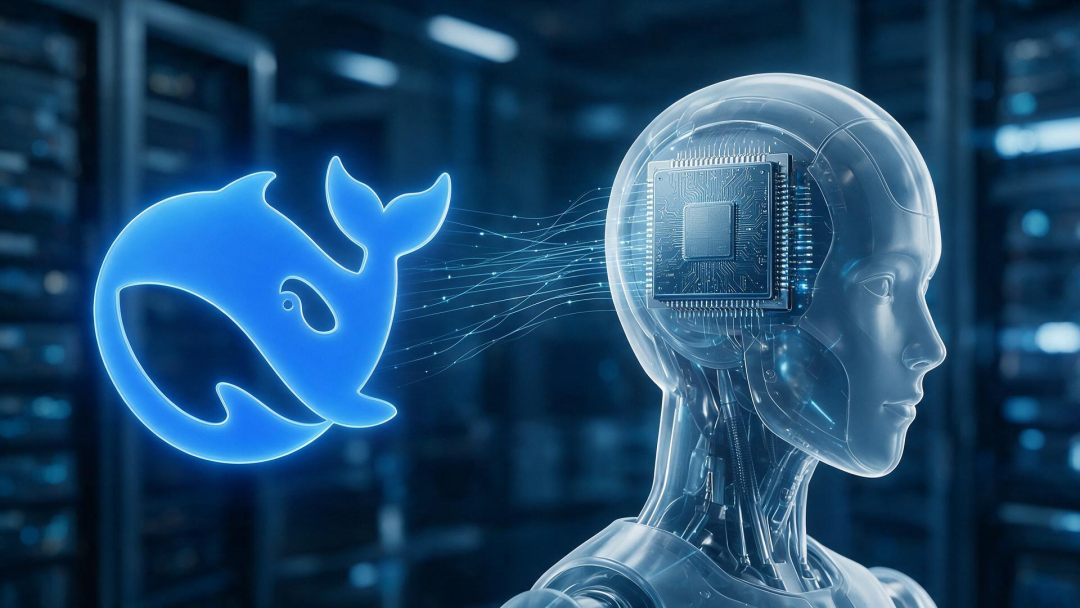
The competition in the robotics sector is shifting from 'building bodies' to 'building brains.'
On October 13, news emerged that DeepSeek has agreed to lead a seed funding round for WinverseAI, raising tens of millions of dollars, with a post-money valuation of approximately $400 million. Meituan's Longzhu Investment and other institutions have also made investment commitments. As of press time, relevant parties had not responded.
If the deal is completed, it will mark Liang Wenfeng's second investment in embodied intelligence within two months. In August this year, DeepSeek participated in Unitree Technology's IPO strategic placement with 141 million yuan.
However, the logic behind the two investments is vastly different. Investing in Unitree is a bet on 'the body'; investing in WinverseAI is about completing 'the brain.'
Hu Han: From Swin to Embodied
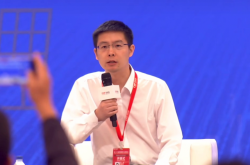
WinverseAI was founded by Hu Han, a former Tencent scientist. His career follows a clear trajectory of technological evolution.
In 2021, Hu Han, as the sole corresponding author and co-first author, published SwinTransformer, winning the Marr Prize for Best Paper at ICCV. Since then, his research focus has shifted from 'designing better vision networks' to 'how to scale models and train them stably'—a critical issue in the era of large models. After joining Tencent in 2025, he led the Hunyuan multimodal large model, spanning visual-language models, world models, and embodied VLMs.
From 'enabling machines to understand images' to 'enabling machines to comprehend the real world,' Hu Han's path aligns precisely with the core nodes of embodied intelligence.
It is worth noting that WinverseAI is not strictly an embodied intelligence company. Industry insiders point out that its business leans more toward foundational infrastructure, focusing on model acceleration technology. The goal is to enable robots to understand voice commands and handle complex tasks, rather than merely executing predefined actions.
A Bridge Already Built
Why did Liang Wenfeng choose Hu Han? The answer lies in the author list of 'SimMIM.'
This paper, published in late 2021, had eight authors. Several, including ZhenDa Xie and YiXuan Wei, later joined DeepSeek as core researchers. In other words, the group of young talents mentored by Hu Han at Microsoft Research Asia includes multiple key members of DeepSeek. They have collaborated repeatedly on papers such as SwinTransformerV2 and SimMIM, with research themes centered around self-supervised learning and model scaling.
The information cost is nearly zero—a crucial prerequisite for Liang Wenfeng's bet.
The Stimulus of GPT-6
An external variable that cannot be ignored comes from OpenAI.
In the publicly released RoboDojo tests in September, GPT-6 Astra, without fine-tuning, directly served as an action policy, achieving an average success rate of 22.48% across 42 robotic manipulation tasks and 2,100 tests, surpassing 40 publicly available robotic policies in the evaluation. In Yinhe General's evaluation, Astra, paired with π0.5 in hybrid mode, scored an average of 62.6 across ten tasks, nearly doubling the second-place score. However, the ceilings are clear. In terms of cost, a single driving session burned approximately 6.6 million tokens; in terms of real-time performance, inference latency was measured in seconds; in terms of precision, direct control saw a sharp decline in success rates for high-precision contact tasks, stopping at the meter level. These three barriers point to the same conclusion: The brain that can truly support embodied intelligence must be closely integrated with the body, run on the edge, and operate at millisecond-level control.
This is precisely the problem that model acceleration technology aims to solve. Since 2026, edge inference engines have been making dense breakthroughs: APXInf, jointly open-sourced by Tsinghua University and Infinigence AI, accelerated inference by 10.7x; Zhiyuan boosted the inference frame rate of the π0.5 model on Jetson Thor from 1.4Hz to 22.1Hz. The sink of computing power has become an industry consensus—the capability density of large models roughly doubles every 3.5 months, making edge intelligence shift from an optional solution to an industry-wide necessity.
Conclusion
What supports DeepSeek's aggressive investments is a rapidly expanding round of financing. According to media reports, DeepSeek's new funding round is at least 80 billion yuan, with a target valuation of approximately 500 billion yuan, planning to go public in early 2027.
But the risks are equally real. WinverseAI, founded just a few months ago, has yet to unveil its products, yet its seed-round valuation has already reached $400 million. The deal has not yet completed its process, and the valuation and investor list may still be adjusted.
A deeper issue lies in the fact that while model acceleration technology is indeed critical, there is a long journey from technical capability to commercial validation. Liang Wenfeng is not just betting on an individual or a team but on the judgment that 'model efficiency determines the upper limit of embodied intelligence.'
On the roadmap to AGI, embodied intelligence was supposed to be the final step. But from Unitree to WinverseAI, Liang Wenfeng is bringing this step forward.
-
![]()
Unitree and DeepSeek, Moving Towards Each Other
-
![]()
In Compliance: Zunjie Releases V800 Third-Party Report, Authoritative and Insightful
-
![]()
Is Software Vulnerable to Being Cracked by Altering Just One Byte? The Reality of AI Reverse Engineering is Less Sensational Than Trending Searches Suggest
-
![]()
DeepSeek Makes Another Move: Why is Liang Wenfeng Betting on Tencent's Former Scientist?
-
![]()
Why Does Jingneng Look Abroad for Chips After Installing 300,000 Modules in Vehicles?
-
![]()
Hello World: Key Highlights of Hello's Revolutionary Generative Driving World Model
-
![]()
Final Verdict: 'Golden September' Falters, 'Silver October' Loses Luster as Domestic Auto Market Remains Under Pressure
-
6G on the Brink of Commercialization: The Interplay of Policy, Technology, and Market Forces