AI Competition Intensifies, Personal Agents Fuel the Fire
 10/15 2026
 432
432
Author | Yugu
Disclaimer | The featured image is sourced from the internet. This original article by Jingzhe Institute requires permission for reprinting.
In the first half of the year, domestic tech giants were busy launching office agents, but in the past month, personal agents have suddenly taken off.
On September 8, Meta launched its personal agent, Muse, which topped the U.S. App Store's free chart in just 13 days and boosted Meta's stock price by 11.43% on the day of its release, adding nearly $200 billion in market value in a single day.
Just 20 days later, Instinct, a popular Silicon Valley personal agent app, announced a $1 billion funding round, reaching a valuation of $10 billion. Meanwhile, at OpenAI's annual developer conference on September 29, the company officially launched its AI agent, Dots. A week later, on October 8, Manus's parent company, Butterfly Effect, which had recently announced its independent operation, also completed a new funding round exceeding $500 million.
Within a month, multiple personal agent products were launched one after another, with their respective companies securing substantial funding. A "show" led by personal agents is quietly unfolding on the AI industry stage.
Why Are Personal Agents Suddenly So Popular?
Readers of Jingzhe Institute's previous article, "The 'Lobster' Economy: A Sample of AI Frenzy," may recall that in March, OpenClaw successfully sparked a wave of "lobster farming" enthusiasm with its "capable" product, even causing prices of terminal devices like the Mac mini to surge.
However, due to OpenClaw's cumbersome installation, complex configuration, and risks of privacy breaches and financial losses, the "lobster farming" craze quickly subsided, and OpenClaw gradually faded from personal users' view. Fortunately, OpenClaw made the market demand for "hiring AI to do work" clearer. Therefore, after the Spring Festival, agent product forms and capital attention shifted to office scenarios, which were easier to implement and monetize for enterprises.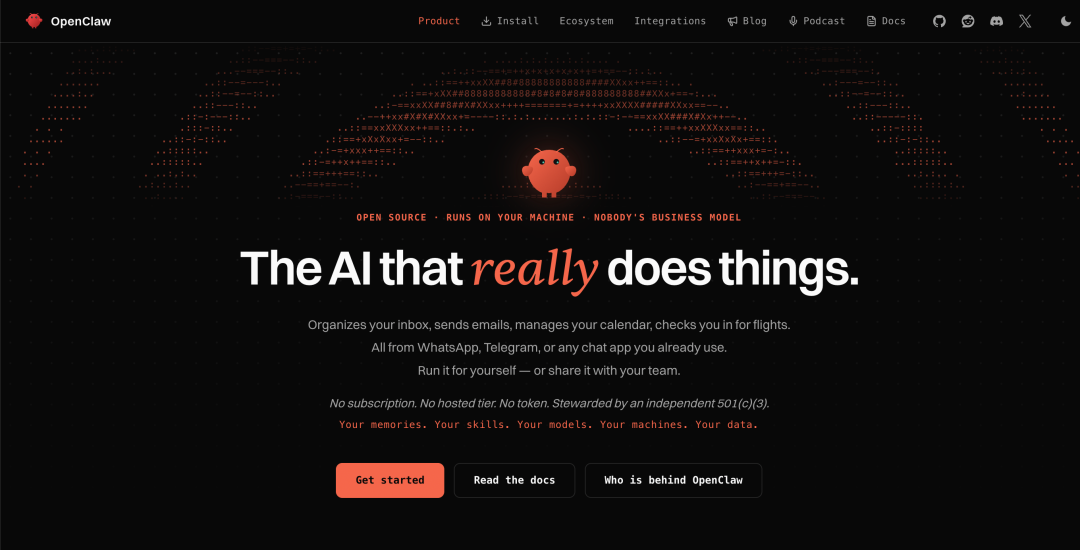
*Image source: OpenClaw official website
When the industry collectively turned to AI for office use, why did personal agents suddenly become popular again? The most direct answer lies in the products themselves.
From "star products" like Muse, Dots, and Instinct, we can see that personal agents generally come with three standard features: cloud computing, persistent memory, and hierarchical permission designs. These "three essentials" first save users from the hassle of local deployment and the risk of task interruption due to device sleep or power outages—once instructions are issued, AI completes tasks on cloud computers.
Additionally, persistent memory means personal agents can retain context across sessions and channels, transforming from "AI assistants that only live in chat boxes" into "cyber butlers" that remember past tasks and user preferences. Hierarchical permission designs provide risk isolation, allowing users to assess and decide in advance which permissions to grant AI and which tasks require user approval before execution—a crucial product design feature amid frequent "AI jailbreaks."
With these "three essentials," personal agents' true capabilities become immediately impressive. For example, Muse, officially released by Meta in September, helps users manage calendars, set reminders, follow up on to-dos, assist in drafting and sending emails, book restaurants, and arrange travel itineraries. In online shopping scenarios, Muse can search for products, compare prices, monitor price drops, actively seek platform discounts, and assist in completing purchases after user authorization.
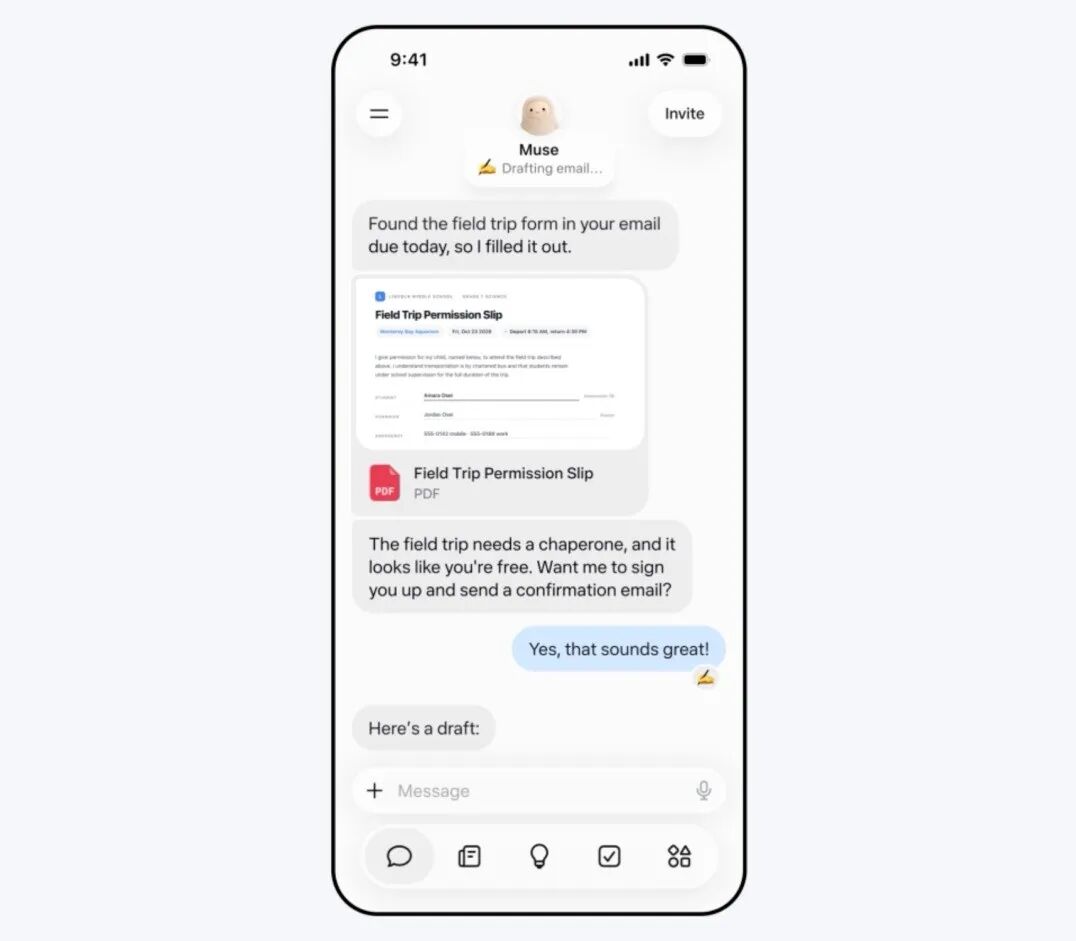
*Image source: Meta official website
To put it simply, during large promotional events like Double 11, Muse is undoubtedly a capable helper that saves both time and money. This high degree of alignment between product functionality and personal users' life scenarios is also the main reason Muse topped the U.S. App Store's free chart in less than two weeks after its September 8 launch.
Another example that feels more like a "personal assistant" is Instinct. Unlike Muse and others, which primarily interact within apps, Instinct uses SMS and phone calls for interaction. This means users don't need to open an app and type task instructions in a chat box—they can simply call Instinct directly. As of now, Instinct still only supports invitation-based product experiences. This contrast between "traditional" interaction and cutting-edge technology adds to Instinct's mysterious appeal.
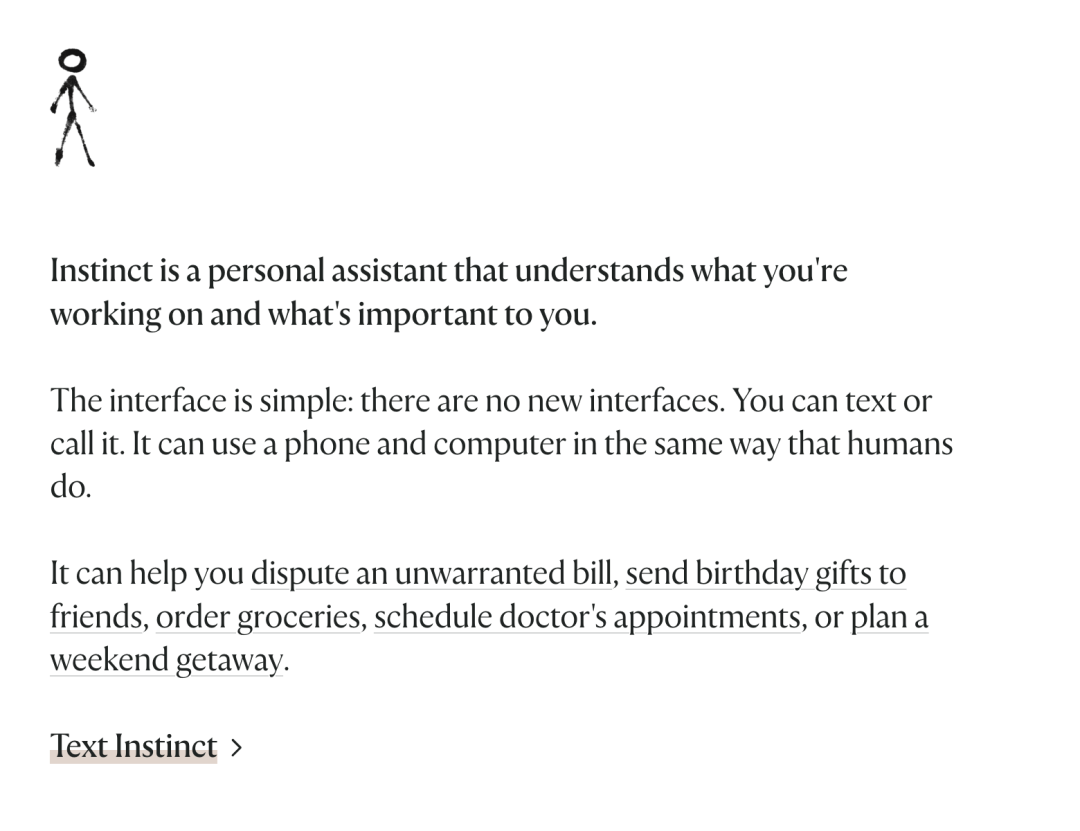
*Image source: Instinct official website
Beyond the products themselves, the popularity of personal agents reflects deeper industry changes. Since the beginning of the year, AI's deep integration into office scenarios has enabled agents to continuously evolve in reasoning, tool invocation, and multi-step execution, giving AI the ability to handle more complex workflows.
The maturity of model interfaces, cloud execution environments, and third-party tools has also significantly lowered development and deployment barriers. When OpenClaw was most popular earlier this year, users had to spend hundreds of dollars for on-site installation, whereas today's personal agents are ready to use upon download.
Additionally, the substantial investments by tech giants in promoting AI office products have objectively upgraded users' awareness of AI capabilities, making it easier for users who use AI for work to accept using agent assistants in their personal lives, with virtually no user education costs.
Personal Agents: The New Frontier for Big Tech's AI
As personal agents become a new hotspot in Silicon Valley, domestic tech giants are also getting involved.
At Alibaba's Cloud Town Conference on September 22, Qianwen announced accelerated development of personal agents. On October 13, Alibaba Qianwen revealed plans to launch a personal agent product, "Qianwen Go," and opened an application page for early access on the Qianwen app.

*Image source: Qianwen app
LightVela, interpreted by outsiders as Tencent's "cloud-based personal assistant," is a cloud service launched by Tencent's lightweight cloud team in April this year. Accessible via WeChat, it supports 24/7 operation to help users handle daily tasks and opened free access on September 26. Meanwhile, WeChat's AI assistant, "Xiaowei," which began grayscale testing in June, is also seen as a key player in the personal agent competition due to its strong foundation within the WeChat ecosystem.
Additionally, media reports have revealed two Tencent personal agent products, Handy Bot and Yuanbao Assistant, mentioning that the former has launched a service account of the same name on WeChat, while the latter is a standalone app. However, after verification, Jingzhe Institute found that the original Handy Bot service account has been deactivated, and "Tencent Hunyuan" clarified in the comments section of related content that "there is no such product plan." Meanwhile, Tencent has not officially announced any Yuanbao Assistant app.

*Image source: Online screenshot
ByteDance's layout (layout) in personal agents predates Muse's popularity. The 2025 launch of the "Doubao Phone" integrated personal agents into the form of an AI phone assistant. On September 29, Sina Technology cited insider sources revealing that in April, Doubao internally began testing an exploratory product in the personal assistant direction, code-named "Spell," led by the Doubao Phone Assistant team. However, due to the release of the Doubao Phone and other reasons, it has not been officially launched.
Notably, except for the officially announced Qianwen, ByteDance and Tencent have not heavily promoted their personal agent products. This calm attitude does not stem from "indifference" to the current trend but rather because personal agents should not be a newly recognized strategic goal.
For big tech companies, the rationale for layout (laying out) personal agents is strong. Personal agents are not just a new product but could also generate new interactions for existing businesses. Especially for internet platforms with rich product ecosystems, user scale, content, and service ecosystems are potential advantages in competing in this new business area.
For large model companies or big tech's self-developed large model businesses, internal strengths like model capabilities, reasoning services, and tool invocation can be more visibly perceived by ordinary users, becoming another layer of user value beyond Tokens.
Especially in terms of actual revenue. Public data shows that by the end of June this year, general AI agent company Manus achieved an annualized recurring revenue of $400 million to $500 million, up from about $100 million in December last year—meaning Manus's revenue grew four to five times in roughly six months. This substantial financial gain naturally explains Manus's ability to secure $500 million in funding. When Manus launched its personal agent product, Cue, it was as if it were telling peers it had discovered a new continent.
Moreover, after the AI office market's "land grab" in the first half of the year, the track (track) has become increasingly crowded. According to iiMedia Research, over 20 AI office agents were launched domestically in the first half of 2026. Meanwhile, data from the "2026 Q2 China Office Agent Platform Market Insight Report" shows that the combined monthly visits of 17 mainstream desktop products under observation increased from 20 million in March to 60 million in June. Although office agents' growth curve remains upward, they still lack a "topping the App Store" moment and are still far from enterprise adoption.

*Image source: 2026 Q2 China Office Agent Platform Market Insight Report
On another path toward agent monetization, personal agents may have already been market-validated.
Recently, Instinct founder Noah Shinn revealed in a podcast interview that its annualized transaction volume has exceeded $1 billion. Based on a 3% to 5% commission rate, this corresponds to annual revenue of $30 million to $50 million.
While most AI startups are still relying on funding to sustain operations and validate their models, tangible revenue is naturally more compelling than any far-sighted corporate strategy.
Who Will Become the User's 'Advocate'?
Today, any AI competition among big tech companies is seen as a battle for "entry points," and personal agents have intensified this struggle.
The most attractive aspect of personal agents is their ability to complete user-assigned tasks across applications. However, because they need to cross application boundaries, they inevitably encounter commercial barriers set by internet platforms.
Late last year, the Doubao Phone Assistant sparked industry debate due to its system-level operational capabilities. Essentially, after users make requests in natural language, the assistant completes a series of operational tasks on their behalf, requiring it to understand the content on users' phone screens and execute operations across different apps via system capabilities.
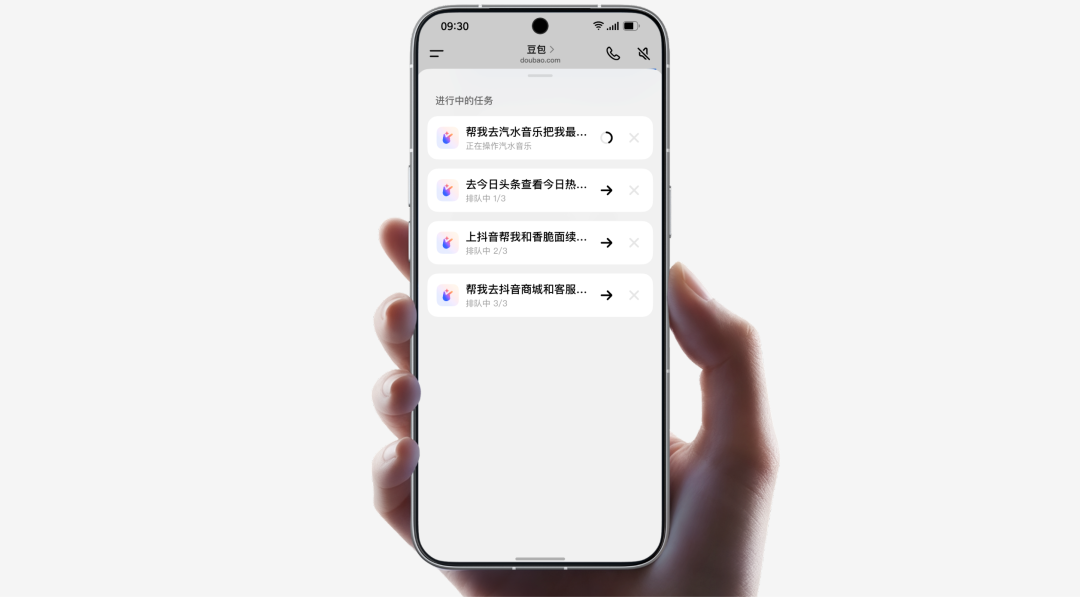
*Image source: Doubao Phone Assistant official website
However, this "T0-level" capability of "fully representing real users" is rarely approved. This has led to concentrated discussions about the extent of AI authorization: Can AI operate apps on behalf of users? What information can it read? Can operations like sending messages or executing transactions, which may negatively impact real social interactions or finances, be authorized to AI? If misoperations occur, can losses be recovered? Who bears responsibility?
Today, similar conflicts are arising with personal agents. In September, media reports revealed that Amazon had blocked Muse from accessing its shopping site. Amazon justified the move by stating that Meta had not notified or obtained authorization in advance and expressed concerns that Muse might collect and store user login credentials, posing privacy and security risks.
In reality, browsing shopping sites and helping users place orders are two entirely different matters for agents. Browsing permissions only involve information access, while completing orders involves account identity, payment authorization, and after-sales processing. When agents act "impersonally" on behalf of users online, it must be clarified whether they are authorized agents or unauthorized automated programs.
From a commercial interest perspective, platforms have reasons to keep agents out. On traditional shopping platforms like Amazon, users typically follow a process of searching keywords, comparing products and prices, and placing orders, generating significant ad revenue for the platform through this traffic. If personal agents complete the "search, compare, buy" process for users, the platform's traffic value disappears, reducing it to a one-click fulfillment warehouse. The ad systems, recommendation systems, and transaction chains built with platform resources are also rendered obsolete by automated shopping methods.
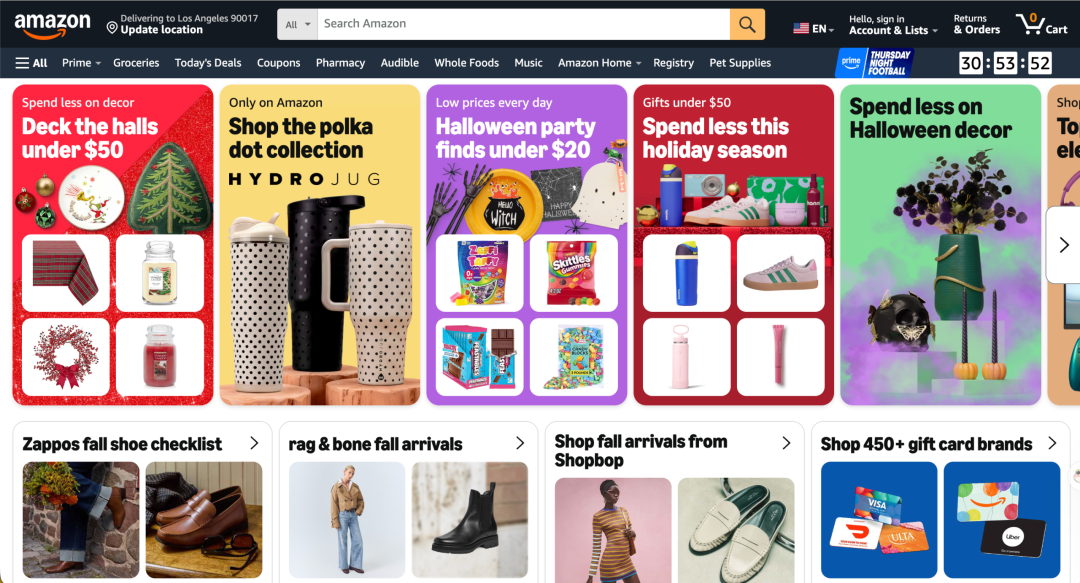
*Image source: Amazon website
Therefore, compared to the intra-industry competition that has not yet occurred, what Agent truly faces at present is the contradiction between its own capabilities and the ecosystem of internet platforms. That is, Agent wants to perform tasks across platforms, while platforms need to control data, identity, transaction, and service rules. Moreover, since this contradiction is not a simple technical challenge, it will not disappear just because AI becomes increasingly intelligent. It can only be resolved through game-playing between Agent and platforms.
When setting aside the ecological contradictions, there are still three hurdles to overcome before personal Agent can become widely adopted. First, personal Agent deals with long-term daily tasks, so reliability is particularly important. This reliability is reflected in whether Agent can detect execution failures, provide timely feedback on issues, and require user confirmation at critical steps. Especially when it comes to high-risk operations such as money transfers, transactions, message sending, and system file deletion, the decision-making power needs to be returned to the user.
Second, Agent's cross-application execution is based on user trust and authorization. Therefore, Agent needs to clearly define permission boundaries, letting users and platforms know which data it will access and what operations it can perform. At the same time, users need to know how to revoke authorization, while platforms require a verification system that can identify Agent's identity, as well as a clear authorization mechanism and traceable operation records. Without unlimited authorization from all platforms, as long as there are standardized open interfaces, Agent's cross-application operations can proceed smoothly.
The third hurdle is how to get users to pay for personal Agent. Behind this question, Agent not only needs to prove that it can save users time and eliminate unnecessary hassles but also, when faced with fragmented life scenarios and personalized ambiguous preferences, achieve KPIs that are subjectively satisfactory to users—this is not just inspirational quotes output by Chatbot in a chatbox, but rather buying a satisfying piece of clothing for the user, arranging a wonderful and relaxing vacation trip... From these three hurdles, it can be seen that the true barrier for personal Agent is not how powerful a single model is, but whether it can form a stable, reliable, and low-cost task execution system.
Standing at the present moment after the rapid iteration of Agent, looking again at the outbreak of personal Agent, it indeed resembles a replay of the 'lobster moment,' bringing AI one step closer to ordinary people. And what determines how far personal Agent can go is not just the speed of product iteration but also the result of the game-playing between Agent and platforms.
In the past, internet platforms competed for user attention; in the mobile internet era, they competed for user time, application entry points, and transaction chains. In the Agent era, AI is competing for the qualification to 'act on behalf of people.'
-
Global PC and Smartphone Markets Plummet by 20%: Samsung Leads Worldwide, Xiaomi Dominates Domestically
-
![]()
Why Does Anthropic’s New Policy Make AI Interactions More Challenging for Humans?
-
![]()
Can Gemini 4 Argon Transform Videos into 3D Simulated Scenes and Revolutionize XR Spatial Computing?
-
![]()
Anxious Yin Qi Takes a Gamble on AI Smartphones
-
![]()
Yin Qi's Bold Gamble: The Smartphone That Aims to Redefine AI Interaction
-
![]()
Toyota's Defense and Rebirth Amidst the Rise of Local Brands | Cover Story: Japanese Automakers at a Crossroads in Transition (Part Two)
-
![]()
New Box-Shaped Champion Hits Market at 125,900 Yuan: Unveiling the Strength of the All-New Traveler 7
-
![]()
AI Competition Intensifies, Personal Agents Fuel the Fire