Yin Qi's Bold Gamble: The Smartphone That Aims to Redefine AI Interaction
 10/15 2026
 339
339
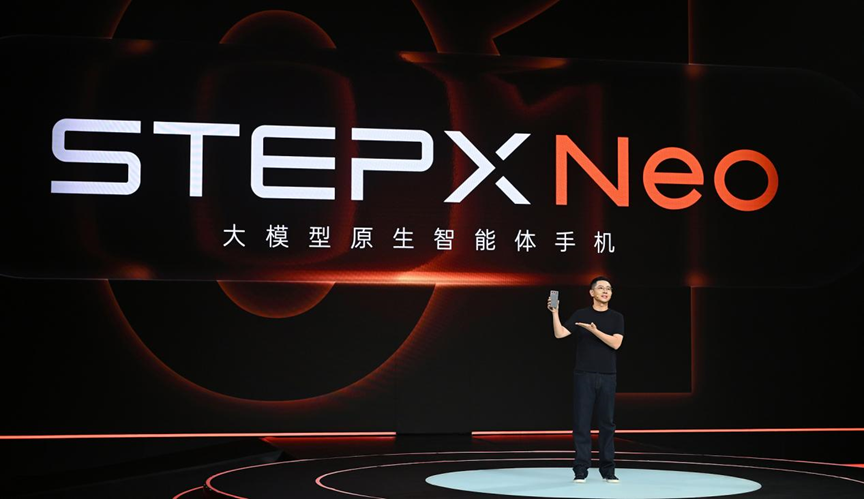
What appears to be a logically self-contained and comprehensive solution remains in the experimental phase of 'system architecture plus prototype validation.' Critical challenges—such as cross-application scheduling permissions, third-party app interface stability, and fault tolerance in complex task chains—have yet to undergo rigorous large-scale user testing.
Author | Yu Xi
Editor | Yang Ming
In 2007, Steve Jobs transformed personal computing by putting the internet in everyone's pocket through a glass screen, fundamentally altering human-information interaction. For nearly two decades, while smartphone hardware has evolved dramatically, the core interaction paradigm remains unchanged: users initiate actions, and devices respond passively.
Now, agent-based smartphones seek to disrupt this decades-old dynamic. If devices could understand user intent and execute cross-application actions, why force manual app switching?
On October 13, Jieyue Xingchen officially unveiled its first large model-native agent smartphone, STEPX Neo, aiming to seize this technological inflection point. This launch came less than ten months after Yin Qi assumed leadership as Chairman and precisely 100 days after STEPX Neo's controversial debut, which critics dismissed as a 'PPT smartphone.'
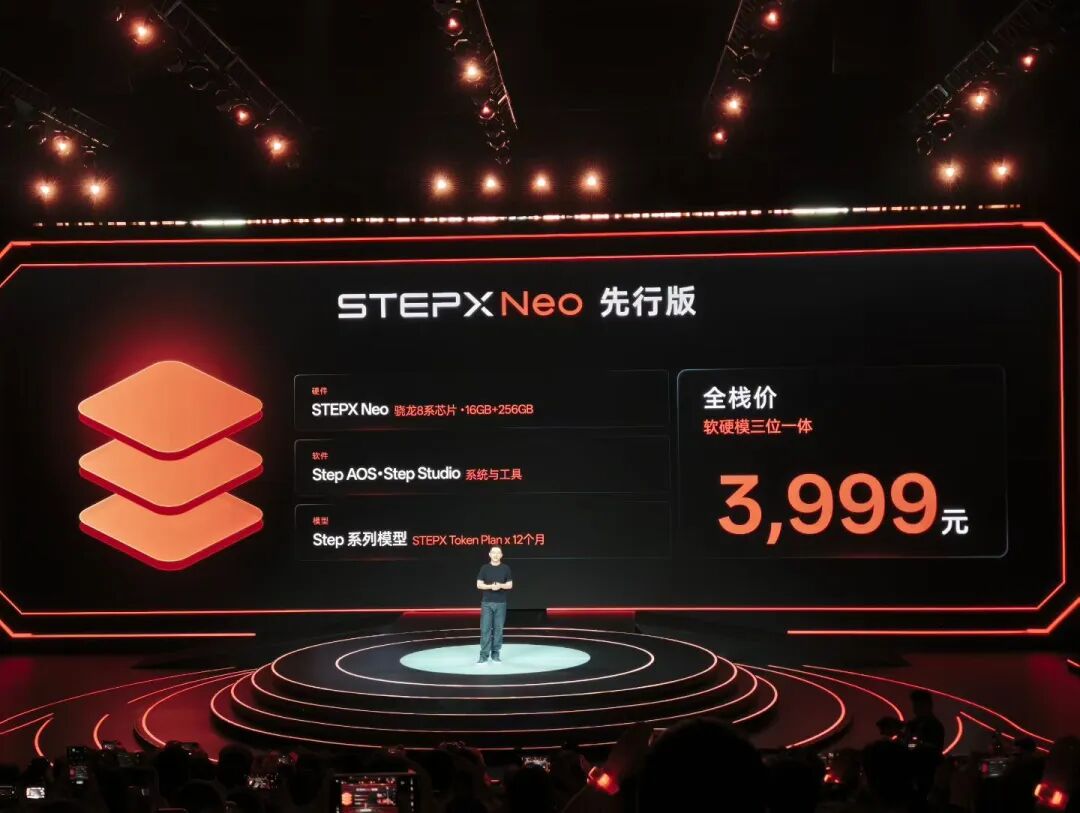
One hundred days earlier, Yin Qi displayed three pivotal statements on stage: 'Late entry means irrelevance. Premature action wastes resources. Inaction guarantees obsolescence.' This encapsulates Jieyue Xingchen's current predicament—a large model company squeezed between public competitors, ecosystem pressures from tech giants, and a cooling smartphone market. Yet it chose the riskiest path: building its own hardware, developing an independent OS, and defining proprietary agent capabilities.
Yin Qi's anxiety is palpable. With 2025 revenue below 500 million yuan and projected 2026 revenue at 1.2 billion yuan—against over 20 billion yuan in funding and a 12 billion USD valuation target—the company needs a revolutionary product to bridge this gap. But STEPX Neo must answer far more than commercial viability.
1. From Guest to Host: STEPX's Paradigm Shift
While some speculate STEPX Neo's UI borrows from Meizu's Flyme system, its true innovation lies in Step AOS 1.0—what Jieyue calls the 'world's first agent-native operating system.' Yin Qi explains: 'Integrating agents into existing systems makes them permanent guests. Only by building agent-first architecture can they become native inhabitants.' This reveals Jieyue's fundamental divergence from mainstream AI smartphone approaches.
Current AI smartphones typically overlay AI capabilities onto Android/iOS. AI assistants function as apps or background services, manipulating third-party apps through simulated human interactions. This approach falters with complex tasks: while single-step operations succeed, multi-step task chains often collapse. Traditional OS architectures—designed for explicit user app launches—deny agents fundamental scheduling permissions and cross-app data access.
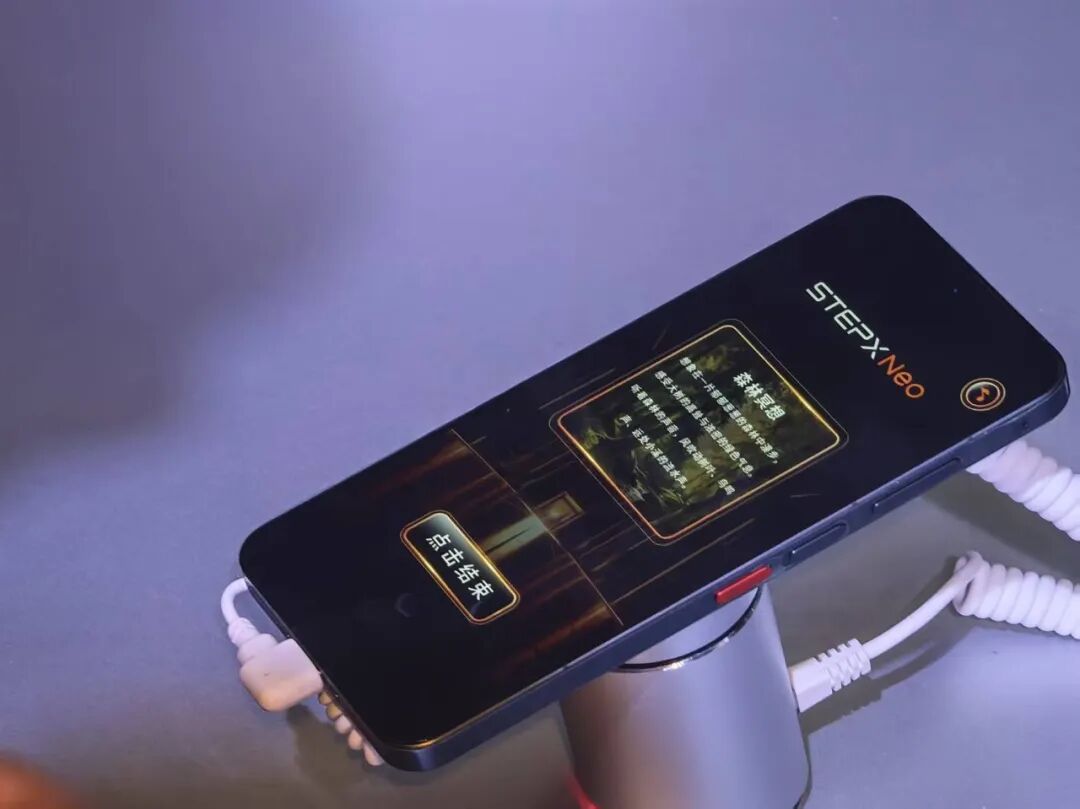
Step AOS reimagines this logic from the ground up. Compatible with Android, Linux, and RTOS, it adds an agent runtime layer that uniformly schedules edge and cloud computing resources, enables cross-app data connectivity, and decomposes system/app functions into atomic units for agent invocation. Jieyue claims this 'dual-domain, three-step' memory structure handles simple tasks locally while complex operations leverage cloud reasoning, with undo/rollback capabilities for misoperations.
Technically, this forms a self-contained solution. However, it remains in the 'system architecture plus prototype validation' phase. Jieyue admits 70% completion, with critical variables—cross-app scheduling permissions, third-party interface stability, and complex task fault tolerance—untested at scale.
The day after launch, Doubao Mobile Assistant published a list of 151 apps (including WeChat, Taobao, Meituan, and Alipay) that block GUI automation. This challenge faces all agent systems relying on 'screen reading + simulated clicks.' Step AOS attempts to bypass this by invoking system-level atomic capabilities, but super apps' willingness to open interfaces remains uncertain.
More fundamentally, edge-side chip capabilities currently mismatch 'agent smartphone' product definitions. Yin Qi concedes: 'Our current edge chips can't support mass-market agent demands.' Step 5 Preview requires 27B activation parameters, far exceeding current edge chip capacities at efficient levels. This forces STEPX Neo's Amoo agent to rely heavily on cloud processing—making its 'edge-side agent' claim more hybrid than pure.
This reflects an industry-wide bottleneck. Yet by claiming 'native' status, Jieyue invites stricter scrutiny. If Step AOS merely adds agent middleware to Android, the question persists: Is it truly native or just another guest?
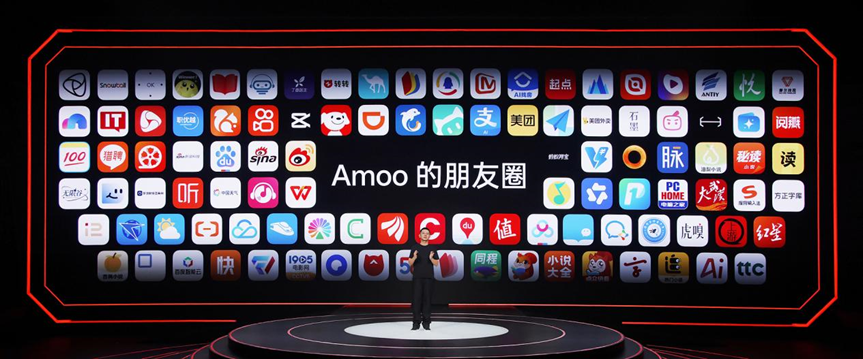
Objectively, agent-native smartphones represent a bold industry experiment, and STEPX Neo deserves credit as the first contender. However, it must overcome familiar barriers: ecosystem authorization, system completion, and user retention. First-day sales matter less than WeChat/Alipay's risk controls, third-party cross-app execution rates, and 90-day active user metrics.
2. Beyond Cloud Water Sellers: A Model Company's Terminal Ambitions
Initially grouped among the 'AI Six Little Tigers,' Jieyue Xingchen remained obscure in its first year. By 2024, it began gaining technical recognition through multimodal model releases, yet failed to create consumer blockbusters. With Kimi gaining traction earlier and DeepSeek/major players blocking its path, Jieyue missed the 'Hundred-Model War' window for market presence and brand recognition—impacting financing and IPO timelines.
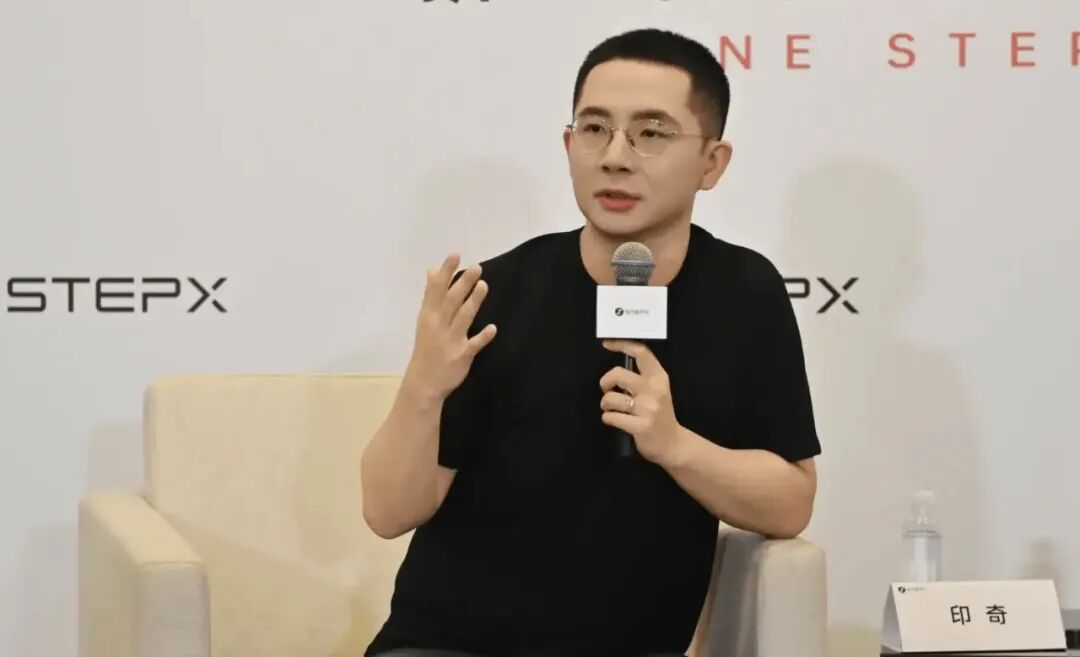
The turning point came in January when Yin Qi became Chairman, bringing Megvii's IPO experience, Qianli Technology's 'AI + Automotive' resources, and sharper capital market perspective. His vision rejects hardware profit margins or pre-installed app revenue. Instead, he wants users to delegate daily tasks to Amoo—driving model invocations, service revenue, and recurring income beyond hardware.
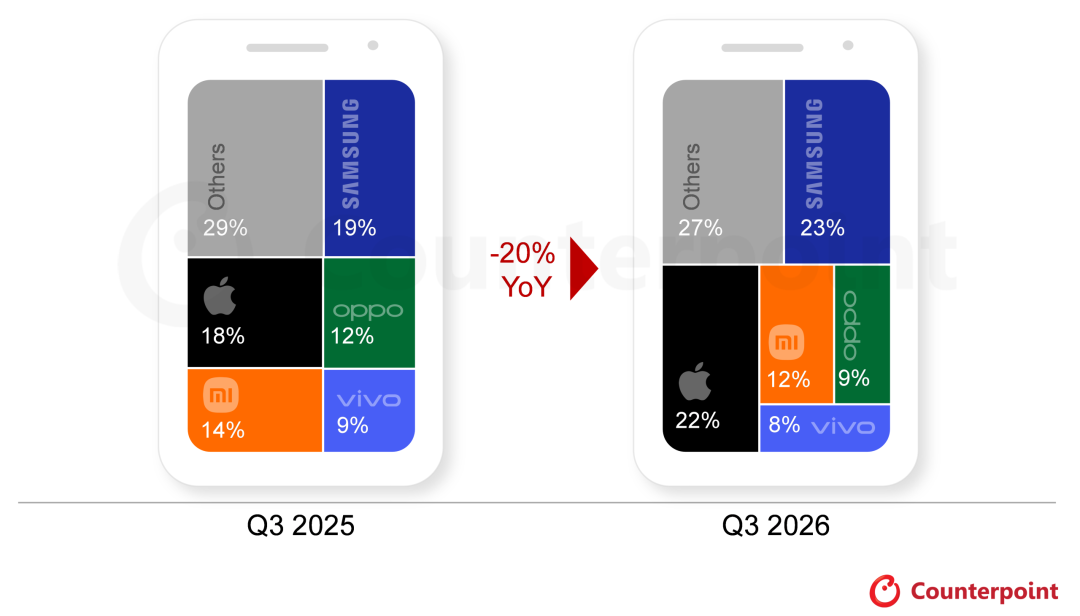
But high-frequency tasks require deep app interfaces, which depend on user scale. User acquisition needs interface access, which needs users—a classic cold-start dilemma in a saturated market. On October 12, Counterpoint reported a 20% YoY decline in Q3 2026 global smartphone shipments due to memory shortages—the worst third-quarter performance in 14 years.
Amid prolonged replacement cycles, manufacturers desperately need new selling points. STEPX Neo's 'agent-native' narrative sounds compelling, but market testing will determine if agents alone can drive upgrades.
Within the 2026 AI smartphone landscape, STEPX Neo represents just one evolutionary path. Domestic players have diverged into four approaches: Huawei's full-stack self-research (chips, systems, models); Honor's Alibaba-powered system agents; Nubia's ByteDance-lightweight ODM hardware; and Jieyue's model company native path. This divergence reflects deeper battles over who defines smartphones' 'primary AI gateway.'
From a broader perspective, this gateway competition is reshaping smartphone industry dimensions. Yet when all devices become 'AI smartphones,' AI itself ceases to differentiate. The true watershed lies in defining the primary gateway—whether through manufacturer system agents, internet giant super-app agents, or model company native agents.
Jieyue bets that confinement to others' terminals guarantees failure in resource allocation. This path demands simultaneous excellence in hardware R&D, supply chain, channels, after-sales, and branding—any weakness could undermine early reputation. Yin Qi refuses to remain a mere cloud water seller, but water sellers know their customers; homebuilders must first persuade occupants.
3. Capital Narrative Before IPO: Jieyue's Strategic Gambit
Three months ago, Yin Qi unveiled STEPX Neo at a launch event lacking hardware specs, pricing, or release dates—prompting industry labels of 'PPT smartphone.' At the time, Jieyue faced critical Hong Kong IPO preparations, and the event served as a pre-roadshow for investors. As IPO architect, Yin Qi needed to prove Jieyue could evolve from model supplier to next-gen terminal gateway.
STEPX carries mission-critical weight beyond single-device sales. It must validate three propositions: model companies can secure system gateways; agents drive high-frequency services; and this闭环 (closed loop) supports Jieyue's valuation.
This aligns with industry trends. Over the past year, China's large model sector shifted from cloud to edge strategies. The logic is harsh: pure cloud-side API/Token sales face low profits, clear ceilings, and entrenched competition. The cloud API price war turned brutal: DeepSeek slashed cache-hit input costs to 0.02 yuan per million Tokens. While Jieyue's Step 5 Preview achieved median performance, it lagged several times behind. On September 10, DeepSeek's announcement triggered Zhipu and MiniMax share drops. Zhipu's MARR reached 1.6 billion USD (86.5% from APIs), while MiniMax served 2M+ enterprise clients—leaving little room for latecomers.
Thus, model companies sought new narratives. Yin Qi positions 'AI + physical terminals' as AGI's core path, embedding models in four scenarios: smartphones, automobiles, embodied intelligence, and IoT. Each represents vast markets, but Jieyue chose the most challenging path.
Hardware demands capital intensity, long cycles, and low margins. Smartphone makers need tens of millions of shipments to amortize R&D/supply chain costs. Jieyue lacks retail channels and C-side brand experience, with STEPX Neo entirely ODM-manufactured while Jieyue handles system/model adaptation.
Compared to listed Zhipu/MiniMax, Jieyue hasn't disclosed developer scale; against Huawei/Xiaomi's decade-plus consumer electronics depth, its hardware execution remains unproven. Media reports reveal industry veterans warned against self-developing smartphones due to cross-sector R&D/supply chain/quality control risks.
Deeper still, the large model industry's pricing logic shifted from capabilities to implementation/revenue. Capital markets no longer pay for benchmark-chasing models.
Following its initial public offering (IPO), MiniMax witnessed a tumultuous journey in terms of market value, plummeting by over 83% owing to the absence of distinctive application scenarios and sluggish growth in consumer-side users. In stark contrast, Zhipu's GLM5.2 swiftly gained popularity, propelling its market capitalization to nearly tenfold that of MiniMax. This underscores the fact that the fundamental pricing rationale in the large model industry consistently hinges on technological barriers and practical implementation. Capital narratives constructed solely on PPT hardware and niche concepts fail to sway secondary markets in the long run.
StepOn is striving to tread a middle ground by having "independent model vendors develop their own terminals." It refrains from delving deeply into government and enterprise services and APIs like Zhipu, nor does it rely on consumer-facing products to carve out a space in users' minds like Moonshot AI. Furthermore, it does not aim to build a developer ecosystem through open-source models and ultra-low pricing strategies akin to DeepSeek. Instead, StepOn has placed its bets on a closed-loop integration of "models + systems + hardware," aspiring to attract users, gather data, and drive token consumption through terminals, ultimately forging a sustainable business cycle.
Nevertheless, each component of this closed loop confronts formidable rivals. At the model level, StepOn's Step 5 Preview still trails behind global frontrunners in terms of benchmark scores and usage volume. At the system level, Step AOS endeavors to penetrate devices from mobile phone manufacturers, but these manufacturers are unlikely to relinquish their bargaining power without a struggle. At the terminal level, the mobile phone market is enduring its chilliest quarter in nearly 14 years, and the survival prospects for STEPX Neo, as the inaugural model from a fledgling brand, are visibly dwindling.
In his external communications, Yin Qi remarked, "The path ahead remains exceedingly arduous, but this might precisely be the most captivating aspect of AI entrepreneurship." While this statement serves as a dignified self-motivator for an entrepreneur, within the sphere of business logic, it essentially concedes that StepOn has opted for the most challenging route. Yin Qi is not placing his bets on a single mobile phone; rather, he is wagering on whether a model company can establish its own gateway beyond the realms controlled by others.
Whether this gateway is valued at $12 billion will be determined by the market in the forthcoming months.
END
Producer: Huang Qiangqiang
-
Global PC and Smartphone Markets Plummet by 20%: Samsung Leads Worldwide, Xiaomi Dominates Domestically
-
![]()
Why Does Anthropic’s New Policy Make AI Interactions More Challenging for Humans?
-
![]()
Can Gemini 4 Argon Transform Videos into 3D Simulated Scenes and Revolutionize XR Spatial Computing?
-
![]()
Anxious Yin Qi Takes a Gamble on AI Smartphones
-
![]()
Yin Qi's Bold Gamble: The Smartphone That Aims to Redefine AI Interaction
-
![]()
Toyota's Defense and Rebirth Amidst the Rise of Local Brands | Cover Story: Japanese Automakers at a Crossroads in Transition (Part Two)
-
![]()
New Box-Shaped Champion Hits Market at 125,900 Yuan: Unveiling the Strength of the All-New Traveler 7
-
![]()
AI Competition Intensifies, Personal Agents Fuel the Fire