Anxious Yin Qi Takes a Gamble on AI Smartphones
 10/15 2026
 356
356
While the seemingly logically sound and comprehensive solution is still in the "system solution plus prototype verification" phase, issues like cross-application scheduling permissions, third-party app interface stability, and fault tolerance rates for complex task chains have yet to undergo extensive user testing.
Author | Yu Xi
Editor | Yang Ming
In 2007, Steve Jobs put the internet in everyone's pocket with a glass screen, revolutionizing the relationship between humans and information. In the nearly two decades since, smartphone designs have evolved countless times, but the interaction logic remains unchanged: users take the initiative to operate, and the phone responds passively.
Now, AI agent smartphones aim to redefine this relationship: if the phone can understand intentions and execute tasks across applications, why should users manually open each app?
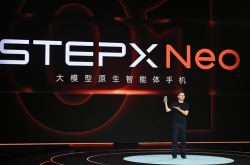
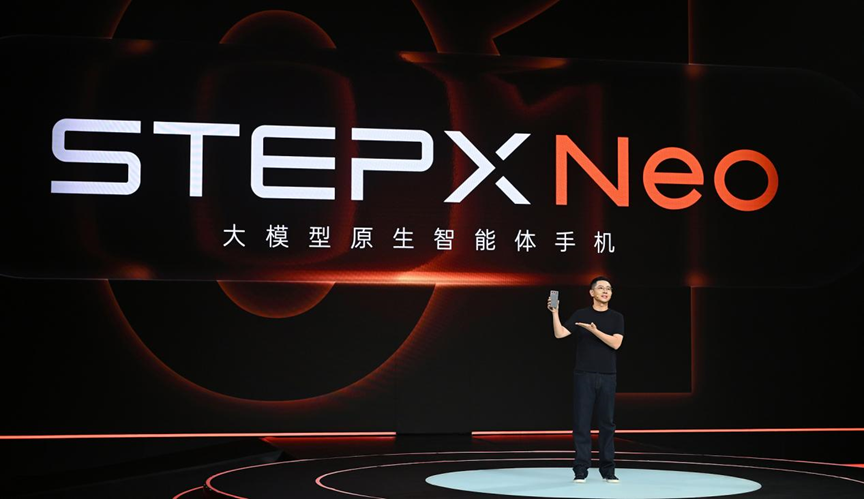
On the evening of October 13, Jieyue Xingchen officially launched its first large model-native AI agent smartphone, the STEPX Neo, attempting to lead at this technological turning point. This moment came less than ten months after Yin Qi took over as Chairman of Jieyue Xingchen and exactly one hundred days after the STEPX Neo's debut, which was initially dismissed by the industry as a "PPT smartphone."
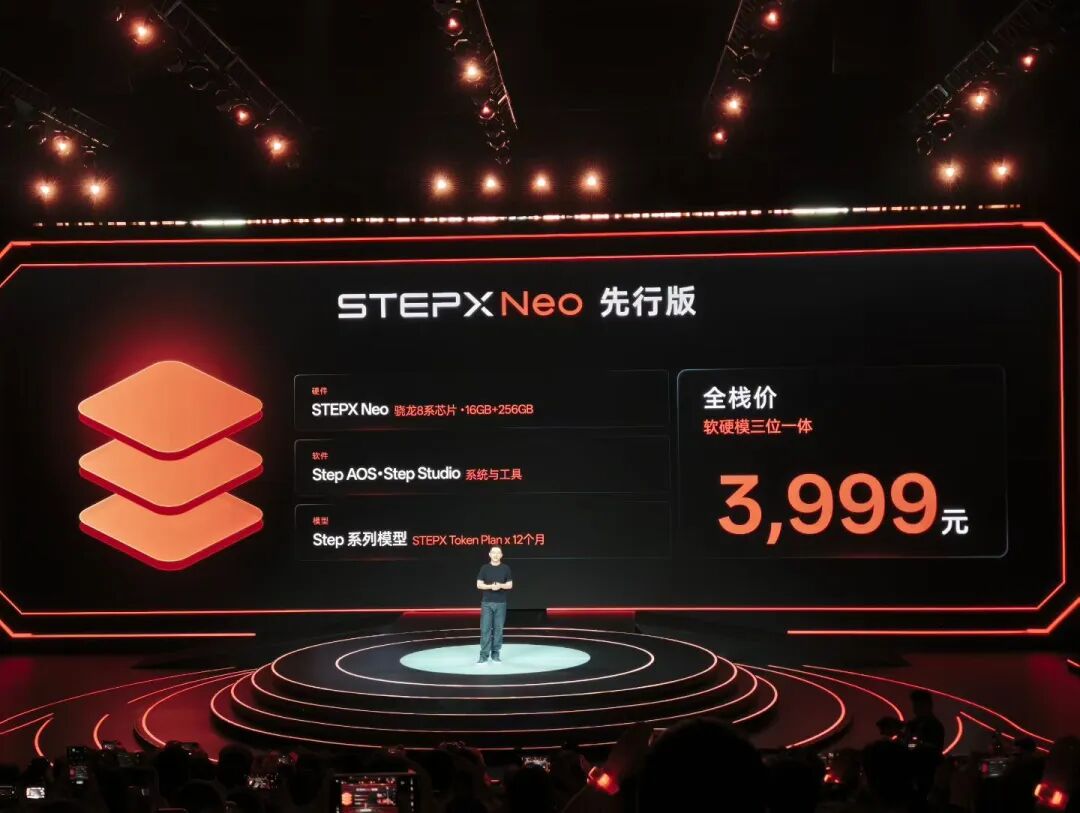
One hundred days ago, Yin Qi displayed three lines of text on the large screen at the terminal launch event: "If you're late, you might as well not do it. If you're early, you might work in vain. If you don't do it, there will be nothing left to do." This statement encapsulates Jieyue Xingchen's current predicament—a large model company caught between competitors going public, ecosystem squeeze from major players, and a cooling smartphone market. It has chosen the most challenging, risky, and least model-company-like path: building its own smartphones, writing its own operating system, and defining its own AI agents.
Yin Qi's anxiety is real. Jieyue's 2025 revenue was less than 500 million yuan, with an expected 1.2 billion yuan in 2026, yet it has raised over 20 billion yuan in funding and targets a valuation of 12 billion USD. The enormous gap between revenue and valuation requires a smartphone capable of telling a new story to support it. But this phone must answer far more than just "Can it sell?"
1 From Visitor to Native: STEPX's Paradigm Shift
While some media and netizens have questioned whether the STEPX Neo's UI interface is a modified version of Meizu's Flyme system, its core selling point is not whether it incorporates Meizu assets or the Snapdragon 8-series chip, nor its transparent dual-tone body and dot-matrix back screen. Instead, it is the Step AOS 1.0, which Jieyue defines as the "world's first AI agent-native operating system."
Yin Qi offers a vivid metaphor: "Opening a door for the AI agent in an old system makes it a visitor; building a house for the AI agent makes it a native." This precisely reveals the fundamental difference between Jieyue and mainstream AI smartphone manufacturers.
Most AI phones on the market today essentially overlay an AI capability shell on top of Android or iOS. AI assistants exist as apps or background services, operating third-party applications by simulating human clicks and swipes through accessibility interfaces. This model has a fatal flaw: while single-step operation success rates are acceptable, they plummet with longer task chains. This is because traditional operating systems' computing power, memory, permissions, and background management are designed around users actively opening apps, leaving AI agents without bottom-level scheduling permissions or cross-app data access.
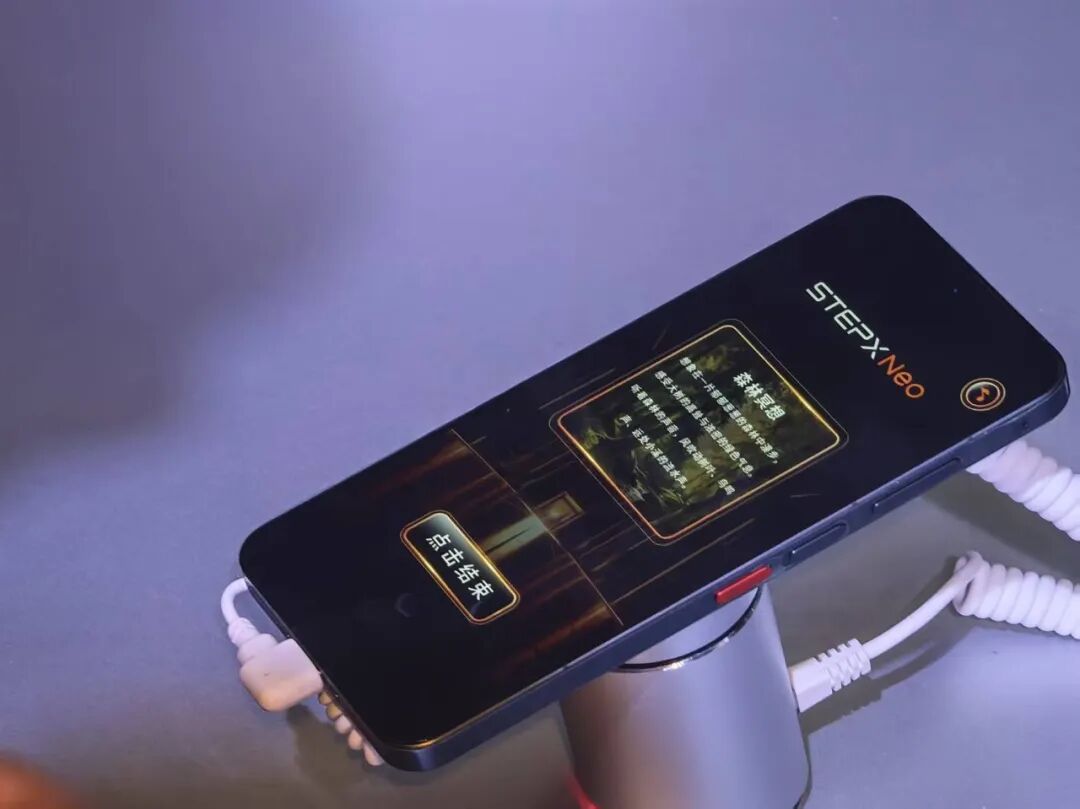
Step AOS attempts to rewrite this logic from the ground up: it is compatible with Android, Linux, and RTOS, adding an AI agent runtime layer on top of traditional systems to uniformly schedule edge and cloud computing power, connect cross-application data, and break down system and app capabilities into atomic units for AI agent invocation. According to Jieyue, it adopts a "dual-domain three-step" memory structure, with simple tasks responding locally and complex tasks reasoning in the cloud, allowing misoperations to be withdrawn and rolled back.
From a technical perspective, this is a logically sound and comprehensive solution. However, the problem is that this solution currently remains in the "system solution plus prototype verification" stage. Jieyue officially admits that the completion rate is about 70%, and critical variables determining the user experience—such as cross-application scheduling permissions, third-party app interface stability, and fault tolerance rates for complex task chains—have yet to undergo extensive user testing.
The day after the launch event, Doubao Mobile Assistant published a rejection list showing that 151 applications, including WeChat, Taobao, Meituan, and Alipay, refused GUI automation operations. This is not unique to Doubao but a wall that all AI agents attempting to take over smartphones through "screen reading + simulated clicks" have crashed into. Step AOS aims to bypass GUI automation by invoking system-level atomic capabilities, but whether super apps are willing to hand over their interfaces remains uncertain.
More realistically, a structural mismatch exists between the current capabilities of edge-side chips and the product definition of an "AI agent smartphone." Yin Qi himself admitted in an interview: "Our current edge-side chips cannot support the future demands of a large number of users for the entire AI agent." The activation parameters for Step 5 Preview are 27B, yet current edge-side chips' carrying capacity falls far short of this level while maintaining acceptable efficiency.
This means that the Amoo AI agent running on the STEPX Neo still needs to offload many computational requests to the cloud. The so-called "edge-side AI agent" is, at this stage, closer to a hybrid "edge-cloud collaborative" form.
Indeed, this is a common bottleneck for the entire industry. However, by choosing to define itself as "native," Jieyue must endure matching scrutiny. If Step AOS ultimately merely adds an Agent middleware layer on top of Android, the question remains: Is it a native or a visitor?
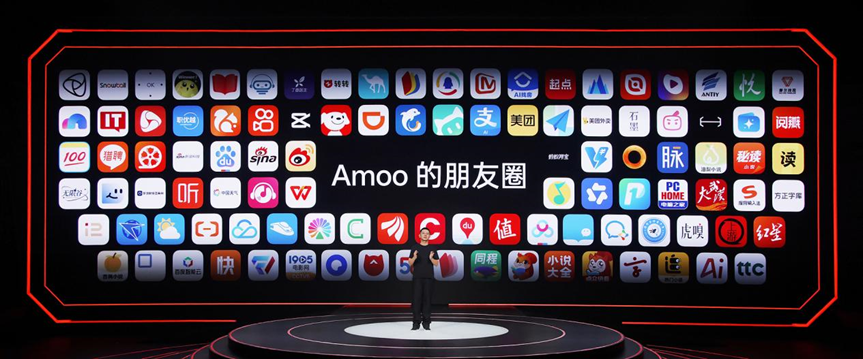
Objectively speaking, AI agent-native smartphones represent a new direction for industry exploration, and the STEPX Neo is the first product to step into the spotlight, making this attempt worthy of recognition. However, it must still overcome the same hurdles: ecosystem authorization, completion, and retention rates. First-sale numbers are just the first hurdle; the real answers will emerge from WeChat and Alipay's risk control actions, third-party real-world cross-app execution rates, and the weekly active users after 90 days.
2 Unwilling to Be a Cloud-Side Water Seller: The Terminal Ambitions of a Model Company
Jieyue Xingchen was initially listed among the "AI Six Little Tigers" but remained largely invisible in its first year. By 2024, it began breaking its silence, continuously releasing a series of models and establishing its technical position as the "multimodal champion."
Despite gaining a clear technical label, its consumer-facing applications never became hits. With Kimi gaining traction earlier and DeepSeek and major players blocking its path, Jieyue's consumer line essentially failed, missing the golden window for market presence and brand recognition during the "Hundred Models War," which also impacted its subsequent funding and IPO timeline.
That changed in January this year when Yin Qi became Chairman of Jieyue Xingchen, overseeing strategic rhythm and technical direction. This "dual-role chairman" brought experience from Megvii Technology's two failed IPO attempts, Qianli Technology's "AI + automotive" industrial resources, and a stronger capital market perspective.
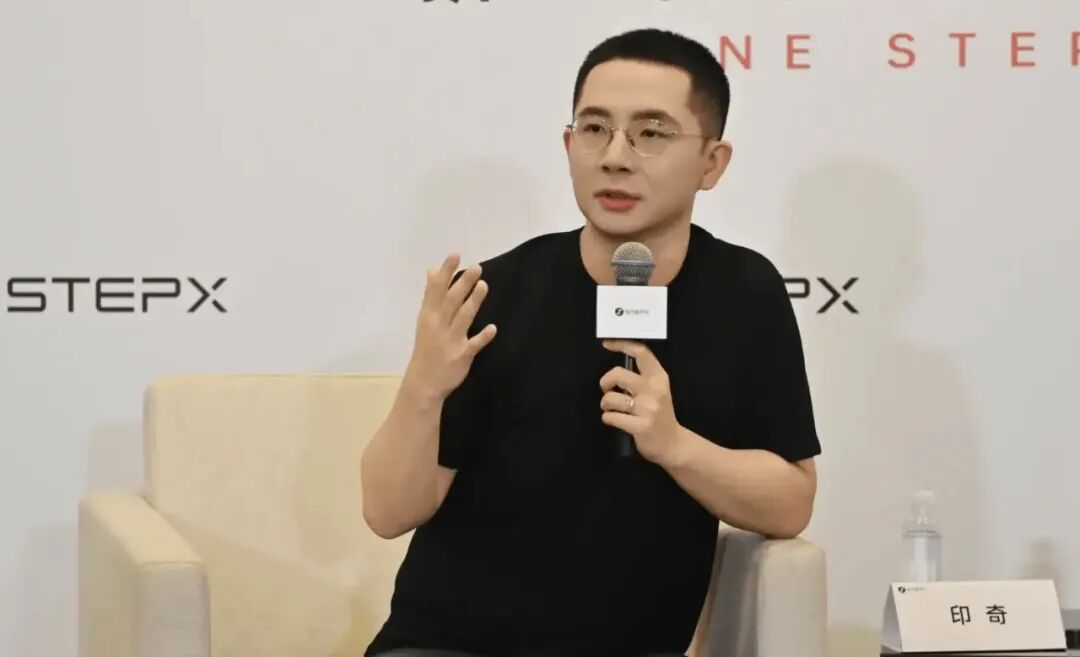
According to Yin Qi's vision, Jieyue does not aim to profit from hardware sales or pre-installed applications and advertising revenue. What he truly wants is for users to delegate enough daily tasks to Amoo. The more tasks, the more model invocations and service revenue, allowing Jieyue to bypass hardware profits and establish sustainable income. In short, he is unwilling to remain merely a cloud-side water seller or settle for one-time profits per smartphone, with income ultimately tied to Agent services and Token consumption.
However, high-frequency tasks require sufficiently deep app interfaces, and the depth of app openness depends on how many users Jieyue can bring. User acquisition requires interface access, but interface access requires users—a classic cold start problem in a nearly saturated market.
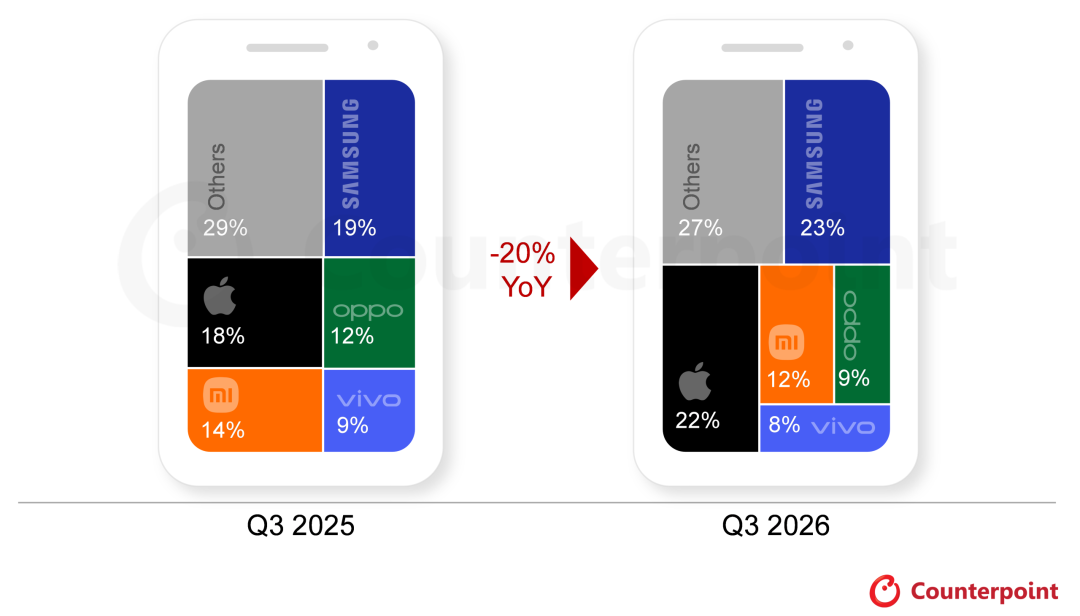
On October 12, Counterpoint Research released its latest report, stating that global smartphone shipments in the third quarter of 2026 declined by 20% year-on-year due to the storage chip shortage, marking the worst Q3 performance in nearly 14 years.
Against the backdrop of prolonged replacement cycles, smartphone manufacturers urgently need new selling points. The STEPX Neo attempts to tell a different story with "AI agent-native." While it sounds appealing, whether AI agents can truly become a reason for consumers to upgrade their phones remains to be market-tested.
Placing the STEPX Neo within the industry landscape, it is merely one of many AI phones undergoing a collective evolution in 2026.
Domestic AI phones have currently diverged into four paths: Huawei's full-stack self-research, covering chips, systems, and models; Honor's deep collaboration with Alibaba, featuring system-level Agents plus third-party large models, which is highly replicable; Nubia's lightweight approach, leveraging ByteDance's capabilities and ODM hardware; and fourth, Jieyue's path of large model companies going native. The divergence among these four paths is superficially about technical choices but fundamentally about who defines the "first AI entry point" on smartphones.
From a broader perspective, this battle for entry points is also reshaping the competitive dimensions of the entire smartphone industry. However, the issue is that when all phones become "AI phones," AI itself ceases to be a differentiator. The true dividing line is who defines the "first AI entry point"—whether it is the smartphone manufacturer's system-level Agent, the internet giant's super app-embedded Agent, or the model company's native AI agent.
Jieyue is betting that if model companies remain confined to others' terminals, they will never secure a role in the next distribution cycle. This path requires it to simultaneously address hardware R&D, supply chain, channels, after-sales, and brand recognition. Any misstep could jeopardize its early reputation. Yin Qi is unwilling to remain merely a cloud-side water seller, but water sellers at least know who their customers are; homebuilders must first persuade others to move in.
3 Capital Narrative Before the IPO: Jieyue Submits Its "Pledge of Allegiance"
Three months ago, at that launch event, Yin Qi already unveiled the STEPX Neo. However, without hardware specifications, pricing, or a release date, and with mostly rendered images displayed on stage, the industry quickly labeled it a "PPT smartphone."
At that time, Jieyue was at a critical juncture for its Hong Kong Stock Exchange IPO, and the launch event was interpreted as a preemptive roadshow for investment banks and cornerstone investors. As the central figure steering this IPO, Yin Qi needed to prove to the capital markets that Jieyue is not just a model supplier but could become the next-generation terminal entry point.
In other words, the STEPX Neo carries a mission far heavier than simply selling a smartphone. It must prove three things for Jieyue: that a model company can secure system entry points, that AI agents can drive high-frequency service consumption, and that this closed loop can ultimately support Jieyue's new valuation.
Indeed, Jieyue's path aligns with industry trends. Over the past year, China's large model industry has undergone a strategic shift from cloud-side to edge-side deployment. The underlying logic is harsh: purely selling APIs and Tokens is becoming a bitter business with clear ceilings and solidified competitive landscapes.
The cloud-side API price war has turned bloody. DeepSeek reduced cache hit input costs to 0.02 yuan per million Tokens, and while Jieyue's Step 5 Preview achieved the industry median, it still lags by several times. On September 10, the day DeepSeek announced its price cut, Zhipu and MiniMax shares both tumbled. Meanwhile, Zhipu's MARR reached 1.6 billion USD, with API revenue accounting for 86.5%, and MiniMax served over 2 million enterprise clients. The landscape is largely set, and later entrants have little chance of winning through further price cuts.
Thus, large model companies are seeking new narrative outlets. Yin Qi defines "AI + physical terminals" as the core path to AGI, embedding models into four major terminal scenarios: smartphones, automobiles, embodied AI, and IoT. Each scenario is vast, but Jieyue remains on a relatively difficult path.
Hardware is a capital-intensive, long-cycle, and low-margin business, requiring smartphone manufacturers to ship tens of millions of units to amortize R&D and supply chain costs. Jieyue lacks its own retail channels and C-side brand operation experience, with the STEPX Neo entirely manufactured by ODMs and Jieyue responsible only for system and model adaptation.
When compared to listed companies such as Zhipu and MiniMax, Jieyue has not released developer scale metrics that are on par with theirs. In contrast to Huawei and Xiaomi, which have been deeply entrenched in the consumer electronics sector for over ten years, Jieyue still lags in terms of hardware execution capabilities. Media reports indicate that several senior industry insiders tried to dissuade Jieyue from developing smartphones independently, pointing out the high risks associated with cross-sector R&D, supply chain management, and quality control.
A more fundamental issue is that the pricing logic within the large model industry is undergoing a transition, moving away from model capabilities alone and focusing more on implementation and revenue generation. Capital markets are no longer inclined to invest in large models that merely chase benchmarks.
Following its public listing, MiniMax experienced significant market capitalization fluctuations, with a correction amplitude exceeding 83% due to a lack of distinctive implementation scenarios and sluggish growth in C-side users. In contrast, Zhipu's GLM5.2 quickly gained popularity, causing its market capitalization to soar to nearly ten times that of MiniMax. This demonstrates that the core pricing logic in the large model industry consistently revolves around technical barriers and practical implementation. Capital narratives based on PPT hardware and niche concepts find it challenging to convince secondary markets over the long term.
StepOn is attempting to tread a middle ground by having an 'independent model vendor develop its own terminals'. It does not delve deeply into government and enterprise services and APIs like Zhipu, nor does it rely on consumer-end products to build user awareness like Kimi. Furthermore, it does not construct a developer ecosystem through open-source offerings and extremely low prices, as DeepSeek does. Instead, StepOn is betting on a closed-loop integration of 'model + system + hardware', aiming to acquire users, data, and token consumption through terminals, ultimately establishing a sustainable business cycle.
However, every component of this closed loop faces formidable competition. At the model level, StepOn's Step 5 Preview still trails behind the global leaders in terms of benchmark scores and usage volume. At the system level, Step AOS aspires to penetrate the devices of mobile phone manufacturers, but these manufacturers are unlikely to relinquish their bargaining power easily. At the terminal level, the mobile phone market is currently experiencing its coldest quarter in nearly 14 years, and the survival prospects for STEPX Neo, as the inaugural model of a new brand, are visibly shrinking.
During external communications, Yin Qi remarked, 'The path ahead remains exceedingly challenging, but this might be the truly intriguing aspect of launching an AI business.' When uttered by an entrepreneur, this serves as a dignified morale booster. However, from a business logic perspective, it is tantamount to acknowledging that StepOn has opted for the most arduous route. Yin Qi is not merely betting on a single mobile phone; rather, he is wagering on whether a model company can establish its own foothold outside the realms controlled by others.
Whether this foothold is worth $12 billion will be determined by the market in the coming months.
END
Producer: Huang Qiangqiang
-
Global PC and Smartphone Markets Plummet by 20%: Samsung Leads Worldwide, Xiaomi Dominates Domestically
-
![]()
Why Does Anthropic’s New Policy Make AI Interactions More Challenging for Humans?
-
![]()
Can Gemini 4 Argon Transform Videos into 3D Simulated Scenes and Revolutionize XR Spatial Computing?
-
![]()
Anxious Yin Qi Takes a Gamble on AI Smartphones
-
![]()
Yin Qi's Bold Gamble: The Smartphone That Aims to Redefine AI Interaction
-
![]()
Toyota's Defense and Rebirth Amidst the Rise of Local Brands | Cover Story: Japanese Automakers at a Crossroads in Transition (Part Two)
-
![]()
New Box-Shaped Champion Hits Market at 125,900 Yuan: Unveiling the Strength of the All-New Traveler 7
-
![]()
AI Competition Intensifies, Personal Agents Fuel the Fire