Toyota's Defense and Rebirth Amidst the Rise of Local Brands | Cover Story: Japanese Automakers at a Crossroads in Transition (Part Two)
 10/15 2026
 377
377
Editor's Note
The competitive landscape of the automotive industry is being reshaped, with the window for industry transformation narrowing. Electrification and intelligence have become the core engines of transformation and upgrading, while globalization serves as the landing zone to test their success. As electrification and intelligent technologies shift from quantitative to qualitative changes, and with the rapid global development of Chinese automakers, Japanese automakers find themselves at a crossroads in transformation. At this historic juncture, Japanese automakers must reconstruct their existing advantages and create new latecomer advantages to come out on top.
Focusing on the transformation of Japanese automakers,
Toyota will not be the next domestic automotive brand to exit the market, but the golden era of effortless profits is gone forever.
In recent years, the phrase “joint-venture automakers are struggling” has become a common refrain in the industry, yet few elaborate on the specifics. However, explaining this phenomenon requires only a set of price figures.
In August 2026, the FAW Toyota bZ5 officially launched in Tianjin as a mid-size all-electric SUV, priced between RMB 129,800 and RMB 199,800, and equipped with standard LiDAR and blade batteries. Earlier, the all-new GAC Toyota bZ3X was released with a limited-time promotional price of RMB 94,800—marking the first time a Toyota all-electric model in China was priced below RMB 100,000.
A decade ago, such pricing would have been unimaginable. At that time, Toyota was a symbol of high joint-venture premiums, rarely engaging in price competition. Some popular models even required price premiums for delivery, a practice accepted by the market as reasonable. Stable vehicle quality control, mature hybrid technology, and a global after-sales network positioned Toyota firmly at the pinnacle of market profits, reflecting consumers' full recognition of its brand value.
Yet, change has arrived faster than expected. A few years ago, discussions centered on whether joint ventures would lower prices; now, the question is how much they must cut to survive. The reason is straightforward: Chinese new energy vehicle (NEV) makers are simultaneously advancing on three fronts—technology, pricing, and intelligence—dismantling the competitive advantages built by joint-venture brands over decades.
Toyota certainly feels this pressure. However, unlike most multinational brands in retreat, Toyota's situation is far more complex. It is not merely a traditional giant clinging to internal combustion engine vehicles. As the world's best-selling automotive brand, Toyota holds more cards than most imagine.
From Price Premiums to Price Floors
To understand Toyota's current position, we must first revisit its golden era.
The 2010s marked the peak of joint-venture brands in the Chinese market, with Toyota as the most iconic beneficiary. Around 2017, models like the Highlander and Alphard consistently commanded price premiums. The Highlander typically saw premiums of RMB 20,000–30,000 and remained in short supply, while the Alphard's premium once reached RMB 300,000, yet demand remained robust. Toyota dealers at the time were the envy of the industry—no elaborate marketing was needed; vehicles sold as long as they were in stock, with per-unit profits far exceeding those of local brands.
This high premium was supported by Toyota's decades-long brand moat: the TNGA architecture's vehicle quality, the leadership of THS hybrid technology, a nationwide after-sales network, and exceptionally high resale values in the second-hand market. Consumers were willing to pay tens of thousands more for the peace of mind of a “Toyota that never breaks” and the long-term promise of “a vehicle passed down through generations.”
The turning point came after 2022. Chinese NEV makers suddenly surged collectively. BYD challenged Toyota's fuel (internal combustion engine) dominance with its DM-i hybrid technology, while NIO, XPeng, and Li Auto poached BBA users in the premium market. Geely, Changan, and Chery squeezed joint-venture space in the RMB 100,000–200,000 mainstream market with “equivalent pricing for ICE and electric vehicles.” By 2026, the market landscape had been upended: NEV retail penetration stabilized above 60%, while ICE vehicles held just 37% of the market share, which continued to shrink.
Data speaks volumes. In the first half of 2026, Toyota's cumulative sales in China fell 17.1% year-on-year to 694,700 units, a drop of 143,000 units compared to the same period last year. It was the only major market where Toyota experienced deep negative growth. FAW Toyota saw a 27% decline, while Lexus dropped 22.7%. Japanese brands' overall market share in China plummeted from 23% in 2020 to under 11%, with Honda and Nissan faring even worse than Toyota.
The most apparent signal was the erosion of the pricing system. In the first half of 2026, terminal transaction prices for some Toyota models dipped below those of comparable local brand ICE vehicles. The Corolla and Levin competed fiercely in the RMB 100,000 price band, with terminal discounts escalating. The RAV4 and Wildlander saw discounts exceeding RMB 40,000 in the RMB 200,000 SUV segment. Even the Highlander, once subject to price premiums, now offered substantial terminal discounts.
The bZ3X's pricing at RMB 94,800 epitomizes this pricing system overhaul. A decade ago, this price would only buy Toyota's entry-level Vios model. Today, it buys a joint-venture all-electric SUV equipped with standard LiDAR, advanced intelligent driving, and a range exceeding 500 kilometers. Behind this lies a significant erosion of multinational brands' premiums in the Chinese market.
However, this does not mean Toyota has surrendered. On the contrary, as a global automaker selling over 10 million vehicles annually, Toyota's transition is more decisive and systematic than imagined.
Defending the Hybrid Stronghold to Navigate Cycles
Many focus on Toyota's pursuit of all-electric vehicles while overlooking its unshakable advantage in the hybrid market—the cornerstone of its bold transformation.
The Chinese auto market in 2026 feels surreal: in August, NEV retail penetration soared to 65.2%, while ICE retail sales plummeted nearly 40% year-on-year. Yet, the HEV (hybrid electric vehicle) market thrived against the trend. From January to August, domestic HEV wholesale volumes reached 489,000 units; in August alone, 107,000 HEVs were wholesaled, up 54% year-on-year. Industry forecasts suggest domestic HEV wholesale volumes could hit 2 million units in 2026, with market penetration exceeding 8%.
In this expanding segment, Toyota remains dominant. In August, FAW Toyota wholesaled 36,400 HEVs, while GAC Toyota sold 29,800, together accounting for roughly 60% of domestic HEV wholesale volumes.
Consumers are not blindly choosing HEVs; they are choosing Toyota's HEVs. The market offers a dazzling array of hybrid technologies: 48V mild hybrids, series-parallel plug-in hybrids, extended-range EVs, and power-split hybrids. Yet, consumer choices, as reflected in sales, overwhelmingly favor Toyota's THS power-split hybrid system.
This technology can be distilled into two key points: a small battery with shallow charging and discharging, and full-range coupling of ICE and electric power. Toyota's fifth-generation intelligent electro-hybrid system uses a mere 1.12 kWh battery, managed via “shallow charge-discharge” to maintain battery levels between 40% and 80% at all times, avoiding full charges or discharges. This design offers two fundamental benefits: exceptionally long battery life, nearly matching the vehicle's lifespan, eliminating replacement cost concerns after five to six years; and physical elimination of thermal runaway risks, as the small capacity and gentle charge-discharge intervals minimize spontaneous combustion hazards.
Real-world performance is most persuasive. The Corolla equipped with the fifth-generation system easily exceeds 1,000 kilometers on a single tank of fuel. The all-new RAV4 Hybrid completed a comprehensive test by China Automotive Technology and Research Center (CATARC) across urban, suburban, mountain, and off-road terrains, climbing over 3,900 meters in cumulative altitude gain while achieving a mere 3.14 L/100 km fuel consumption. Critically, the system operates stably in extreme temperatures ranging from -40°C to 85°C, alleviating winter range anxiety for northern users.
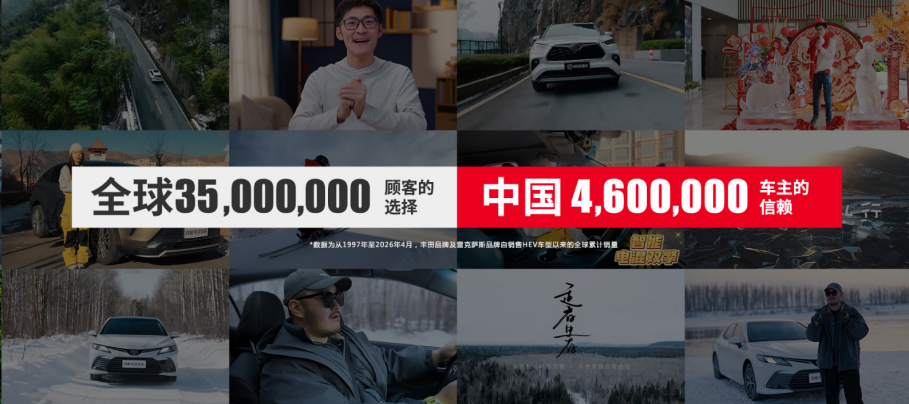
Public data shows Toyota's global hybrid sales have surpassed 35 million units, while corporate data indicates Toyota has maintained a perfect safety record in China—zero spontaneous combustion, zero explosions, and zero leaks—a trust asset nearly impossible for rivals to replicate amid frequent battery incidents worldwide.
Defined, Developed, Manufactured, and Iterated in China
If hybrids represent Toyota's defense, the implementation of the RCE (Regional-Chief Engineer) system marks its “rebirth.”
At the 2025 Shanghai Auto Show, Toyota officially announced the launch of the RCE system in China, encapsulated in sixteen words: “Defined in China, Developed in China, Manufactured in China, Iterated in China.”
This is unprecedented in Toyota's history. Traditionally, Toyota's management logic was clear: Japan's headquarters handled top-tier R&D, while overseas factories focused on localized production modifications. Technology flowed exclusively from Japan to the world, with Chinese teams playing executive and adaptive roles without true product definition authority.
Now, Toyota has granted a single regional market—China—unprecedented autonomy. Chinese engineers, serving as chief engineers for model development, wield full decision-making and management authority across the entire lifecycle, from product planning and R&D to production and sales.
Why did Toyota make this change? The answer lies in market dynamics. In the first half of 2026 alone, over 600 new models launched in the domestic market, averaging more than three facelifts or replacements daily. Most local brands achieve facelifts every six months and model replacements annually. If Toyota failed to align with local market rhythms, by the time headquarters decisions and new product R&D were complete, market trends would have already shifted.
The early failure of the bZ series all-electric models epitomized the flaws of this old system. Developed by Japanese teams as “global models,” they suffered from outdated intelligent experiences and product definitions misaligned with Chinese user needs, leading to inevitable market rejection.
Complementing the RCE system is the ONE R&D system, which consolidates dispersed R&D resources in China into a more formidable force. Together, these systems have brought three major changes to Toyota: faster market responsiveness, higher R&D efficiency, and deeper supply chain localization.
Changes are already underway. The bZ3X, the first model developed under the RCE system, was entirely led by Chinese teams from the product definition stage. Chinese engineers clearly understood the priorities for RMB 100,000-level all-electric users: they did not need flashy supercar acceleration or CLTC ranges exceeding 1,000 kilometers. Instead, they sought reliable quality, user-friendly intelligent driving, comfortable space, and trustworthy after-sales service. Based on this precise user insight, the bZ3X dared to equip a RMB 100,000-level model with Hesai LiDAR and Momenta's advanced intelligent driving system, while introducing a “triple accountability” safeguard policy, ultimately dominating the joint-venture all-electric market.
Integrating China's Cutting-Edge Tech into Toyota
While the RCE system addresses “who defines the vehicle,” full supply chain localization tackles “what builds the vehicle.”
Today, examining the supplier lists for the bZ3X and bZ5 reveals a long roster of Chinese tech firms: battery collaborations with CATL, BYD Battery, and CALB; intelligent driving powered by Hesai LiDAR and Momenta's end-to-end solutions; cockpit ecosystems integrated with Huawei HarmonyOS, voice interactions using iFLYTEK's large models, and electric drive systems from Huawei DriveONE. Toyota disclosed that Chinese suppliers accounted for 65% of components in the 2026 bZ3X, with over 100 Chinese suppliers deeply involved in core parts.
The benefits of this openness are clear. First, significant manufacturing cost reductions: the bZ3X's standard LiDAR and advanced intelligent driving at RMB 94,800 were made possible by localized supply chain cost advantages. Second, the model's intelligence and localization now match those of mainstream local brands like Geely, Changan, and Chery, placing them on equal footing.
More noteworthy is Toyota's collaboration model with Huawei and Momenta. Toyota did not simply “procure” a solution; it deeply participated in underlying calibration and safety verification. For intelligent driving, Momenta provided algorithms and software, while Hesai supplied LiDAR hardware. However, Toyota imposed over 10 safety standards to ensure the system met its safety benchmarks while remaining user-friendly. This “Toyota quality standards + China's cutting-edge tech” combination addresses intelligence shortcomings without sacrificing brand core strengths.
Of course, this full supply chain openness signifies the breakdown of Toyota's once-proud “vertical integration” model. When core technologies like batteries, intelligent driving, and cockpits rely on external suppliers, where does Toyota's technological moat lie? This is a long-term question. For now, pragmatic Toyota has chosen to prioritize “availability” over “perfection”—first adopting China's most mature intelligent solutions to match local brands in user experience, then pursuing technical self-reliance and differentiation later.
In a sense, this is also a “rebirth.” The Toyota that once insisted on “making all core technologies in-house” has finally learned to embrace change with an open mindset, integrating China's premium resources for its benefit. For a century-old automaker, this conceptual shift matters more than launching a few blockbuster models.
A Toyota Era is Emerging
As the bZ series gains momentum, a bigger development shook the automotive industry: substantial progress toward integrating FAW Toyota and GAC Toyota.
On the evening of September 14, 2026, GAC Group announced plans to acquire shares in a joint-venture auto company held by China FAW Group Co., Ltd. (hereinafter “FAW Group”) via issuing A-shares. Upon completion, FAW Group would become GAC Group's second-largest shareholder. Though the announcement did not name the target, industry speculation pointed to FAW Toyota.
Currently, FAW Group's two major joint ventures are FAW Toyota and FAW-Volkswagen. From a business perspective, GAC Group lacks collaboration experience with Volkswagen Group but shares over 20 years of deep joint-venture ties with Toyota, along with common foundations in manufacturing standards and supply chain management. Integrating FAW Toyota and GAC Toyota resources onto a single platform is far more practical than merging unrelated joint-venture businesses across brands.
Specifically, over the past two decades, FAW Toyota and GAC Toyota have leveraged a sister-car strategy to operate in different regions within the growing market. The combinations of Corolla and Levin, Avalon and Camry, RAV4 Rongfang and Wildlander, have helped Toyota quickly cover consumer groups in different regions. However, as the market has shifted to Stock competition (survival competition, implying a mature market with limited growth), the side effects of this model have become increasingly apparent. Nearly 1,400 dealers are now engaged in internal competition in overlapping markets, leading to redundant investment in R&D resources for models on the same platform and scattered marketing expenditures that fail to create synergies.
The transaction adopted a non-cash approach of 'assets for equity,' where GAC Group issued its own shares to exchange for the equity of FAW Toyota held by FAW Group. Without needing to provide cash, FAW Group secured a strategic shareholder position in GAC Group through asset injection. This 'steady bilateral collaboration' model not only avoids the cash flow pressures associated with traditional mergers and acquisitions but also enables GAC, FAW, and Toyota to form a community of shared interests under the new equity framework, fundamentally addressing the governance challenges that arose from the independent operations of FAW Toyota and GAC Toyota in the past.
The benefits of integration are immediately apparent. R&D resources are no longer duplicated, parts can be centrally procured to reduce costs, channels no longer compete internally, and marketing expenditures can be concentrated to promote blockbuster models. Ultimately, these cost savings can be translated into price competitiveness for products, allowing consumers to purchase more cost-effective models.
The deeper significance lies in the fact that the era when joint venture brands could rely solely on brand premium to reap profits has ended. Joint venture brands must shift from 'dividing the pie' to 'making the pie together,' regaining users through improved efficiency and product competitiveness.
Of course, integration will not happen overnight. Challenges such as balancing the interests of FAW and GAC, repositioning over 1,400 dealers, addressing after-sales support for existing customers, and reconciling the relationship between 'localized' R&D and 'unified' sales require time to resolve. However, the direction is clear: the era of 'One Toyota' is approaching. By eliminating internal competition, Toyota can allocate more resources to product development and technology itself, which is the key organizational guarantee for winning the electrification battle.
Between defending the status quo and embracing renewal, there is no turning back.
In 2026, Toyota stands at a delicate historical juncture. On one hand, it faces the most severe challenges since entering the Chinese market: declining market share, a loosening price system, and slower electrification transformation compared to domestic brands.
In August 2026, Toyota's sales in China reached 118,400 units, down 22.8% year-on-year, marking the seventh consecutive month of decline. Among them, Lexus sold 12,000 units, down 34% year-on-year. These figures serve as a stark reminder that Toyota's golden era of effortless profitability is long gone.
On the other hand, Toyota has not retreated as some joint venture brands have, nor has it reached the brink of exiting the market. Its core market remains stable, with its share in the HEV market providing resilience through economic cycles. Toyota's QDR (Quality, Durability, Reliability) genes and stable after-sales service continue to be reasons why many consumers choose the brand.
Therefore, for Toyota, transformation will require a delicate balancing act. It must 'defend the status quo' by preserving the core advantages accumulated over decades and not losing its roots during the transition. Simultaneously, it must 'embrace renewal' by adopting an open mindset toward localization, delegating decision-making power to Chinese teams, integrating China's cutting-edge technologies into its products, and restructuring its organization to adapt to new market rhythms.
Like a general breaking the cauldrons and sinking the boats, Toyota has no retreat. Despite the many unresolved challenges it still faces—such as rebuilding its technological moat as core components increasingly rely on Chinese suppliers, reconciling governance mechanisms when conflicts arise between localized R&D and Japanese-led sales, maintaining Lexus's premium brand value after shifting from imported to domestically produced models, and bridging the clear gap with leading new energy vehicle players in intelligent software and user experience (a gap that cannot be fully closed by simply adopting Huawei's cockpit system or Momenta's intelligent driving solutions)—at least the current direction is correct. When Toyota completes this battle between defending the status quo and embracing renewal, what we will see is a new Toyota that is both familiar and unfamiliar—it will still be the Toyota that prioritizes quality, safety, and reliability, but it will also be a Toyota that better understands China, is more intelligent, and is more down-to-earth.
For consumers, a more competitive Toyota is undoubtedly a positive development—it will push domestic brands to continue improving and bring more practical and reliable products to the market. After all, the automotive industry has never been a zero-sum game; a flourishing market with diverse players is what truly defines spring.
Note: This article was first published in the 'Cover Story' section of the October 2026 issue of 'Auto Review' magazine. Please stay tuned. Related reports:
Cover Story (Part 1): Defensive and Offensive Strategies in the Transformation of Japanese Automakers

Image: Sourced from the Internet
Article: Auto Review
Layout: Auto Review
-
![]()
Can Gemini 4 Argon Transform Videos into 3D Simulated Scenes and Revolutionize XR Spatial Computing?
-
![]()
Anxious Yin Qi Takes a Gamble on AI Smartphones
-
![]()
Yin Qi's Bold Gamble: The Smartphone That Aims to Redefine AI Interaction
-
![]()
Toyota's Defense and Rebirth Amidst the Rise of Local Brands | Cover Story: Japanese Automakers at a Crossroads in Transition (Part Two)
-
![]()
New Box-Shaped Champion Hits Market at 125,900 Yuan: Unveiling the Strength of the All-New Traveler 7
-
![]()
AI Competition Intensifies, Personal Agents Fuel the Fire
-
![]()
Memory Price Surge Deals Blow to Smartphone Industry! Global Smartphone Shipments Plunge by 20%, Samsung and Apple Secure a Combined 45% Market Share
-
What a Shock! Domestic Smartphone Sales Can’t Keep Up with the Apple iPhone18 Pro