Young Wartime CEO: How to Win Meta's AI Turnaround Battle
 10/16 2026
 538
538
The competition in artificial intelligence has only just begun. Every company has a chance. Major players are placing their bets. Tencent's AI leader is Yao Shunyu, while Xiaomi has placed its bets on female scientist Luo Fuli. Although Alibaba's Qianwen team experienced the departure of Lin Junyang, the combined strength of its other leading figures remains formidable. This article explores Meta's AI turnaround story to see how these major capital players are betting on top-tier, highly youthful AI leaders.
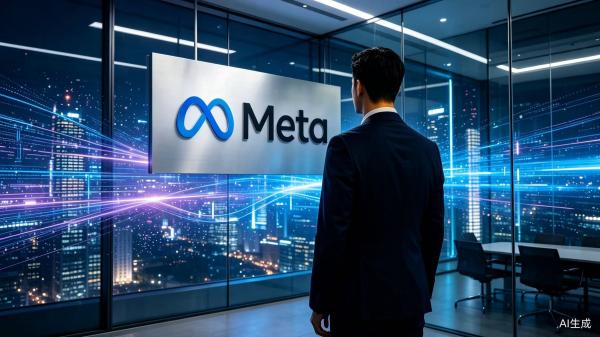
In the spring of 2025, a sense of being left behind permeated Meta. The release of Llama 4 was met with a dismal response, with benchmark tests revealing that "different models were used for different tests." Zuckerberg's patience with the generative AI department ran out completely. Later, after his departure, Turing Award winner Yann LeCun stated bluntly that Meta only chose "safe, proven options," a choice that inherently meant falling behind.
Fourteen months later, the situation had reversed. On October 12, 2026, Meta's Super Intelligence Lab released Muse Wonder and Muse Wonder Full. Independent evaluation agency Artificial Analysis gave them intelligence index scores of 52 and 56, respectively, with the latter matching Anthropic's Claude Sonnet 5.5 and surpassing GPT-6 Astra and Gemini 4 Argon. Wired's headline spared no praise: "Muse Wonder Brings Meta Back to the AI Frontier."
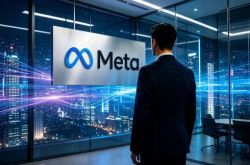
The person who pulled Meta from the depths was a 29-year-old Chinese entrepreneur named Alexandr Wang, also known as Wang Tao in Chinese. He was the founder of Scale AI and was recruited by Zuckerberg in June 2025 with a $14.3 billion investment, bringing both himself and his company into Meta as the Chief AI Officer to lead the newly established Super Intelligence Lab.
Zuckerberg wasn't betting on Wang's research capabilities. LeCun put it bluntly: "He has no research experience, doesn't know how to conduct research, and is unclear about what researchers like or dislike." What Zuckerberg was betting on was something else: the sense of urgency a founder feels when facing life-or-death stakes, a "wartime mentality" almost entirely absent among corporate managers in large companies.
Wang brought this mentality to Meta. His first move was to transform himself from a "founder" into a "coach." During his time at Scale AI, all decisions had to go through him, making him a bottleneck for business progress. At Meta, he clearly understood that he was "neither an AI researcher nor a product designer," so he shifted his focus entirely to talent recruitment, scouting top talent in various fields and creating an environment where they could excel.
This was not humility; it was strategy. Meta's AI department laid off about 600 employees in October 2025, affecting veteran research teams like FAIR, including Chinese scientist Tian Yuandong. However, Wang's own TBD Lab—the core team focused on building "superintelligence"—emerged unscathed from the layoffs. He replaced Meta's old blood with new blood, using the urgency of "outsiders" to wash away the complacency of "insiders."
The cost of this purge was significant. LeCun left by the end of 2025 to start his own AI startup, leaving behind a cryptic remark: Meta's new team was "obsessed with large language models." This implied that his preferred world model approach had been marginalized. Within Meta, some were also skeptical of Wang. A former employee commented on Muse Spark, saying, "Those guys at TBD—Alex and Zuckerberg—set low standards for both internal and external teams."
But Wang was betting on a different path. Instead of chasing OpenAI and Anthropic in Meta's weakest areas of programming and abstract reasoning, he placed his bets on "personal intelligent agents." The core selling point of Muse Wonder was not chat but Active Memory and Active Focus—enabling AI agents to remember user context across conversations and proactively adjust plans when encountering obstacles without abandoning their goals. In an interview with Bloomberg on the release day, Wang stated frankly: "Other ecosystems have focused on programming agents. We took a differentiated approach to truly excel in personal intelligent agent applications."
This judgment made sense. Meta had Facebook, Instagram, and WhatsApp, with daily behavioral data from three billion users—a treasure trove unavailable to any competitor. Feeding this data to a truly "understanding" personal intelligent agent offered a much better chance of success than going head-to-head with OpenAI in programming.
Wang's other advantage was speed. Muse Spark was released in April 2026, and Muse Wonder followed just six months later in October. This iteration pace was unprecedented in Meta's AI history. Russ Salakhutdinov, a Carnegie Mellon professor and former VP of AI research at Meta, commented: "The amount of work TBD Lab accomplished in such a short time is impressive. Alex knows what he doesn't know and is willing to listen."
"Knowing what you don't know"—this might be Wang's most underrated strength. A 29-year-old non-researcher leading a team of top AI scientists could easily fall into two extremes: either forcibly playing the technical authority or completely delegating authority and losing direction. Wang chose a third path: he recruited Tsinghua alumnus Zhao Shengjia as Chief AI Scientist to oversee the scientific agenda of the MSL and brought in UC Berkeley professor Dawn Song to lead the new AI research department. He didn't do research himself but ensured the right people were doing it.
Of course, Meta hasn't won yet. Muse Wonder Full is currently only available to Muse Code subscribers, with the standard version of Wonder priced via API, and whether the strongest version will be opened to enterprise customers remains unknown. Anthropic's Claude Opus 5.5 still leads with a score of 58 on the intelligence index, and GPT-6.1 Sol remains superior in cost efficiency. Meta's AI talent war has also come at an astonishing cost, with signing bonuses of up to $100 million offered to researchers from OpenAI and Google.
But at least, Meta is back at the table. From the collapse of Llama 4 to the frontier performance of Muse Wonder, from LeCun's departure to the efficient operation of TBD Lab, Meta completed a costly but clear-directioned transformation in fourteen months. Zuckerberg wasn't betting on a technical genius but on an entrepreneur who had spent a decade in the data annotation industry and understood that "trust" and "delivery" were more valuable than "vision."
The most important lesson Wang learned at Scale AI might not have been how to annotate data but how to make top talent believe they could win by following him. The people who remained after the turmoil in Meta's AI team—Zhao Shengjia, Dawn Song, and the researchers at TBD Lab who chose not to leave—formed a team that was leaner, more focused, and more dangerous than in the Llama era.
Muse Wonder is not the endpoint. In his interview on the release day, Wang said something that seemed like an invitation to skeptics and a reminder to competitors: "I would recommend everyone try it out for themselves and judge."
Whether Meta can catch up from behind depends not on Zuckerberg's balance sheet but on what Wang can deliver in the next six months.
-
Big Tech Firms Struggle with Security Concerns in AI Race
-
![]()
Apple AI is Finally Coming to China, But Siri is Not in the First Batch of Features
-
![]()
Unbelievable! TikTok Sellers Lodge Collective Complaint: AI-Generated Sales Videos Distort Product Info, Deceiving Shoppers
-
![]()
New China-EU Automobile Trade Consensus: What Do BMW and Volkswagen's Differing Positions Signal?
-
![]()
Three Departments Launch Investigation into Zunjie; DCD Seals Three Vehicles—Who Will Oversee the Retest?
-
![]()
Development Isn't Just 'Washing Away the Exposed Area': How Do Photoresist Sidewalls Take Shape?
-
![]()
Young Wartime CEO: How to Win Meta's AI Turnaround Battle
-
![]()
7 Million DAU! ByteDance's Free CEO Romance Short Dramas Are Driving Foreigners Wild