Embodied AI Secondary Development Companies: Closest to Demand, Yet Shifting Boundaries
 11/01 2026
 478
Editor: Lü Xinyi
In the embodied AI industry chain, the segment closest to cash flow is inseparable from "secondary development companies."
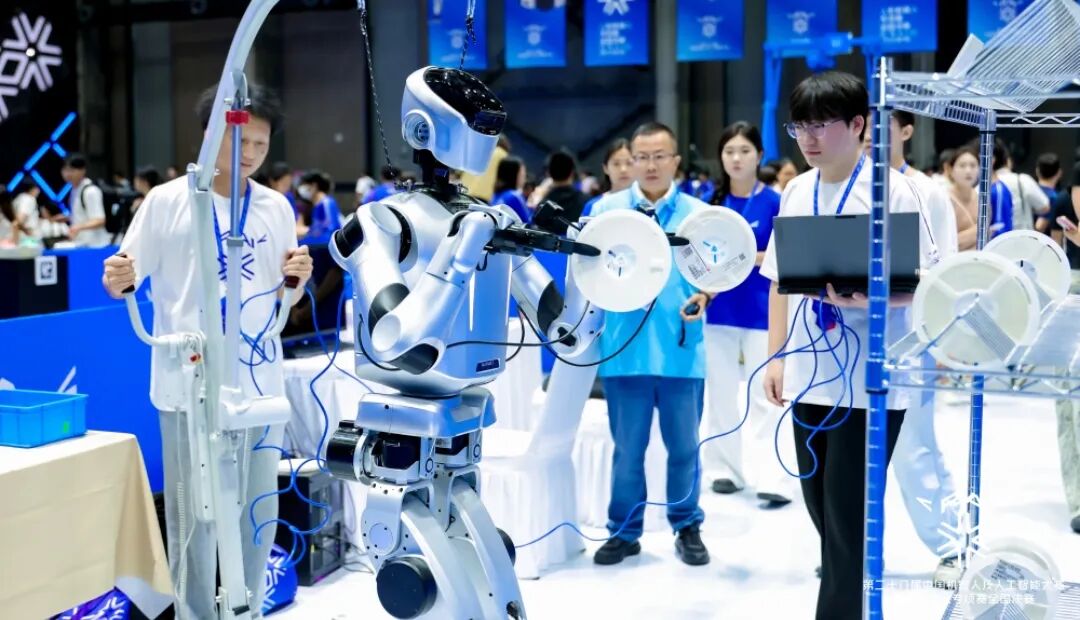
These companies form a crucial middle layer connecting general capabilities with real-world scenarios. They provide body configuration development—such as installing robotic arms—along with scenario data collection plus model adaptation and deployment, system integration, delivery, and operations. In doing so, they help general-purpose products better fit the application demands of different scenarios.
Since entering the mass production era, these companies have also become the segment with the strongest demand. The industry often tracks changes in their orders and performance to gauge how much real demand exists in the downstream market.
But this business—the one closest to demand—is seeing its boundaries shift.
As OEMs continuously push their business into the application layer, the space that originally belonged to secondary development companies appears to be getting compressed bit by bit. The easier embodied AI applications become to develop, the more the businesses that secondary development enterprises can operate independently need to be redefined.
Some even say outright that the ecological niche of secondary development companies is defined by OEMs.
In May this year, Unitree Technology's UniStore shared application platform fully opened, allowing developers to upload motion models and users to directly download and deploy them; in August, Songyan Power joined forces with Accelerated Evolution and Luming Robotics to invest in Oakay Qingxi, supporting the company in developing system and application platforms for multiple bodies; in October, Swiss quadruped robot company ANYbotics upgraded its inspection software, connecting fleet tasks, inspection data, and customer maintenance systems.
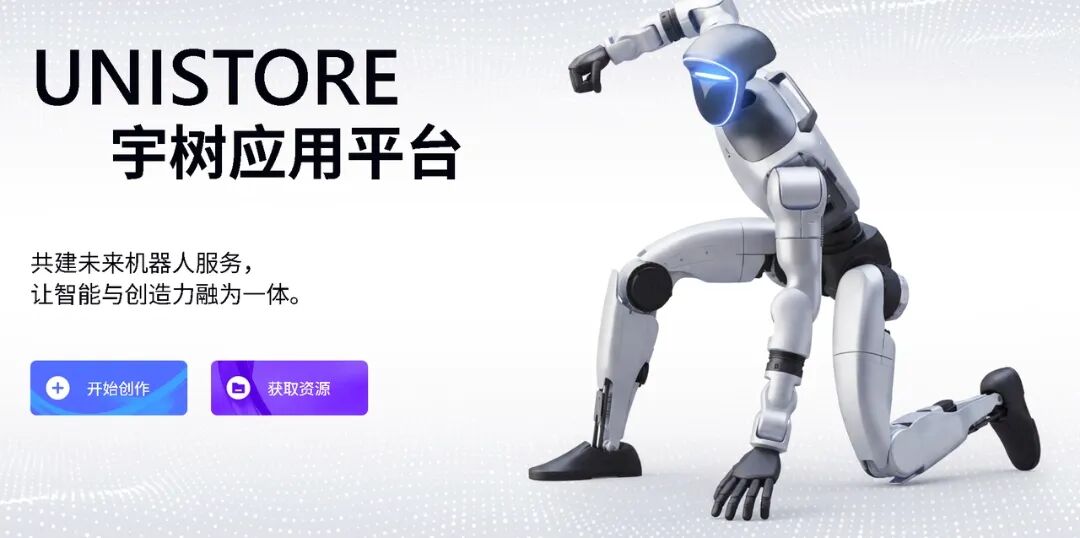
Providing application distribution channels, improving software systems, jointly supporting external enterprise partners... From application distribution to software design to platform co-building, original manufacturers are expanding the capabilities that embodied bodies can directly provide through different approaches, participating in the application and secondary development chain of body products.
These changes provide secondary development companies that adopt external bodies and develop and deliver applications with more resources they can call upon—and also place them in a continuously changing market: functions that previously required separate development may become part of the original manufacturer's products; work that originally required repeated investment may also be completed faster with tools. While lower development costs can unleash new application opportunities, they may also weaken the rationale for some services to be profitable on their own.
For secondary development companies, adding a few new features, maintaining a few networks, and packaging a few customer acquisition capabilities is no longer enough. Selling software requires forming products that can be continuously used and maintained; developing industry solutions requires organically connecting robot capabilities with the operational requirements of scenario owners; operating terminal services requires long-term, orderly organization of equipment, personnel, and on-site work.
Companies once collectively referred to as "secondary development" may further differentiate along their respective businesses in the future: companies that rely on simple customization and lack their own products and user base may face business contraction; companies that can continuously solve specific problems have the opportunity to establish their position in a more specialized division of labor.
Development tools can allow more companies to enter the market, but they cannot complete long-term operations for them. The value of a secondary development company will ultimately be determined by what business it operates, what capabilities it accumulates, and which customers it serves.
With someone else's body, you can enter the market; only by carving out a place with your own products and services can you truly stay in the game.
The change first occurs in how scenario owners obtain the actual functions of the body.
In May this year, Unitree's UniStore shared application platform fully opened. Developers can upload and share motion models, and users can also download motions developed by other teams and deploy them to robots; in October, Leju Robotics publicly provided its LeTools Skills development toolchain, encapsulating some basic capabilities as reusable skills. Developers can call and combine existing skills, connect operation models, and develop and verify new skills on this basis. Application teams can thereby reduce some underlying development work and devote more energy to implementing specific tasks.
For application teams, ready-made models and tools can reduce duplicate investment, and application platforms also add channels to reach users. But for teams that mainly rely on charging for general motion customization, if ready-made applications are already sufficient to meet demand, why would scenario owners still spend effort on customization? Functions and content that originally required separately hiring a team and establishing a project may also become applications jointly provided by multiple developers and ready for use—just waiting for scenario owners to "take as needed."
The same platform building can both help secondary development companies further expand their business and may also change their original profit models.
In addition to providing development tools, original manufacturers' coverage of applications is also entering more specific industry processes.
In October, Swiss quadruped robot company ANYbotics upgraded its original Data Navigator platform and renamed it Shift. According to its published product design, scenario owners can deploy tasks for the fleet on the platform, view inspection results, and connect relevant information to maintenance systems. Data collected by robots and information such as equipment abnormalities can be seamlessly connected with existing equipment operations and maintenance workflows through the OEM's own platform.
Such products have already demonstrated a work logic and development direction of full-process, full-chain autonomous coverage. Facing such changes, relevant secondary development companies need to reassess, when developing solutions, what requirements of scenario owners their own capability boundaries can still satisfy. And even if scenario owners still need support from external teams, secondary development companies must also consider: what value can their software and services add, and whether they need to redesign from scratch...
But of course, there is still an ROI calculation issue between local manufacturers expanding their own product coverage and improving capabilities, and whether they should personally step in to connect the needs of different industries and different scenario owners.
Zhao Jiangpeng, co-founder and CMO of Feikuo Technology, told Embodied Research Institute that for applications closely tied to underlying hardware and of strategic significance, OEMs building their own teams can improve collaboration efficiency; but industries such as education, cultural tourism, and industry require different understandings, customer resources, and service systems, and whether to cover them themselves depends on resource investment and organizational efficiency.

In addition, the same body facing subtle changes in scenarios or tasks may still have detailed issues such as parameter tuning, interface design, and visual-tactile hardware adaptation. Model generalization capability is also a major test for body manufacturers that want to enter the field.
Jonathan Hurst, co-founder of Agility Robotics, mentioned in an article in October that the company invested a great deal of time and effort to support early deployment, which may even offset related profits. Equipment transportation, customer support, and fleet software have all become problems that must be solved after robots are put into use.
These tasks may also be completed jointly through partners. In April this year, Deng Taihua, founder, chairman, and CEO of AgiBot, proposed at a partner conference that AgiBot plans to achieve tens of thousands of units deployed from 0 to 1 in "industrial and commercial deployment scenarios," and then co-create with ecosystem partners to achieve 1-to-N promotion and form a larger deployment scale. Soon after, in July, AgiBot announced its overseas layout, incorporating the logistics, technical support, customer service, and deployment capabilities of local partner companies in Australia, New Zealand, and other places into its RaaS network.
What OEMs do not do today may not necessarily remain undone tomorrow; the business handed to secondary development partners today may not necessarily continue to be cooperated on in the same way. The long-term position of secondary development cannot be built only on the space temporarily left by OEMs.

The term "secondary development" is increasingly insufficient to explain the differences among secondary development companies.
In July this year, officials stated that the entities promoting the robot application service provider model include not only robot manufacturers, but also user units with development capabilities and service enterprises connecting robots with application scenarios. Application development can grow out of different businesses, and there is no unified starting point for enterprises.
At present, there are already multiple secondary development companies in the industry with different backgrounds.
Take Oakay Qingxi as an example. The direction it has chosen is to provide software systems and applications for multiple bodies. Its products include the Oakay operating system and applications such as motion generation, grasping, and navigation. The company attempts to use a unified software framework to enable some applications to migrate between bodies of different brands, reducing duplicate development work on different devices.

The appeal of Oakay Qingxi's route lies in the fact that, as a secondary development company, it uses a unified software architecture to accommodate as many brands of bodies as possible, meaning it can cover scenario owners with different body needs more broadly. When choosing or changing bodies, existing applications have a chance to continue being used, reducing redevelopment work.
Developing along this path, the identity of "secondary development company" will gradually become more specific as a robot software supplier, and its product R&D, customer expansion, and technical services will also revolve around the software business.
Other companies' accumulation comes from industry businesses they had already carried out before embodied AI.
Xianheng International's semi-annual report disclosed in August shows that its Qidian Perception upgraded acoustic and infrared imaging products, launched an integrated top-mounted module adapted to CloudMinds models, and promoted the top-mounted module and inspection solutions through CloudMinds' existing distribution channels. Quadruped inspection solutions for substations, cable tunnels, and photovoltaic power stations have achieved small-volume deliveries.
In this business path, embodied AI has expanded the implementation methods of its existing detection products and professional capabilities. Scenario owners need inspection scenario solutions, OEMs have bodies, technical systems, and user channels, and what secondary development companies need to do is connect mobility capabilities, detection equipment, analysis software, and customer processes to form delivery strength.
Hardware adaptation, detection judgment and anomaly identification, industry knowledge, and customer experience... These companies' original business capabilities provide the foundation for determining their application direction, while the entry of embodied AI brings new adaptation and delivery requirements. The company's professional image in the face of the new industry can continue to deepen along its original industry accumulation.
Companies that directly operate terminal services will form another investment structure.
U.S. company TAU uses modified Unitree G1 robots, combined with manual teleoperation, and has begun providing home cleaning services in San Francisco and other places. TAU designed its own cameras, grippers, and onboard computing systems, while the rest of the hardware comes from Unitree itself. TAU also uses videos, robot status, and operation instructions recorded during service to train its own models, hoping to gradually achieve autonomous cleaning.

In this path, the robot is a tool for TAU to carry out cleaning services, while customer relationships and service delivery are operated by TAU. It needs to select, modify, and use equipment around cleaning tasks, and organize personnel scheduling, home visit arrangements, and quality assurance. Application development thus becomes part of its own services, and the company's professional capabilities must also be accumulated in how to complete cleaning and how to stably provide services.
Zhao Jiangpeng, co-founder and CMO of Feikuo Technology, predicts that as technology advances, secondary development companies may increasingly form specialized divisions of labor across different domains—technical services, industry solutions, software platforms, and operations. This differentiation already rests on a realistic foundation: expanding the software business requires stronger product reuse and adaptation maintenance; expanding industry solutions requires accumulated industry knowledge, user channels, and delivery experience; and expanding operations requires the organizational capacity to manage equipment, personnel, and continuous service.
The deeper a company goes into its business, the more capabilities it must accumulate and the more specialized the resources it must invest—and the operational differences among companies under the common label of "secondary development" will become increasingly pronounced.
Several businesses can still coexist within the same company, but operating multiple businesses does not eliminate the need for trade-offs: which businesses can share technology and customer resources, and which require dedicated teams and long-term investment. These choices will ultimately shape the company's positioning.
The direction of enterprise specialization will ultimately be settled gradually through these concrete business choices.
At the execution level, the differentiation of secondary development companies will be reflected in where money and people are invested. Facing limited resources, companies must always be clear about what they rely on to sustain operations, around what they will expand their business, and which immature directions they are willing to bear the risk of exploring.
The first thing to think through is how the business can be scaled up.
Completing one project brings revenue, but how much reusable experience it leaves for the next deal is unknown—and it is even less sufficient to explain how this business can continue. Why customers will buy next time, what the company plans to continue selling, and what revenue will cover the cost of subsequent development and service all require corresponding arrangements. If these questions can only be answered after the next order appears, the company's business strategy will easily be led astray by one temporary demand after another.
In an interview, Zhao Jiangpeng distinguished between commercial projects and business models: a project transaction shows that customers are willing to pay at a specific time and in a specific scenario; whether a business model can hold up still depends on whether demand can continue, whether revenue can cover the actual costs of development, deployment, and subsequent maintenance, and whether delivery can be replicated. If doing ten projects requires ten independent R&D teams, costs will increase along with revenue growth.
Industrial automation service company Formic provides a reference. It uses robots from KUKA, ABB, FANUC, and other manufacturers, incorporating installation, monitoring, maintenance, and operational assurance into a monthly-fee automation service. Customers continue to pay fees, and the company continues to bear service responsibility for system operation.
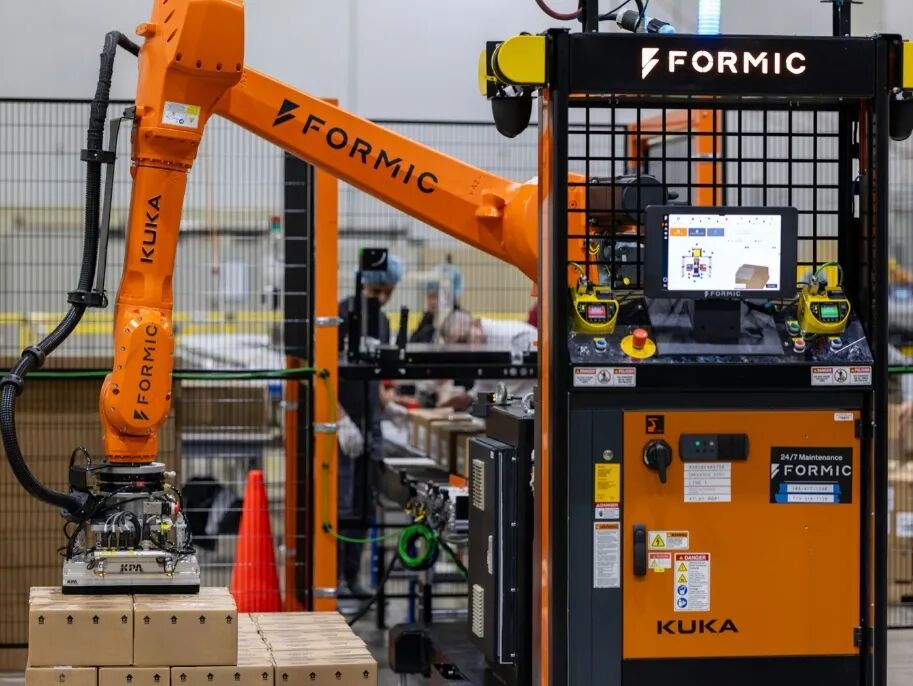
In such an arrangement, "cross-brand capability" is not an empty phrase—rather, it makes a unified and reusable delivery and service system a company's long-term hard business strength. In this way, how many robot ontologies it can adapt to, what kinds of scenario tasks it can cover, and how many scenario parties it can attract become a linear vision for the company's business development direction. The corporate narrative is more unified, the product roadmap is clearer, and there is also greater confidence about the future.
Of course, the project-based model can also form a clear business model in the long run, provided that the company can gradually develop methodologies for continuous customer acquisition, organized delivery, and profit generation, and then decide accordingly how to expand the business and arrange R&D.
Secondary development companies need to use projects to validate their own business direction, rather than always letting projects decide the direction for them. Once the business model is clear, it is still necessary to make trade-offs regarding the company's development direction.
If a scenario ontology manufacturer is willing to lay out in a certain scenario, it may be due to preferences in areas such as equipment acceptance, technical validation, and ecosystem building; some secondary development companies are able to enter, possibly because they already had customer acquisition capabilities, or simply because they rode the tailwind of the ontology manufacturer. The fact that the original manufacturer has started doing it and peers are doing it is not reason enough to follow suit and invest.
Specific to certain tasks within a certain scenario, such trade-offs still exist. FieldAI, a U.S. general robot operating system R&D company, collaborated with the UK's McLaren Construction to trial Boston Dynamics' Spot robot equipped with its software on a construction site. The initial tasks still focused only on on-site imaging and point cloud collection to support work such as progress verification. As for "big jobs" such as on-site logistics operations and multi-ontology collaboration, these merely belong to subsequent expansion directions.
In the same construction site scenario, the problems to be solved differ greatly. For secondary development companies, "entering the construction scenario" is probably still too broad a business goal. They must start from the existing team's capabilities to further determine what tasks they can undertake and which users they can serve. The more refined the application direction, the more accurate the company's judgment of investment value and capability reuse can be.
The expansion of business scope should be built on these more accurate judgments.
The relationship between short-term revenue and long-term investment must also be handled rationally. For businesses with low technical thresholds, if demand is stable and delivery is proficient, there is no problem using them to support the company's operations; directions that are attractive in prospects but still need development require time for validation and trial and error. What truly requires vigilance is when short-term projects continuously occupy R&D resources while long-term directions remain stuck in planning, or when, in pursuit of distant prospects, a company takes on investment beyond its capabilities too early. Business trade-offs must leave room for both and also set limits on investment.
These choices must ultimately land on R&D and delivery.
The more tools the original manufacturer opens up, the more secondary development companies need to re-judge which capabilities are worth developing themselves.
The embodied intelligence industry requires relatively high investment, technology iterates quickly, and it is on the eve of gradually maturing commercial deployment. When ontology manufacturers enter the field, it is easy to give secondary development companies the impression of "fighting a well-funded battle," but in reality the ontology manufacturers' goal is first and foremost ontology sales themselves. Even if they accelerate deployment at the application and service layers, it is difficult for ontology manufacturers to go deep into major scenarios to understand user needs—and this is precisely where secondary development companies have their foothold.
In other words, building long-term business by combining scenario needs should be the ultimate purpose of secondary development companies' R&D.
Zhao Jiangpeng believes that application companies do not need to participate in R&D across the entire chain from ontology and chips to models and terminal applications. Even if they participate in ontology R&D, they need to distinguish the purpose: whether it is to support application delivery, for their own validation, or to prepare for forming an independent product line. It appears that all are "developing robots," but the costs and operational responsibilities behind them may be completely different.
R&D investment also needs to connect with delivery arrangements. Can a function developed for one customer continue to be sold later? How can technology intended for long-term investment be validated in actual tasks? Who will continuously maintain an already delivered system? These questions will affect what kind of team the company actually needs, and also determine whether technological accumulation can be converted into revenue.
As the original manufacturers' capabilities continue to improve, the business that secondary development companies can "leverage" will also continue to change. What companies can grasp is to gradually concentrate their customers, products, and investment on businesses with long-term operations and clear capabilities, so that they have both revenue for continued operations and capabilities worth continuously accumulating.
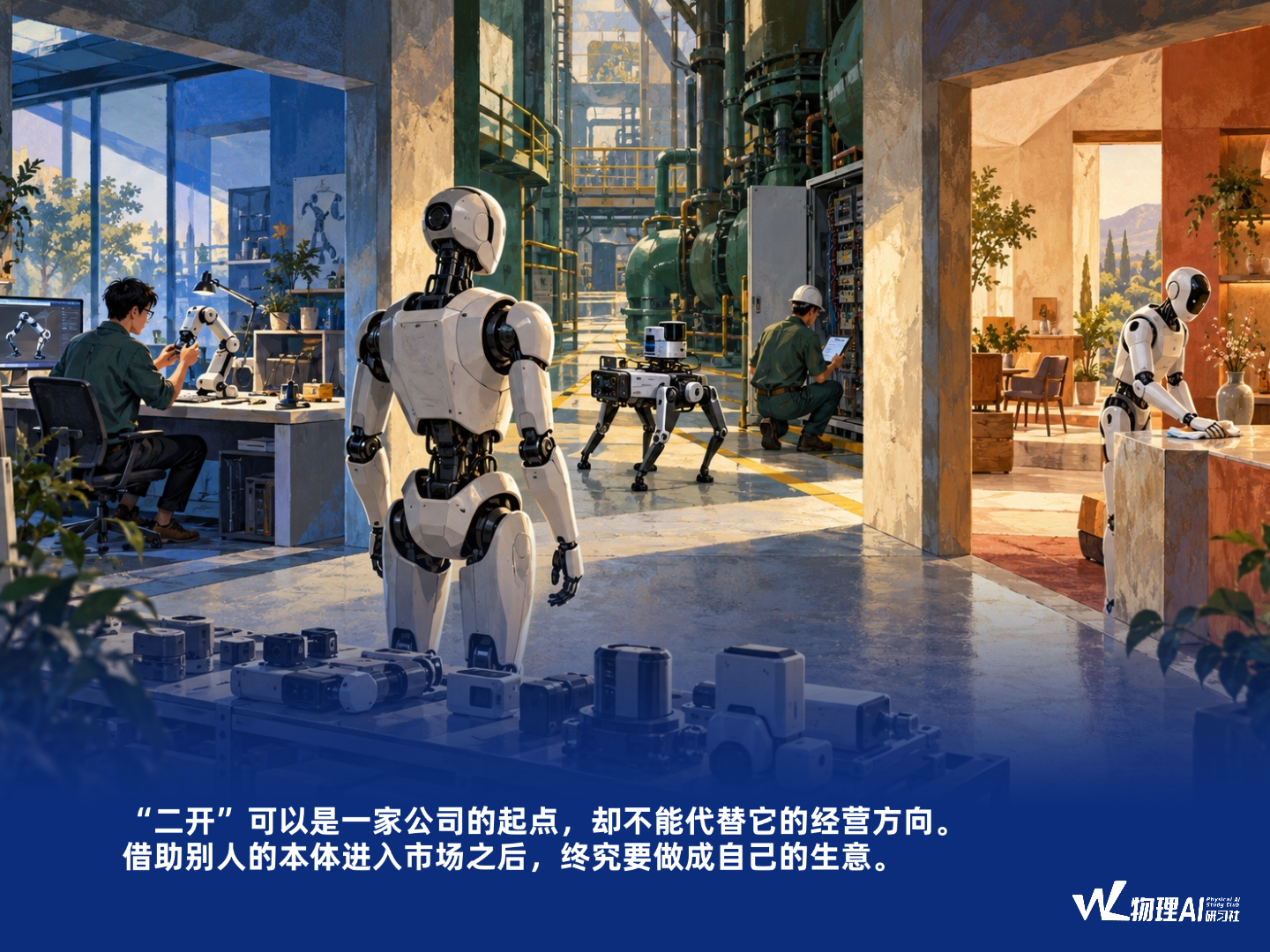
"Secondary development" can be the starting point of a company, but it cannot replace its business direction. After entering the market with someone else's ontology, a company must ultimately build its own business.
-
![]()
Embodied AI Secondary Development Companies: Closest to Demand, Yet Shifting Boundaries
-
Exports Surge 169% Year-on-Year in First Three Quarters as Geely Navigates Industry Cycle with Systemic Capabilities
-
![]()
AI Hardware: Don't Even Think About Bypassing Privacy
-
![]()
Will Anthropic Become the Most Valuable Company in Human History?
-
![]()
Zhongrun Optics Q3 Report: Consolidation Drives Revenue Up 38.85%
-
Tianyi Ma Q3 Report: Net Profit Plunges 50%, Gross Margin Under Pressure, Interest Expenses Devour Profits
-
Foxconn Industrial Internet Q3 Report: AI Computing Power Delivered, Quality of Growth Improves
-
Mercedes-Benz's All-Electric E-Class