Zhongrun Optics Q3 Report: Consolidation Drives Revenue Up 38.85%
 10/30 2026
 352
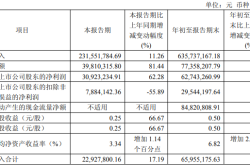
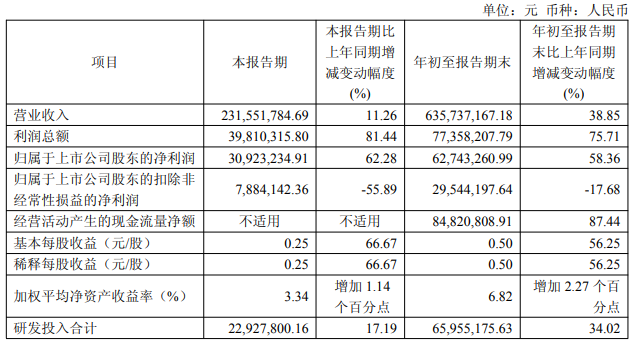
On October 30, Zhongrun Optics released its Q3 2026 report. For the first three quarters, the company reported operating revenue of approximately RMB 636 million, up 38.85% year on year; net profit attributable to shareholders of the parent company of approximately RMB 62.74 million, up 58.36% year on year; and net cash flow from operating activities of approximately RMB 84.82 million, up 87.44% year on year. In Q3 alone, revenue reached approximately RMB 232 million, up 11.26% year on year, while net profit attributable to shareholders of the parent company came to approximately RMB 30.92 million, up 62.28% year on year.
The strong growth in both revenue and net profit attributable to shareholders of the parent company was mainly driven by the consolidation of Dais Optoelectronics starting in July 2025.
Dais Optoelectronics specializes in precision optical components, and its technical expertise in precision optical components for industrial lasers is now extending into the optical communications sector. Several products—including prisms, lenses, waveplates and polarization beam splitter prisms—have entered customer sampling and small-batch trial production, and are expected to enter mass production in the second half of 2026. The consolidation effect, together with recovering downstream demand in special security, high-definition imaging and display applications, jointly supported revenue growth.
Net profit excluding non-recurring items for the first three quarters, however, was approximately RMB 29.54 million, down 17.68% year on year—a marked divergence from the trends in revenue and net profit attributable to shareholders of the parent company. The reason lies in capacity ramp-up costs at the Pinghu Base: Pinghu Zhongrun officially began operations in July 2025 and entered its ramp-up phase in the first half of 2026, with product production costs, R&D investment and various operating expenses temporarily elevated, directly squeezing profit excluding non-recurring items for the period.
The Pinghu plant is positioned for consumer optical products, mainly fixed-focus lenses, covering applications such as robot vacuums, drones and smart doorbells, while also undertaking in-house supply of plastic lenses. The pace of its capacity release will directly affect the subsequent trajectory of gross margin and expense amortization.
-
![]()
AI Hardware: Don't Even Think About Bypassing Privacy
-
![]()
Will Anthropic Become the Most Valuable Company in Human History?
-
![]()
Zhongrun Optics Q3 Report: Consolidation Drives Revenue Up 38.85%
-
Tianyi Ma Q3 Report: Net Profit Plunges 50%, Gross Margin Under Pressure, Interest Expenses Devour Profits
-
Foxconn Industrial Internet Q3 Report: AI Computing Power Delivered, Quality of Growth Improves
-
Mercedes-Benz's All-Electric E-Class
-
![]()
The Largest IPO in History Has Officially Filed Its Application
-
![]()
Prefabricated Data Centers Are Suddenly Catching On