Foxconn Industrial Internet Q3 Report: AI Computing Power Delivered, Quality of Growth Improves
 10/30 2026
 367
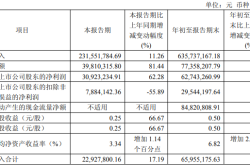
The term "AI computing power" has been bandied about in capital markets over the past two years, but few companies can truly translate industry prosperity into numbers on the income statement. Foxconn Industrial Internet's (601138) 2026 Q3 report at least lets the outside world see the word "delivered." According to the company's Q3 report, revenue for the first three quarters reached 941.414 billion yuan, up 55.88% year-on-year; net profit attributable to shareholders was 40.375 billion yuan, up 79.55% year-on-year; net profit after deducting non-recurring items came in at 39.449 billion yuan, up 82.15% year-on-year—both revenue and net profit have already surpassed the full year of 2025. Profit growth is clearly outpacing revenue growth, operating cash flow has turned from negative to positive, and the buyback plan has been executed to its lower limit. Taken together, the highlight of this financial report lies not merely in "fast growth," but in where that growth comes from, how much substance it carries, and whether it can be sustained.
01. Servers and Switches Ramping Up in Tandem—Growth Is No "One-Legged Jump"
Let's start with the revenue side. The most solid aspect of Foxconn Industrial Internet's Q3 report is that it did not stake its growth on a single product. On a quarterly basis, cloud computing business revenue alone grew 75% year-on-year and 25% quarter-on-quarter in Q3, with GPU and ASIC routes advancing in tandem, making them important engines for diversified growth in the segment. Among them, AI-ASIC server shipments grew 1.5 times year-on-year and 80% quarter-on-quarter; AI-GPU rack shipments grew 70% year-on-year and 15% quarter-on-quarter; the new generation of AI racks also began shipping, and overall market share continued to climb compared with the previous generation of products. In other words, the "technology route switch" that the market worried about did not leave the company scrambling; instead, it produced a pattern in which both GPU and ASIC routes benefit.
The communications and mobile network equipment business is also picking up the baton. Again looking at Q3 alone, network equipment revenue grew 1.2 times year-on-year and 25% quarter-on-quarter; shipments of 800G and above switches grew 80% year-on-year and 25% quarter-on-quarter, with products covering multi-chip platform Ethernet switches, CPO switches, NVLink switches, and SuperNIC network cards. In the context of AI data centers, this matters a great deal: computing clusters need not only GPU servers but also high-speed switching, network cards, and connectivity solutions—and the value content on the network side is rising in sync. Add to that the rapid growth of WiFi 7 routers, low-orbit satellite broadband equipment, and other businesses, and Foxconn Industrial Internet's growth looks more like a combination punch of "computing power + connectivity" than a one-legged jump.
02. Profit Outpaces Revenue—Substance Is Hidden in the Structure
High revenue growth matters, but manufacturing companies fear "revenue growth without profit growth" even more. Foxconn Industrial Internet's performance this time is actually more interesting on the profit side. In the first three quarters, the company's gross margin was approximately 7.09%, up from 6.76% in the same period last year; net profit attributable to shareholders grew 79.55%, and net profit after deducting non-recurring items grew 82.15%, both clearly outpacing the 55.88% revenue growth. The fact that net profit after deducting non-recurring items grew faster than net profit attributable to shareholders shows that this round of growth stems mainly from the core business rather than one-off gains.
In the first three quarters, non-recurring gains and losses totaled about 926 million yuan, less than 3% of net profit attributable to shareholders, further confirming the "substance" of profits. Behind this lies a shift in product structure. AI servers, AI racks, 800G and above switches, CPO switches, NVLink switches, and other products continued to ramp up, and the share of high-value products increased—one of the underlying reasons for the rise in cumulative gross margin.
On a quarterly basis, however, Q1 gross margin was 7.35%, while both Q2 and Q3 came in at 6.99%, essentially flat with 7.00% in Q3 last year. The cumulative gross margin increase of 0.33 percentage points year-on-year is more related to the low base in the first half of last year (6.60% in the first half of 2025), and product structure upgrading has yet to be reflected in a further increase in gross margin. The improvement in net margin actually comes more from the dilution of expense ratios—sales, administrative, and R&D expenses totaled 14.35 billion yuan, up 12.9% year-on-year, and their share of revenue fell from 2.10% to 1.52%.
Overall expenses were under control. In the first three quarters, R&D expenses were 8.173 billion yuan, up 7.45% year-on-year, far below revenue growth, indicating that the company is not squeezing R&D to prop up profits. Financial expenses, however, rose to 2.920 billion yuan as borrowing scale expanded, compared with 736 million yuan in the same period last year; interest expenses alone were 3.329 billion yuan—a piece that warrants attention. In the first three quarters, the weighted average return on equity reached 21.77%, up 7.39 percentage points year-on-year; basic earnings per share were 2.04 yuan, up 80.53% year-on-year. In manufacturing, such profit elasticity is not often seen.
03. Cash Flow Turns Positive—The Foundation for Expansion Is More Stable
Beyond profit, cash flow is another indicator in this financial report that is easily overlooked but highly telling. In the first three quarters, net cash flow from operating activities was 3.216 billion yuan, compared with -4.141 billion yuan in the same period last year—an improvement of more than 7.3 billion yuan year-on-year. The company explained it plainly: sales collections increased, and the increase in operating cash inflows exceeded the increase in cash outflows.
For a manufacturing enterprise with revenue approaching one trillion yuan and sizable accounts receivable and inventory, operating cash flow turning from negative to positive is a positive signal, but the judgment that "growth is not paper wealth" still needs a footnote: the net inflow of 3.216 billion yuan was only equivalent to 8% of the 40.375 billion yuan net profit attributable to shareholders in the same period. During the same period, accounts receivable increased 78.3% from the beginning of the year, and accounts payable rose by about 60%, so a considerable part of the improvement came from increased occupation of upstream payments.
Whether collection efficiency can keep pace with revenue expansion still needs to be observed. The balance sheet also shows that the company is in a state of "active expansion." At the end of the period, accounts receivable were 197.455 billion yuan, up 78.3% from the beginning of the year, of which about 70 billion yuan was added in Q3 alone—faster than the 25% quarter-on-quarter revenue growth in that quarter; inventory was 188.94 billion yuan, up 25.2% from the beginning of the year, lower than revenue growth, indicating relatively restrained stockpiling; accounts payable were 220.66 billion yuan, up nearly 60% from the beginning of the year, indicating that the company still has strong bargaining power in occupying supplier funds.
During the same period, construction in progress was 13.43 billion yuan, up significantly from 7.83 billion yuan at the beginning of the year; capital expenditure was 14.09 billion yuan, up 40% year-on-year, and capacity construction is accelerating. At the end of the period, monetary funds still stood at 97.91 billion yuan; equity attributable to shareholders was 190.57 billion yuan, up 14.27% from the beginning of the year; the asset-liability ratio rose from 63.37% at the beginning of the year to 67.09%; the current ratio was 1.38 and the quick ratio 0.88; interest-bearing liabilities were 128.39 billion yuan, slightly higher than monetary funds of 97.912 billion yuan.
Overall, this looks more like actively adding leverage during an order expansion period than passively filling holes, but short-term debt repayment and liquidity management have also become variables that need to be tracked. Of course, the subsequent turnover of accounts receivable and inventory still bears watching, but at the current stage of rapid revenue expansion, this is more like a leading indicator of orders and stockpiling.
04. Buyback Implemented—Real Money Is More Convincing Than Slogans
Finally, shareholder returns. On July 27, the company's board of directors approved a buyback plan to use 1 billion to 2 billion yuan of its own funds to repurchase shares at a price of no more than 103 yuan per share, for the purpose of safeguarding company value and shareholder rights. It was first implemented on August 19, and by September 19 it had reached the lower limit of 1 billion yuan and was completed, with a cumulative repurchase of 15.8334 million shares, accounting for about 0.08% of total share capital, at an average repurchase price of 63.16 yuan per share, with a high of 66.40 yuan and a low of 59.91 yuan.
Against the backdrop of the Q3 report, the signal from this buyback is relatively clear: performance is growing rapidly, operating cash flow is improving, and the company is still willing to spend real money on buybacks, indicating that management has confidence in current value and future operating rhythm.
Executing the lower limit of 1 billion yuan is not aggressive, but from board approval to completion in less than two months, the action was crisp. According to the plan, these shares will be sold through centralized bidding 12 months after the buyback result announcement, and the portion not sold within the deadline will be cancelled—which is not exactly the same effect as a direct cancellation buyback. For investors, compared with mere slogans, this combination of "performance growth + buyback implementation" makes it easier to believe that the company's judgment on the main line of AI computing power is not short-term trend-following.
After all, a good Q3 report not only tells the market how much money was made in the past nine months, but also answers where growth comes from, whether it can continue, and whether shareholders can share in it. Foxconn Industrial Internet's answer sheet, at least on the main line of AI computing power, has given a relatively clear answer: servers and switches are ramping up as dual engines, profit growth is outpacing revenue, cash flow has turned positive, and the buyback has been implemented.
Next, what the market should watch is not the story, but the pace of ramping up of new-generation AI racks, 800G+ switches, CPO and other products, whether quarterly gross margin can stay above 7%, and whether accounts receivable and inventory turnover can keep up with the pace of expansion. As long as these key indicators do not deviate, there is still room for Foxconn Industrial Internet's AI narrative to continue.
- End -
-
![]()
Will Anthropic Become the Most Valuable Company in Human History?
-
![]()
Zhongrun Optics Q3 Report: Consolidation Drives Revenue Up 38.85%
-
Tianyi Ma Q3 Report: Net Profit Plunges 50%, Gross Margin Under Pressure, Interest Expenses Devour Profits
-
Foxconn Industrial Internet Q3 Report: AI Computing Power Delivered, Quality of Growth Improves
-
Mercedes-Benz's All-Electric E-Class
-
![]()
The Largest IPO in History Has Officially Filed Its Application
-
![]()
Prefabricated Data Centers Are Suddenly Catching On
-
![]()
Two Contrarian Bets: Can Wang Tao Really Succeed Zuckerberg?