BMW Profit Margin Nears Zero as Carmaker Launches Strategic "Loss"
 11/05 2026
 511
Confronting the True Cost of Electrification
"
Author | Zaizhou
2026 profit margin guidance: -0.5% to 0.5%.
It is hard to imagine that a century-old luxury carmaker's automotive business would find itself on the brink of losses.
During the 2009 financial crisis, BMW's profit margin stood at -0.6%. During the 2020 pandemic, it was 2.7%. In other words, the money BMW makes from selling cars in 2026 will return to levels last seen when Lehman Brothers collapsed.
Layoffs followed almost immediately. Globally, BMW plans to cut 8,000 jobs across R&D, administration, and management through voluntary departure, to be completed by the end of 2027, with maximum compensation of 650,000 euros—roughly 4.88 million yuan.
In Shenyang, BMW Brilliance plans to cut 1,800–2,000 jobs, with compensation of N+5, effective from November. The extra five months are calculated based on basic salary, not pre-tax monthly salary.
On one side is a 650,000-euro check; on the other, an N+5 agreement. The same income statement, two kinds of dignity.
01 What Pushed the Profit Margin to Zero Is China
Looking only at the financial report, BMW is actually not in such bad shape.
In the third quarter, global deliveries were 551,100 vehicles, down 6.3% year on year. But Europe delivered 235,800, up 2.6%, and the United States 107,100, up 2.5%. Pure electric vehicles totaled 110,300, up 7.2%, accounting for 20% of deliveries, compared with 17.5% in the same period last year.
Only China delivered 114,400 vehicles in the same period, down 24.8% year on year, and 376,400 in the first three quarters, down 21.8%.
BMW's own explanation is that cuts in subsidies for new energy vehicles in China and fierce price competition led to a significant contraction in China and dragged down global performance.
Of course, there is another factor not explicitly mentioned: Chinese automakers going overseas brought competition to Europe and Southeast Asia, in turn squeezing BMW's traditional markets. The growth in Europe and the United States in the financial report was achieved against this backdrop.
Europe has once again become BMW's largest market. This sentence used to be the norm; now it is news.
A market that was once a reliable source of profit pulled the global automotive business profit margin from 5.2% to 3.4%, and dragged the full-year guidance from 1%–3% down to near zero.
It is indeed a bit of dark humor.
Besides sales, there are other factors: additional U.S. tariffs, which reduced BMW's automotive business profit margin by about 1.25 percentage points each in the third quarter and the first three quarters. R&D spending was 1.790 billion euros, down 6.8% year on year and down 7.4% in the first three quarters, meaning even R&D is being economized. Selling and administrative expenses were 2.480 billion euros, down 3%.
In the first three quarters, overall revenue fell 7.3% to 92.718 billion euros, and net profit attributable to shareholders fell 21.8% to 4.319 billion euros. Among the few numbers still rising in the financial report is the financial services business, with penetration rising to 55.4%, 3.4 percentage points higher than the same period last year.
Selling cars does not make money, so finance makes up a little. This is standard practice for luxury brands.
But the ceiling of the financial services business depends on how many new cars are sold.
Of course, to be clear, BMW is not losing money.
At the group level, the third-quarter pre-tax profit margin was 6.8%, and free cash flow is expected to exceed 2.5 billion euros. Excluding one-off restructuring costs, the automotive business profit margin is still above 2%. What is near zero is the automotive business EBIT margin, not the group's profit or loss.
The real problem is the trend.
BMW Brilliance sales were 673,600 vehicles in 2021, 665,000 in 2022, 646,200 in 2023, 607,800 in 2024, and 525,700 in 2025. In five years, from 670,000 to 520,000.
The workforce is also shrinking. Tianyancha shows that BMW Brilliance had about 21,000 insured employees in 2025, 2,402 fewer than in 2024.
The curve is even steeper in 2026: 316,900 vehicles from January to September, with September alone down more than 33% year on year. For the full year, at the current pace, it will be 380,000 to 400,000 vehicles, down 25% to 28% year on year.
This is not a cycle; it is the fifth consecutive year of decline.
What is more troublesome is that the decline is happening exactly in BMW's most profitable price band—300,000 to 600,000 yuan—the interval with the thickest profits for luxury brands and also where Chinese brands have concentrated their electrification attacks over the past two years.
The reason is not hard to find. In July 2026, BMW Brilliance stopped production of three domestically made pure electric models—the i3, iX1, and i5—and the pure electric product line briefly dropped to zero.
At present, in the pure electric market above 300,000 yuan, the top ten sellers in 2025 include the NIO ES8 and ES6, AITO M8 and M9, and Li Auto i8 and MEGA, accounting for more than half.
Over the same period, the scale of these players: HarmonyOS Intelligent Mobility sold 589,100 vehicles in 2025, NIO 327,000, up nearly 47% year on year, and Li Auto 409,000. The contribution of BMW Brilliance's entire new energy product line is far lower than any one of them.
02 Germans Get 4.87 Million Yuan; Shenyang Workers Get N+5
At the end of July, BMW announced it would cut 8,000 positions by the end of 2027—about 5% of the workforce—concentrated in administration, R&D, and group planning, with production lines untouched. The method is voluntary departure, and the price is very high: up to 650,000 euros, about 4.87 million yuan. Volkswagen's comparable program caps at 405,000 euros, and Mercedes-Benz at 500,000. BMW's figure set a new high among German automakers.
On October 8, the internal inquiry channel opened. Forty to fifty thousand employees logged in at the same time to calculate how much they could get, and the system crashed on the spot. After repairs, the heat did not fade. In three days, 5,000 slots were snapped up. On October 20, BMW closed the application channel early.
A layoff was turned into a rush purchase.
This money is not generosity. BMW is calculating another account: using one-time spending to buy out long-term labor costs. Germany has dismissal protection and unions. Forced layoffs would mean lawsuits and strikes, with higher costs. Paying people to leave on their own is the cheapest path. In exchange, BMW also promised not to carry out forced layoffs among remaining German employees for several years.
The person driving this is CEO Milan Nedeljkovic, who took office just in May this year. In addition to 8,000 positions, about 100 executives mainly based in Munich will also be cut. Management is being reduced faster than originally planned.
Those who took the money and left are not in an easy position. An employee working in the German auto industry said his annual salary is close to 100,000 euros. Looking for work under the IG Metall collective agreement, he found that such large companies have almost stopped hiring. Even if he finds a job, the annual salary will most likely be only 70,000 to 85,000 euros—a pay cut of 15% to 30%.
Now look at Shenyang. On November 2, BMW Brilliance launched personnel adjustments involving three plants: Dadong, Tiexi, and Powertrain, with a scale of 1,800 to 2,000 people, about 10% of 19,000 employees. Most are P-category production positions, with some G-category technical positions.
Compensation is N+5, with N calculated on pre-tax monthly salary and 5 on basic salary.
For example, a worker in the final assembly workshop of the Dadong plant who had worked for nearly five years received a call from human resources on November 3 and signed the agreement that day. Three people left his team this time: one section chief and two frontline workers. A veteran employee at the Tiexi plant who had worked for 15 years signed on the same day.
An employee in an equipment planning position said that the three-year contracts of four employees in his department expired this year and none were renewed.
The price gap is right there: up to 4.87 million yuan per person in Munich, and a bit over 100,000 yuan per person in Shenyang.
But this is not BMW playing favorites. Germany has the dismissal protection law and IG Metall. Forced layoffs would face strikes, litigation, and public opinion. To get people to leave, you can only buy them out. BMW prepared 1 billion euros in one-time spending for these 8,000 people, in exchange for saving 1 billion euros in labor costs each year from 2028.
Shenyang does not have this constraint. N+5 is already considered decent in the industry, and agreements are signed quickly.
So this is not a moral issue; it is a cost structure issue. German labor is so expensive that you cannot afford to lay people off; Chinese labor is cheap enough to lay people off directly.
Let's do a small calculation. For BMW Brilliance's 1,800 people this time, assuming an average annual comprehensive labor cost of 150,000 to 200,000 yuan per person, that saves 270 million to 360 million yuan a year. N+5 compensation, assuming an average length of service of 8 years and a pre-tax monthly salary of 10,000 yuan, is about 120,000 yuan per person, or about 216 million yuan for 1,800 people. It pays back in one year.
BMW now has to do two things at the same time: reduce costs in Germany and contract in China. Two layoff rounds, one logic.
03 A Competitive Product Has Arrived
This round of layoffs is easily read as contraction, but from another angle, it looks more like a gear shift.
Shenyang is cutting frontline production positions, corresponding to the three discontinued oil-to-electric models and the adjusted capacity rhythm; Germany is cutting administration, R&D, and planning, corresponding to the organizational redundancy piled up in the old platform era. What is being reduced at both ends is the weight of the previous era.
And in the same factory, another line is accelerating.
On October 15, the sixth-generation high-voltage power battery began mass production at the Shenyang Powertrain plant. On August 21, the Neue Klasse iX3 opened pre-sales at the Chengdu Auto Show and will be officially delivered in November.
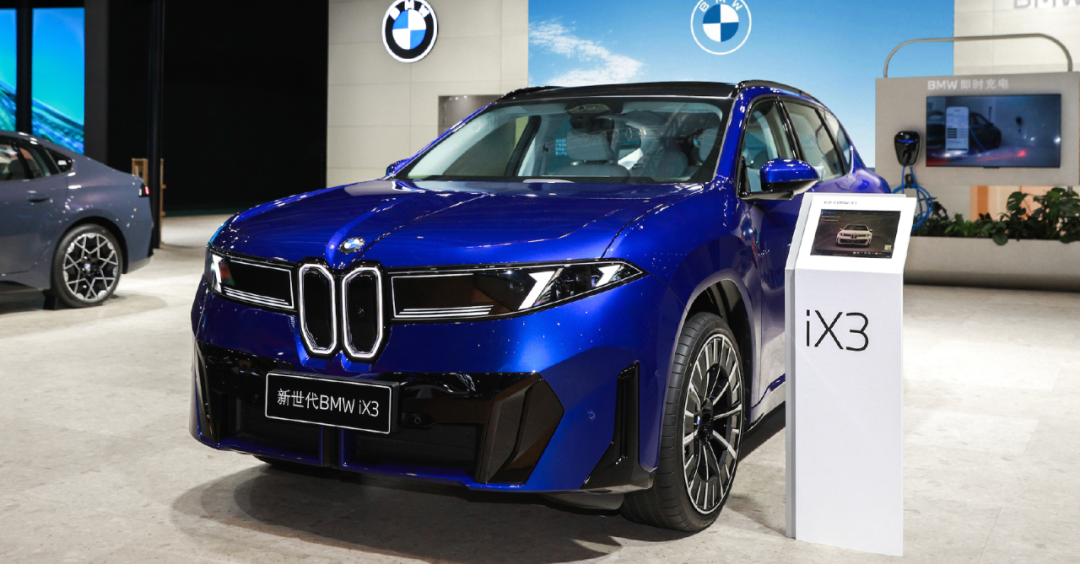
This car is given high hopes. It adopts a native pure electric platform, full-domain 800V, and maximum 400kW charging. 46mm large cylindrical cells, 9-series high-nickel, with energy density 20% higher than the fifth-generation prismatic cells.
The 50L version has a CLTC range of 919 kilometers and can add 418 kilometers of range in 10 minutes. In August, a BMW engineer drove an iX3 50L from the Shenyang plant all the way to the Beijing R&D center—1,030.2 kilometers without charging—and still had 5% battery left on arrival.
The price starts at 269,900 yuan, the 40L is 299,900 yuan, and the 50L is 339,900 yuan. National unified pricing, pre-order and launch at the same price, nearly 40 configurations standard across the lineup, including the 800V platform, intelligent driving assistance, and an AI assistant integrating Alibaba's large model.
What does this price mean? For the first time, BMW has put its pure electric luxury into the main battlefield under 300,000 yuan. Previously it sold cars on brand premium; now it is fighting head-on with products and prices.
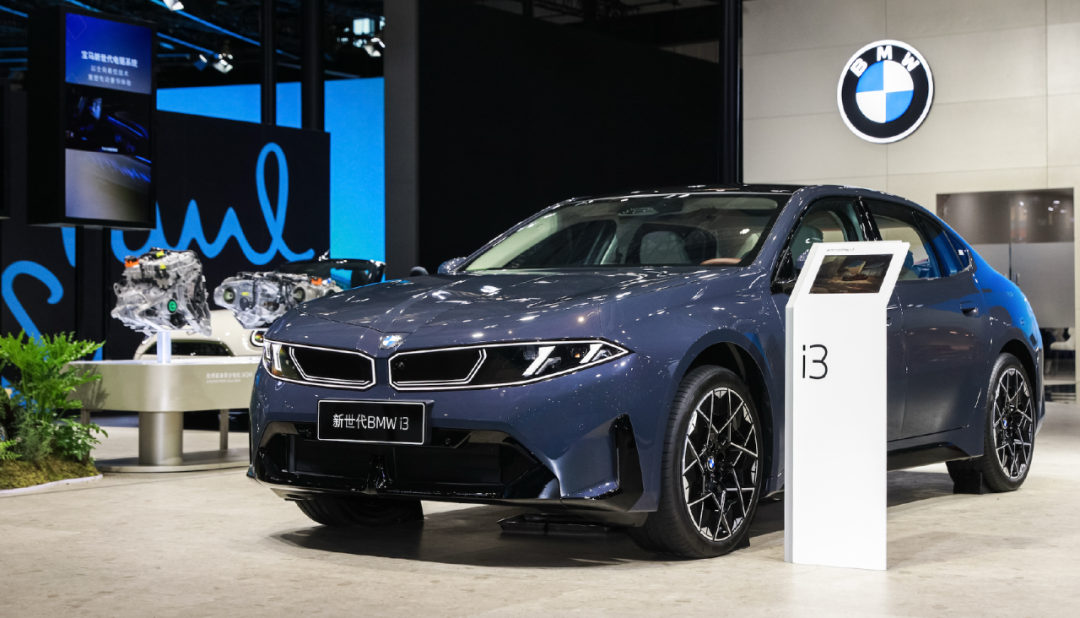
The overseas version has already received a five-star rating in the Euro NCAP 2026 edition, and cumulative orders in Europe are heading toward 100,000. In the first quarter of next year, the eighth-generation 3 Series developed specifically for China—the Neue Klasse i3—will be delivered, with a CLTC range of more than 1,000 kilometers. In 2027, nearly 20 models equipped with the Neue Klasse technology cluster will be launched.
This is BMW's real trump card.
Now look at the account of reducing the burden. Cutting 8,000 in Germany saves 1 billion euros a year from 2028, and cutting 1,800 in Shenyang saves 270 million to 360 million yuan a year. If this money is not invested, it will only make the financial statements look good for one year. BMW's statement is that it wants to accelerate production of new models and phase out old models and old technologies earlier.
This is not the first time BMW has been in this position. In the 2009 financial crisis, the automotive business profit margin was -0.6%, and afterward it climbed back through its Efficient Dynamics strategy. In 2016 it launched the "First Strategy," also turning toward electrification amid doubts. This is the third gear shift, only the home field has moved to China, and the competitors have become Chinese brands.
So a more accurate reading of this matter is that BMW is using a high-cost slimming down to buy a chance to start again.
The four words "light pack" are easy to say. To truly achieve it, two conditions must be met at the same time: the old baggage must be reduced cleanly, and the new platform must be able to catch on.
BMW has already acted on the first condition. The second condition will be known in 2027.
-
![]()
Chinese Large Models Are Going Open Source in Droves: AGI Ideal or Ecosystem Positioning?
-
![]()
With 360,000 Units Sold Propping Up Half of XPeng's Business, How Far Is MONA from Independence?
-
![]()
After Falling Below One-Third, What Does the Fuel Vehicle Still Rely On to Stay in the Game?
-
![]()
BMW Profit Margin Nears Zero as Carmaker Launches Strategic "Loss"
-
No Longer Just Writing PPTs! ChatGPT Opens a New Frontier: It Can Help with Grocery Shopping, Create Recipes, and Even Pick Kindergartens
-
![]()
Auto Electronics Leader Posts Consecutive Earnings Growth, Nearly 9.5 Billion Yuan Invested in R&D Over Five Years
-
Awkward Indeed: Chinese Consumers Are Apple's Biggest Fans – iPhone 18 Pro Sales Surge 29%, Revenue Climbs 21%
-
![]()
Silicon Valley Tech Giants Bet on AI Games to Capture the Last Profitable Frontier