After Falling Below One-Third, What Does the Fuel Vehicle Still Rely On to Stay in the Game?
 11/05 2026
 467
Recently, the latest passenger vehicle retail statistics released by the Passenger Car Market Information Joint Branch of the China Automobile Dealers Association show that in September the retail penetration rate of new energy passenger vehicles reached 67%, the retail share of fuel vehicles fell below one-third for the first time, and single-month retail sales of fuel vehicles plunged 43% year-on-year. The news was subsequently shared by Tesla CEO Musk on social media, and the shift in China's oil dependence also drew widespread attention.

Single-month figures may contain an element of chance, but over a longer horizon the changes unfolded gradually. In July of the same year, the China Association of Automobile Manufacturers had already announced two "firsts": the monthly share of new energy vehicle sales exceeded 60% for the first time, and the cumulative share in the first seven months surpassed 50% for the first time, measured on a full-caliber basis that includes commercial vehicles and exports. New energy's rise to become the main force in the market is no longer a localized phenomenon. The question worth discussing is not whether fuel vehicles will exit, but in what form they will continue to exist. Public data and corporate actions suggest that the domestic contraction of fuel vehicles is the result of product substitution, policy constraints, and infrastructure shifts, yet the pace of electrification in overseas markets is uneven. The fuel vehicle business is diverging between domestic niche scenarios and overseas markets, with hybridization and intelligentization serving as the main ways to extend its life cycle.
▍The New Energy-Dominated Landscape Has Taken Shape
A closer look at the September data reveals that fuel vehicles have already diverged internally. Statistics from the Passenger Car Market Information Joint Branch show that retail sales of pure fuel vehicles fell 49% year-on-year, while ordinary hybrid vehicles actually grew 25%. What is contracting in the market is not every vehicle with an engine, but products with older technology and higher running costs. From the perspective of product attributes, electric vehicles are electronic products and naturally adapt to intelligent functions.
Calculated on the same mileage, the cost of using electricity is significantly lower than that of using fuel. As the industry scale expands, the past price disadvantage of electric vehicles is also fading, creating comprehensive substitution pressure on fuel vehicles. From an industry operations perspective, the fuel vehicle segment has already seen continuously declining sales, constantly falling prices, and some companies operating at a loss. Shrinking demand and price pressure are compounding, and the operating difficulty for companies relying on fuel vehicles has clearly increased.
At the same time, as the electric vehicle fleet has grown, foot traffic at gas stations has shrunk, and some stations face the pressure of losses and closure. The decline in refueling convenience will further weaken the appeal of fuel vehicles, a process difficult to reverse through price cuts alone. Policy is also tightening simultaneously. The Ministry of Industry and Information Technology and other departments have made clear that the new energy vehicle credit ratio requirements for 2026 and 2027 are 48% and 58% respectively; the new fuel consumption limit standards are generally tightened by about 18%, and supporting documents require that by 2030 the average fuel consumption of enterprises fall to 3.3 liters per 100 kilometers, with the target generally tightened by about 48%. For automakers, developing new energy and hybrids is no longer just a market choice but also a compliance requirement.

With the market and policies working together, the brand landscape is shifting accordingly. Data from the China Association of Automobile Manufacturers show that in the first half of 2026, the cumulative share of self-owned brand passenger vehicles reached 71.8%, exceeding 75% in June alone, while the combined share of foreign brands in China was less than 30%. The growth of self-owned brands stems mainly from the combined efforts of new energy, exports, and product structure upgrading, rather than simply relying on low prices. Data from the Passenger Car Market Information Joint Branch show that in September the retail penetration rate of new energy in the luxury car market reached 44.9%, and public reports also indicate that Mercedes-Benz sales in China have declined significantly and that it will comprehensively review its business in China.
From the perspective of demand structure, fuel vehicles still have a basis for existence in specific scenarios. In Northeast China and other regions with cold winters and insufficient charging infrastructure, pure fuel vehicles and hybrid models still have practical value. Hybrid models are more stable than pure electric vehicles in cold weather and more fuel-efficient than pure fuel vehicles, making them a relatively compromise choice in these regions.
▍Segmented Scenarios and Overseas Markets Become New Survival Boundaries
Domestic electrification is advancing rapidly, but the global market has not turned around in sync. Data from the China Association of Automobile Manufacturers show that in the first half of 2026 China's automobile exports reached 5.096 million units, up 65.3% year-on-year, and in June alone exports reached 1.037 million units, exceeding one million for the first time; among them, exports of traditional fuel vehicles reached 2.741 million units, up 35.5%, still higher than the 2.355 million units of new energy exports. Industry statistics also show that in the first half of the year exports of gasoline fuel vehicles were about 1.94 million units, up 40% year-on-year, with Russia, Africa, and South Asia being markets with stronger demand.
From the data structure, exports have become an important support for vehicle market sales. From the perspective of different global regions, Europe's electrification direction is consistent with the Chinese market but at a slower pace. In North America, Southeast Asia, Africa, and other places, electricity prices are relatively high and charging facilities are difficult to roll out on a large scale in the short term, so fuel vehicles still occupy the mainstream, and the competitiveness of new energy vehicles cannot be separated from the support of infrastructure and the battery supply chain.
Companies continue to invest in fuel vehicle technology because there is a realistic operational basis. Traditional automakers have invested heavily in the internal combustion engine industry chain, and completely abandoning it is not economical. The fuel business can still provide stable profits and spread R&D costs, and overseas demand also gives domestically accumulated technology room for output.
The domestic market and overseas markets are not an either-or relationship. Technology polished domestically can spread costs overseas, and overseas returns can in turn feed domestic new energy R&D. Horse Powertrain, a joint venture between Geely and Renault, is a typical case. It is held by Renault, Geely, and Saudi Aramco, focuses on internal combustion engines and hybrid powertrains, has five major R&D centers and eighteen production bases globally, and places its operating focus overseas.
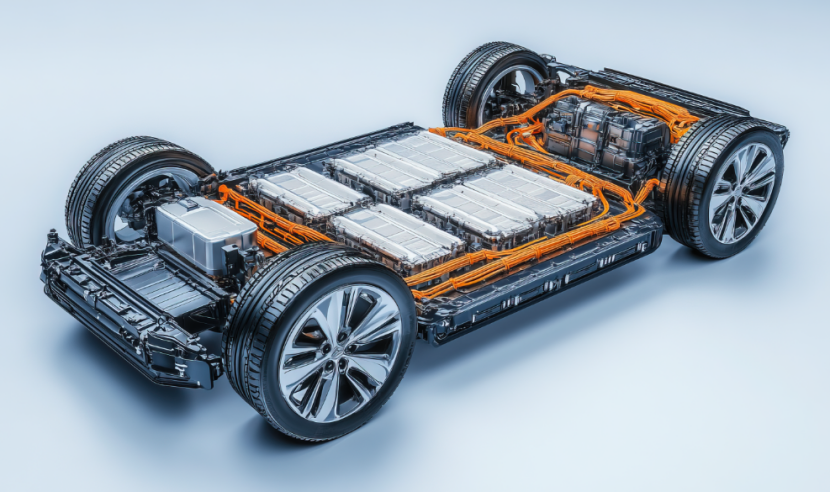
At the product level, hybridization and intelligentization are common directions. Geely released i-HEV Smart Engine Hybrid. Public information shows that measured fuel consumption is as low as 2.22 liters per 100 kilometers, the engine's maximum thermal efficiency is 48.41%, and it is paired with a new electronic and electrical architecture and AI cloud power. Chery launched the "China New Fuel" strategy. According to corporate release information, the Kunpeng Tianqing engine achieves 48.57% thermal efficiency, and the Falcon 500 intelligent driving system is equipped with a high-computing-power chip and 26 sensors, supporting highway navigation assistance.
For users, this upgrade means that fuel vehicles are no longer just different in power form; in-car interaction, navigation assistance, and parking experience are also aligning with new energy products. Alternative fuels also leave room. During the National People's Congress and the Chinese People's Political Consultative Conference, relevant suggestions were made to promote methanol electric trucks, and green methanol has already been included in the pilot scope. Recently, Geely also released a new methanol electric hybrid model for commercial trial in passenger vehicles.
From the perspective of technical characteristics, battery energy density has a physical upper limit, and the high energy density of fuel is difficult to completely replace in the short term. Hybrids combine convenient refueling with optimized energy consumption and are an intermediate carrier connecting the fuel era and the pure electric era. In the future, pure electric, plug-in hybrid, oil-electric hybrid, and pure fuel vehicles are expected to develop in parallel in different scenarios. But it should be noted that hybridization and intelligentization can enhance segmented competitiveness, but cannot reverse the overall downward trend of domestic share.
What can be determined at present is that the domestic share of fuel vehicles will decline over the long term, new energy has undeniably occupied a dominant position, the supporting role of exports and overseas markets has strengthened, and hybridization and intelligentization have become common directions. The uncertain part is equally clear: there is no precise number for exactly what share fuel vehicles will contract to. But overall, fuel vehicles are more likely to be gradually compressed into specific scenarios and regions, and their survival boundary still depends on the game among local energy policies, infrastructure, and consumer capacity.
Layout 丨 Yang Shuo Image source: Qiankuwang
-
![]()
Chinese Large Models Are Going Open Source in Droves: AGI Ideal or Ecosystem Positioning?
-
![]()
With 360,000 Units Sold Propping Up Half of XPeng's Business, How Far Is MONA from Independence?
-
![]()
After Falling Below One-Third, What Does the Fuel Vehicle Still Rely On to Stay in the Game?
-
![]()
BMW Profit Margin Nears Zero as Carmaker Launches Strategic "Loss"
-
No Longer Just Writing PPTs! ChatGPT Opens a New Frontier: It Can Help with Grocery Shopping, Create Recipes, and Even Pick Kindergartens
-
![]()
Auto Electronics Leader Posts Consecutive Earnings Growth, Nearly 9.5 Billion Yuan Invested in R&D Over Five Years
-
Awkward Indeed: Chinese Consumers Are Apple's Biggest Fans – iPhone 18 Pro Sales Surge 29%, Revenue Climbs 21%
-
![]()
Silicon Valley Tech Giants Bet on AI Games to Capture the Last Profitable Frontier