With 360,000 Units Sold Propping Up Half of XPeng's Business, How Far Is MONA from Independence?
 11/05 2026
 535
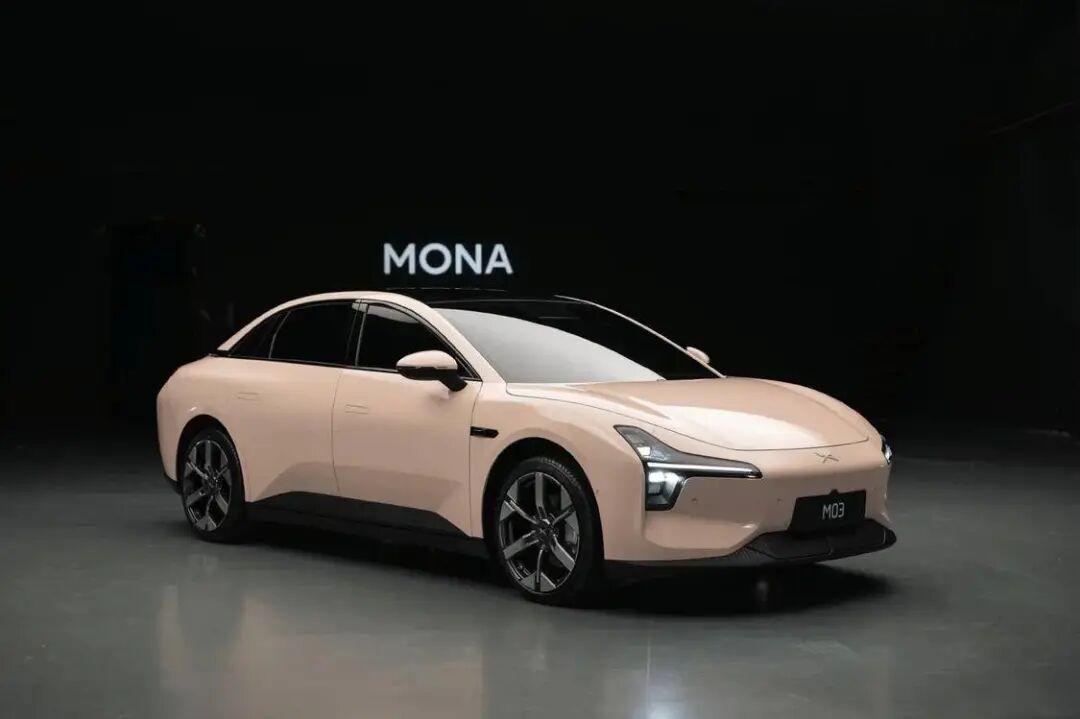
On October 29, the XPeng MONA L05 officially launched with a limited-time starting price of 139,800 yuan, and 5,000 near-production vehicles sold out in just 3 minutes.

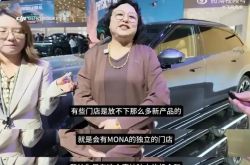
Before the new car even launched, XPeng Group President Wang Fengying had already revealed at the 2026 Paris Auto Show that starting in 2027, some cities would establish standalone MONA stores, and she did not rule out the possibility of the MONA brand becoming fully independent in the future. After the related interview was published by the media on October 30, it sparked considerable discussion. This means that MONA—the product line tasked with driving volume—may move toward independent operations down the road.
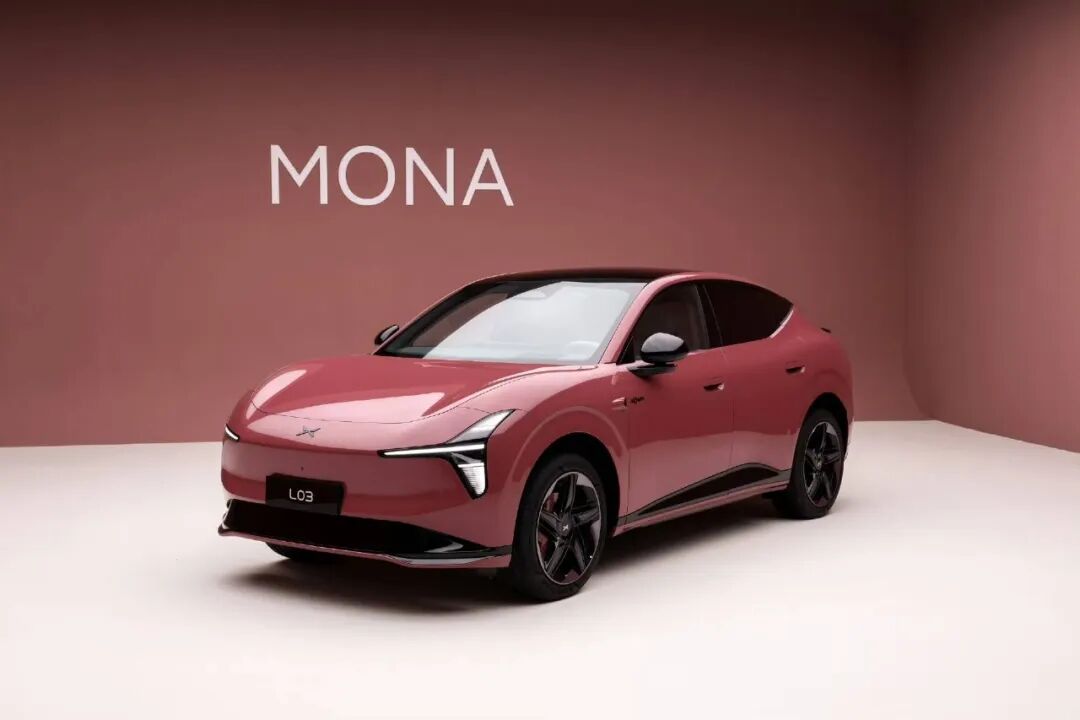
MONA's weight within XPeng is clear from the data. He Xiaopeng revealed on the night of the L05 launch event that the MONA series had cumulatively delivered over 360,000 units. Statistics from third-party platforms show that from the M03's launch in August 2024 to September 2026, XPeng sold a cumulative 720,500 vehicles in China, with the M03 and L03 together accounting for 333,700 units—46.31% of the total—and exceeding 50% in some months. In October, XPeng Group delivered 50,237 vehicles overall, also a record high, among which the MONA L03 delivered more than 20,000 units in a single month.
Why spin off a series that contributes nearly half of sales? Will low-priced models undermine the main brand's technology positioning, and what practical considerations lie behind the split? These questions are worth careful thought.
Why does the affordable series need separate network operations?
The direct reason Wang Fengying gave is not complicated: existing stores simply lack showroom capacity. MONA already has three models—the M03, L03, and L05—and the main brand's G and D product lines continue to launch new cars. Mall stores have limited display space, making it difficult to showcase all models simultaneously. This reason explains the urgency of channel adjustment, but it may not capture all the motivations.
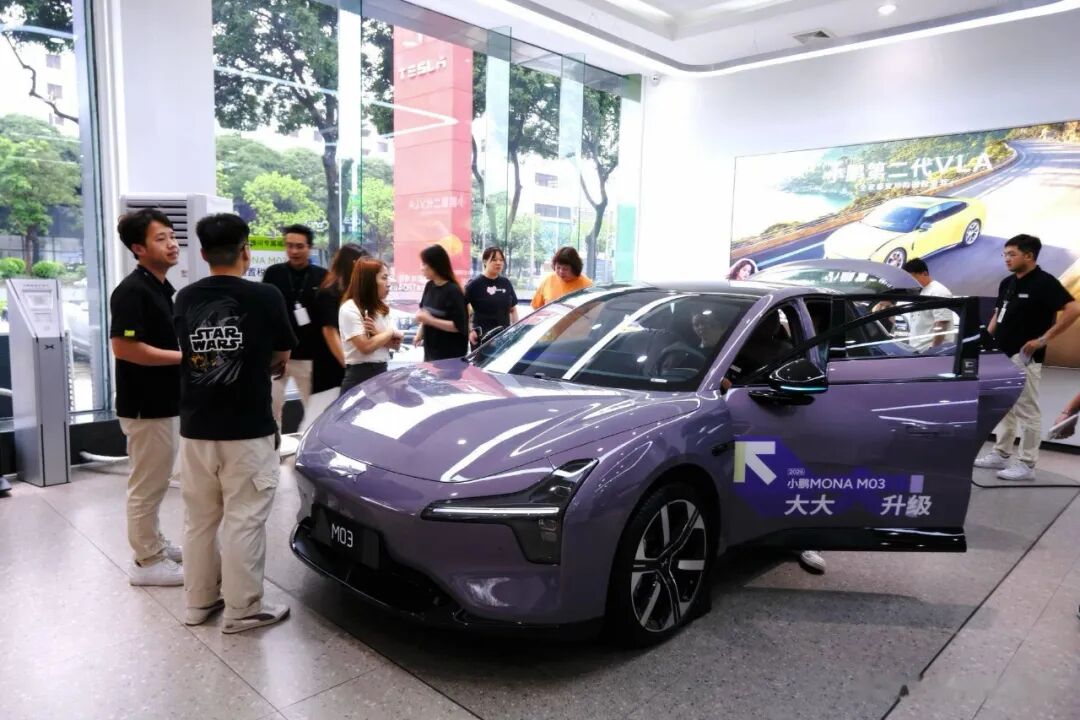
First, look at MONA's growth curve. Since its launch in August 2024, the MONA M03 has held the sales championship among pure electric sedans priced from 100,000 to 200,000 yuan for 24 consecutive months. The L03, launched in July this year, locked in over 20,000 firm orders within 7 minutes of launch and reached 46,859 units within 1 hour, delivering more than 20,000 units in October alone. With three models on sale simultaneously, MONA already has the scale of an independent product line. If it continues to be squeezed into the same showroom, the display resources allocated to each car become limited.
The conflict in brand tone is actually more noteworthy. XPeng has long used intelligence and technology as its core labels. From XNGP intelligent assisted driving to the Turing chip, and then to physical AI and Robotaxi, the main brand's narrative direction has always been upward. MONA's main price range is concentrated between 100,000 and 150,000 yuan, and its target users differ significantly from those of models such as the P7 and G9. Placing the two types of products in the same showroom makes it difficult to unify price anchors and sales pitches.
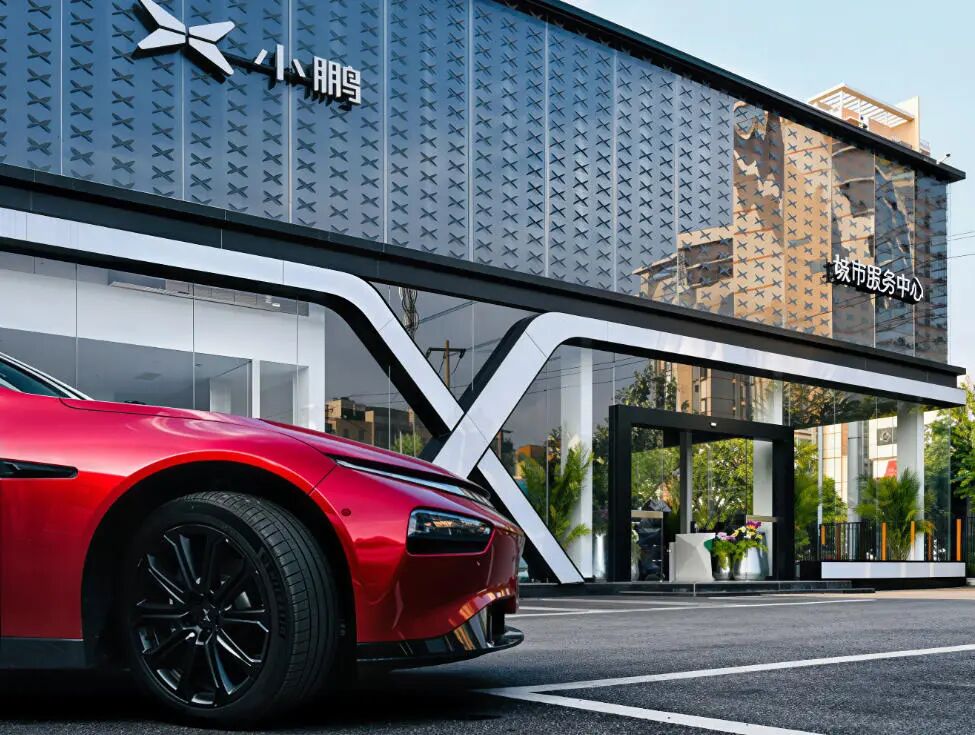
By operating MONA through a separate network, the main brand's pricing system and technology narrative can be delineated more clearly, and MONA can also find a display approach that better fits its own users.
There are also some more practical speculations in the market, such as facilitating separate financing after independence, or giving MONA greater autonomy through team competition. These claims currently lack public evidence, and XPeng has not confirmed them, so for now they are closer to market observation than established fact.
There is another layer of background that is easy to overlook. MONA originated from the Didi smart car business that XPeng acquired in 2023, and it had relatively independent product DNA from birth. Now that cumulative deliveries have reached 360,000 units, redefining product and channel boundaries is not abrupt.
Why is it difficult to build an independent brand?
To understand XPeng's choice, NIO is an important reference. Among new forces, NIO is one of the earlier companies to get a multi-brand matrix running. NIO's main brand, Onvo, and Firefly have different positioning while sharing the battery swap system and core technology base. This structure was once regarded as an industry model. But this model is currently under pressure.
Data published by NIO shows that in October, Onvo delivered 8,383 vehicles, down 51.7% year-on-year and down 4.3% month-on-month. Looking back at the trend during the year, Onvo delivered 11,743 vehicles in June, falling to 10,155 in July, 8,810 in August, 8,763 in September, and further to 8,383 in October—declining month-on-month for five consecutive months.
During the same period, NIO's other two lines moved differently. In October, the NIO main brand delivered 18,125 vehicles, and Firefly delivered 7,738 vehicles, up 30.9% year-on-year and 5.6% month-on-month. With one line rising and another falling among the three, Onvo's adjustment is closer to a phased problem of the brand itself and is not highly related to the overall strategy.
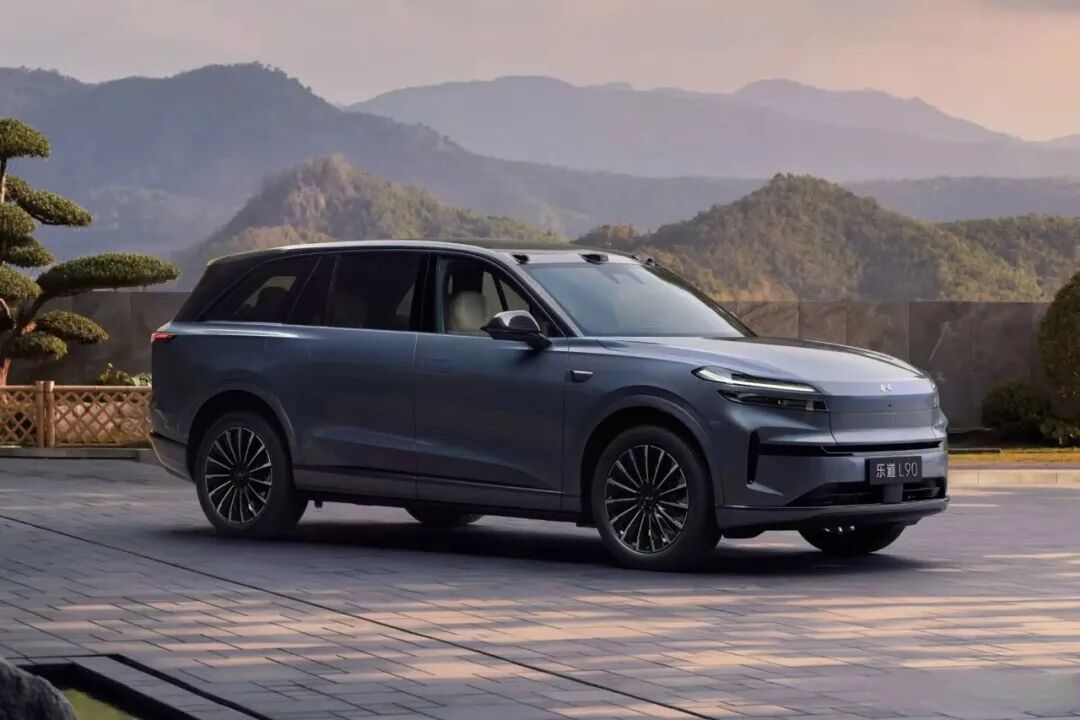
From a fundamental perspective, Onvo also has many highlights. On October 8, Onvo's cumulative deliveries exceeded 200,000 units in two years, ranking among the top three new forces in delivery speed, with an average transaction price of 234,000 yuan over the full cycle—higher than many traditional luxury brands. In the first half of this year, Onvo's average transaction price once reached 248,000 yuan, and deliveries in the first three quarters reached 70,191 units, a new high for the same period. Data can confirm this aspect of product strength.
Onvo's weakness lies more in brand perception. Li Bin once admitted that Onvo's awareness is roughly equivalent to that of NIO at the end of 2019 and the beginning of 2020. While the product experience is recognized, the range of consumers it can reach is still limited. He also gave a long-term sales structure of 3:6:1 for NIO, Onvo, and Firefly at an earnings call. Onvo bears the group's main task of driving volume, and it is still some distance from this goal. The 200,000-yuan-class pure electric SUV segment is already crowded, and new extended-range models continue to divert users, so the pressure Onvo faces is not hard to understand.
This set of data offers a fairly direct reminder to XPeng: a brand name can be established quickly, but user perception requires long-term accumulation. Even if MONA becomes independent in the future, consumers' perception of the brand will still need to be rebuilt.
What problems must be faced in implementing separate network operations?
If MONA achieves independence in the future, separate network operations may seem like merely adding stores, but once implemented, automakers must bear substantial costs and investment.
Independent stores mean double the rent, sales training, inventory, and delivery systems. Mall location resources in first- and second-tier cities are limited. If MONA moves into lower-tier cities, whether single-store sales can support operations remains uncertain. Judging from common industry practice, channel splitting will probably first be piloted in first- and second-tier cities and will not be rolled out comprehensively in the short term.
Existing car owners are more concerned about issues close to them. After the network split, will MONA owners' after-sales, charging, and benefits be affected, and will main brand stores still handle MONA maintenance? XPeng has not yet given a complete plan for these details. For users who have already purchased cars, changes in the brand name are not important; whether service locations remain convenient is what they care about most.
The official tone has remained restrained, which is worth noting. When "Qiche Badan" sought verification from XPeng on whether MONA would become independent, the company responded that there was currently no new information internally on this matter. Wang Fengying's exact words were also "not ruling out." What has been confirmed is the channel split in 2027, not legal brand independence. With channels moving first and brand independence postponed, XPeng has left itself ample room for observation and adjustment.
Leapmotor's direction is exactly the opposite. Leapmotor has officially announced a high-end second brand, planned to debut and deliver in the fourth quarter of 2027, targeting the market above 300,000 yuan, and adopting an independent product line, independent operating model, and an all-new vehicle architecture. One company is splitting off its affordable series, while another is adding a high-end brand. The multi-brand layout of new forces has only just entered its middle stage.
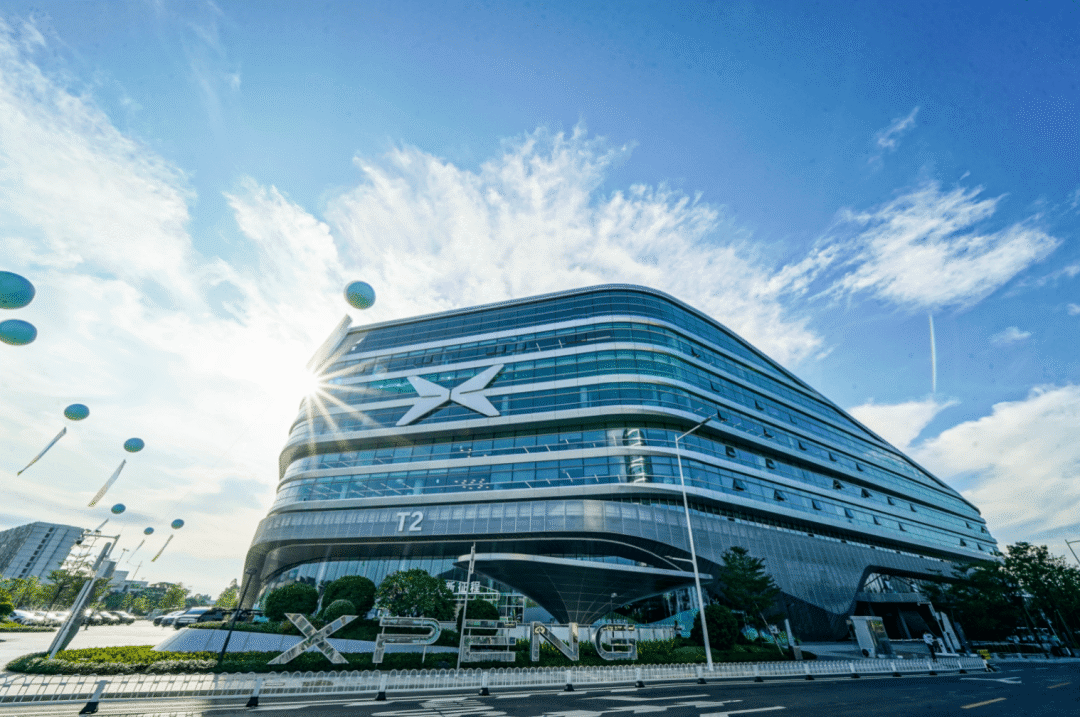
Whether MONA can become independent may seem like a channel issue, but in essence it tests how XPeng balances scale expansion and brand tone. After the network split, the main brand can move forward with less burden, and MONA's operating rhythm will also be more flexible, but issues involving cost, users, and brand perception cannot be avoided. Onvo's consecutive decline has already shown that independence is only the starting point of a new journey, and the finish line is still far away.
At the current pace, independent MONA stores will first be implemented in 2027, while brand-level independence still has no clear timetable. Over the next two years, MONA's sales trend and user reputation will be the key to deciding how this move unfolds.
-
![]()
Chinese Large Models Are Going Open Source in Droves: AGI Ideal or Ecosystem Positioning?
-
![]()
With 360,000 Units Sold Propping Up Half of XPeng's Business, How Far Is MONA from Independence?
-
![]()
After Falling Below One-Third, What Does the Fuel Vehicle Still Rely On to Stay in the Game?
-
![]()
BMW Profit Margin Nears Zero as Carmaker Launches Strategic "Loss"
-
No Longer Just Writing PPTs! ChatGPT Opens a New Frontier: It Can Help with Grocery Shopping, Create Recipes, and Even Pick Kindergartens
-
![]()
Auto Electronics Leader Posts Consecutive Earnings Growth, Nearly 9.5 Billion Yuan Invested in R&D Over Five Years
-
Awkward Indeed: Chinese Consumers Are Apple's Biggest Fans – iPhone 18 Pro Sales Surge 29%, Revenue Climbs 21%
-
![]()
Silicon Valley Tech Giants Bet on AI Games to Capture the Last Profitable Frontier