Trump Loses Midterm Elections, U.S. Stocks Wipe Out Over $2 Trillion in One Night, AI Bubble Bursts, China's Chance to Overtake Has Come
 11/06 2026
 325
Everyone predicted Trump would lose the midterm elections—after all, during his time in office, he stirred up trouble and controversy, provoked widespread resentment, and had no positive effect on the U.S. economy.
But no one expected him to lose so thoroughly—not only did the Republicans lose both the House and Senate to the Democrats, but they also fell significantly behind in gubernatorial races.
Moreover, Texas, once a traditional red state, flipped blue—a truly unprecedented situation.
It can be said that after this midterm election, Trump has completely lost control of Congress. Over the next two years, his policies will not pass easily, and he may face a series of problems such as legislative gridlock and stalled appointments.
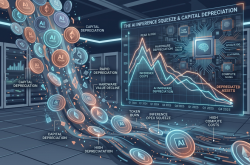
Interestingly, because Trump lost the midterm elections, the U.S. AI investment boom has suffered a major setback. The three major U.S. stock indices fell collectively, with tech stocks on the U.S. market experiencing significant selling pressure.
The Philadelphia Semiconductor Index dropped about 12%, with tech hardware leaders such as Nvidia, Micron, and AMD seeing notable declines. The market value of the "Magnificent Seven" tech giants shrank by over a trillion dollars in a single night, and the selloff spread to the memory, cloud computing, and data center supply chains.
The Nasdaq 100 fell 6.4%, losing approximately $2.3 trillion in market value in a single day, while the S&P 500 dropped 4.4%, marking its largest single-day decline since April 2025.
Why did the market fall so badly? The root cause is that the market's attitude toward AI investment has changed.
Trump's Republican Party has been firmly committed to developing AI, while the Democrats take a cautious approach to AI, and some Democratic candidates have explicitly advocated temporarily pausing or restricting AI.
So the market worries that some future AI projects will face stricter regulation, longer payback periods, more restrictions, and so on.
Of course, in addition to that, AI itself has problems such as uncertain prospects and excessive cash burn. Combined together, this naturally triggered market panic, and large funds began to dump AI-related targets.
Many people say that after this wave, the AI bubble will probably burst. After all, AI has burned so much money, and when it will become profitable remains unknown—and whether it will ever be profitable is hard to say. Previously everyone was running blindfolded; now that there has been a brake tap, it could mark a huge turning point for the entire industry.
Some also say that once the U.S. AI bubble bursts and the brakes are applied, it will be China's opportunity to overtake. After all, once the U.S. AI bubble bursts, China's opportunity will arrive—our situation is completely different from that of the United States.
And it is very likely that the U.S. may relax its external regulation in the AI sector, giving China a chance to overtake the United States and achieve superiority. Of course, whether this will happen remains to be proven by time.
-
Thank You, Chinese Apple Fans, for Giving Apple's New CEO Two Big Gifts!
-
![]()
You Paid for the Flagship Model—But What You Get May Be a Watered-Down Version
-
![]()
Model Factories Are Bleeding, Cloud Vendors Are Counting the Money
-
Trump Loses Midterm Elections, U.S. Stocks Wipe Out Over $2 Trillion in One Night, AI Bubble Bursts, China's Chance to Overtake Has Come
-
![]()
Why Did OpenAI Label Its Own New Model GPT-6 Cyber with a "Critical" Warning?
-
![]()
$1.8 Trillion! The AI Investment Frenzy Is Running Red-Hot
-
![]()
Baolong Technology, a Leader in Air Suspension, Posts 12.07 Million Yuan Q3 Loss, but Non-Recurring Net Profit Rises 53% to 51.71 Million Yuan
-
![]()
Xiaomi Auto Tops 50,000 Again in October: Stock Surges 18% in Just 4 Days!