Model Factories Are Bleeding, Cloud Vendors Are Counting the Money
 11/06 2026
 325
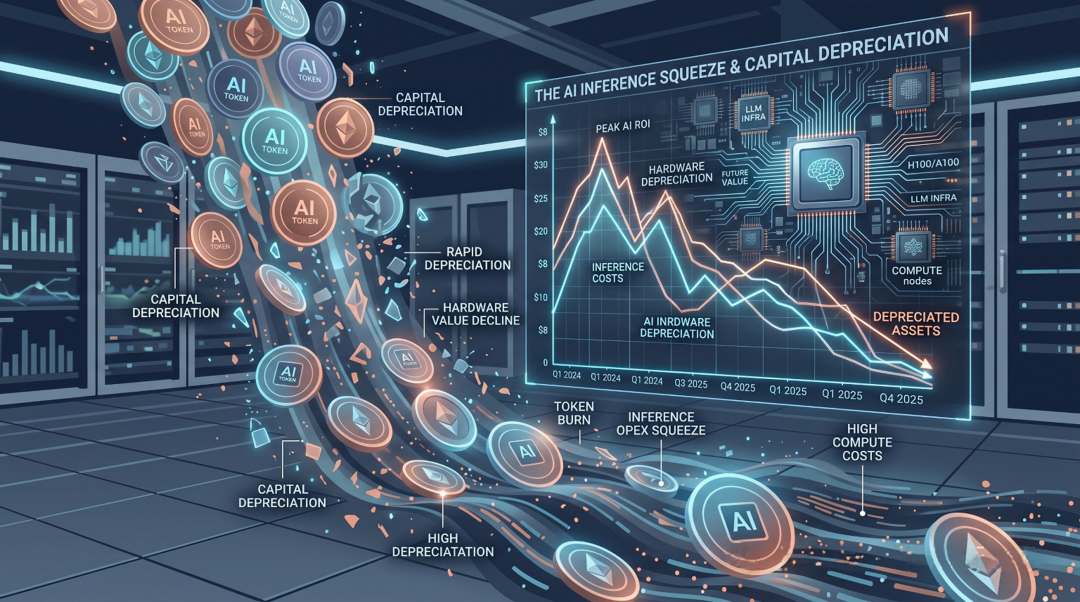

The token business is really no easy game.
Image source: Internet (please contact us for deletion if infringing). Partially AI-generated.
On November 4–5, over the course of a single night, the global capital market projected the relationship in the AI industry chain that people least want to put on the table—clearly, onto two market charts.
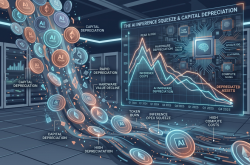
One chart shows a sharp decline. Daiwa Securities' Token Price Index has fallen about 25% cumulatively since it was first covered in August; OpenAI's average comprehensive list price across multiple regions has been cut by about 31%, and Anthropic's by about 47%.
The pricing unit of the model layer is becoming cheaper at a visibly rapid pace.
The other chart shows a sharp rise. In overnight U.S. trading, Microsoft rose over 6%, Amazon rose over 6%, and Google rose over 3%; a few hours later, when Hong Kong stocks opened, Alibaba rose 7.65%, Tencent rose 6.13%, and Kingsoft rose 4.08%.
The stock prices of cloud vendors and infrastructure players were pushed up by capital during the same period.
Put these two charts together, and the answer is plainly visible: there is an inevitable connection between Token price cuts and the rise of cloud vendors.
The money has not disappeared from the AI industry; it has merely slid down from the model layer's price list and landed in the collection accounts of the compute layer and the hardware layer.

A 25% decline is a structural migration.
If this round of price cuts were a limited-time promotion by one vendor, it would eventually be reversed. But behind the 25% decline, two irreversible structural variables are at work simultaneously.
The first variable is that the model hierarchy itself is diverging. In this round of price cuts by OpenAI and Anthropic, the main move is not slashing flagship models to the bone, but pushing lightweight models to the forefront.
The Luna version of GPT-6 has input pricing pressed down to $0.10 per million Tokens and output at $0.50; Anthropic's Claude Haiku 5.5 likewise brings requests within 100,000 Tokens down to input $0.10 and output $0.50, with unit prices only one-tenth of the previous generation.
When enterprise workloads migrate on a large scale from flagship models to these "good enough" low-cost tiers, the realized revenue per Token is naturally diluted.
Daiwa explains this mechanism very directly: the spread of cheaper model tiers, combined with improvements in inference efficiency, jointly pushes down Token prices, and migration of workloads to low-priced models requires extremely large volume growth to offset the decline in unit prices.
The second variable is engineering improvements in inference efficiency, which have already turned "price cuts" into a necessary move for model factories to maintain competitiveness.
Xiaomi's MiMo team has publicly disclosed a set of figures: through systematic reconstruction of KV Cache management, tiered caching, scheduling strategies, and the Prefill/Decode pipeline, cache Token capacity increased 5x and cache cost decreased 80%—which is the technical confidence behind its API price cuts of up to 99% while still maintaining break-even.
Efficiency improvements themselves are a good thing, but the other side is: when leading players can all use engineering methods to press down unit inference costs, model factories that do not follow with price cuts will be quickly left behind in call volume.
So the question becomes: can sales growth make up for the gap left by falling unit prices? Daiwa's judgment is restrained and cold: the recent wave of price cuts "may absorb a considerable portion of short-term sales growth."
In plain terms, call volume is indeed rising, but most of the revenue generated by that rise has already been eaten up by the price cuts themselves.
The marginal returns of trading price for volume are approaching a critical point that is not very friendly to pure model factories.

ARR growth is being slowed.
The most thought-provoking sentence in Daiwa's research report is not the 25% decline, but its explicit expectation: the Token price war will slow the annualized recurring revenue growth of pure large-model labs in the short term.
Note the wording here. "Pure large-model labs" refers to players whose revenue structure is absolutely dominated by APIs and model calls, with no cloud business or hardware business as a buffer.
The impact on them is completely different in magnitude from companies like Alibaba, Tencent, and Microsoft, where "models are just one piece of the business puzzle."
Look at two sets of already disclosed financial data. Zhipu's revenue in the first half of 2026 grew 400% year-on-year to 954 million yuan—an astonishing growth rate; but overall gross margin fell from 50% to 26.4%, and adjusted net loss was 1.964 billion yuan, widening 12.1% year-on-year.
MiniMax's revenue grew 283% to $117 million, and gross margin rose from 12.1% to 17.9%, but adjusted net loss was $293 million, widening 111% year-on-year.
Revenue is rising by double or even several times, losses are widening faster, and gross margin has not systematically risen with scale expansion.
This is what diminishing marginal returns from "trading price for volume" looks like on financial statements. For every yuan of new revenue for a model factory, inference compute costs, training compute amortization, and customer acquisition costs must first be deducted, and the remaining gross profit space is continuously compressed by downward unit prices.
R&D spending is still several times revenue, and compute bills will not be discounted in sync just because API prices are cut. The volume obtained by price cuts has expanded call scale, but has not simultaneously expanded the profit pool.
Daiwa lays out the order of capital allocation very clearly: in the short term it prefers "companies with guaranteed contracts on hand and IaaS exposure," while applications and distribution are placed in the position of long-term winners.
In other words, during a period of declining Token unit prices, players sitting in the compute rent-collection seat have far more certain cash flow visibility than players sitting in the model pricing seat.

The end that is counting the money.
The reason Token price cuts are "value redistribution" rather than "industry concession" is that the beneficiaries are not just one layer, and the sources of certainty each layer takes away are completely different.
The first layer, the IaaS rent-collection layer: compute is hard currency, and price wars cannot reach the data center.
No matter how low model factories press API list prices, for models to run, GPU hours must be purchased.
Microsoft Azure's quarterly revenue for the quarter ended September grew 48% year-on-year to $33.2 billion, AWS revenue grew 39% to $46 billion, and AWS operating profit rose from $11.4 billion in the same period last year to $17.8 billion.
The AI revenue growth of cloud vendors and the price cut magnitude of model factories appear on the same timetable.
In its stock selection logic, Daiwa places IaaS exposure first in short-term preference, for a simple reason: the model layer's price war attacks its own gross margin; cloud vendors collecting compute fees are collecting the model factories' cost item.
The fiercer the price war and the more call volume rises, the thicker the compute bills become.
The second layer, the full-stack layer: cost and technology closed loop turn "price cuts" into pressure on others rather than on themselves.
Daiwa's optimism about Alibaba and Tencent rests on two different full-stack structures.
Alibaba is a trinity of "cloud infrastructure + self-developed chips + large models": the cloud provides the compute foundation, self-developed chips reduce external dependence for unit compute, models iterate within their own closed loop, and the cost tolerance for price cuts comes from vertical integration rather than mere financial subsidies.
Tencent takes another full-stack path: "Agentic AI products + ecosystem distribution + cloud business." Model capabilities reach scenarios through agents and WeChat ecosystem distribution channels, while the cloud undertakes the compute and deployment needs during implementation.
What they have in common is: models are not the only source of revenue, so model price cuts do not directly equal pressure on the company's profit margin.
Full-stack players can use revenue from the infrastructure layer to hedge against falling unit prices in the model layer; pure model labs do not have this buffer.
The third layer, the hardware layer: price increases take away the purest certainty.
Counterpoint's data placed here requires almost no explanation: in the third quarter of 2026, global DRAM revenue was close to $200 billion, up 369% year-on-year, but unit shipments grew only about 4% quarter-on-quarter, and the average selling price per Gb rose to $1.9.
Revenue growth was nearly 5x, shipments barely moved, and all the increment came from price.
Analysts define this market as a "price-driven supercycle" rather than a shipment cycle. AI agents have raised consumption of traditional DRAM, the GPU-to-CPU ratio is moving from 4:1 toward 2:1 or even 1:1, server memory demand has been structurally pushed up, and major new wafer fabs will not begin production until 2028, so the tight supply situation shows no reversal in the short term.
Memory makers do not need to judge which model will win, nor do they need to participate in Token pricing. They only need to be sure of one thing: as long as AI workloads are growing, memory is a scarce resource being fought over, and the price of scarce resources is determined by the supply curve, not by the willingness of model factories to cut prices.
This is the least "sexy" but most certain layer of profit in the entire chain.

Special variables in the Chinese market.
This round of value redistribution has an extra layer of complexity in the Chinese market, because the strongest position Chinese model factories have held in the past—namely, cost-effectiveness—is being eroded from the outside.
Daiwa clearly points out that U.S. AI suppliers are narrowing the past pricing advantage of Chinese vendors through sharp price cuts while raising the capability threshold; Chinese models on average remain price-competitive, but no longer firmly occupy the absolute high ground of "cost-effectiveness."
When OpenAI and Anthropic press the prices of lightweight models to the level of $0.10/$0.50 per million Tokens, the space for Chinese models to gain call volume simply by being "cheaper" has been systematically compressed.
So Chinese vendors have begun taking two alternative paths, both essentially bypassing the locked pricing framework of "selling Tokens."
The first path is using open source to trade for an ecosystem position. Alibaba's Qwen has so far open-sourced more than 470 models, with cumulative global downloads exceeding 4 billion and more than 330,000 derivative models, making it the world's largest open-source model family.
Open-source revenue is not reflected in API bills, but it embeds models into developers' toolchains, enterprises' private environments, and the global derivative ecosystem.
When a model becomes the default option of an ecosystem, demand for cloud and deployment will grow from elsewhere.
The second path is using private deployment to trade for cash flow. IDC data shows that in the first half of 2026, China's MaaS market reached 10.63 billion yuan, up nearly 9x year-on-year; in the large-model private deployment market, SenseTime's SenseCore held second place in the industry with a 9.4% share.
The contract size per deal, payment certainty, and gross margin structure of private deployment are fundamentally different from the Token-billed API business: it changes revenue from a fluctuating model of "pay as you use" to project-based cash flow of "delivering a set of capabilities."
This may not be the endgame, but it is one of the few revenue forms that model factories can grasp during a downcycle in Token unit prices and that is not directly anchored by public list prices.

If the 25% Token price cut is read only as "AI is cheaper now," one will miss the displacement happening across the entire value chain. For those following this industry, the following three indicators are more worth tracking than the Token unit price itself:
First, gross profit per Token. Do not look at how much the Token list price has fallen; look at how much the model factory can still retain per Token after deducting inference compute costs. A decline in list price itself is not the problem; a decline in list price without simultaneous improvement in unit gross profit is the accurate signal of "bleeding."
Second, Agent call density. The place where cheap Tokens truly create incremental value is not the number of conversations in a chat window, but the density with which agents repeatedly call models and consume Tokens in task chains. Only when call density rises can compute consumption be sustainable, and only then does the rent-collection logic of the IaaS layer hold.
Third, the share of private deployment orders. For model factories without a cloud business buffer, changes in the share of private deployment revenue reflect whether they can partially decouple revenue from the public Token pricing system.
A rising share means the certainty of cash flow is improving; a stagnant or declining share means they are still locked on a track of declining unit prices.
Condense these three indicators into one sentence: the model layer engages in a price war, the infrastructure layer collects rent, and the application layer determines who actually makes money.
The 25% decline in Token prices is merely the gauge of this redistribution. The real question is: on which side of the gauge does your revenue stand?
-
Thank You, Chinese Apple Fans, for Giving Apple's New CEO Two Big Gifts!
-
![]()
You Paid for the Flagship Model—But What You Get May Be a Watered-Down Version
-
![]()
Model Factories Are Bleeding, Cloud Vendors Are Counting the Money
-
Trump Loses Midterm Elections, U.S. Stocks Wipe Out Over $2 Trillion in One Night, AI Bubble Bursts, China's Chance to Overtake Has Come
-
![]()
Why Did OpenAI Label Its Own New Model GPT-6 Cyber with a "Critical" Warning?
-
![]()
$1.8 Trillion! The AI Investment Frenzy Is Running Red-Hot
-
![]()
Baolong Technology, a Leader in Air Suspension, Posts 12.07 Million Yuan Q3 Loss, but Non-Recurring Net Profit Rises 53% to 51.71 Million Yuan
-
![]()
Xiaomi Auto Tops 50,000 Again in October: Stock Surges 18% in Just 4 Days!