When MONA Accounts for Half of XPeng's Sales, Is It Trying to Break Away and Go It Alone?
 11/06 2026
 483
XPeng must find the most sustainable balance between "pursuing sales scale" and "preserving brand premium."
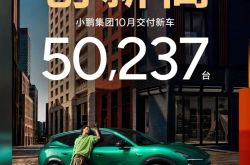
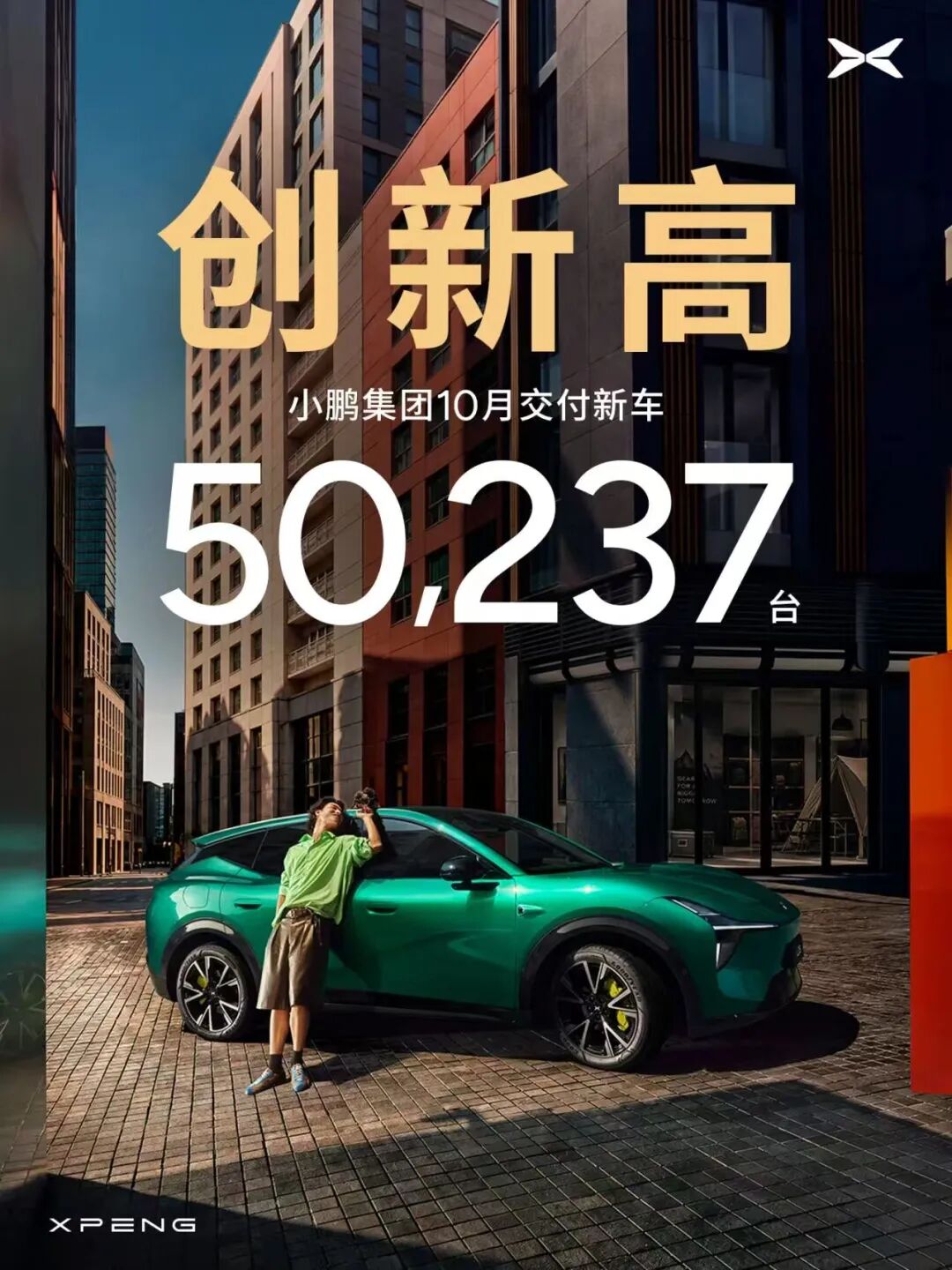
Shortly after November began, XPeng officially posted its October delivery results, and the figure of 50,237 directly set a new monthly delivery record for the brand. Deliveries rose 22% month-on-month and 20% year-on-year, while overseas markets posted a year-on-year growth rate of 166%, with 13,326 vehicles delivered during the month.
This performance is indeed quite impressive within the current new forces camp.
Right at the peak of record sales, news released by XPeng Group President Wang Fengying during the Paris Auto Show immediately drew industry attention to the MONA line. Some media reported that Wang Fengying proposed that starting in 2027, standalone MONA stores would be set up in some cities, and that the possibility of the MONA brand becoming independent in the future would not be ruled out.
Outside observers speculate that the essence of this possibility is that XPeng needs to find the most sustainable balance between "pursuing sales scale" and "preserving brand premium."
First, let's do the obvious sales math.
Now if you casually bring up XPeng with anyone in the industry, no one can avoid mentioning MONA.
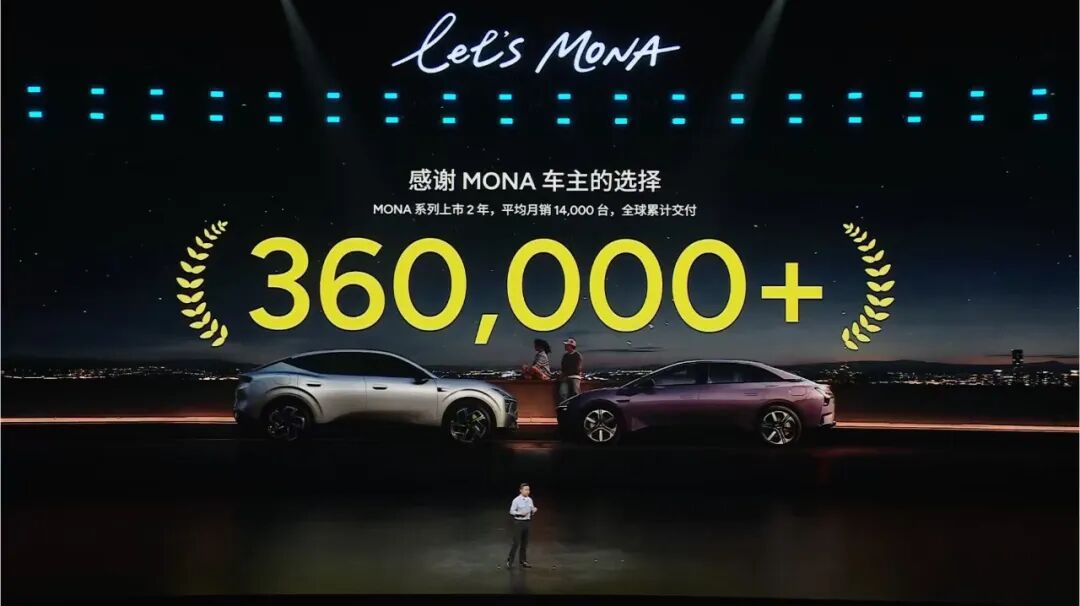
From the launch of the first model M03 in August 2024 to now, the MONA series has surpassed 360,000 cumulative global deliveries. In September 2026 alone, the M03 and L03 together sold 17,600 vehicles, accounting for 57% of XPeng's total deliveries that month. Roughly every two cars driven out of an XPeng store include one bearing the MONA name. The recently launched L05 sold out 5,000 quasi-ready vehicles in 3 minutes on its launch day, and in October alone L03 deliveries surged to more than 20,000 units.
But the intuitive structural change is that sales of older models under XPeng's main brand are really not impressive enough now. In September, the P7 sold 1,317 units, the G9 only 135, and the X9 only 805. These models that originally carried the brand's high-end positioning now collectively sell less than a fraction of a single MONA model.
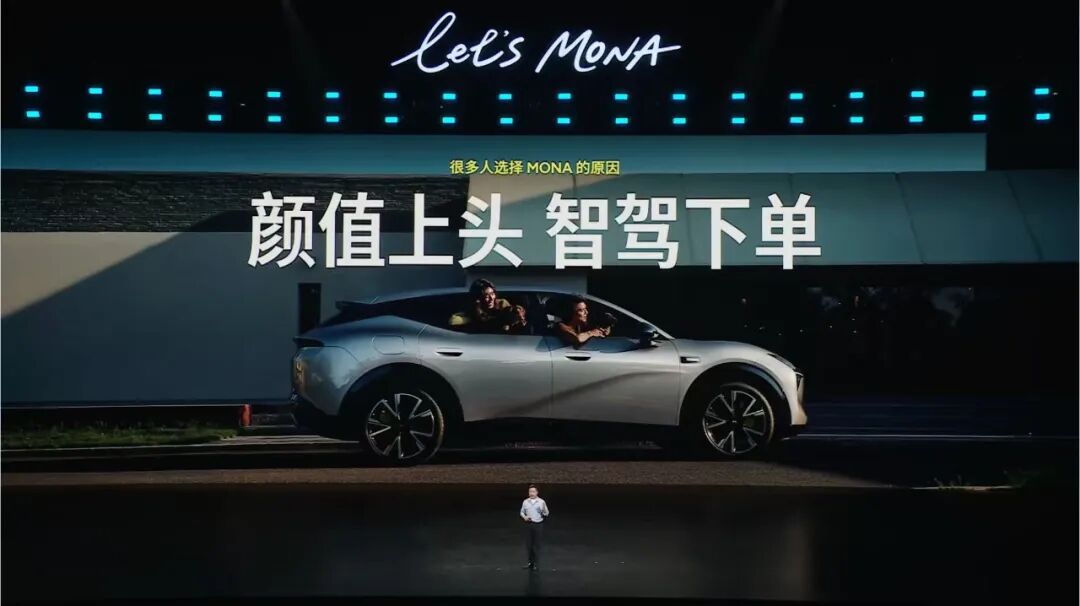
To put it plainly, XPeng's current foundation is not the "intelligent driving brand" that people used to associate with the P7 and G9, but truly MONA using the 100,000-150,000 yuan price band to lift overall sales to a new height. But behind the good-looking sales numbers, the profitability picture is not very optimistic.
In the first half of 2026, XPeng's total sales were 166,000 vehicles, actually down 15.8% year-on-year, while the net loss in the same period expanded to 3.12 billion yuan. It should be noted that in the first half of 2024, XPeng's net loss was 2.6 billion yuan, when monthly sales were still struggling around 10,000 vehicles. Now sales have nearly tripled, but losses have instead grown larger. The core reason is that the average vehicle price has been pulled down too hard. In the first half of 2024, XPeng's average revenue per vehicle was still 237,600 yuan, but by the first half of 2026 it had directly fallen to 169,000 yuan.
The scale obtained by low-price volume sales has not yet brought enough profit space. This is the reality XPeng cannot avoid now.
So when MONA becomes the main sales driver, the sweetness and the trouble are tied together. After all, MONA has grown from a project code name XPeng acquired into the product line now carrying the load, and the benefits it brings are obvious.
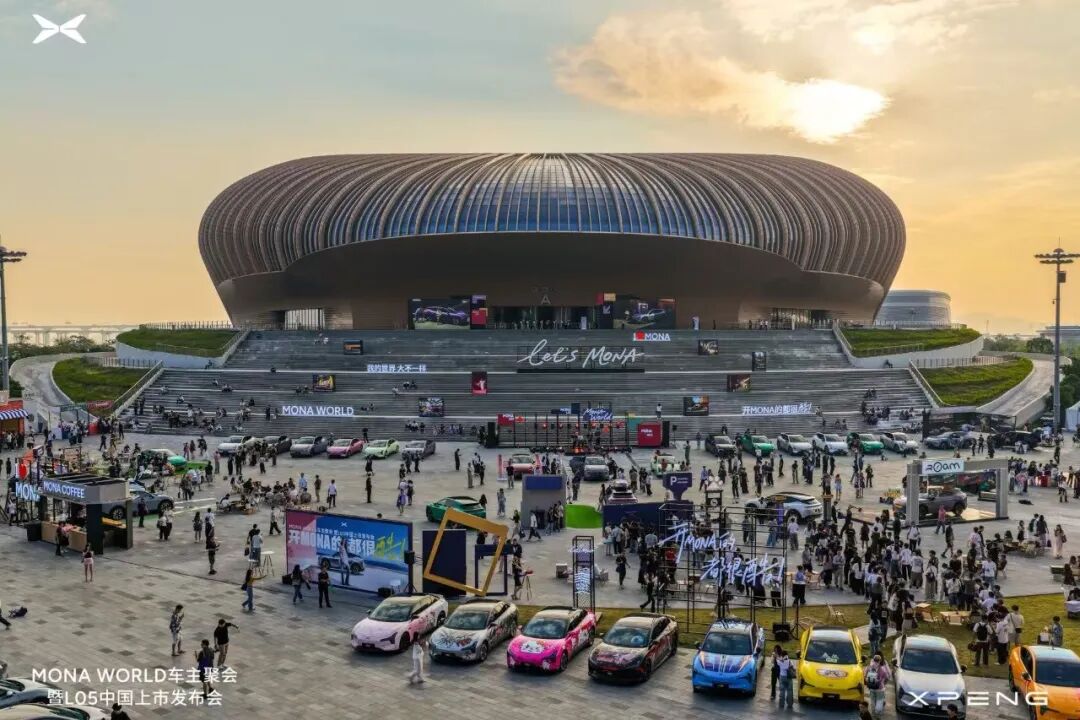
The most direct one is that it pulled XPeng out of the sales quagmire of 2024. At that time, XPeng's monthly sales had just exceeded 10,000, and cash flow pressure was enormous. As soon as the M03 launched, it established a foothold in the 100,000-200,000 yuan pure electric market through cost-effectiveness, ranking first in sales in this segment for 24 consecutive months and forcibly giving XPeng a renewed foundation.
Without the support of MONA's several hundred thousand units in sales, XPeng would simply not have had the room to roll out subsequent new models, tackle overseas markets, let alone stabilize monthly deliveries at the current level of 50,000 vehicles.
Moreover, the user profile MONA has developed on its own is indeed an entirely new incremental market. Among MONA users now, 55% are under 30, half are buying their first car in life, and female car owners account for more than half. These young first-time buyers, who originally would not have noticed the "intelligent driving" label at all, have now become XPeng's largest user base.
In overseas markets, MONA's cost-effectiveness route also works. The L03 has already been sold in markets such as Australia, Indonesia, and the Philippines, and the L05 is subsequently planned to cover 65 countries and regions worldwide, equivalent to using this series to open up a global affordable channel for XPeng.
But when the coin flips over, the trouble also arrives bit by bit.
A move pushed by reality
The most painful issue is the strain on brand tonality.
XPeng spent several years and countless resources implanting the labels of "intelligent driving and upward technology" in users' minds, with the goal of securing a foothold in the mid-to-high-end market above 200,000 yuan. As a result, more than half of sales now come from the 100,000-150,000 yuan MONA. When users enter an XPeng store, with a MONA priced in the low hundreds of thousands on the left and a G6 priced at more than 200,000 on the right, the price anchor is directly broken.
Sales staff explain MONA's cost-effectiveness to young people who have just graduated, then turn around and explain the P7's advanced intelligent driving to users seeking a sense of technology. Two completely different pitch systems simply cannot be aligned in the same showroom.
There is also internal cannibalization among models. The newly launched L05 is priced from 144,800 to 176,800 yuan, exactly overlapping with the price range of its own G6. Many users standing in the showroom directly struggle over whether to choose the extended-range, large-space MONA or the main-brand model with advanced intelligent driving, and in the end it is often the lower-priced MONA that steals users from its own main brand.
The brand premium accumulated in the past is being diluted bit by bit by MONA's volume sales.
So when many people see the news that MONA is going independent, their first reaction is that XPeng wants to replicate the multi-brand paths of Geely, Chery, or even NIO. But in fact, this time XPeng has not dared to go all the way to complete independence in one step. Wang Fengying herself also said that brand independence will be advanced slowly according to the pace of product launches, with no rush.
If some MONA stores are first made independent, at least a car-buying scenario more suited to young users' preferences can be created for them, so they do not have to sit in a main-brand showroom full of technological atmosphere, bewildered by a bunch of lidar and intelligent driving parameters.
The concern behind this is actually understandable to everyone. XPeng today still cannot bear the cost of complete independence. For example, when NIO previously promoted Onvo, it set up the framework of an independent brand, and the investment in channels, teams, and marketing alone consumed considerable resources. Now Onvo's sales have declined month-on-month for five consecutive months, and user awareness of a new brand simply cannot be quickly built by burning money.
MONA now appears to have high sales, but XPeng itself is still in a stage of large losses. If MONA's supply chain, after-sales, and team were all stripped out of the main brand now and an independent system were rebuilt, XPeng's current cash flow simply could not support such an expense.
So the path XPeng has chosen now is actually a "semi-independent" compromise. It will first open standalone MONA sales centers in some cities, separating the showroom space first so that users on both sides do not interfere with each other. In product planning, MONA has already been given exclusive use of the D line, completely separated from the main brand's G line, but the core R&D, supply chain, and after-sales systems are still shared with the main brand, so as not to burn an extra sum of wasted money for independence.
To put it bluntly, this is the most pragmatic choice XPeng has made in the face of reality, as it does not want to give up the foundation and overseas markets MONA has won through low prices, nor does it want the mid-to-high-end technology positioning the main brand has painstakingly built to be completely dragged down by the affordable volume route.
As for whether MONA will eventually become a completely independent new brand entirely separated from XPeng, no one can say for sure now. But what is certain is that when a vehicle series already accounts for more than half of the brand's total sales, the tug-of-war between it and the main brand is destined to continue.
Note: Some images are from the internet. If there is any infringement, please contact us for deletion.
-END-
-
![]()
Full WiFi Bars but Videos Won't Load? Here's What's Really Going On
-
![]()
Yang Yuanqing's Bold 30% PC Market Share Pledge: Ambitious but Far from Easy
-
![]()
U.S. Moves to "Permanently Ban" Chinese Cars — and It Reeks of Fear
-
![]()
When MONA Accounts for Half of XPeng's Sales, Is It Trying to Break Away and Go It Alone?
-
![]()
Hong Kong Stocks Bull Run: Hang Seng Tech Soars 5.55%
-
![]()
Xiao Zhan and Sun Yingsha's "First Stock of Massage Devices" Under Scrutiny: Actual Controller Ousted
-
![]()
Why Can Longgang's Cross-Border E-Commerce Keep Its Lead Steady Despite Industry-Wide Headwinds?
-
10 Years On: Chip Performance Has Grown 40-Fold and Memory 8-Fold—So Why Do Phones Still Lag?