Yang Yuanqing's Bold 30% PC Market Share Pledge: Ambitious but Far from Easy
 11/06 2026
 532
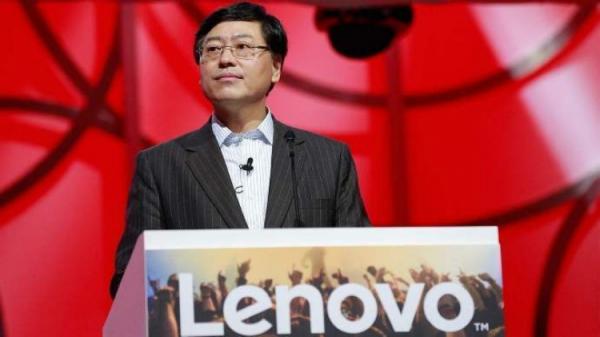
At Lenovo's Global Industry Analyst Conference yesterday, company leader Yang Yuanqing made a bold pledge: Lenovo is pursuing a long-term goal of capturing 30% of the global PC market. He said Lenovo will turn market fluctuations into competitive advantages, widen its lead over the runner-up in global PC share, and hold its ground across market segments and regions.
The latest IDC report shows that in Q3 this year Lenovo shipped 14.9 million PCs, comfortably ranking first worldwide with a 23.8% share, while HP and Dell followed at 16.5% and 12.1%, respectively. In my view, Yang's 30% flag is hardly surprising—but pulling it off will clearly be harder than in recent years.
Lenovo currently holds about 23.8% of the global PC market, 7.3 percentage points ahead of second-place HP, and its near-term advantage is indeed widening. Yet a 30% long-term target means it must capture a substantial amount of additional industry share—and it must do so while grappling with fluctuating global PC demand, rising supply chain costs, and uncertainty over how quickly AI PCs will monetize.
Why the Confidence to Claim 30%
① Its market-share lead keeps growing. In Q3 this year Lenovo shipped 14.9 million PCs for a 23.8% share, followed by HP and Dell at 16.5% and 12.1%, and the gap between Lenovo and the runner-up continues to widen.
② Premiumization is lifting revenue per unit. Yang emphasized that shipments may face short-term pressure, but higher revenue per unit—driven by product-mix upgrades and stronger revenue from high-value models—can partially offset that pressure.
③ AI PCs are driving product-mix upgrades. Lenovo is repositioning the PC from a hardware sale to an AI terminal entry point, and a rising share of high-end PCs, AI PCs, and workstations is helping improve profits.
④ Supply chain and global operations remain a moat. Lenovo has advantages in multi-region manufacturing, global procurement, and channel coverage, making it easier to hold share during industry downturns and giving it relatively stronger operational resilience.
But 30% Is No Easy Goal
① The industry is still contracting. In Q3 this year global traditional PC shipments totaled 62.7 million units, down 20.1% year-on-year—the steepest decline of this cycle. Shipments from all top three vendors fell by double digits, with Dell hit hardest, down as much as 30.9%.
② Cost pressure is real. Rising prices for components such as memory and processors will squeeze complete-machine profits and may also affect channel stocking and end demand.
③ The closer share gets to 30%, the harder the marginal gains. Going from 23.8% to 30% is not simple linear growth; what must be won later comes out of the existing bases of HP, Dell, Apple, and a large number of regional brands—and fierce competition is unavoidable.
④ AI PCs have yet to prove long-term willingness to pay. At present, AI PCs are reflected mainly in premiumization and higher ASPs (average selling prices), but whether personal agents and cross-device collaboration can sustainably drive replacement still depends on the ecosystem experience, and rapid short-term growth is somewhat uncertain.
From a Business and Capital-Market Perspective
Frankly, what is more noteworthy about Yang's latest statement is not whether 30% can be hit right away, but that Lenovo is upgrading its narrative from "No. 1 in PC shipments" to triple growth across AI terminals, infrastructure, and services.
For Lenovo, PC market share remains the base, but future valuation elasticity will depend more on three things: whether AI PC penetration can keep rising; whether revenue per unit and profit margins can stay stable; and whether infrastructure and solution services can continue to contribute high-quality profits.
So 30% is both a strong signal and a bet by Lenovo's management on the AI PC cycle and its supply chain capabilities. In the short term it serves more to boost confidence and reinforce the leader narrative, but whether it can truly be delivered depends on whether Lenovo can keep seizing share over the next few quarters amid industry headwinds and turn AI PCs from a selling point into a stable replacement driver—that is, the core lever for market-share improvement.
Conclusion
The 30% long-term goal is an ambitious declaration by a leading company at an industry inflection point, proving that Lenovo still believes in the value of the PC entry point. But it is a high-difficulty upper limit, and whether it is achieved depends not mainly on whether more machines can be produced, but on whether AI PCs can truly set off a large-scale replacement wave—and whether Lenovo can maintain profit margins and cross geopolitical barriers while expanding share. What do you think?
-
![]()
Full WiFi Bars but Videos Won't Load? Here's What's Really Going On
-
![]()
Yang Yuanqing's Bold 30% PC Market Share Pledge: Ambitious but Far from Easy
-
![]()
U.S. Moves to "Permanently Ban" Chinese Cars — and It Reeks of Fear
-
![]()
When MONA Accounts for Half of XPeng's Sales, Is It Trying to Break Away and Go It Alone?
-
![]()
Hong Kong Stocks Bull Run: Hang Seng Tech Soars 5.55%
-
![]()
Xiao Zhan and Sun Yingsha's "First Stock of Massage Devices" Under Scrutiny: Actual Controller Ousted
-
![]()
Why Can Longgang's Cross-Border E-Commerce Keep Its Lead Steady Despite Industry-Wide Headwinds?
-
10 Years On: Chip Performance Has Grown 40-Fold and Memory 8-Fold—So Why Do Phones Still Lag?