Annual Salary Million President Resigns After Three Months, Assurance Report Delayed Three Times: How Long Will Taiji Co., Ltd.'s "Old Accounts" Remain Unsettled?
 11/10 2026
 500

Produced | Startup Frontline
Art Editor | Xiao Qing
Review | Song Wen
November 24, 2025, Zhaochuan Town, Xuanhua District, Zhangjiakou, Hebei.
Zone 1 of the Huazhang Xuanhua Computing Power Hub Industrial Base passed completion acceptance and was officially delivered for use by ByteDance. This is but one of many nodes in the North China computing power network.
Behind this project lies another story—that of a listed company, Taiji Co., Ltd. According to its annual report, the company won the bid for the mechanical and electrical installation subcontracting project of the Huazhang Xuanhua Computing Power Hub Industrial Base.
Two months after project delivery, on January 31, 2026, Taiji Co., Ltd. released a performance forecast, expecting a loss of 330 million to 495 million yuan for 2025. Three months later, on April 30, the annual report was finalized, and the company's actual loss came in at 763 million yuan. This marked Taiji Co., Ltd.'s first annual loss since its listing in 2010. One reason for the loss was that the company made a provision for nearly 90% bad debts on the Huazhang project.
Profit decline is only the surface; the deeper problem is that under the advance-funding model, the company's capital turnover continues to face pressure. In March this year, Taiji Co., Ltd. also conducted a special verification of several data center engineering construction projects, concluding that "some engineering quantities were abnormal, resulting in difficulty in recovering receivables," which also caused multiple financial reports of the company to be "recalculated from scratch."
Although Taiji Co., Ltd. is currently attempting transformation and reducing business, the hidden risks left by the above-mentioned past projects continue to affect the company.
1. Nearly 800 Million Bad Debt Provision "Drags Down" Performance
To understand where this loss comes from, one must first see clearly what kind of business Taiji Co., Ltd. is in.
The company is an informatization "general contractor" under China Electronics Technology Group. Simply put, if a local government wants to build an "all-in-one online service," from computer rooms, servers, domestic databases, to front-window application systems, and then three years of operation and maintenance, it can package the entire set and hand it to Taiji Co., Ltd., which is responsible for a series of work including design, hardware procurement, integration, debugging, and delivery.
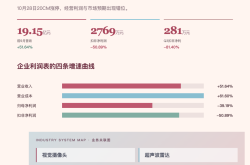
Its revenue is mainly divided into four parts: industry solutions (that is, the above-mentioned general contracting projects, contributing more than half of revenue), digital infrastructure (helping customers build data centers, computer rooms, and computing power centers), proprietary software products (providing customers with basic software products, general software products, and industry business products for sales, customized development, and services), and cloud and data services (providing customers with cloud computing services and data intelligence services).

(Figure / 2026 Semi-Annual Report)
The Huazhang Xuanhua project mentioned at the beginning has a total investment of 8.6 billion yuan, covers 278.6 mu, has an IT load of 300MW, is built in six zones, and is a data center cluster in the Beijing-Tianjin-Hebei region affiliated with one of the eight national computing power hub nodes. The owner is Huazhang Data Technology Co., Ltd., headquartered in Guangzhou. According to disclosures by Huazhang Data, its computing power supply chain connects to ByteDance. Taiji Co., Ltd., meanwhile, signed the mechanical and electrical installation subcontract with Sinohydro Bureau 7. This business is mainly included in the company's "digital infrastructure" segment.
This single project supported nearly one-fifth of Taiji Co., Ltd.'s revenue scale in 2025. The annual report shows that the "Project Management Department of the Huazhang Xuanhua Computing Power Hub Industrial Base of Sinohydro Bureau 7 Co., Ltd." contributed revenue of 1.403 billion yuan to Taiji in 2025, accounting for 18.01% of annual revenue, making it unquestionably the largest customer.
Driven by this, the digital infrastructure segment's full-year revenue was 1.678 billion yuan, a year-on-year increase of 45.90%, making it one of the few businesses of the company that grew significantly in 2025.
But at the same time, at the end of 2025, Taiji Co., Ltd.'s other receivables balance for the "Huazhang Data Center Business Portfolio" reached 790 million yuan, with a bad debt provision of 696 million yuan, a provision ratio of 88.07%.
According to the annual report notes, other receivables mainly consist of current account payments, performance bonds, bid bonds, etc. Although they are not subcontracting project payments, they have also eroded the company's profits.


Throughout 2025, Taiji Co., Ltd. recorded credit impairment losses of 740 million yuan and asset impairment losses of 133 million yuan, totaling 873 million yuan, directly swallowing net profit attributable to the parent of 767 million yuan, ultimately dragging the company into its first annual loss since listing.
In fact, the owner Huazhang Data itself has already reached the edge of debt. According to Qichacha information, Huazhang Data Technology Co., Ltd. was subject to a high-consumption restriction on January 9, 2026, and has since been listed multiple times as a person subject to enforcement, with its equity frozen, and multiple tax arrears announcements during the year.
More intriguingly, January 31, when Taiji Co., Ltd. released its performance forecast, was 22 days after Huazhang Data was subject to the high-consumption restriction. The loss range given in its performance forecast had an upper limit of only 495 million yuan, but the actual loss disclosed in the annual report three months later surged directly to 763 million yuan.
It is precisely because of the "significant deviation between the forecast and the annual report, and failure to correct in a timely manner" that Taiji Co., Ltd. received a regulatory letter from the Shenzhen Stock Exchange. So, as of the January 31 time point, did the company already have information about the deterioration of Huazhang Data's debt? If it did, why was it not fully reflected in the performance forecast? If it did not, how do the company's customer credit management and accounts receivable risk control systems operate?
In addition, in a normal subcontracting relationship, the subcontractor only settles with the general contractor. As a subcontractor, why would Taiji Co., Ltd. form 790 million yuan of other receivables against the owner Huazhang Data?
These questions remain to be answered. "Startup Frontline" also sent an interview letter to Taiji Co., Ltd. accordingly, but as of publication, the other party had not replied.
2. Assurance Report Delayed Again and Again, Million-Yuan Executive Resigns
The impairment provision for Huazhang Data is only the tip of the iceberg.
From the current situation, Taiji Co., Ltd.'s loss momentum does not seem to have improved. In the first half of 2026, the company achieved operating revenue of 1.689 billion yuan, a sharp year-on-year drop of 53.18%; net profit attributable to the parent was a loss of 353 million yuan, compared with a profit of 1.2602 million yuan in the same period last year, turning from profit to loss year-on-year, a decline of 28,112.44%; net profit attributable to the parent after deducting non-recurring gains and losses was a loss of 383 million yuan, a year-on-year plunge of 32,332.62%.

In the first three quarters of this year, the company's loss narrowed somewhat, but revenue continued to decline.
In the first three quarters of 2026, operating revenue was 2.324 billion yuan, a year-on-year decrease of 52.23%; net profit attributable to shareholders of the listed company was a loss of 459 million yuan, a year-on-year decrease of 11,436.89%; net profit attributable to the parent after deducting non-recurring gains and losses was a loss of 491 million yuan, a year-on-year decrease of 16,497.71%. (Note: The year-on-year increase or decrease in the third-quarter report is based on the company's unrestituted or restated prior-year accounting data.)
In the semi-annual report, the company stated that the significant decline in performance this year was mainly related to proactive business contraction.
In the first half of the year, the company optimized and adjusted some system integration businesses and digital infrastructure businesses, prudently assessed existing risk projects, and strictly controlled new project signing, causing the newly signed scale and revenue recognition scale of the two types of businesses to decline significantly in the first half, and the company's operating revenue and operating costs to drop sharply year-on-year.
In the first half of 2026, after Taiji proactively cut businesses, the comprehensive gross margin increased from 23.32% to 27.30%. For the above four businesses, except for cloud and data services, gross margins also increased.
The company's proactive business contraction this time indeed has traces to follow.
In March 2026, Taiji Co., Ltd. conducted a special verification of some data center engineering construction projects, concluding that "some engineering quantities were abnormal, resulting in difficulty in recovering receivables."
The so-called "abnormal engineering quantities" refers to abnormalities in the external municipal electricity projects of some projects, that is, the external power supply supporting facilities of data centers. After conducting traceability verification of data center engineering construction projects, the company retroactively corrected relevant data in the 2022 annual report, 2023 annual report, 2024 annual report, as well as the 2025 first-quarter report, semi-annual report, and third-quarter report all at once.
As a result, the company's 2022 operating revenue was reduced by 163 million yuan, and net profit attributable to the parent dropped from 378 million yuan to 64 million yuan, a reduction of 314 million yuan, a decrease of 83.16%; in 2023, the company's operating revenue was reduced by 281 million yuan, and net profit attributable to the parent dropped from 375 million yuan to 350 million yuan, a reduction of 25 million yuan, a decrease of 6.64%; in 2024, it was adjusted upward in the opposite direction, with net profit attributable to the parent increasing from 191 million yuan to 208 million yuan.
In the 2025 first-quarter report, operating revenue was reduced by 174 million yuan, and net profit attributable to the parent dropped from 16.26 million yuan to 2.63 million yuan; in the semi-annual report, operating revenue was also reduced by 174 million yuan, and net profit attributable to the parent dropped from 9.65 million yuan to 1.26 million yuan; in the third-quarter report, operating revenue was still reduced by 174 million yuan, and net profit attributable to the parent turned from a profit of 4.05 million yuan to a loss of 2.68 million yuan.
So, is there a corresponding relationship between the retroactive adjustment of this part of the external municipal electricity project and the above-mentioned 790 million yuan of other receivables from Huazhang Data? Who is the owner of the external municipal electricity project? This is also one of the doubts the company has left to the market.
In addition, if a periodic report is changed, a statutory procedure is still required, namely, hiring an accounting firm to issue a special assurance report on the correction matters. On April 30, Taiji Co., Ltd. announced a commitment to "complete it within two months."
But after that came a long "extension marathon." On June 30, Taiji Co., Ltd. delayed for the first time, pushing the "submission date" to August 31; on August 31, the company delayed for the second time, pushing it to October 31; on October 30, it delayed for the third time, and the submission date was again postponed to December 30.
As of October 30, the company stated that the delay was due to the matter involving more fiscal years and a larger workload, requiring more verification procedures. It is worth noting that each new announcement landed exactly at the node when the previous commitment expired, extending another two months.

Disorder in the company's internal control is not the first time. In December 2021, the Beijing Securities Regulatory Bureau took administrative regulatory measures by issuing warning letters to the company and relevant responsible persons; in March 2022, the Shenzhen Stock Exchange again sent a regulatory letter to the company and relevant responsible persons on the same matter.
At present, Zhongxinghua Certified Public Accountants has issued an audit report with a qualified opinion on the company's 2025 financial report. One reason is that the verification of data center engineering projects cannot yet determine the final impact.
It is worth noting that just after the company released its performance forecast for the first half of 2026, on July 31, Taiji Co., Ltd. President Zhong Kai applied to resign from all positions in the company for personal reasons and would no longer hold any other positions in Taiji Co., Ltd. after resignation.
It is understood that Zhong Kai is a veteran of Taiji Co., Ltd. He has served successively as general manager of the Third Business Division of the Building Headquarters, general manager of the Data Center Business Division, general manager of the Smart City Infrastructure Business Group, and vice president, and also served as general manager of Zhongdian Wang'an. His 2025 annual salary reached 1.3228 million yuan.
During Zhong Kai's tenure at the Data Center Business Division, the company was going through exactly the period when accounting issues arose in external municipal electricity projects from 2022 to 2024. Was Zhong Kai's resignation related to the Huazhang project and the retroactive adjustment? Has the company initiated internal accountability proceedings against the responsible parties? "Startup Frontline" also sent an interview request to Taiji Co., Ltd., but the company had not responded by the time of publication.
3. Behind the Advance-Funding Business Model, Share Price Has Halved Within the Year
Taiji Co., Ltd.'s proactive scale contraction and retroactive adjustment of past projects are inextricably linked to the underlying logic of this business.
Government informatization general contracting is a grueling business that demands heavy upfront funding. From contract signing to delivery, a project typically goes through multiple stages—equipment procurement, software deployment, on-site construction, debugging, and acceptance. Before the owner pays, the contractor usually has to cover part of the equipment, labor, and subcontracting costs upfront. When a project has not yet met the conditions for revenue recognition, the related investment may be recorded under items such as inventory and contract assets. Once delivery is complete and revenue is recognized, any payment not yet collected becomes accounts receivable.
This means that from purchasing servers and deploying systems to on-site construction, most of the project investment costs sit in unsettled links. Cash goes out first, revenue is recognized according to completion progress, and payment collection has to wait for the client's fiscal approval and budget process.
For such enterprises, therefore, order scale and operating revenue are not entirely equivalent to operating quality. The more projects there are and the longer the cycle, the greater the working capital tied up; once acceptance, settlement, or the owner's payment progress changes, the gap between profit and cash flow is quickly exposed.

The industry is still expanding, but growth opportunities do not mean every project can be converted into cash in a timely manner. Taiji Co., Ltd.'s problems mostly lie in project structure and capital occupation.
Data shows that as of the end of 2025, the company's inventory reached 2.058 billion yuan and accounts receivable stood at 4.181 billion yuan—a combined total of 6.239 billion yuan—while full-year revenue in 2025 was only 7.789 billion yuan. In other words, more than 80% of the company's annual revenue turned into inventory and receivables sitting on the books.
At present, Taiji Co., Ltd. appears intent on reducing engineering volume, easing capital pressure, and improving financial quality. According to the 2026 third-quarter report, although accounts receivable had dropped to 3.489 billion yuan, revenue for the same period was only 2.324 billion yuan—a receivables-to-revenue ratio exceeding 150%. Business has contracted, but not much cash has come back.
It is worth noting that just last month, the company's stock saw a cumulative deviation of more than 20% in closing price increases over three consecutive trading days (October 19, 20, and 21, 2026). On November 5, the share price rose more than 4% again.
The company was quick to note in an announcement on abnormal price fluctuations that, as of the disclosure date, Taiji Co., Ltd. had no specific cooperation with the National Data Group. Its data element businesses—covering government public data governance, data circulation infrastructure construction and operation, and data resource development and utilization—accounted for only about 2% of revenue in the first half of 2026 and had not yet had a material impact on operating performance.
From the stock price performance perspective, although the share price has risen continuously in recent days and triggered abnormal fluctuation alerts, it has still shown an overall downward trend since the beginning of the year. Data shows that as of the close on November 6, Taiji Co., Ltd. had accumulated a decline of over 45% from the start of the year (calculated from January 5) to date.
For Taiji Co., Ltd., what truly determines the quality of its subsequent operations may no longer be how many large projects it can secure, but rather a clear reckoning of the balance between revenue scale and cash recovery.
*Note: The header image and unsigned images in this article are all from Shetuwang, under the VRF agreement.
-
Annual Salary Million President Resigns After Three Months, Assurance Report Delayed Three Times: How Long Will Taiji Co., Ltd.'s "Old Accounts" Remain Unsettled?
-
![]()
First Chinese President Suspected of Being "Stripped of Power": Core Functions Such as R&D Returned to German Side—What Happened at Audi China? | Mingjing Pro
-
![]()
Haoon Automotive Electronics' Q3 Financial Report: Revenue Up 52%, But Quarterly Adjusted Profit Barely Reaches 2.81 Million Yuan
-
![]()
SAIC Motor Sparks Heated Discussion Online: Executive Departure and Lawsuits Raise Questions
-
![]()
The First Country Built by AI—How Is It Doing Now?
-
![]()
Robot Vacuum Cleaners: Drawing the "Kill Line"
-
![]()
Mobile Phones Aren't Selling, and Tablets Are Suffering Too—What Exactly Is Going On?
-
![]()
Car Buyers Are Getting Older and Older—So Why Are Cars Still Marketed as Youth-Oriented?