SAIC Motor Sparks Heated Discussion Online: Executive Departure and Lawsuits Raise Questions
 11/10 2026
 563

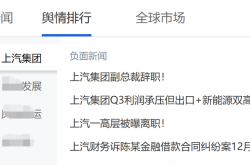
SAIC Motor unexpectedly found itself on the Tonghuashun public opinion trending list today. Recently, multiple court hearing notices have surfaced online regarding financial loan disputes in which SAIC Finance is suing individuals. Alongside this news, SAIC Motor also disclosed another executive change: Vice President Yang Xiaodong resigned due to personal development needs and departed on November 6, exiting his positions at the company upon resignation. The relevant announcement was published on November 7. With both pieces of news appearing on the trending list simultaneously, it is easy for observers to connect them to operating pressure. SAIC cited personal development needs as the reason for the departure, and the announcement also detailed the work handover arrangements. Currently available public information has not linked this personnel change to the personal loan lawsuits. Auto finance deserves a closer look. Automakers use financing plans to facilitate transactions, but they must also reckon with borrowers' repayment capacity over the coming years. Sales can be recorded in the same month, but credit risk may only surface later.

First, the lawsuits
This topic points to SAIC Motor Finance Co., Ltd. According to the risk assessment report disclosed by SAIC, it is a wholly owned subsidiary of the group and a licensed non-bank financial institution, with approved businesses including buyer credit and consumer credit for member units' products. A finance company under an automaker can extend its business to car-buying customers. Therefore, it is not unusual in itself for individuals to become defendants in loan disputes.
Buying a car and borrowing money are two separate transactions. Once the vehicle has been delivered, the loan must still be repaid according to the contract. If a dispute arises, the parties may negotiate or resolve it through judicial proceedings. Recent reports are mostly automated compilations of court hearing information, providing clues for observation. The original court announcements, complaints, and complete judgments for the relevant cases still need to be verified. The total amount involved, the total number of cases, and the growth rate all currently lack verifiable evidence, and the specific circumstances of the cases should also await disclosure of court materials.
Court hearing information can tell readers that disputes exist, but who bears what responsibility specifically still depends on evidence. Adding several reports together to conclude that the company's risk is out of control skips the most important verification steps: loan scale, overdue ratio, and actual recovery. What can be checked with complete case details is a historical car loan case published by the Shanghai Financial Court. It is enough to illustrate how discounts, defaults, and recourse in this business fall step by step onto the borrower.
The contract behind the preferential interest rate
The judgment (2023) Hu 74 Min Zhong No. 687 records that a borrower took out a loan of 93,000 yuan in 2019 to buy a Roewe passenger car, repayable in 36 installments, and began to fall into arrears in February 2021. The contractual annual loan interest rate was 13.18%; under normal performance, the borrower bore part of the normal interest at an annual rate of 3.99%, with the rest borne by a third party. Part of the interest on this loan was paid by someone else.
The discount felt at the time of purchase is attached to the performance conditions stipulated in the contract. The contract stipulated an annual overdue interest rate of 19.77%, which the first instance adjusted to 15.40%. The court ultimately ordered repayment of the remaining principal of 32,242.64 yuan and corresponding interest, and clarified the disposal of the mortgaged vehicle and the priority repayment arrangement. On May 6, 2023, the second instance upheld the original judgment. The above are facts of that historical case, and the relevant interest rates and judicial handling apply only to that case.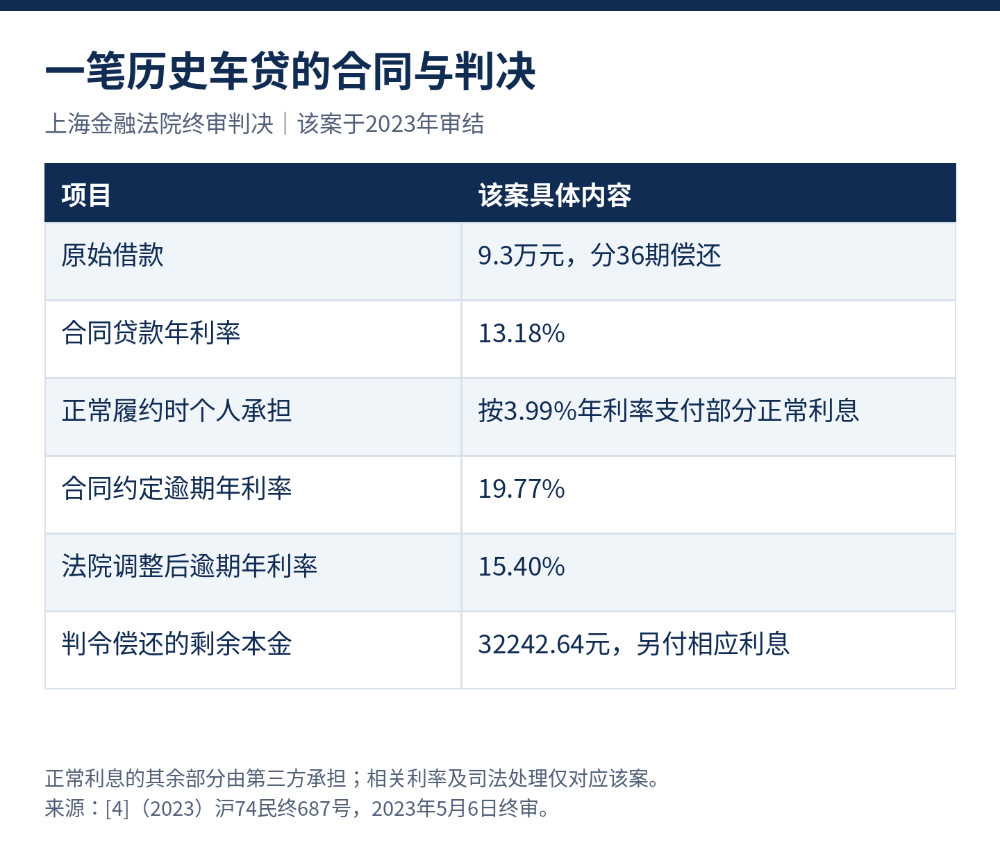
This judgment lays out the details most easily overlooked in car loans: who is subsidizing the interest, what conditions the discount must meet, how money is calculated after default, and how collateral is disposed of. At signing, these clauses may be just a few pages of paper; when repayment difficulties arise, each one corresponds to real expenses. Sales staff are willing to talk about low monthly payments, but financial institutions should explain the full bill thoroughly. If customers understand before signing, there will be one less layer of dispute later. When explanation is postponed until collection, patience and trust on both sides are often already mostly depleted.
A few disputes cannot support a risk conclusion
Now look at SAIC Finance's fundamentals. The 2026 semi-annual risk assessment report shows that at the end of June, assets were 230.348 billion yuan, liabilities were 159.567 billion yuan, net assets were 70.781 billion yuan, and the debt-to-asset ratio was 69.27%. This is a financial institution with considerable asset scale, and judging its risk requires corresponding overall data.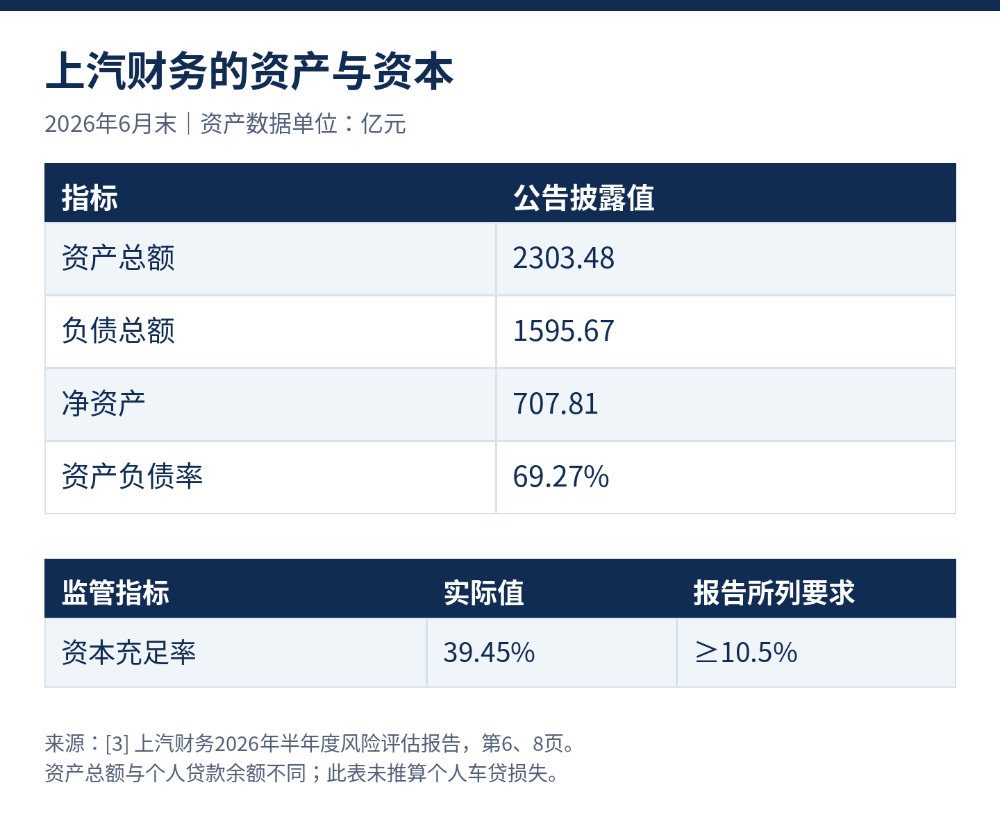
The finance company's assets have other components, and total assets and personal loan balances should be viewed separately. To analyze car loan quality, it is necessary to further examine loan classification, overdue duration, and loss provisions. A few pieces of news about loan disputes cannot carry the weight of evaluating the asset quality of the entire company. The report also lists a capital adequacy ratio of 39.45%, higher than the listed regulatory requirement of 10.5%, and the listed company's assessment conclusion is that the relevant risks are controllable.
Capital provides room to absorb losses, but judging the quality of newly issued loans still requires tracking subsequent repayments. The group's profit pressure also has clear data. In the first three quarters of 2026, SAIC Motor's total operating revenue was 455.221 billion yuan, down 2.94% year on year; net profit attributable to the parent was 5.638 billion yuan, down 30.40% year on year. The company mainly attributed the relevant profit changes to capital market effects, changes in the fair value of financial assets, and exchange losses in overseas business.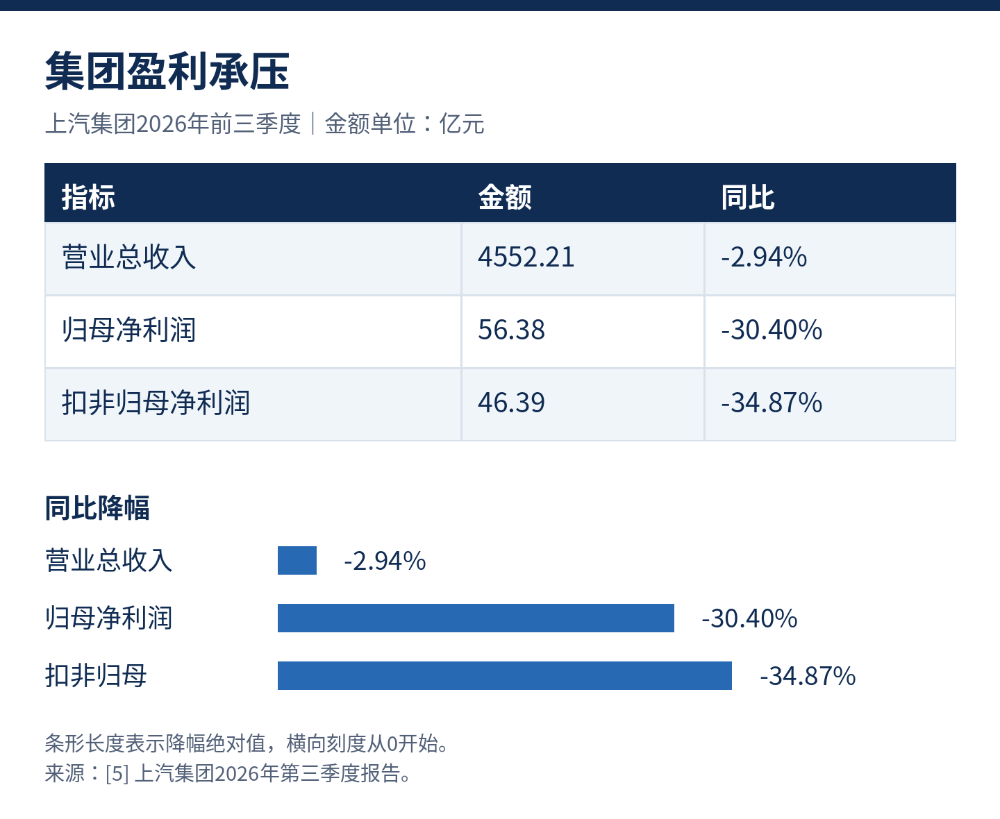
The reasons for the profit decline have already been explained in the announcement. Existing materials cannot support directly attributing this to personal car loan lawsuits. For automakers, a more valuable check is: how many additional sales does a financial promotion generate, and after deducting interest subsidies, funding costs, and expected credit losses, how much profit remains.
The test remains for later
Within the industry, auto finance is still very large. A 2026 report by the China Banking Association, disclosed via CS.com.cn, showed that at the end of 2025, the assets of 24 auto finance companies nationwide totaled 914.448 billion yuan, up 6.94% year on year; the retail financing balance was 725.04 billion yuan, with an average non-performing loan ratio of 0.75%. At the end of 2024, the average non-performing loan ratio was 0.65%.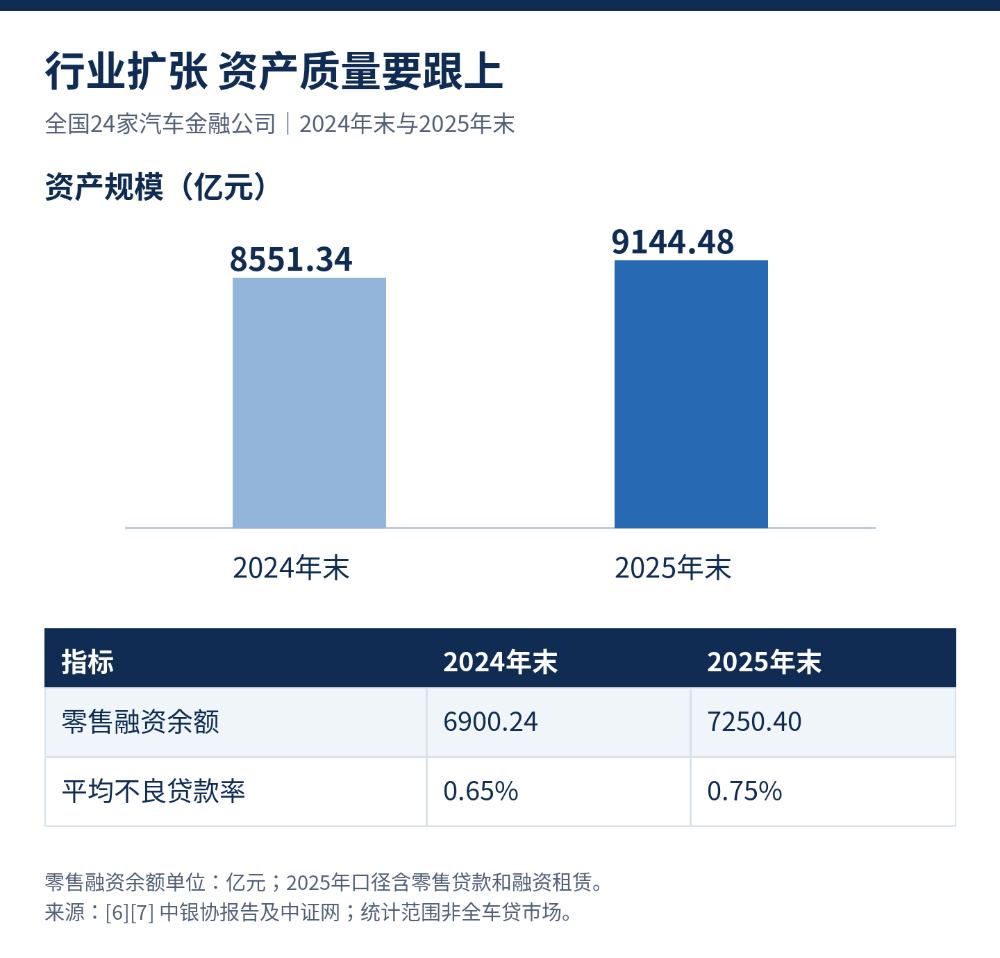
These figures correspond to auto finance companies, and their coverage differs from the entire car loan market and also from the enterprise group finance companies to which SAIC Finance belongs. Putting them together is to look at the industry background; directly comparing rankings or estimating SAIC's losses both require additional data. The average non-performing ratio rising by 0.10 percentage points is worth continued observation; the fact that the entire industry remains at a relatively low level also has a corresponding factual basis.
For operators, the key is to distinguish: which group of customers has slowed repayments, which types of channels have deteriorated loan quality, and where losses are concentrated. Car loans first face the gap between income and monthly payments. A low down payment reduces the cash customers must put up now, and a long term spreads repayments thinner, but the debt obligation lasts longer. Once household income changes, a monthly payment that was just affordable at the time may squeeze other living expenses.
Therefore, financing plans can be flexible, but customers' repayment capacity should be examined solidly. If credit standards are relaxed whenever sales tasks tighten, the extra orders today may have to be realized in the future through higher collection costs. Another test comes from vehicle value. Cars depreciate with continued use, and new car price adjustments and product replacements may also affect used-car valuations. When a borrower falls into arrears, how much the mortgaged car can be sold for directly affects debt recovery.
Repossessing the car also involves appraisal, disposal, and other steps, and the corresponding time and costs should also be included in calculations. Channel incentives should also be aligned. After a dealer closes a transaction, it can quickly obtain sales benefits; the risks borne by the financial institution, however, will continue for years. If cooperation compensation is linked only to disbursement volume, subsequent loan performance is easily neglected. Channel evaluation should follow through until customer repayment.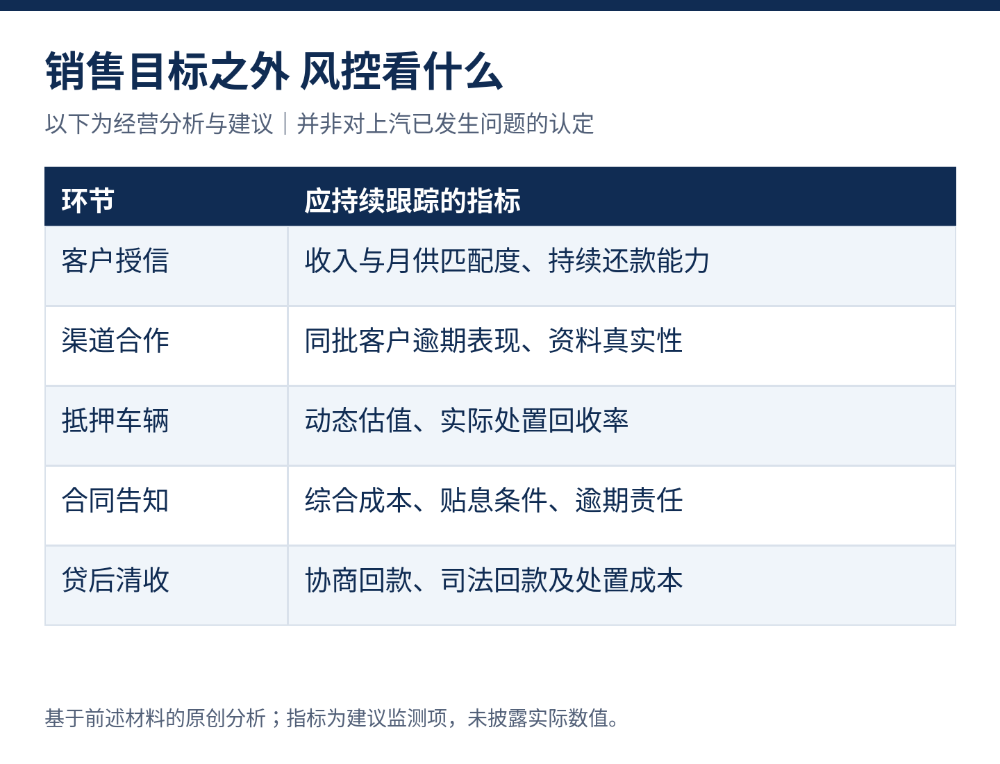
Customers also need a cost list they can understand. Interest, service fees, conditions for early settlement, and the method of calculating interest after default should be clearly explained before signing. The more complex the financing plan, the simpler the sales explanation should be. Only when customers can repay on time and clearly understand their responsibilities can institutions have a more stable repayment base.
The auto loan policy adjusted in 2024 allows financial institutions to independently determine the maximum disbursement ratio for loans for personal-use traditional fuel vehicles and new energy vehicles, while requiring them to reasonably determine ratios, terms, and interest rates based on borrowers' credit and repayment capacity, and to strengthen pre-loan review and post-loan management. Institutions have more operating room, but they also need to make risk judgments more carefully.
The car-selling account must be settled only when the loan is fully repaid
The topic of SAIC Finance suing individuals reflects a commonly overlooked side of the auto business: sales can be completed at vehicle delivery, but the true quality of financial business must be tested by collections. Automakers should put promotions and risk control on the same operating account. When selecting customers, designing terms, and arranging interest subsidies, they should calculate the losses that may occur in the future.
When looking at the returns of a batch of business, one should also look at arrears, actual recovery, and disposal costs at the same time. Management should especially pay attention to businesses where loans are still growing but early arrears have already begun to rise. By the time bad debts enter the financial statements and tightening begins, the cheapest handling window is often already missed. Verifying income once more during approval and contacting customers once earlier after disbursement may both reduce subsequent recourse costs. Post-loan management should also leave room for negotiation.
For customers who are temporarily in difficulty but still solvent, compliant negotiation may improve recovery efficiency; where litigation is truly necessary, contract disclosures, collection records, and amount calculations should withstand scrutiny. The ultimate evaluation of collection effectiveness depends on repayment quality. The more the auto market competes on price and sales volume, the more automakers must uphold the standard of independent credit review. Finance can help consumers buy cars earlier, and sound risk control is what allows such support to continue. Only when cars can be sold and loans can be collected as agreed is the business truly complete.
What do you think of this hot topic? We look forward to your civilized and rational comments in the message area.
Statement: This article is only an analysis of financial hot spots from a professional perspective. The data and materials cited are from public queries, company announcements, and Tonghuashun iFinD. The views are for reference only and do not constitute any investment or consumption advice.
#FinancialHotspots #InDepthInterpretation #BusinessFinance #InvestmentBankingCircle #ListedCompanies #PrimaryMarket #IPO #AI #SAICMotor
-
Annual Salary Million President Resigns After Three Months, Assurance Report Delayed Three Times: How Long Will Taiji Co., Ltd.'s "Old Accounts" Remain Unsettled?
-
![]()
First Chinese President Suspected of Being "Stripped of Power": Core Functions Such as R&D Returned to German Side—What Happened at Audi China? | Mingjing Pro
-
![]()
Haoon Automotive Electronics' Q3 Financial Report: Revenue Up 52%, But Quarterly Adjusted Profit Barely Reaches 2.81 Million Yuan
-
![]()
SAIC Motor Sparks Heated Discussion Online: Executive Departure and Lawsuits Raise Questions
-
![]()
The First Country Built by AI—How Is It Doing Now?
-
![]()
Robot Vacuum Cleaners: Drawing the "Kill Line"
-
![]()
Mobile Phones Aren't Selling, and Tablets Are Suffering Too—What Exactly Is Going On?
-
![]()
Car Buyers Are Getting Older and Older—So Why Are Cars Still Marketed as Youth-Oriented?