First Chinese President Suspected of Being "Stripped of Power": Core Functions Such as R&D Returned to German Side—What Happened at Audi China? | Mingjing Pro
 11/10 2026
 329
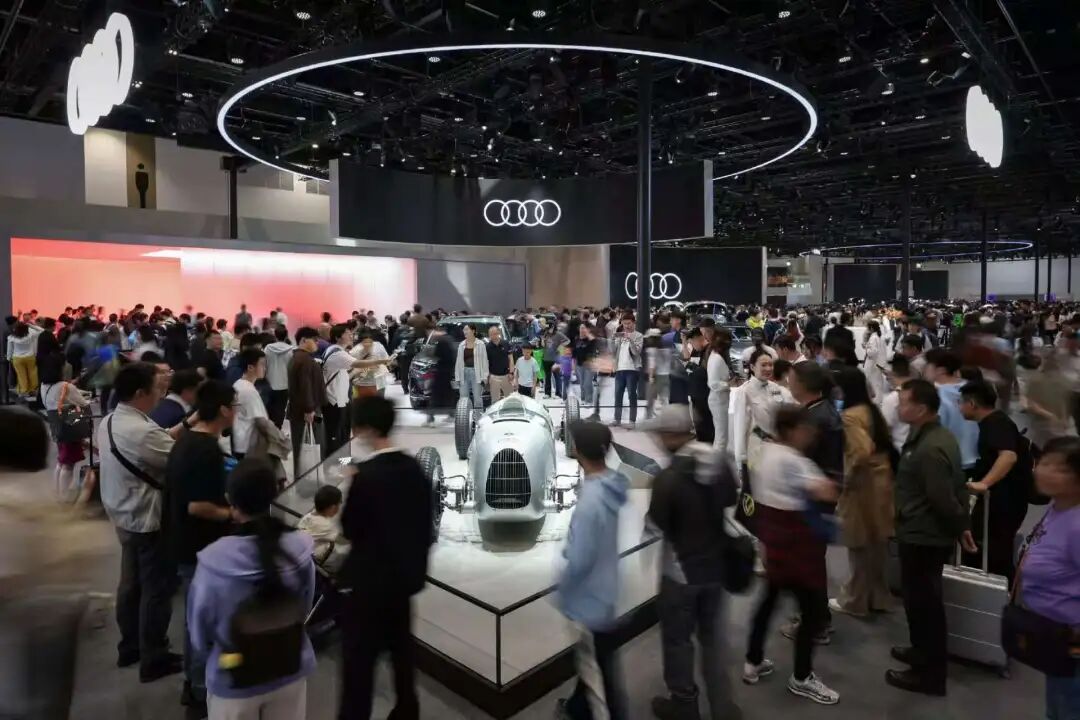
Audi's recent adjustments in the Chinese market have brought some unexpected new developments.
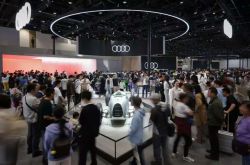
Recently, Audi made a series of adjustments in China. First, on October 22, Audi China announced a reshuffle of its China region personnel. Starting November 1, Zhang Jun will succeed Johannes Roscheck as President of Audi China. Rolf Michl, current Managing Director of Audi Sport GmbH, will head to China to serve as Chief Operating Officer (COO) of Audi China. As part of this personnel adjustment, the Audi China Management Board will also be streamlined, with Zhang Jun and Rolf Michl jointly forming the board. This marks the first time Audi China has had a Chinese national serve as CEO of the China region. Audi stated that through these appointments it is strengthening its operational and leadership capabilities in China.
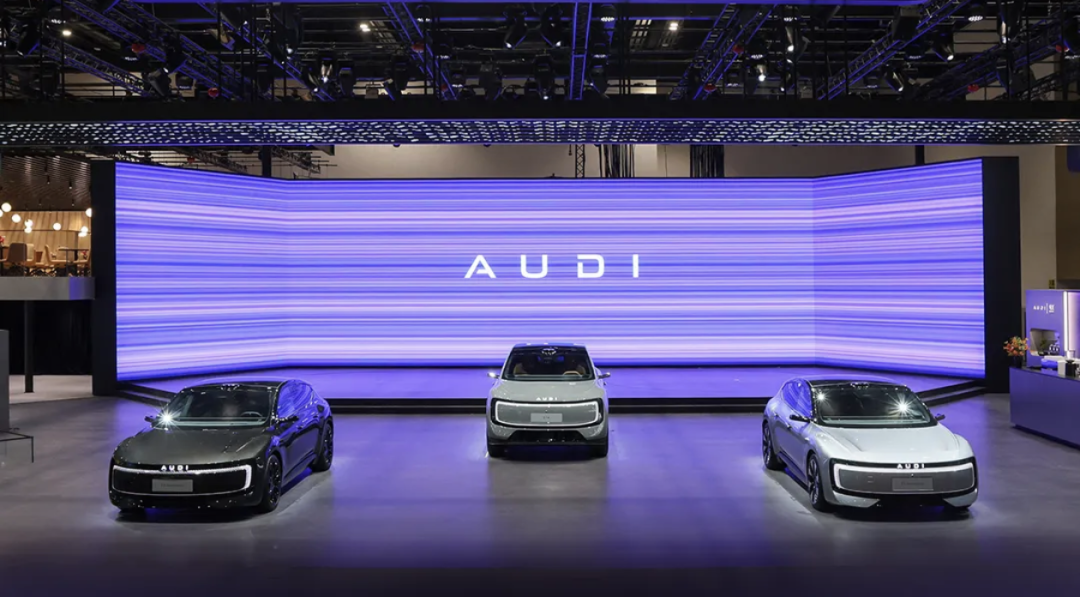
Then, on October 26, Audi China, SAIC Audi, and FAW Audi issued a joint statement. According to the statement, SAIC Audi will transfer Four Rings models and related assets to FAW Audi, focus on developing AUDI brand electric vehicles, and the Four Rings brand will be entirely consolidated under FAW Audi. This is a first among luxury brands and represents Audi's reshaping of its brand system and portfolio layout in China. This series of adjustments demonstrates the strategic direction and determination of Audi to make a fresh start in the Chinese market. However, behind these adjustments, Audi in Germany has actually kept some cards in hand and has not fully let go to allow the Chinese market to take flight.
According to a November 9 report by China Economic Net, although Audi China President Zhang Jun succeeded Johannes Roscheck, who was dispatched by the German headquarters, German Audi headquarters has clearly reduced his power. Audi China's organizational chart and division of responsibilities show that Zhang Jun is responsible for strategy and joint venture management, brand and sales, and finance and administration, with the focus of his authority falling more on sales and external affairs; at the same time, Zhang Jun's three direct subordinates are all German, and his actual control is limited.
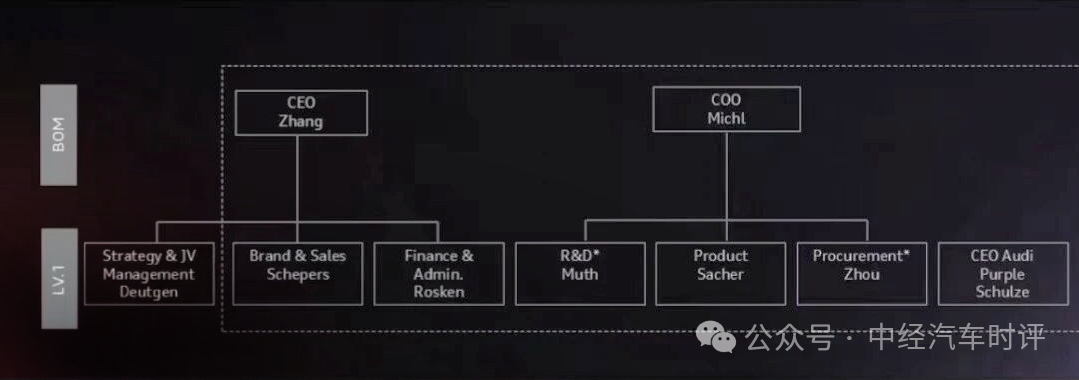
The report stated that core technical and product affairs at Audi China—such as R&D, products, and procurement—are handled by Michl, and the company's real power is not in Zhang Jun's hands. His decision-making space is still defined by the headquarters. In addition, before Zhang Jun took office, the above structure had already been finalized, and he does not have the right or conditions to adjust the structure and cannot change the current situation in which real power lies elsewhere.
In addition, the President of Audi China previously held a TMK level within Volkswagen, while Zhang Jun is at OMK, one level lower than TMK. Within the Volkswagen system, the number of Chinese and Chinese-national OMKs is actually not small. Zhang Jun and Audi China COO Rolf Michl divide power and stand separately, and both their level and authority are lower than those of Johannes Roscheck, who is returning to the Ingolstadt headquarters. This means that, as the representative first Chinese President of Audi in China, he has in fact been "stripped of power."
This also discounts the significance of Audi's localization. After all, Audi's replacement of its China region president was highly anticipated by the outside world and was even initially misreported as the "first Chinese-national" president. At present, Audi China has not responded to this. However, it has triggered heated discussion in the industry.
In fact, comparing Audi China's press release at the time of the appointment of the new management team also reveals changes in management responsibilities in China. Regarding Zhang Jun's appointment, Audi stated that through these appointments it is strengthening its operational and leadership capabilities in China. Audi stated that the Chinese market is currently evolving rapidly, with new competitors and technological innovations emerging one after another and customer demands constantly changing, all of which place higher demands on automakers.
Therefore, Audi is establishing a streamlined and focused management structure and has formed a leadership team that combines rich global experience, solid local market knowledge, and a high degree of execution.
Audi's CEO stated that it is "strengthening the China management team, integrating their international experience, insights into the Chinese market, and deep understanding of the Audi brand, so as to consistently execute our strategy, respond faster to customer needs, and ensure business continuity for Audi Sport with sustainable and rich experience."
Two years ago, when Johannes Roscheck took office, the statement was: "Next, we plan to further expand cooperation with our two Chinese partners to quickly open up new customers and market segments, thereby fully leveraging growing market vitality and continuously developing the potential of intelligent connected electric vehicles. Johannes Roscheck will rely on his rich international experience to further drive our business transformation in China. The President of Audi China will play a key role in achieving our strategic goals in our largest global market."
There are some differences between these two statements. It appears that "one focuses on execution while the other focuses on expansion," and "one is partial while the other is overall." Of course, judging from the wording on streamlining the organization, Audi China in China actually no longer needs a separate R&D unit—after subsequently delegating power to the north and south Audi joint ventures, Audi China will play more of a supporting role.
The same is true for relatively core areas such as R&D and procurement. In terms of R&D, Audi has already established a three-dimensional R&D center system in China. Among them, the Beijing Audi China R&D Center (wholly owned by Audi) serves as Audi's main brand (FAW Audi) China R&D hub, including localization of FAW Audi models, intelligent cockpit, intelligent driving, electronic architecture, design, regulations, and forward-looking pre-research, and connects with the German headquarters; while the Shanghai AITC (SAIC Audi joint venture) is responsible for the AUDI exclusive brand's independent complete vehicle R&D center, independently defining and forward-developing a new generation of intelligent electric models; the FAW Audi Changchun R&D Center is responsible for Audi and PPE platform complete vehicle trial production, calibration, durability, and production engineering verification base, as well as FAW Audi mass-production supporting engineering.
Subsequently, with the development of Audi's localized R&D, Audi China's R&D center will be further adjusted.
The same applies to procurement. With the arrival of the new energy era, China's high-quality supply chain is now indispensable. Delegating power to joint ventures and promoting localization of the supply chain is an inevitable choice for Audi to enhance competitiveness. From this perspective, Audi's choice is actually understandable. A more interesting change is the role and positioning of Audi China in this process.
Before 2016, Audi had only one partner in China, FAW Audi, and the core of R&D between the two sides was mainly the introduction of imported cars and the landing of domestically produced cars. Subsequently, after 2017, the north-south Audi situation took shape, and Audi China hoped to control the situation. On the one hand, it strengthened R&D capabilities, and on the other hand, it increased its layout at the brand and market levels. Audi's plan was to form a truly unified plan at the brand level and form the same management structure as Volkswagen. Starting in 2023, Audi had already begun laying out the AUDI brand. By this year, the split situation of the north and south Four Rings has ended.
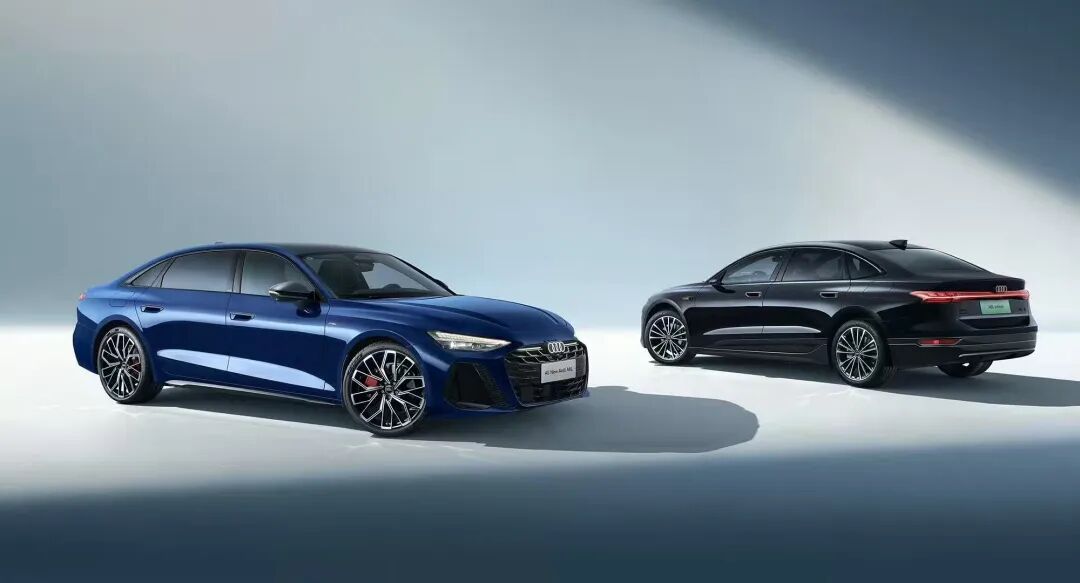
In fact, judging from this change, Audi's previous approach of forming a unified management mechanism in R&D, market, and brand has still not been achieved. And as Four Rings Audi returns to FAW and the AUDI brand develops independently, Audi China's positioning will inevitably be adjusted. Against this background, Audi China's responsibilities may also need further adjustment. Judging from the current trend, German Audi is further reducing its organizational structure, or in Audi's words, "establishing a streamlined and focused management structure." This is also more in line with Audi's subsequent development needs and cost-control requirements.
Data shows that in fiscal year 2025 the Audi Group achieved sales revenue of 65.5 billion euros, a year-on-year increase of 1.5%. At the same time, the group's operating profit was 3.4 billion euros, with an operating sales return of 5.1%. In fiscal year 2025, the Audi Group's global vehicle deliveries were 1.6444 million units. In the Chinese market, Audi sales were 619,931 units, a year-on-year decrease of 5.1%. In 2025, the Audi Group's revenue in the Chinese market was 10.114 billion euros, with a financial contribution in China of 504 million euros.
Under the new landscape, Audi's changes are also a natural choice. For Audi itself, this is the most realistic and strategically appropriate choice. This may also be the reason why the responsibilities of Audi China's top leader have been reduced.
-
Annual Salary Million President Resigns After Three Months, Assurance Report Delayed Three Times: How Long Will Taiji Co., Ltd.'s "Old Accounts" Remain Unsettled?
-
![]()
First Chinese President Suspected of Being "Stripped of Power": Core Functions Such as R&D Returned to German Side—What Happened at Audi China? | Mingjing Pro
-
![]()
Haoon Automotive Electronics' Q3 Financial Report: Revenue Up 52%, But Quarterly Adjusted Profit Barely Reaches 2.81 Million Yuan
-
![]()
SAIC Motor Sparks Heated Discussion Online: Executive Departure and Lawsuits Raise Questions
-
![]()
The First Country Built by AI—How Is It Doing Now?
-
![]()
Robot Vacuum Cleaners: Drawing the "Kill Line"
-
![]()
Mobile Phones Aren't Selling, and Tablets Are Suffering Too—What Exactly Is Going On?
-
![]()
Car Buyers Are Getting Older and Older—So Why Are Cars Still Marketed as Youth-Oriented?