I Just Wanted to Turn Off My Brain and Binge Some Short Dramas—Never Expected to Be Ambushed by Historical Knowledge
 11/11 2026
 549
Editor | Sun Jing
I just wanted to toss my brain aside and binge some short dramas—never expected knowledge to sneak into my head like that.
If you've watched historical short dramas, you probably know this feeling of being caught off guard by knowledge.
I originally just wanted to casually watch a few episodes, but as I kept watching, I found myself pondering the official system of the Song Dynasty, the aristocratic clans of the Northern and Southern Dynasties—and I even couldn't resist opening an AI assistant to check what the characters in the show actually experienced in real history.
Since the beginning of this year, a batch of historical-themed short dramas has gone viral one after another. They don't follow the familiar formulas of "wealthy families, revenge, slapping faces"; instead, they weave patriotism, intellectual showdowns, and rigorous historical settings into their plots. Not only have they racked up hundreds of millions of views, but they've also sparked a learning enthusiasm among viewers that many didn't even have during their school days.
On social media, some sigh that following a time-travel imperial examination short drama helped them revisit timeless masterpieces and finally understand what "a single poem overshadowing all of Tang poetry" really means; others, after watching a Northern Song historical short drama, couldn't resist cramming on Song history—and later, in the spirit of "sharing joy with everyone," built a website explaining the relationship between the characters in the show and real Song history...
From "just casually watching" to "let me look this up," how do these historical short dramas lead viewers step by step into history?
01 The end point of watching dramas is reading history?
First, an observation that has no statistical significance: many of the historical-themed short dramas that have gone viral this year are set in periods that rarely appear in mainstream film and television narratives.
On screen, the grand strategies of prosperous dynasties and great emperors have been portrayed time and again; on mobile phones, the gaps in history, the collision between the fates of ordinary people and great eras, and the various lingering regrets left for later generations have opened up new space for short drama creators.
For example, recently, the number of viewers waiting for updates of "Armed Into Song: Season 11" on the Hongguo App has exceeded 5 million.
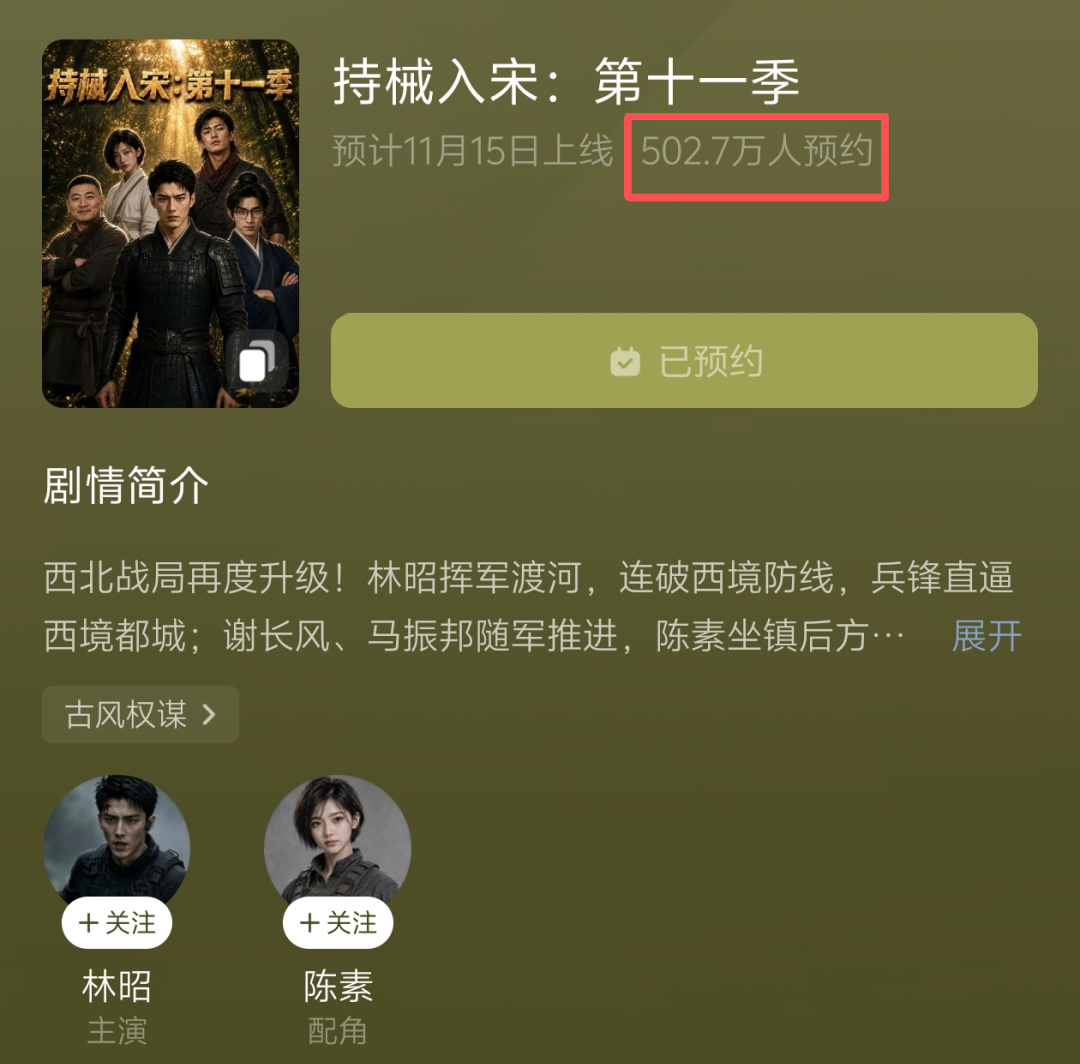
This AI short drama, set in the late Northern Song Dynasty, has seen its reputation continue to grow since launching in August this year, and is called the "ceiling of AI short dramas" by fans.
The story setup of "Armed Into Song" is not complicated: five modern special forces soldiers carrying modern weapons travel back to the late Northern Song Dynasty, attempting to change the course of the Jingkang Incident. The encounter between modern military equipment and ancient warfare inherently carries strong dramatic conflict. But what truly drives the story forward is the series of real problems this squad must face.
The screenwriter did not give the protagonists a "cheat": modern firearms are terrifyingly powerful, but every bullet fired is one fewer. The five not only have to solve survival problems like food and registration, but also build defensive fortifications, improve crossbows, and train troops. Even after gaining local advantages on the battlefield, the protagonists still have to deal with practical issues such as food, military supplies, local governance, and the bureaucratic system.
History here is not just a "backdrop" for modern people to travel into; the political situation, military dilemmas, and social order of the late Northern Song Dynasty directly determine what the characters can and cannot do.
This also gives viewers the motivation to learn about history: why did the Northern Song, which ended the chaos of the Five Dynasties and Ten Kingdoms by force, instead move toward valuing civil over military in its institutional design? Why did the "Jingkang Humiliation" happen? What difficulties did the Northern Song army face at the time? Even the famous line from the Zuo Zhuan, "The great affairs of the state are sacrifice and war," receives a passionate annotation at the village funeral in "Qinghe Village," where the story takes place.
As of November 6, "Armed Into Song" has accumulated 12 billion views across all platforms, with bullet comments like "full marks for logic," "comparable to a blockbuster," and "this is what a real drama should be" flooding the screen.
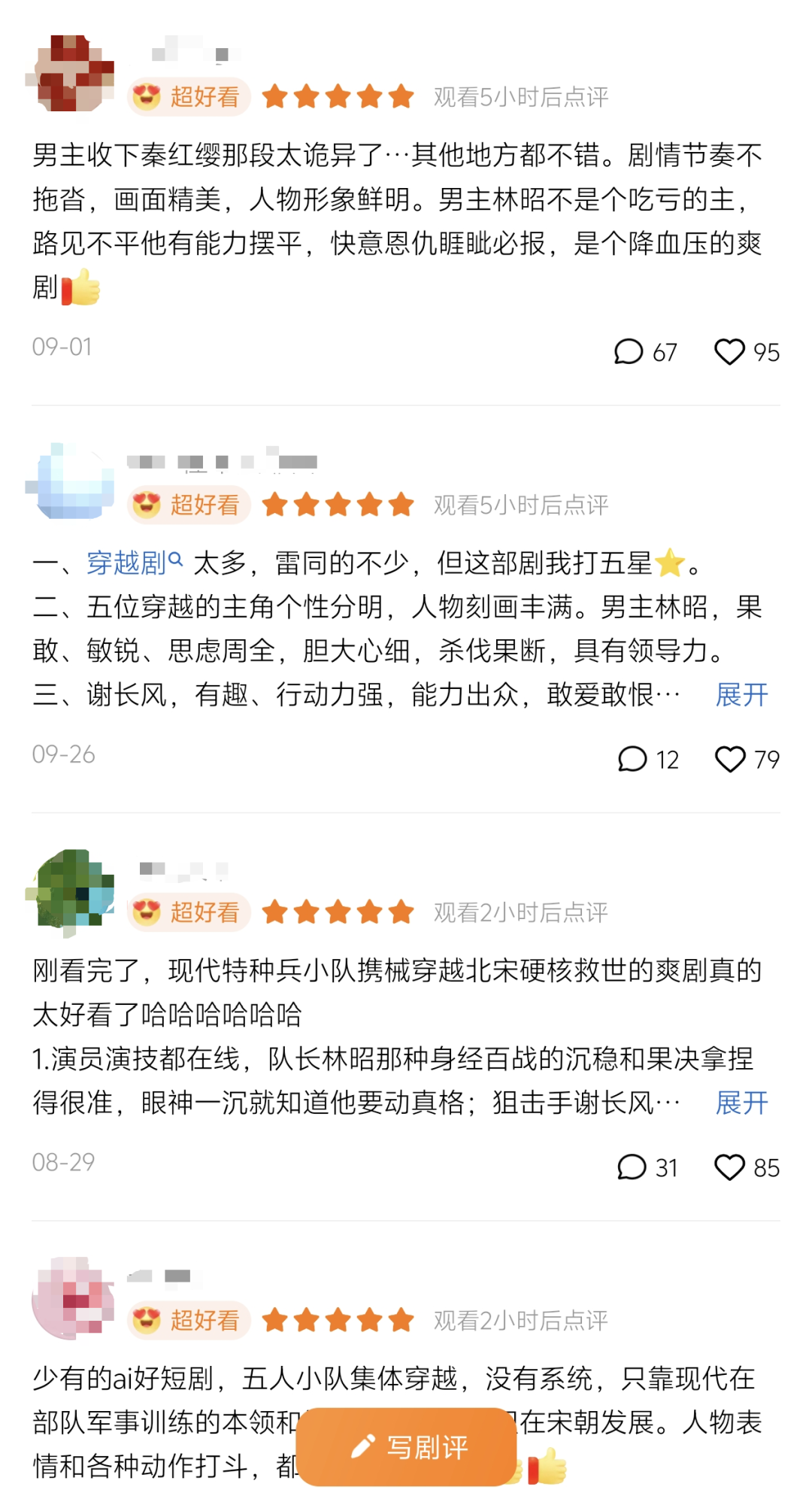
▲"Armed Into Song" has received widespread praise on the Hongguo App
"Taking the Name Langya," set against the relatively "niche" history of the Northern and Southern Dynasties, turns knowledge density into the protagonist's survival skill in society. Many netizens' biggest takeaway after watching the entire series is: this is the first time I've seen such a cultured short drama.
According to the plot, modern Chinese literature PhD Wang Yang travels back to the Southern Qi Dynasty and, to protect himself, impersonates a member of the prestigious Langya Wang clan. In a society dominated by aristocratic clans, what he faces is not simple monster-fighting and leveling up, but how to understand clan order, ceremonial systems, and cultural rules, and use his knowledge to find a foothold.
There is a scene in the drama centered on a debate over the Book of Documents: facing an opponent who champions the "Old Text Book of Documents," Wang Yang starts with the character "ying" and points out that pre-Qin texts mostly used "jing" to represent shadows, thereby questioning the authenticity of the transmitted "Old Text Book of Documents."
Those contents that might originally appear in historical papers or annotations to ancient texts are transformed into dramatic conflicts between characters with winners and losers, with consequences. The series' devotion to historical accuracy is also reflected in many details, such as when characters quote classics like the Analects, the Book of Songs, and the Rites of Zhou, the subtitles note the sources, and many characters appearing in the show can be found prototypes for in historical records.
Netizens not only follow the plot but also can't resist looking up the characters' real experiences and comparing them with the dramatization in the show.
A similar learning craze also appeared during the broadcast cycle of the premium long drama "The Peaceful Year" earlier this year, which was set against the history of the Five Dynasties and Ten Kingdoms. It is clear that the issue is not the length of the series, but whether the plot, characters, and visual presentation can lead viewers into a period of history.
Dai Weihong, director of the Wei-Jin-Northern and Southern Dynasties History Research Office at the Institute of Ancient History, Chinese Academy of Social Sciences, once commented that the original work of "Taking the Name Langya" constructed a "three-layer research system"—based on core historical sources such as the Book of Southern Qi and A New Account of the Tales of the World, incorporating academic research findings from scholars like Qian Mu, and through the restoration of daily life details such as clothing, food, housing, and transportation, making history transform from old paper piles into a "tangible living scene."
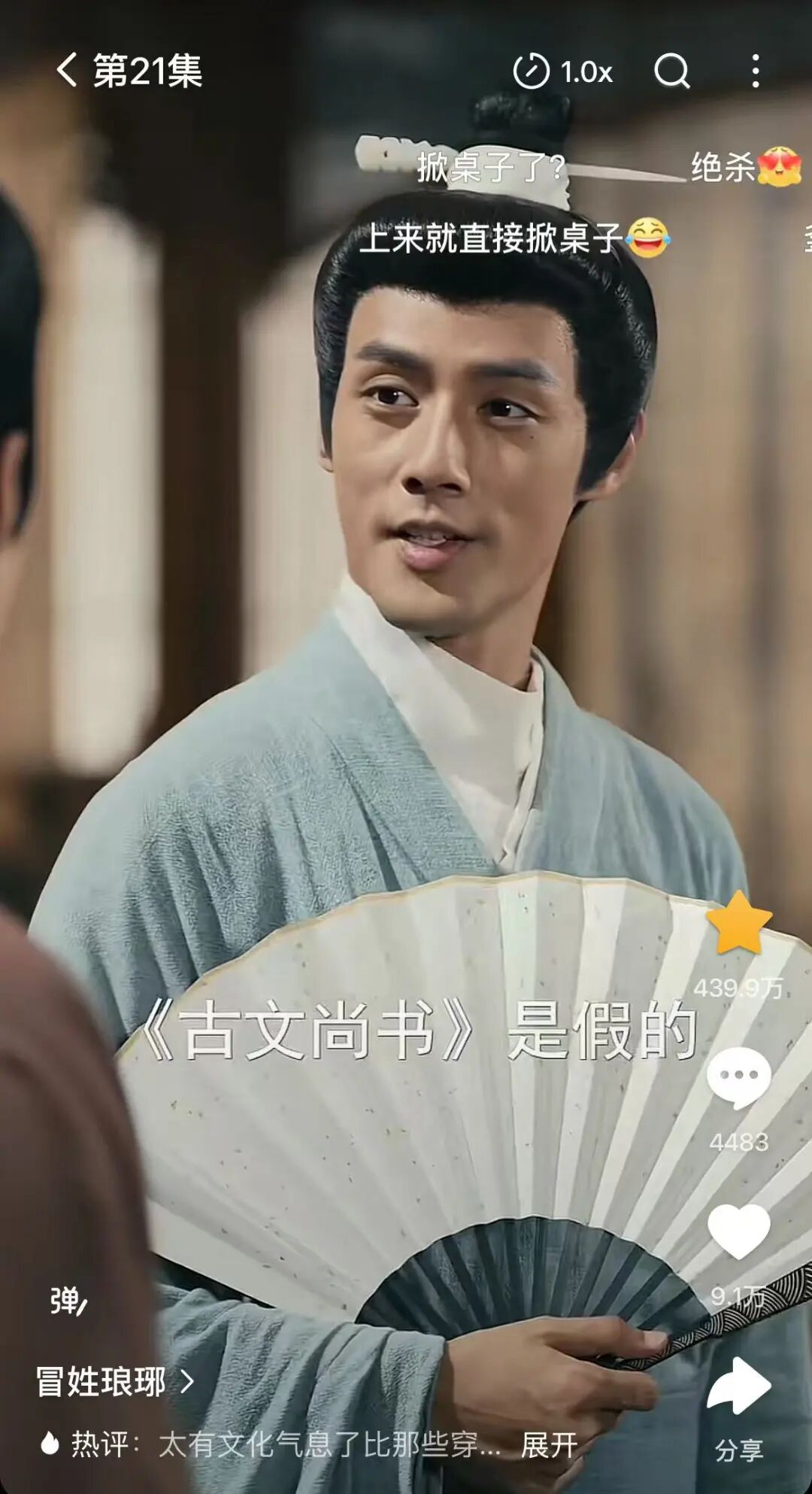
▲Still from "Taking the Name Langya"
"Plum by the Inkstone" chose another path. This drama is based on Yan Zhenqing's surviving calligraphy work "Draft of a Requiem to My Nephew," and the protagonist Yan Jiming is Yan Zhenqing's nephew and an important figure behind the tragic story of the "Draft of a Requiem to My Nephew."
During the An Lushan Rebellion, the Yan father and son defended Changshan Commandery against the rebel army to the death, and later "the father fell, the son died, the nest overturned and the eggs were crushed." But in official histories, not much personal information about Yan Jiming survives. Later generations' understanding of him mostly comes from Yan Zhenqing's "Draft of a Requiem to My Nephew." The short drama transforms this period of history into concrete character relationships and emotional stories, giving viewers a chance to imagine the parts that historical sources did not elaborate on.
Some people reread the "Draft of a Requiem to My Nephew" after watching, and others made special trips to Xi'an to look for historical traces of the Yan family.
"The Ming Dynasty: Li Jinglong's Alternative Life," with over 600 million views, attempts to rewrite the fate of the historically controversial Li Jinglong. Cemetery security guard Zheng Qian accidentally travels back to the Hongwu era of the Ming Dynasty and becomes Duke of Cao Li Jinglong. Beneath the power-fantasy exterior of the Duke of Cao gradually approaching the center of court politics, the undercurrents of late Hongwu officialdom and the tragic undertones of historical figures such as Zhu Biao, the Ming's first crown prince, and the Jianwen Emperor are revealed one by one.
Such a batch of historical short dramas created with care makes history concrete and perceptible. Viewers follow the characters into an unfamiliar era, carrying questions like "why did the situation come to this," and gradually seek answers as events unfold.
When the viewing pleasure of time-travel dramas extends from "cheat codes" to understanding historical trajectories, the spirit of the times, and the fates of characters, "consuming history" becomes, in a sense, a dialogue with history.
02 Why does history always have new stories?
After getting into Hongguo short dramas, director Jia Zhangke once pointed out the real difference between long and short dramas: "Whether a story is told in two hours or two minutes is a matter of form, not bloodline. When the screen stands upright, creators don't become shorter. If two minutes move people, they've moved them. If two hours don't move people, you can't apply for overtime."
What he means is that short dramas only shorten the narrative duration, but viewers' demands for good stories have not decreased as a result. This is also why the "domineering CEO," "crooked-mouth Dragon King," and "counterattack" genres that frequently topped the charts in the industry's early days gradually lost their effectiveness.
When a new content form first emerges, a mix of good and bad is basically the norm. Just as the first content to go viral on short video platforms was live-streaming tipping and rural self-abuse performance content, it is not surprising that the first phenomenal representative works of short dramas were the "domineering CEO" series. But as novelty fades, novelty-seeking and monotonous thrill will increasingly feel as bland as industrial saccharin.
You should know that viewers can mock themselves for "brainless" scrolling, but mainstream works cannot truly be "brainless" with zero "nutritional" additives.
Under this subtle tension, the value of historical themes becomes prominent.
First, historical knowledge can become a new kind of thrill.
In the past, many short dramas relied on identity reversals, wealth domination, and emotional conflict to create pleasure. Historical themes can also retain strong plots, but they offer another kind of satisfaction: a character relies on knowledge, judgment, and understanding of rules to break through in an unfamiliar environment. At the same time, the "era" itself also needs to participate in the plot: why can't characters easily change their circumstances, and why can a seemingly minor decision ultimately affect a larger historical process? Behind every answer lies room for the plot to develop.
The debate over classics in "Taking the Name Langya" is an example. Viewers may not be familiar with the textual issues of the Book of Documents from the start, but they can gradually understand the key points of the debate through the characters' exchanges. Knowledge is no longer background explanation outside the plot; it participates in determining victory and defeat.
In "Armed Into Song," modern weapons appear powerful enough, but limited ammunition, insufficient production capacity, and a different organizational system determine that the characters cannot simply rely on equipment to clear the game. What viewers think about along with the plot is how technological advantages can be implemented, and whether a person can understand the operating rules of another era.
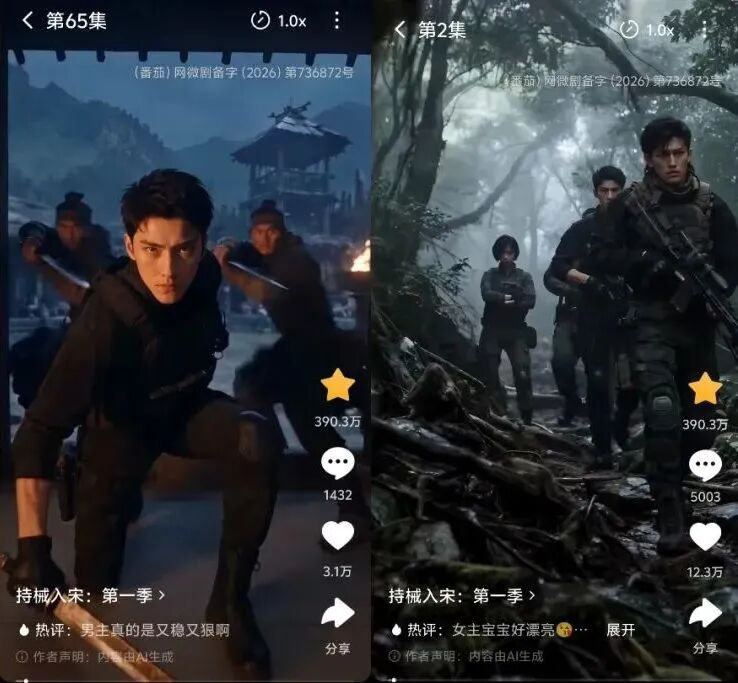
▲Still from "Armed Into Song"
When knowledge reserves and rigorous logic drive the plot, viewers gain an intellectual satisfaction different from emotional release.
Second, there is ample room for imagination.
British historian Edward Hallett Carr had a famous view: history is an endless dialogue between the present and the past. It is the product of later generations reexamining and interpreting the past with their current perspectives, awareness of problems, and historical background.
Although the environments in which historical figures lived differ from modern society, simple universal emotions such as passionate patriotism, courage and loneliness, forbearance and struggle can transcend time and resonate with people. And the choices some characters face, projected onto the present, can still provoke thought among today's viewers.
For example, in the classic historical drama "Ming Dynasty 1566," every character is filled with a "sense of powerlessness." Screenwriter Liu Heping later explained that the sense of powerlessness also mirrors the general mentality of people today. That is why this drama could become popular again 10 years after it aired.
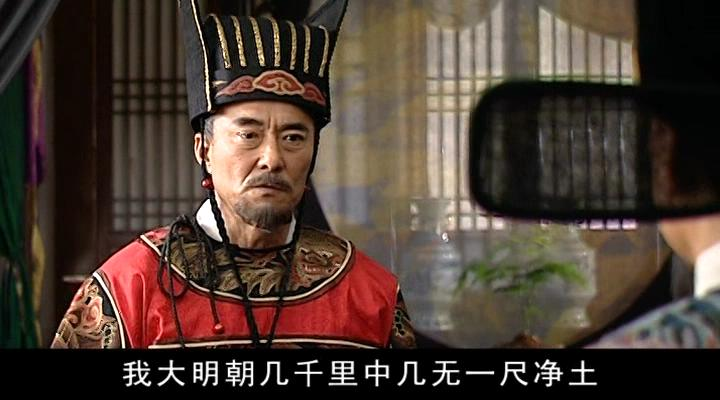
▲Still from "Ming Dynasty 1566"
What viewers see on screen is a historical narrative, yet what they connect with may be their own real-life circumstances. This suggests that historical short dramas hold significant potential to reach a broad short-drama audience. According to the "Annual Survey Report on Chinese Micro Short Drama Users" released by CSM Media Research, historical themes enjoy a favorability rating exceeding 73% among micro short drama users.
That said, ample creative space for historical themes does not mean creators can fabricate at will.
Historical themes appeal to viewers not only because they harbor untold stories, but also because they can weave together knowledge, the constraints of a given era, and dramatic conflict. What creators must do is genuinely transform these resources into compelling stories.
The short drama format itself also offers a more accessible entry point for such stories. In the past, following a historical drama often meant setting aside dedicated time. Now, with episodes running just a few minutes, short dramas allow viewers to catch a segment during their commute, on a lunch break, or before bed.
Even viewers unfamiliar with a particular period of history can still be drawn in by an engaging story first, then gradually come to understand the history behind it by following the characters' experiences.
03 When Viewers Start Doing Their Homework, Short Dramas Must Withstand Scrutiny Even More
As historical short dramas go viral, some intriguing discussions have begun appearing in the bullet comments.
In the past, feedback on short dramas tended to focus on whether the plot was thrilling enough and whether there were enough twists; now viewers "do their homework" on whether characters' clothing matches the era and official rank settings, whether the timeline of a certain battle is accurate, and whether the history behind a certain artifact is explained clearly. After finishing a drama, some even flip through historical sources and check classical texts, cross-referencing the plot against real history.
All these signs point to one thing: viewers' expectations for historical short dramas are no longer just about watching for fun.
This places higher demands on creators. Historical themes can certainly involve artistic fiction, but characters' behavior must have period-appropriate grounds, and dramatic conflict also needs to grow out of the characters' positions and circumstances; costumes, makeup, props, sets, actions, and even shot transitions must likewise withstand scrutiny.
"Plum by the Inkstone" was once praised by netizens with a rather weighty teasing remark: "If the screenwriter hadn't digested a few Yan Ruoqus (textual scholars), this script probably couldn't have been written." This comment speaks to the effort of historical research and also points out an important condition for historical short dramas to gain recognition: creators must first have a sufficient understanding of that era before they can tell a credible story.
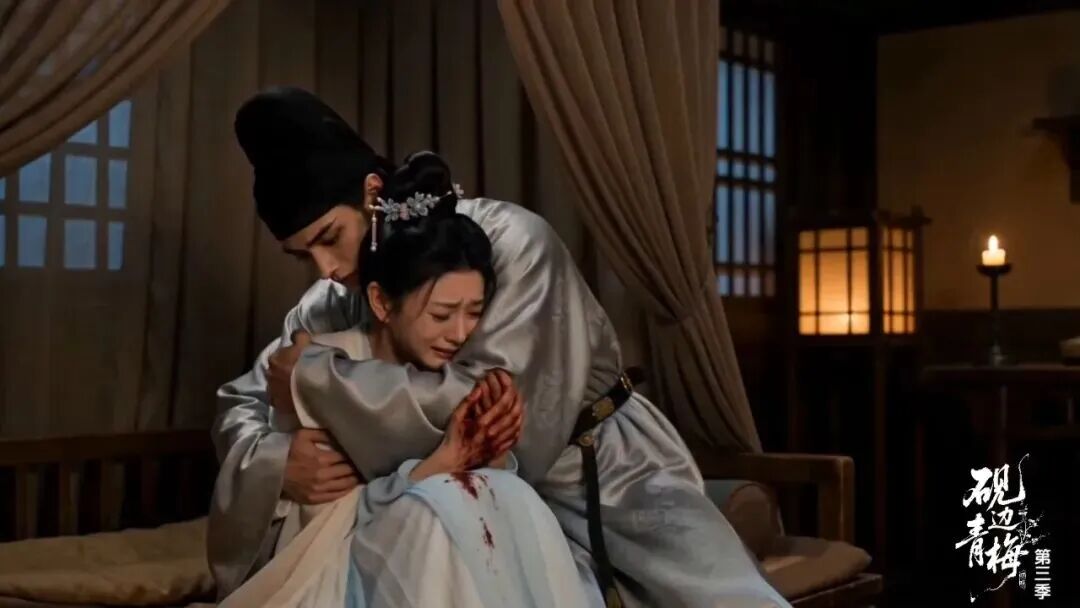
▲Still from "Plum by the Inkstone"
The cultivation and refinement of viewers' tastes may in the future also push short dramas toward premiumization in turn.
Since the beginning of this year, AI has also brought new variables to short drama production. War scenes, ancient cities, and group portraits of characters that were once costly now have more possibilities for realization. Lower production barriers also provide new opportunities for grassroots creators to try more subjects.
Of course, even works that have already achieved breakout success still have room for improvement. For example, in "Armed Into Song," some AI-generated character images are not natural enough, and the male lead Lin Zhao still wears earphones in ancient times; in "Plum by the Inkstone," tropes such as the female lead encountering danger and the male lead rescuing her are used frequently, and some shots have technical issues such as disordered dialogue orientation and visible continuity errors.
The production efficiency of short dramas can be rapidly improved with technology, but scripts, historical research, and audiovisual details still require creators to spend time polishing.
For short drama platforms such as Hongguo, the next step is also to transform this audience expectation into positive incentives for the content ecosystem: through creative support, works that invest seriously in scripts, knowledge research, and audiovisual production should receive more opportunities; at the same time, governance of low-quality and homogenized content should be strengthened so that creators are motivated to continuously explore new themes and forms of expression.
Only when the short drama ecosystem continues to improve will the industry have the opportunity to produce more premium short dramas that users can watch without feeling "burned."
-
![]()
I Just Wanted to Turn Off My Brain and Binge Some Short Dramas—Never Expected to Be Ambushed by Historical Knowledge
-
![]()
After a Decade-Long March Toward Premiumization, Has BYD Lost Interest in Maserati?
-
![]()
AI Short Dramas Go Global: Traffic Is Proven, but Monetization Remains the Real Test
-
![]()
In Depth | The German Big Three's "China Cash Machine" Has Completely Stalled
-
![]()
Who Benefits from the Partnership Between Zunjie, Which Seeks Scale, and Maserati, Which Seeks Prestige?
-
![]()
Changan Personnel Adjustment: Wu Xuxi Promoted to Vice President of Kaicheng, Liu Bin to Head Changan Mazda Marketing
-
![]()
Why Can Nissan, Shrinking in Scale, Grow Again? | Cover Story: Japanese Automakers at the Crossroads of Transformation (IV)
-
Has the U.S. Stock Market AI Bubble Burst?