After a Decade-Long March Toward Premiumization, Has BYD Lost Interest in Maserati?
 11/11 2026
 545
Produced by Radar Finance | Text by Zhou Hui | Edited by Meng Shuai
After more than a decade-long marathon toward premiumization, BYD has forged its own path.
On November 8, when media again asked about rumors of acquiring Maserati, BYD Executive Vice President Li Ke said, "Perhaps we were more interested a few years ago. But now we have found our own path, and the direction is right."
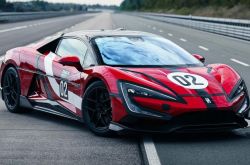
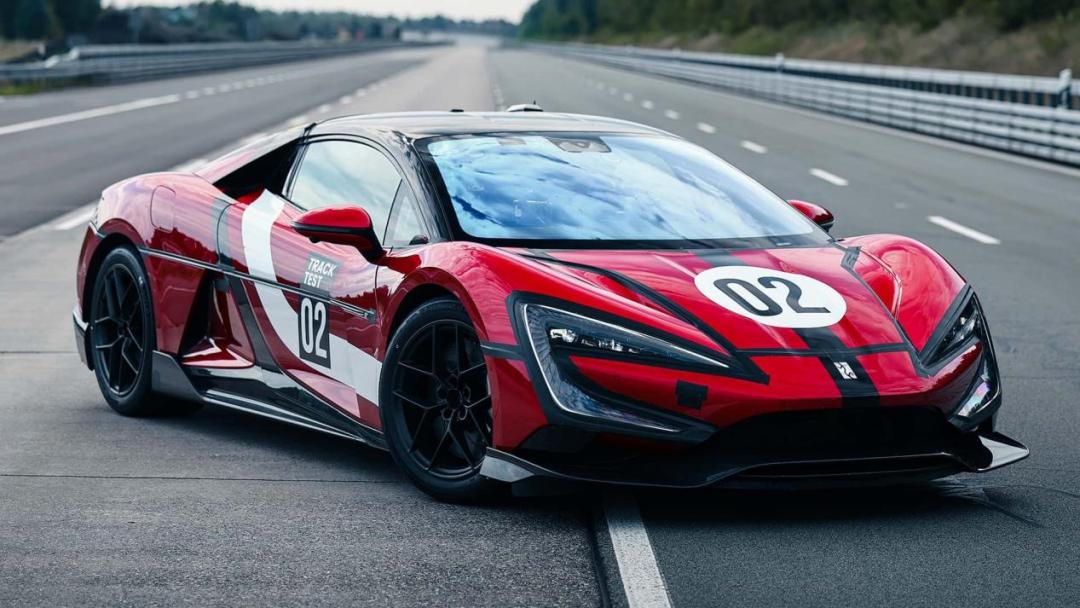
At the same time, referring to the Yangwang U9 Xtreme, which had just achieved a top speed of 503.17 km/h on a closed test section, Li Ke proudly stated, "Besides, the fastest car in the world today is ours."
From Denza in 2010 to Yangwang and Fang Cheng Bao later on, BYD's "premium dream" has continued to advance with the support of R&D funding on a scale of hundreds of billions.
In the first 10 months of this year, the combined sales of the above three brands reached 468,000 vehicles, up 70% year on year, accounting for about 13% of BYD's total sales.
While continuing to advance its premiumization strategy, BYD's global layout has also yielded a bumper harvest. In October this year, the company exported 170,200 new energy vehicles, up 102.84% year on year.
Driven by both premiumization and globalization, BYD achieved revenue of 221.488 billion yuan in the third quarter of this year, up 13.59% year on year, and recorded a net profit attributable to parent company of 10.02 billion yuan, up 28.08% year on year.
However, due to phased pressure in the first quarter, BYD's performance in the first three quarters of this year still showed a situation of "revenue growth without profit growth."
"Finding our own path," has BYD become "disenchanted" with Maserati?
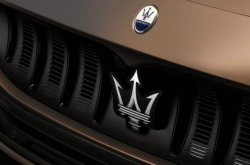
"Perhaps we were more interested a few years ago. But now we have found our own path, and the direction is right." When media recently asked again about rumors of acquiring Maserati, BYD Executive Vice President Li Ke responded this way.
The origin of this rumor can be traced back roughly half a year ago. According to Kuai Technology, at an industry summit at that time, Li Ke said, "BYD is evaluating high-end assets in the European market, and Maserati is indeed within the scope of consideration."
Li Ke said such brands are "very attractive" and that "the company has been studying various acquisition opportunities."
On the same day, BYD also confirmed to media that it was in negotiations with European automakers such as Stellantis over taking over underutilized local plants.
Two days later, at an automotive conference in London, Li Siting, Vice President of BYD's international business, revealed that the company was evaluating the acquisition of traditional luxury brands under operational pressure in Europe, and Maserati was once again named.
BYD executives' repeated remarks immediately sparked market discussion, with outsiders speculating that this new energy vehicle leader was intending to bring the Italian luxury car brand Maserati into its fold.
However, on May 21, BYD denied this widely discussed rumor, saying it was not true. Li Ke also stressed that the purpose of the company's negotiations with Stellantis was to acquire its idle plants in Italy and did not involve brand acquisitions.
It is worth mentioning that in his response on November 8, Li Ke also proudly stated, "Besides, the fastest car in the world today is ours."
The confidence behind Li Ke's remark came from the Yangwang U9 Xtreme, built by BYD's high-end new energy vehicle brand Yangwang.
According to media reports, on November 1, the Yangwang U9 Xtreme driven by racer Marc Basseng achieved a top speed of 503.17 km/h on a closed test section of the E11 highway in Abu Dhabi, United Arab Emirates, reaching the milestone of breaking through 500 km/h in the speed limit of the human automotive industry.
To celebrate this moment, on November 6, the Burj Khalifa, the world's tallest building, lit up with a dedicated light show for the Yangwang U9 Xtreme. The next day, Yangwang also held a fleet parade led by the U9 Xtreme in Abu Dhabi.
During the celebration, Li Ke said that with the successful launch of the Yangwang brand, more and more BYD cars can be seen on the roads there. "Everyone recognizes our products, and it is easier to build a brand independently. This choice better fits the future and better unleashes the value of technology."
After more than a decade-long premiumization marathon, BYD has reaped rich rewards
Behind BYD's "disenchantment" with Maserati are the rich rewards gained from its more than decade-long marathon of premiumization.
According to Tianyancha information, BYD Company Limited (referred to as "BYD") was founded in 1995. At the beginning of its establishment, the company mainly engaged in the research, development, and production of batteries.
In 2003, under the leadership of Wang Chuanfu, BYD completed the acquisition of Xi'an Qinchuan Automobile Co., Ltd., marking the start of its automotive business.
Subsequently, BYD set the goal of developing new energy vehicles. By 2009, the automotive business had developed into BYD's largest source of revenue, contributing 21.617 billion yuan in revenue for the year, accounting for 52.58% of revenue.
The following year, BYD began its initial trial in premiumization, jointly launching the Denza brand positioned in the high-end new energy vehicle segment with Daimler, the parent company of Mercedes-Benz.
Despite the endorsement of the Mercedes-Benz brand, due to factors such as immature technology and insufficient market awareness, Denza's initial performance was hardly impressive. According to 21st Century Business Herald, from 2016 to 2020, the brand accumulated losses of billions, with annual sales long below 5,000 vehicles.
However, Wang Chuanfu did not give up his "premium dream" because of this. In 2022, BYD launched an entirely independently built new high-end automobile brand, Yangwang, positioned in the million-yuan-level high-end new energy vehicle segment.
In its 2022 annual report, BYD stated that Yangwang would take the lead in applying the group's cutting-edge technological achievements and innovative design concepts, and based on extreme driving scenarios, provide users with ultimate safety, ultimate performance, and ultimate experience, reshape the values of high-end brands in the new energy era, and strengthen the group's brand influence in the high-end market.
In early 2023, with the maturity and application of core technologies such as "e4 Platform," the Yangwang brand was officially released. In September of the same year, the Yangwang U8 luxury version, equipped with the two core technologies of "e4 Platform" and "DiSus-P" intelligent hydraulic body control system, was officially launched.
In addition, in August 2023, BYD also released the professional personalized brand Fang Cheng Bao, benchmarked overall against luxury automobile brands such as BBA, and its first super hybrid off-road SUV, Bao 5, was officially launched in November of that year.
Since then, the three major brands Denza, Fang Cheng Bao, and Yangwang have jointly supported BYD's "premium dream." Among them, Denza and Fang Cheng Bao are positioned in the 300,000 to 500,000 yuan market, while Yangwang focuses on the million-yuan-plus market.
In 2023, Denza's full-year sales were about 127,800 vehicles, up 1,203.1% year on year. Among them, cumulative sales of the Denza D9 were about 119,200 vehicles, overtaking the Buick GL8 to become the annual sales champion in the entire MPV market that year.
In December of the same year, sales of Yangwang and Fang Cheng Bao were 1,593 and 5,086 vehicles, respectively, up 290.4% and 712.5% month on month.
Since then, the share of BYD's premium models in sales has gradually increased. In 2024, the combined sales of the three major brands Denza, Fang Cheng Bao, and Yangwang were about 190,000 vehicles, accounting for less than 5% of sales.
By 2025, these three brands had combined sales of 397,000 vehicles, up 109% year on year, with their sales share nearly doubling compared with 2024.
According to a research report by Soochow Securities, in the first 10 months of this year, the combined sales of the aforementioned three brands climbed further to 468,000 vehicles, up 70% year on year, accounting for about 13% of total sales.
Quarterly performance rebounds, first three quarters show "revenue growth without profit growth"
At the Yangwang brand launch event in January 2023, Wang Chuanfu once said that throughout the history of the automotive industry, the birth of high-end automobile brands must be accompanied by the maturity of top core technologies, and super technology creates high-end brands.
To realize the "premium dream," BYD has continued to increase R&D investment. Data from Tonghuashun iFinD shows that from 2023 to 2025, BYD's R&D expenses were 39.575 billion yuan, 53.195 billion yuan, and 57.978 billion yuan, respectively, up 112.15%, 34.42%, and 8.99% year on year.
In the first three quarters of this year, BYD's R&D expenses were 36.277 billion yuan, far exceeding its net profit attributable to parent company of 22.345 billion yuan in the same period. According to BYD Executive Vice President He Zhiqi, as of now, BYD's cumulative R&D investment has exceeded 280 billion yuan.
With R&D funding on a scale of hundreds of billions, BYD has "hammered out" a rich technology "fish pond," including second-generation blade batteries and flash charging technology, thereby gaining considerable returns in fierce industry competition.
According to IT Home, in October this year, BYD sold a total of 490,200 new vehicles, up 10.97% year on year and 5.74% month on month, ranking first on the monthly automobile sales list (as of November 6).
However, looking over a longer time span, in the first 10 months of this year, BYD's cumulative sales reached 3.6217 million vehicles, down 2.16% year on year.
It is worth mentioning that BYD's performance in overseas markets was quite outstanding. In October this year, the company exported 170,200 new energy vehicles, more than doubling year on year.
Thanks to the continued advancement of its premiumization strategy and the explosive growth of its overseas business, BYD's third-quarter performance rebounded significantly.
In the third quarter of this year, the company achieved single-quarter revenue of 221.488 billion yuan, up 13.59% year on year, and recorded a net profit attributable to parent company of 10.02 billion yuan, up 28.08% year on year.
At the same time, the company's profitability also improved. Data from Tonghuashun iFinD shows that BYD's gross profit margin in the third quarter was 18.01%, an increase of about 0.4 percentage points compared with 17.61% in the same period last year.
However, affected by phased pressure in the first quarter, BYD's performance for the entire first three quarters still showed a situation of "revenue growth without profit growth."
Financial reports show that in the first three quarters of this year, BYD achieved cumulative revenue of 566.304 billion yuan, up only 0.01% year on year, and recorded a net profit attributable to parent company of 22.345 billion yuan, down 4.24% year on year.
Although the company's overseas business has developed rapidly, it has also pushed up BYD's inventory scale to a certain extent.
As of September 30, BYD's inventory was 221.578 billion yuan, an increase of about 60% from 138.421 billion yuan at the end of last year. BYD clearly stated that the increase was mainly due to the growth of its overseas automotive business and increased stocking.
In addition, overseas business also brought certain exchange losses to BYD. In the first three quarters of this year, BYD's financial expenses surged from -2.936 billion yuan in the same period last year to 7.368 billion yuan.
Regarding the change in this indicator, BYD explained that it was mainly because this period saw exchange losses, while the same period last year saw exchange gains.
Radar Finance will continue to pay attention to BYD's subsequent development.
-
![]()
I Just Wanted to Turn Off My Brain and Binge Some Short Dramas—Never Expected to Be Ambushed by Historical Knowledge
-
![]()
After a Decade-Long March Toward Premiumization, Has BYD Lost Interest in Maserati?
-
![]()
AI Short Dramas Go Global: Traffic Is Proven, but Monetization Remains the Real Test
-
![]()
In Depth | The German Big Three's "China Cash Machine" Has Completely Stalled
-
![]()
Who Benefits from the Partnership Between Zunjie, Which Seeks Scale, and Maserati, Which Seeks Prestige?
-
![]()
Changan Personnel Adjustment: Wu Xuxi Promoted to Vice President of Kaicheng, Liu Bin to Head Changan Mazda Marketing
-
![]()
Why Can Nissan, Shrinking in Scale, Grow Again? | Cover Story: Japanese Automakers at the Crossroads of Transformation (IV)
-
Has the U.S. Stock Market AI Bubble Burst?