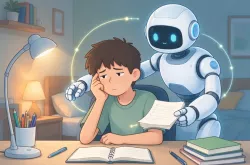
What ChatGPT's Teen Mode May Take Away from Teenagers: The One Thing They Need Most
 11/12 2026
 455
What these young students stand to lose is not just the ability to think, but the confidence to trust their own inner voice.
In August of this year, OpenAI rolled out teen mode, and all users under 18 will be automatically placed into this mode.
A year ago, a lawsuit alleged that ChatGPT was linked to the suicide of a 16-year-old boy named Adam Raine.
For a long time, a large number of similar lawsuits have been filed, yet the companies have consistently maintained that their products are not directly responsible for these tragedies.
These lawsuits have exposed one thing: when it comes to the negative psychological impact of AI on teenagers, the industry is only willing to acknowledge part of it. They choose to turn a blind eye to the rest.
On the surface, teen mode is designed to block the most obvious risks: filtering harmful content, notifying parents if a child shows signs of self-harm, and stipulating that AI cannot pretend to be a friend, cannot claim to have emotions, and cannot let children mistakenly believe it is more than a tool.
This last restriction was specifically created in response to the fatal Character.AI case, in which a 14-year-old boy developed very deep feelings for a chatbot.
More and more people now realize that it is not only the content AI outputs that causes harm; the very way AI chats with people can also cause harm. It is precisely with this understanding that they created learning mode, the learning feature included in teen mode.
Many studies have long confirmed what we have always known: if AI simply does children's homework for them, grades may appear to improve in the short term, but once AI is no longer allowed, grades immediately return to their original level—or even become worse than before AI was used at all. The goal of learning mode is to help children learn real things and retain their abilities.
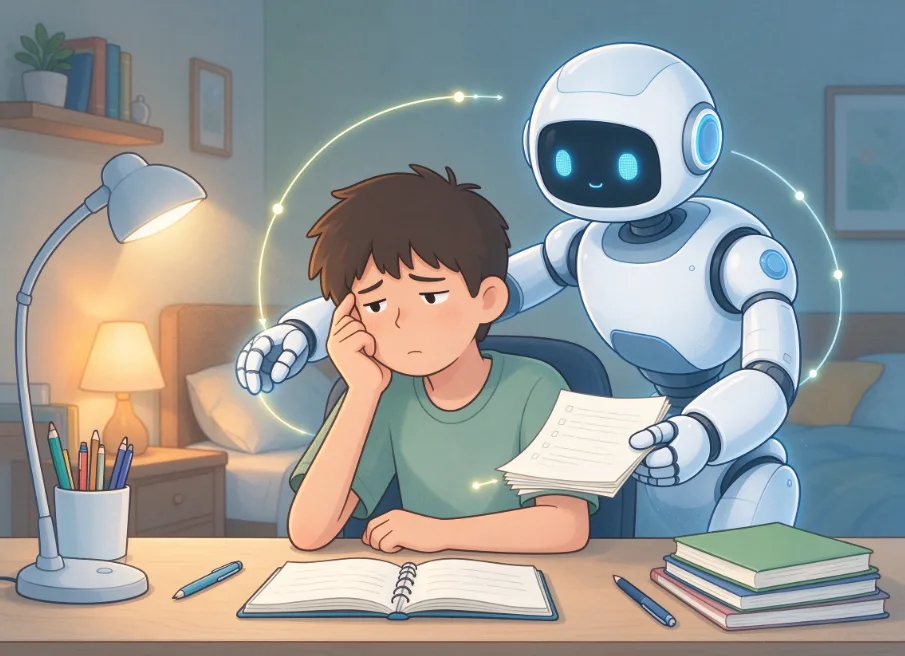
Image source: Doubao AI generated
Leah Belsky, OpenAI's vice president in charge of education business, said this is a major shift: AI is no longer just a machine that directly throws out answers, but has become a tutor that guides thinking.
It uses Socratic questioning and does not give answers directly, forcing children to use their own brains to figure out most questions.
Teen mode does have its highlights: as long as there is a phone, anyone can use it.
It does not easily feed answers to children. Many children cannot afford tutors, and teachers do not have enough time to slowly answer questions. This AI companion is equivalent to popularizing high-quality thinking tutoring.
Moreover, it knows a lot and is available on call, which even real teachers cannot match.
Tutors get off work on schedule, and parents can also become impatient or be busy with other things. But teen mode is always patient and keeps chatting. To be honest, it is probably the only conversational partner in human history that can be infinitely tolerant of teenagers and never get annoyed.
In other words, in essence, it is a perfect parent that is almost unreal. And the trouble lies precisely here.
Adolescence helps people grow not because teenagers think everything they think is right, but because they deeply believe they are right. It is this somewhat reckless, unproven certainty that gives them the courage to figure out what they truly believe.
What shapes people during adolescence is not that teenagers never make mistakes, but that they firmly believe they are not wrong.
It is this passionate, largely unfounded self-confidence that pushes them to find their true stance. If a child always has someone accompanying and guiding them while thinking, and the responses they receive are always just right, then they will never learn to decide for themselves.
But now people are increasingly inseparable from AI, and this is really hard to achieve.
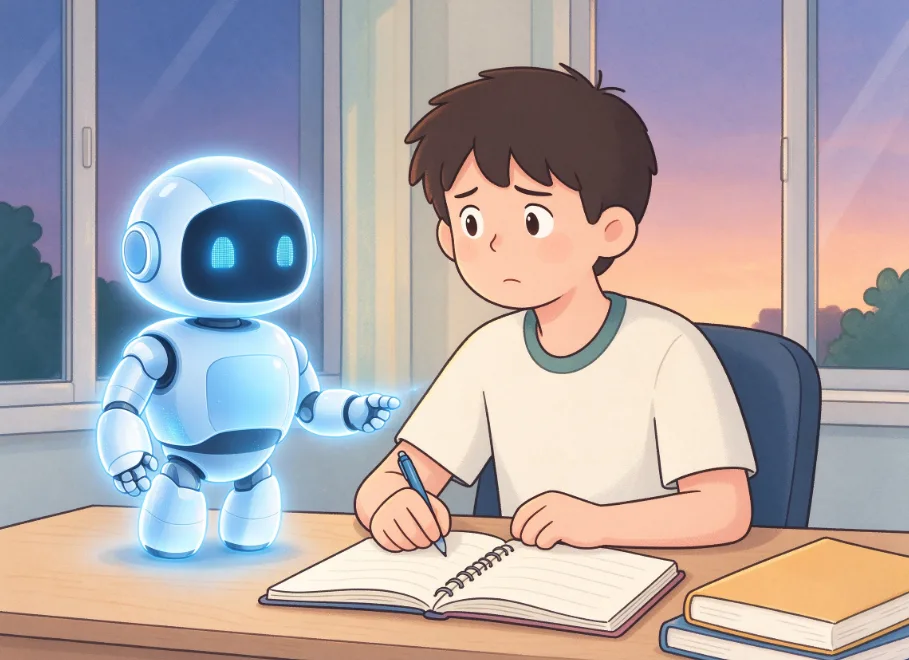
Image source: Doubao AI generated
Even if this could really be achieved, human growth cannot simply rewind by removing the tool. Many tech leaders actually know this very well and specifically send their own children to schools that strictly require homework to be completed independently.
But ordinary children do not have this condition. All they can use is teen mode. Worse still, they may also use ordinary AI without this set of guidance rules.
What these children lose is far more than the ability to solve problems; it is the confidence to believe in their own thoughts.
We have long found that staying online all the time interferes with the formation of children's self-identity. Jonathan Haidt compiled a large amount of research on phone use and found that the surge in anxiety, depression, and suicidal thoughts among teenagers happened right after electronic devices began encroaching on their unsupervised, free time to space out.
Sherry Turkle has studied teenagers and technology for decades. She found that many children only know what they really think after posting their thoughts online and reading others' comments.
This is the deeper harm that the tech industry and the designers of teen mode have not solved.
Although teen mode tells you to think for yourself, it always holds your hand and keeps guiding you from the side, keeping children dependent.

Image source: Doubao AI generated
In the end, a stable sense of self must go through real tests. Facing oneself at such moments brings doubt and fear, but also sudden clarity and the joy of thinking.
In the 1850s, the German philosopher Schopenhauer wrote: Independent thinking is always an uncomfortable thing, so very few people are willing to do it.
And now, we may be raising a generation that hardly has to face this test anymore.
This article was compiled by Leitech from The Guardian
Original link: ChatGPT's teen mode may deprive teenagers of a basic need
Source: Leitech
Images in this article are from: 123RF licensed image library Source: Leitech
-
![]()
Final Word: Latest CAAM Data Reveals Four Distinct Features of China's Auto Market in the First 10 Months
-
![]()
Ancient Surveillance Footage Goes Viral: "Real Video" of Wu Song Fighting a Tiger Leaks Online, AI Memes Leave Netizens Dumbfounded
-
![]()
Anthropic IPO Massively Oversubscribed, Valuation Eyeing $1.5 Trillion
-
The Auto Market Enters an Era of Pure Survival
-
![]()
What ChatGPT's Teen Mode May Take Away from Teenagers: The One Thing They Need Most
-
![]()
October New Energy Vehicle Segment Sales Revealed: All Four Xiaomi Models Make the Cut, While Tesla Is "Left Out in the Cold"
-
How Does Tencent Hunyuan Hy4 Perform When Working at Tongfu Inn?
-
The First Wave of Smart Glasses Cheaters Have All Flunked Their Exams