Final Word: Latest CAAM Data Reveals Four Distinct Features of China's Auto Market in the First 10 Months
 11/12 2026
 562
The China Association of Automobile Manufacturers (CAAM) released statistics on domestic auto production and sales for January to October of this year on November 11.
Statistics show that from January to October this year, auto production and sales reached 26.318 million and 26.286 million units, down 5% and 5.1% year-on-year respectively, displaying a typical pattern of weak domestic demand and strong overseas demand, rising new energy vehicles (NEVs), and continued contraction of the fuel vehicle segment.
Feature One: Overall Volume Under Pressure, NEVs Grow Against the Trend, Penetration Exceeds 54.8%
In the first 10 months, NEV production and sales reached 14.509 million and 14.411 million units, up 11.5% and 11.3% year-on-year, forming a sharp contrast with the overall market decline.
Cumulative NEV sales accounted for 54.8% of all new vehicles sold; the penetration rate in October alone surged to 64.3%, meaning that for every 10 vehicles sold, more than 6 were NEVs — and the pace of electrification continues to exceed expectations. Fuel vehicles became the main drag on the overall market, with their market share continuing to shrink, and the traditional "Golden September and Silver October" peak-season effect completely failed to materialize.
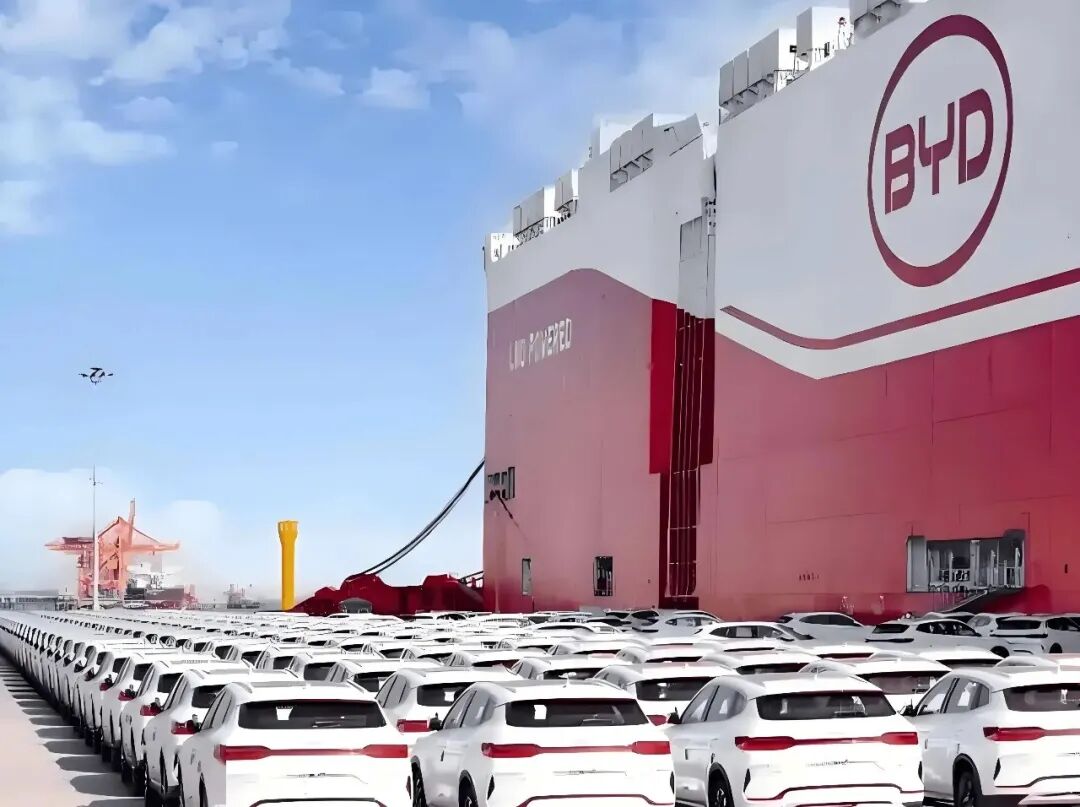
Feature Two: Exports Become the Core Growth Engine, with Monthly Exports Exceeding One Million for Five Consecutive Months
From January to October, auto exports reached 9.271 million vehicles, a sharp increase of 65.1% year-on-year; among them, NEV exports reached 4.612 million vehicles, up 1.3-fold year-on-year.
In October alone, exports reached 1.066 million vehicles, with NEV exports at 606,000 units, and NEVs' share of exports remained above 50% for five consecutive months. A large part of domestic automakers' incremental growth was absorbed by overseas markets, which offset the sluggish domestic market and became a key factor determining automakers' performance.
Feature Three: Greater Pressure on Passenger Vehicles, Commercial Vehicles Relatively Stable
From January to October, passenger vehicle production and sales reached 22.688 million and 22.622 million units, down 6.4% and 6.6% year-on-year, with declines exceeding those of the overall market. The domestic passenger vehicle market has entered a stage of stock replacement, with first-time purchase demand shrinking, relentless price wars, continued cutthroat competition, and white-hot rivalry. Commercial vehicles saw smaller declines, supported by infrastructure and logistics demand, demonstrating stronger resilience.
Feature Four: The Growth Structure Has Completely Shifted, and the Industry Logic Has Moved from Domestic Scale Competition to Global Competition
In the past, auto market growth mainly relied on new domestic demand. Now the domestic market is a stock game, and incremental growth depends on overseas markets. NEVs are also diverging internally; not all brands can share in the dividends. Leading brands have stabilized their scale by relying on overseas expansion and technological advantages, while some automakers that depend on domestic low-price cutthroat competition are under continuously mounting pressure. (End)
-
![]()
Final Word: Latest CAAM Data Reveals Four Distinct Features of China's Auto Market in the First 10 Months
-
![]()
Ancient Surveillance Footage Goes Viral: "Real Video" of Wu Song Fighting a Tiger Leaks Online, AI Memes Leave Netizens Dumbfounded
-
![]()
Anthropic IPO Massively Oversubscribed, Valuation Eyeing $1.5 Trillion
-
The Auto Market Enters an Era of Pure Survival
-
![]()
What ChatGPT's Teen Mode May Take Away from Teenagers: The One Thing They Need Most
-
![]()
October New Energy Vehicle Segment Sales Revealed: All Four Xiaomi Models Make the Cut, While Tesla Is "Left Out in the Cold"
-
How Does Tencent Hunyuan Hy4 Perform When Working at Tongfu Inn?
-
The First Wave of Smart Glasses Cheaters Have All Flunked Their Exams