DeepSeek Breaking: App and Web Usage Limited Amid Computing Power Shortage
 11/17 2026
 379
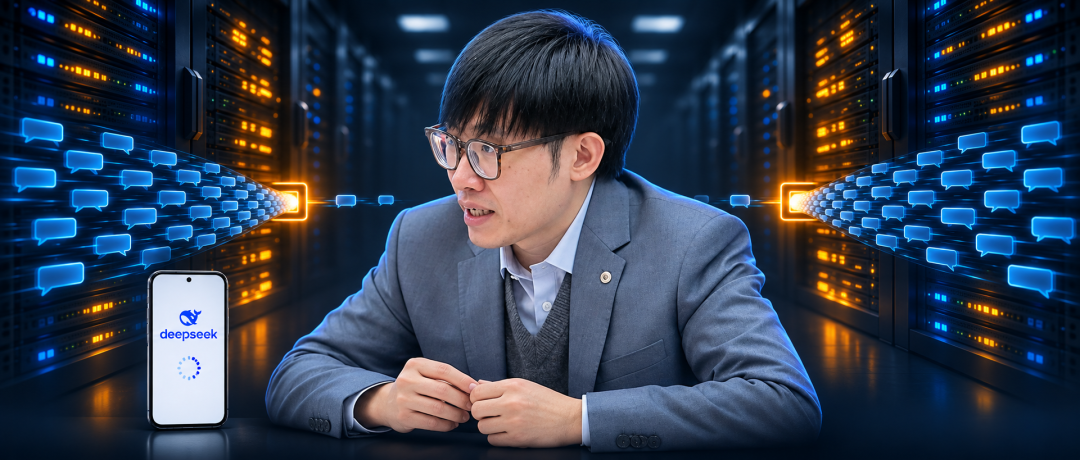
On November 16, STAR Market Daily reported that DeepSeek has imposed usage limits on long conversations for its App and web version. User feedback points to three changes: some idle long conversations can no longer be resumed, the single-input cap has been reduced to roughly 40,000 characters, and users receive a notice once they hit the daily usage limit. The rules still need to be clarified.
Yicai reported that the idle periods users encountered vary, ranging from 7 days to 72 hours. As of that report's publication, DeepSeek had still not announced unified rules or restoration times, nor a paid plan for ordinary App users.
These figures come from user feedback, and their scope of application still requires official confirmation.
The most recent verifiable official product move was the opening of the full-suite application API on November 13, giving developers capabilities such as web search, file input, link reading and voice.
It expands the services developers can purchase, but the quota issue facing App users remains unanswered. This discussion has already gone beyond the free quota itself.
As AI gradually enters work processes and users begin to rely on it to deliver results, the platform must provide sustained resource guarantees for that reliance. The more useful the service, the more clearly the underlying accounts need to be calculated.

After 100 Million Users
DeepSeek has already reached a user scale of hundreds of millions. QuestMobile's third-quarter report shows that in September 2026, the App MAUs of Doubao, Qwen and DeepSeek were approximately 419 million, 158 million and 123 million respectively, with DeepSeek ranking in the top three. This counts Apps, while web and API demand have their own measurement scopes.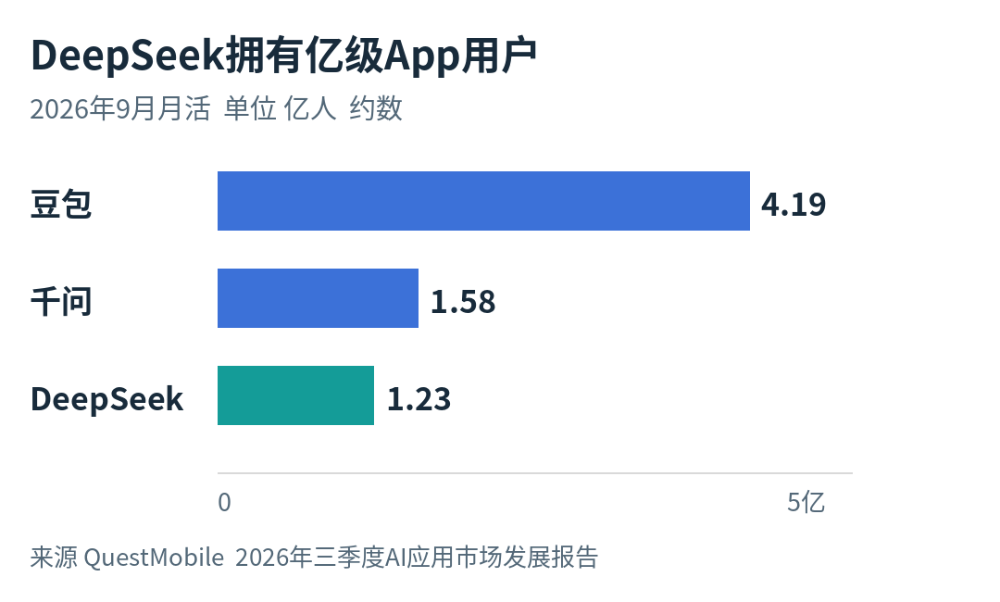
Figure 1 Top three domestic AI-native Apps by MAU
App-based and not market share; MAU reflects coverage, but servers face specific tasks. Looking up a word, reading a long report, and continuously debugging code involve resource consumption that is hard to compare.
With the same number of users, if usage intensity increases, the platform may still come under pressure. Currently, the official website and App have been updated to V4.1 Flash 1017, according to the October 17 update log.
The current API price page also lists V4 Pro 0813, and the previously announced Pro retirement plan has been adjusted in the update log to continue providing service.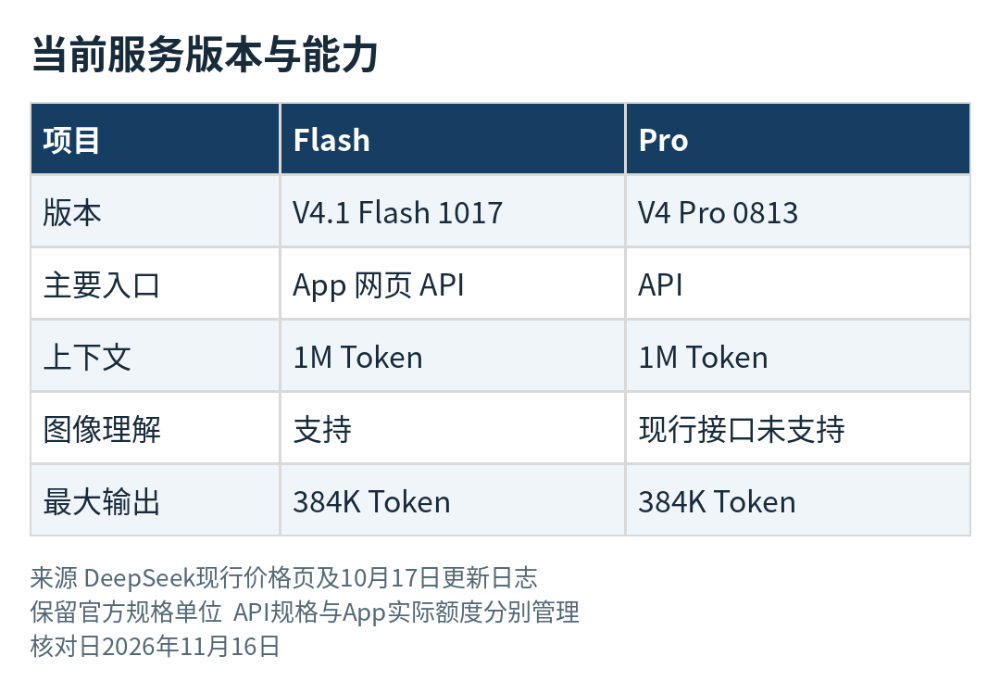
Table 1 Current versions are subject to the update log and current price page
The model is actually working hard to save resources. DeepSeek disclosed that V4.1 Flash has 552 billion total parameters, 8 billion input activation parameters and 16 billion output activation parameters.
Total parameters can be understood as the scale of the entire factory, while activation parameters are closer to the workshops mobilized when handling the task at hand. The model is large, but the portion used in each computation can be smaller.
In its cache optimization introduction, DeepSeek states that compared with the previous generation, the new model's HBM demand has dropped to one quarter and SSD demand to one eighth.
This is an officially disclosed technical improvement, and the listed ratios should be understood within the corresponding technical scenarios. The entire platform's server procurement and operating costs also involve other items.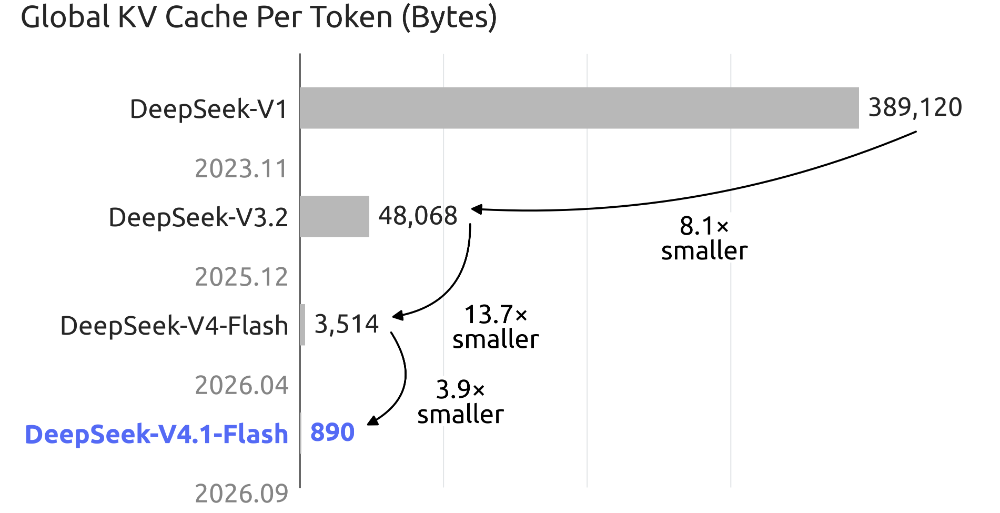
Figure 2 DeepSeek official
Original cache comparison chart, unit is bytes per Token, original chart retains English. How the saved resources are used next determines the direction of costs.
More people are beginning to upload files, request long-form reasoning, or have agents repeatedly call tools, so the savings brought by a single technology may be absorbed by a larger task volume. Long conversations are one such expense. To handle the next round of questions, the model needs to process the preceding context.
KV cache stores reusable intermediate results to reduce repeated computation, while also creating storage, reading and scheduling demands. DeepSeek's API documentation has already introduced the disk cache mechanism.
This means there is far from a simple equal sign between idle chat records and continuous occupation of GPU memory. Existing public materials are not yet sufficient to conclude what cache retention strategy the App adopts and how much resources this quota limit can release.
There is another easily confused point: the 1M Token context labeled by the API is an interface specification, while the approximately 40,000 characters reported by users is an App input limit.
The number of Chinese characters and the number of Tokens also have different measurement methods. Comparing the two directly can easily misread product rules as a regression in model capability.
Computing Power Is Growing
Available services are still scarce. China's total computing power is increasing rapidly. People's Daily Online reported, citing data from the Ministry of Industry and Information Technology, that as of the end of September 2026, China's intelligent computing power scale reached 2592 EFLOPS, up 146% year on year.
Despite such rapid total expansion, specific platforms still encounter resource constraints because supply and demand need to match item by item. Chips need sufficient memory and communication capabilities, data centers need access to electricity, and software needs to enable clusters to collaborate effectively.
Even after procurement funds are in place, delivery, installation and debugging still take time. The equipment scale on paper must ultimately become answers received promptly after users send questions. Peak load adds another layer of difficulty to this account.
Batch tasks can queue, but users who are working usually want results immediately. If resources are configured for peak demand, there may be idle capacity during off-peak periods; if configured too tightly, peak experience will be affected. The platform needs to repeatedly seek a balance between service speed and equipment utilization.
Domestic computing power also has to pass the test of system efficiency. Beyond chips, operator adaptation, compilers, communication libraries and inference frameworks all affect final output. With similar equipment prices, the time and electricity costs required to run the same task may differ.
What customers really buy is the ability to complete tasks. Demand is still moving toward more complex tasks. An agent may first search, then read files, call tools, and finally continue reasoning based on the results.
When a user sends one instruction, the backend may execute multiple rounds of tasks. The more capable the model, the more complex the resource arrangements the platform needs to manage.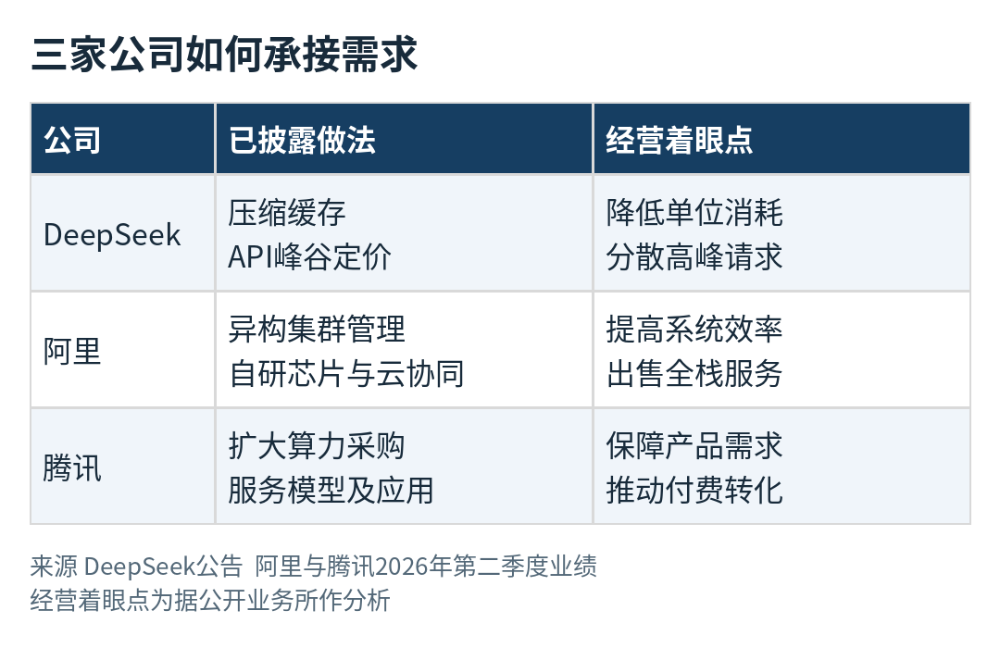
Table 2 Company public disclosures and this article's analysis
DeepSeek chooses to improve efficiency through architecture, caching and pricing. The current API off-peak price is half of the peak price, encouraging tasks that can be deferred to run during off-peak periods.
Alibaba manages heterogeneous clusters including self-developed chips in its cloud services, attempting to optimize from hardware to software together. Tencent is expanding computing power procurement to support model upgrades, office programming products and cloud customers.
Several companies are all addressing resource issues, but their revenue sources and product arrangements have different emphases.
For a model company, how resources are allocated among free chat, developer calls and model research and development will also affect user experience. DeepSeek has not yet disclosed the specific resource allocation plan for this adjustment, and outsiders should retain room for judgment.
Cash Goes Out First
Returns Are Tested Later. How heavy computing power investment is can be seen from the same-quarter financial reports of two companies.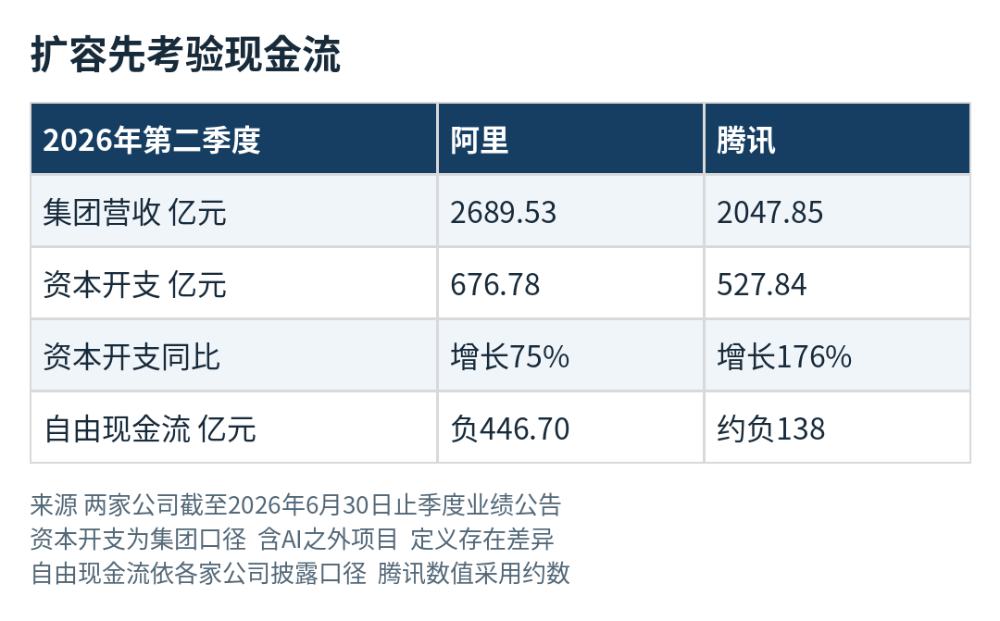
Table 3 Same natural quarter Group level
Companies have different financial definitions. In the second quarter of 2026, Alibaba's capital expenditure was 67.678 billion yuan, up 75% year on year; Tencent's was 52.784 billion yuan, up 176% year on year.
This is group-level capital expenditure, and the asset scope covered has different definitions, including investment beyond AI. Using it directly to estimate large model costs would distort the picture. Cash flow better illustrates the pressure of capacity expansion.
Alibaba's free cash flow net outflow in the quarter was 44.670 billion yuan, which the company mainly attributed to increased cloud infrastructure spending.
Tencent's free cash flow was approximately negative 13.8 billion yuan; the company explained that operating cash flow included large AI-related prepayments, and excluding prepayments for computing power procurement, free cash flow was positive 37.6 billion yuan.
Capital expenditure is counted according to each company's definition, while capital expenditure payments emphasize cash outflows in the current period, and prepayments may also reflect arrangements to lock in resources in advance. These scopes need to be viewed separately. Mixing them into one item and then inferring large model losses cannot explain real operations.
Investment is also generating revenue. Alibaba's AI cloud and computing power service revenue in the quarter was 48.437 billion yuan, up 45% year on year, of which AI-related product revenue was 12.376 billion yuan.
This segment has included T-Head, and revenue covers both cloud services and chip business. It is suitable for observing its own growth, but cross-company comparisons require calibrating boundaries first.
After procurement is completed, asset recovery has only just begun. Equipment depreciation, electricity, bandwidth and operations and maintenance will continue to enter the operating books. Enterprise customers need to verify results and go through access processes before deciding whether to expand purchases.
Traffic can surge quickly, but revenue realization usually requires a longer delivery process. As of public queries today, a complete public financial report of DeepSeek comparable on the same basis as the above companies has not been obtained.
Therefore, this article leaves blanks regarding exactly how much it has lost and how much budget free users occupy. Peer financial reports are enough to show the weight of investment; there is no need to fabricate an income statement for DeepSeek.
Charging Will Become More Common Sooner or Later
Rights Should Be Clarified First. My judgment is that paid tiering of large model services will continue to expand. The basic experience can retain a free entry point, while high-intensity use, long tasks and stable services require clearer pricing.
As for when DeepSeek will launch an App subscription, we should still wait for official disclosure by the company.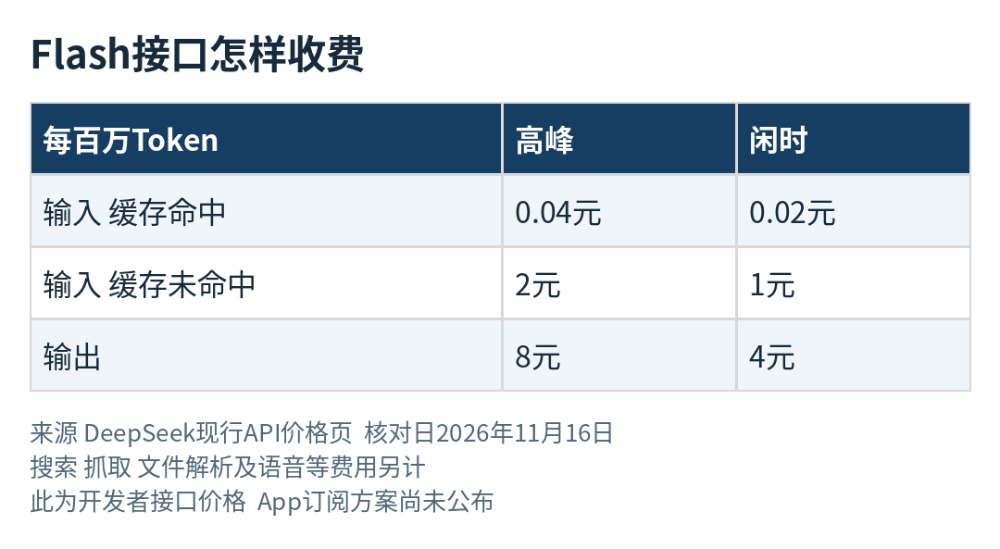
Table 4 Flash developer interface RMB prices
Developer APIs have long been charged by usage. Based on the current Flash unit price, assuming billed input is 1 million Tokens with all cache misses, and billed output is 100,000 Tokens, the bill is 2.8 yuan during peak hours and 1.4 yuan during off-peak hours.
Search, file parsing and other fees are charged separately. This is a calculation under public prices and represents the amount customers pay; the platform's real costs still need separate calculation. Total computing power investment can rise while per-Token prices fall.
Alibaba has listed chip component price increases as one factor in capital expenditure growth in its financial report, while DeepSeek has lowered API prices through technical improvements. When a certain resource becomes more expensive and a certain task becomes cheaper, the final operating result must be jointly determined by task volume, equipment utilization and revenue.
Therefore, charging is necessary, but delivery is also required. The platform should clarify how quotas are calculated, when they are restored, how long conversations are continued, and what guarantees paid users receive. Users are willing to pay to save time, and they also have reason to demand that services be predictable.
Capital can bear capacity expansion costs in advance, but return expectations must always rest on sustained revenue. What model companies need to prove next is that customers are willing to buy repeatedly, that revenue can cover service expenditures, and that room is left for the next round of research and development and capacity expansion.
I support reasonable charging for valuable large model services. After free services attract users, the platform should do a better job of stable delivery. For people who have already put AI into their workflows, services that can continue as agreed carry more weight than a price list that looks cheap.
What do you think about this hot topic? We look forward to your civilized and rational opinions in the comment area.
Disclaimer: This article provides analysis of trending financial topics from a professional standpoint only. Data and materials are sourced from publicly available queries, company announcements, and Tonghuashun iFinD. The views expressed are for reference purposes only and do not constitute any investment or consumption advice.
#FinancialHotTopics #InDepthAnalysis #BusinessFinance #InvestmentBankingCircle #ListedCompanies #PrimaryMarket #IPO #AI
-
![]()
New Energy Vehicle Sales Surge as Volkswagen's China Offensive Begins
-
![]()
Liu Bin Takes the Helm at Changan Mazda Sales as the Hard Road of Transformation Begins
-
![]()
Baidu’s Computing Power Dividend: Money In, Money Out—When Will the Kunlun Chip Ride to the Rescue?
-
![]()
Heavyweight Warning! CAAM to Publish Payment Terms Review of 17 Automakers — This Time It Means Business
-
![]()
DeepSeek's Quota Limits: A Prelude to Consumer-Side Paid Plans?
-
![]()
XPeng Poised for Record November Sales Exceeding 60,000 Units, Entering High-Growth Phase: He Xiaopeng Vows to Widen Lead Over Rivals in 2027 | Mingjing Pro
-
First Domestically Built BMW iX3 Rolls Off the Line in Shenyang, Presales from 269,900 Yuan—Can It Turn Things Around?
-
![]()
DeepSeek Breaking: App and Web Usage Limited Amid Computing Power Shortage