One-Size-Fits-All Ban! Schools Swept Up in AI Crackdown, Disadvantaged Students Left Behind
 11/18 2026
 384
Is banning students from using AI really a good thing?
When New York public school students returned to class this year, the AI tools available to them had suddenly shrunk dramatically.
New York Mayor Zohran Mamdani and Schools Chancellor Kamar Samuels introduced a one-year temporary ban: roughly 600,000 students from pre-K through eighth grade—about two-thirds of the children in the largest school district in the United States—are barred from using student-facing generative AI.
Students in all grades are also prohibited from using companion chatbots.
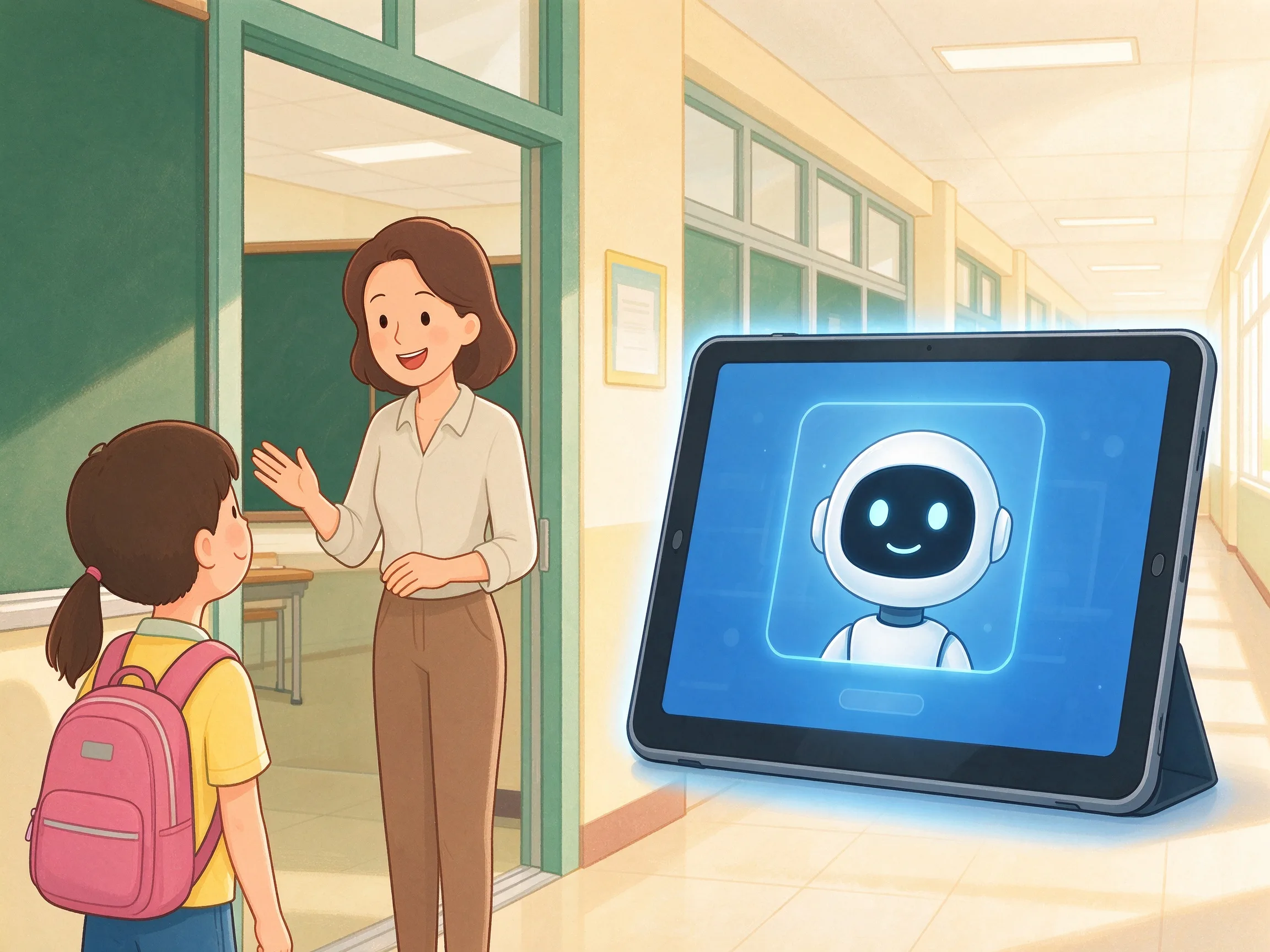
Image source: Generated by Doubao AI
At the high school level, access has also been tightened considerably, with only a few thousand students allowed to participate in strictly vetted pilot programs.
Mamdani said: "For children to learn well and grow up properly, they cannot do without the guidance of teachers, and they cannot do without real person-to-person communication."
Behind this sweeping ban is growing concern across the United States about the problems AI has brought into classrooms.
As early as May this year, the American Federation of Teachers publicly called at the National Press Club for: as little screen time as possible in early grades, no AI tools for elementary school students, and no companion chatbots for anyone under 16.
Union President Randi Weingarten does not want to destroy all students' laptops. She cited a survey of 3,000 teachers: 88% of teachers have found that students' attention spans are getting worse. As electronic devices proliferate in classrooms, grades begin to decline.
What she wants, in fact, is to find an appropriate balance.
Across the United States, at least 17 states are discussing bills to restrict students' use of electronic devices during school hours; major cities such as Los Angeles have also decided to set limits on screen time.
But many education technology companies are worried: with this kind of one-size-fits-all ban, the ones who ultimately suffer are the students with poor conditions and scarce resources.
For many children, not being able to use screens or AI chatbots is at most a bit of an inconvenience.
But in the view of people in the AI industry, for another group of children, this is a real loss—and there is nothing else that can fill the gap.
Ivan Krukoff saw this situation firsthand when he himself immigrated to the United States. After moving to California, he found that the school district his younger daughter attended was short of funding, and he discovered that a large part of his daughter's progress in English relied on extra after-school tutoring at home. He also clearly knew that some children in the class had no one at home who could help them with tutoring.
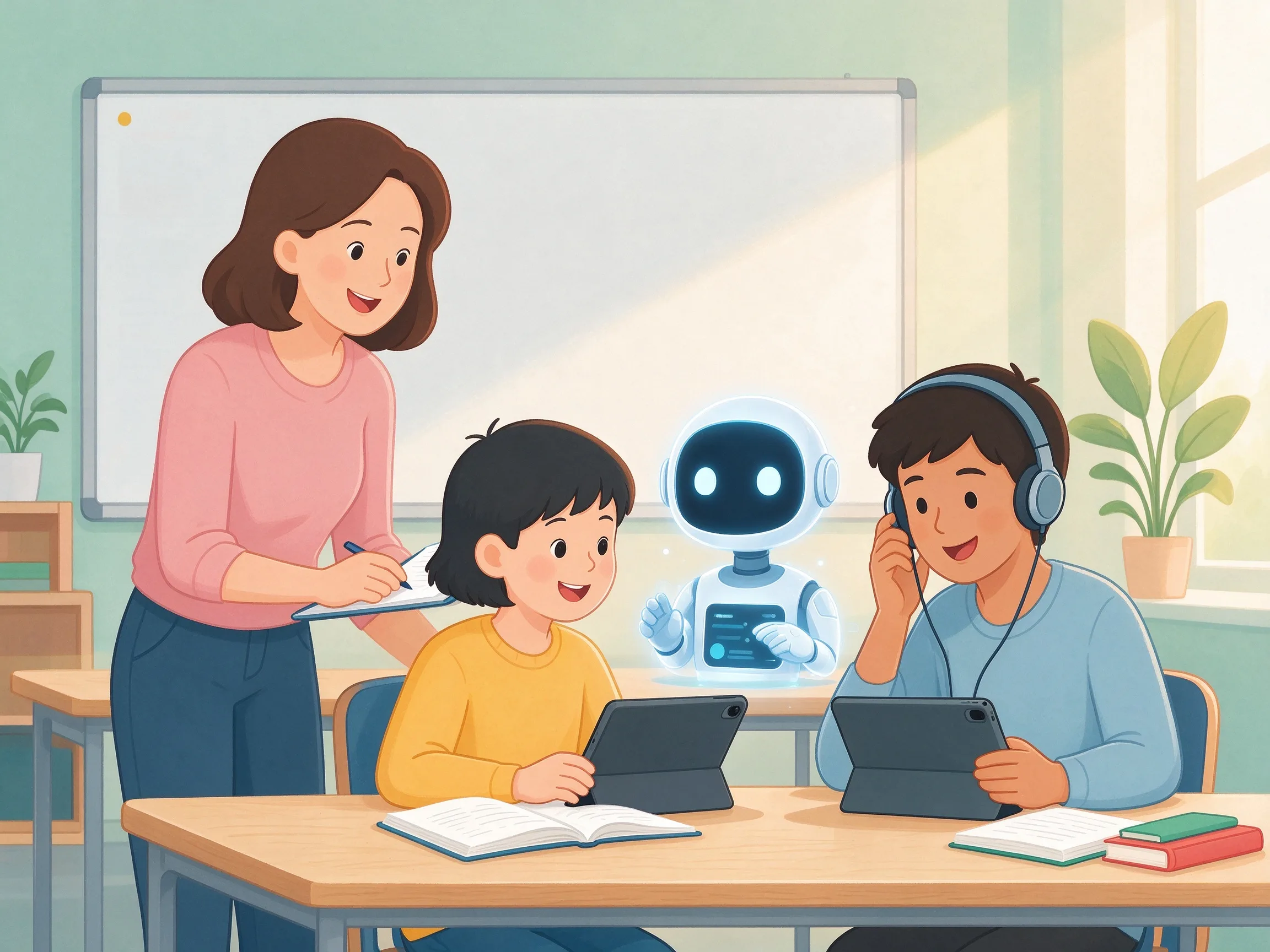
Image source: Generated by Doubao AI
So Krukoff founded a company to fill this language-learning gap. He created Buddy.ai, an AI conversation tutoring teacher that has passed U.S. children's privacy certification and is specifically designed for language learning.
In well-funded school districts, a one-size-fits-all ban is merely inconvenient. But in poorly resourced school districts, this ban directly takes away the only helper the children can use; they have no other alternatives.
In California, half of preschool children are learning bilingually, most of them from low-income families. For so many years, California has been unable to recruit enough bilingual teachers to teach these children.
After-school tutoring was originally a particularly useful way to make up for the shortcomings of traditional education, and its effect is especially prominent for younger students. If the tutor is a teacher, the effect is even better.
Krukoff believes that specially customized AI tutoring tools are not meant to replace teachers, but to help teachers extend their capabilities: after school, helping children practice repeatedly and providing timely feedback.
AI can also free teachers to do what only humans can do well: tackle difficult problems, explain complex knowledge points thoroughly, and capture those moments that truly change the way children think.
Developers of education AI believe that directly banning chatbots across the board does more harm than good.
Abhijit Sethi, who is responsible for education technology strategy at the education AI platform LearningMate, has a simple criterion: it depends on why the tool was originally created.
He said that general-purpose chatbots and AI specifically designed for education—aligned with teaching principles, equipped with safety protections, and matching students' classroom content—are completely different things.
General-purpose tools such as ChatGPT and Perplexity were not developed with young children in mind at all. Whether in terms of safety or learning logic, they are not suitable for children. AI for young children must come with a full set of safety protections.
Treating devices or technology itself as the root of the problem is the wrong direction. What should really be watched is how it is used and how adults should manage it well.
This year, the national school network coalition in the United States (an organization made up of technology leaders who manage devices and networks for K12 schools) proposed at a conference: when people rush to ban screens, most of them fail to distinguish which tools help students learn and which are just for distraction and slacking off.
What should be regulated is bad behavior, not AI conversation itself.
AI products for children should be strictly regulated, but the rules should target the places where real harm may occur. If a product "induces children to develop emotional dependence, tells children to hide things from adults, isolates children from adults, and creates exclusive intimate relationships," then it should be strictly restricted—rather than banning useful AI interactions along with it.
Restrain the dangerous uses of AI; do not simply cut off AI conversations that can create value.
This article was compiled and translated by Leikeji from unite.ai
Original link: AI companies believe that schools banning students from using AI will bring hidden costs
Source: Leikeji
Images in this article are from: 123RF licensed image library Source: Leikeji
-
Forecasting the Official Launch Price Range of the iCAR V25 from V23 and V27 Sales Trends
-
![]()
In the AI Era, Tokens Are This Small Chinese City's "New Local Specialty"
-
![]()
Global Smartphone Shipments to Decline for Second Consecutive Year, Yet Apple's iPhone Defies the Trend with Year-over-Year Growth: Consumers Increasingly Favor Huawei and Apple
-
![]()
$69 Open-Source Box Bridges Bluetooth, Serial Ports, and Vintage Stereos to Your Smart Home
-
![]()
321, Go Token: Who's Grabbing the "Recharge Entry Point" of the AI Era
-
![]()
Why Is Apple the Only One Selling More Despite Industry-Wide Price Hikes?
-
![]()
Slashing Prices While Imposing Quotas: The AI Large-Model War Has Already Switched Tracks
-
![]()
XPeng Reports 870 Million Yuan Net Loss in Q3 — Who Ate the Profit?