Why Is Apple the Only One Selling More Despite Industry-Wide Price Hikes?
 11/18 2026
 534
Something strange happened in the November phone market—a phenomenon that defies easy explanation.
Android makers raised prices across the board, yet Apple swept the top two spots on the sales chart that same month. Price hikes on one side, explosive sales on the other—this is no coincidence.
01
An Anomalous November
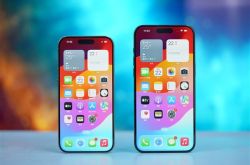
As of November 7 (week 45), the iPhone 18 Pro series had been on sale in China for seven weeks, with cumulative sales of 7.8287 million units—just shy of the ten-million mark. On the week 44 sales chart, the Pro and Pro Max took the top two spots outright, with the Pro Max far ahead at No. 1, and Apple claimed four of the top five positions.
Meanwhile, Android was busy adjusting prices: Samsung's China-market Galaxy S26 and S26+ starting prices rose by 1,000 yuan, and OPPO and vivo also successively raised the suggested retail prices of select models on sale.
Raising prices while selling explosively proves one thing: price is no longer the only variable in this market.
02
What's Rising Isn't the Phone—It's the Memory
The source of this round of price increases isn't the phone makers—it's upstream.
The DRAM shortage has persisted all year. TrendForce statistics show that in the first quarter of 2026, DRAM contract prices rose about 90% quarter-on-quarter, then narrowed quarter by quarter; in the fourth quarter, the price increase for general-purpose DRAM was still 10%–15%.
The pace is slowing, but prices remain at elevated levels.
What's even more counterintuitive is the configuration trend. TrendForce data shows that despite memory becoming more expensive, the baseline storage of phones in 2026 is actually continuing to increase—low-capacity chips are being phased out, and on-device AI is consuming even more memory.
In other words, manufacturers are building larger capacities on more expensive components.
The cost is shared by everyone. So the real question has never been whether prices should rise, but: after they rise, what do you offer to keep people willing to buy? Image source: Internet
03
Same Cost Pressure, Two Outcomes
Apple's answer is to turn price increases into profit.
Its high-end models command sufficient brand premium and ecosystem stickiness; users upgrade not because it's cheap, but because "I'm used to this system." A few hundred yuan more is merely addition and subtraction on gross margin for Apple.
Android faces a tougher road.
With many models at the same price point and plenty of substitutes, users' first priority is often still price; once prices rise, the first to leave are those who would rather wait and see.
There's only one way to break the deadlock: offer a visible difference.
The domestic Android sales champion in October was Honor, riding a recovery in shipment pace; it equipped all three models of the upcoming 700 series with rear-screen designs, combining battery, display, imaging, and health measurement.
The rear screen may not be a must-have, but it's a differentiator you can perceive without looking at a spec sheet.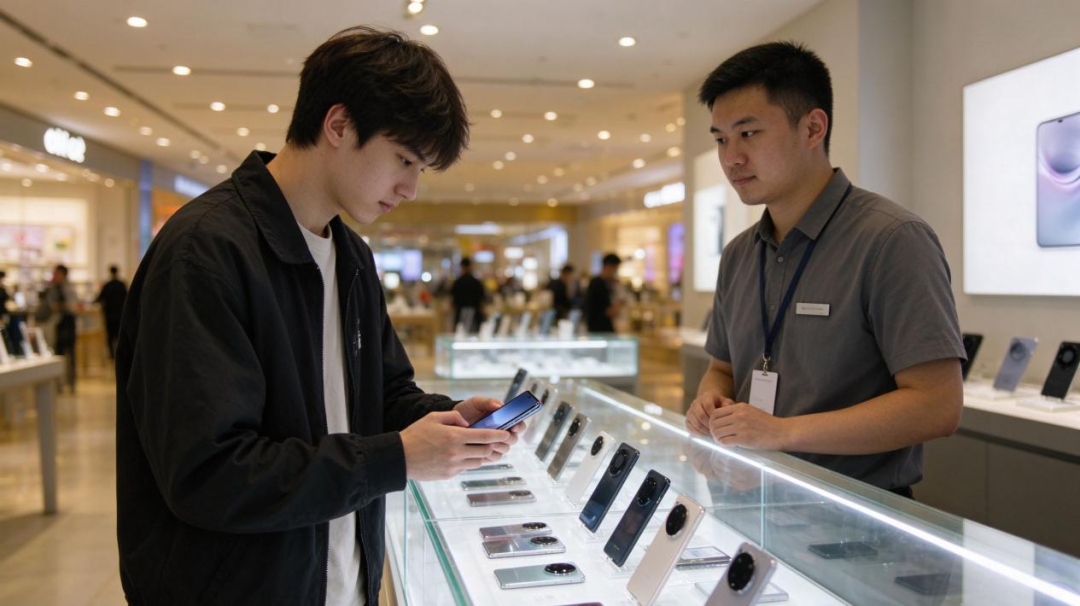 Image source: Internet
04
Price Increases Are an Industry Health Check
This round of price increases is essentially a health check for the entire industry.
It turns homogenization from an adjective into a bill. In the past, market share gained by stacking specs and undercutting on price collapses the moment costs rise.
So here are three criteria for judging whether a new phone at this point in time is worth buying:
Does it have a difference that can be explained without looking at a spec sheet?
Is this difference used every day, rather than only once on unboxing day?
Three years from now, can it still give you a reason not to upgrade?
If it can't answer all three, then what it raises isn't the price—it's the interval until your next upgrade.
05
Final Thoughts
Back to that anomalous November.
What's truly worth remembering isn't the number 7.8287 million, but the signal behind it: the phone industry has moved from an era of who is cheaper into an era of who is more worth it.
Price increases won't stop, and memory won't become cheap overnight. Those who survive won't be the best at talking specs, but the best at answering "why."
Next time you stand at the counter, you might first ask yourself: that extra few hundred yuan I'm willing to pay—what exactly am I buying?
#PhoneMarket
-
Forecasting the Official Launch Price Range of the iCAR V25 from V23 and V27 Sales Trends
-
![]()
In the AI Era, Tokens Are This Small Chinese City's "New Local Specialty"
-
![]()
Global Smartphone Shipments to Decline for Second Consecutive Year, Yet Apple's iPhone Defies the Trend with Year-over-Year Growth: Consumers Increasingly Favor Huawei and Apple
-
![]()
$69 Open-Source Box Bridges Bluetooth, Serial Ports, and Vintage Stereos to Your Smart Home
-
![]()
321, Go Token: Who's Grabbing the "Recharge Entry Point" of the AI Era
-
![]()
Why Is Apple the Only One Selling More Despite Industry-Wide Price Hikes?
-
![]()
Slashing Prices While Imposing Quotas: The AI Large-Model War Has Already Switched Tracks
-
![]()
XPeng Reports 870 Million Yuan Net Loss in Q3 — Who Ate the Profit?