Tencent's AI Gamble: Hunyuan Is the One Card It Cannot Afford to Lose
 11/20 2026
 359
Produced by Caigou Business Review, with content from the original editorial team of Business Review
Author | Xuanniao
On November 18, Tencent released its financial report for the third quarter of 2026.
In this report, what may be most noteworthy is not revenue and profit, but capital expenditure.
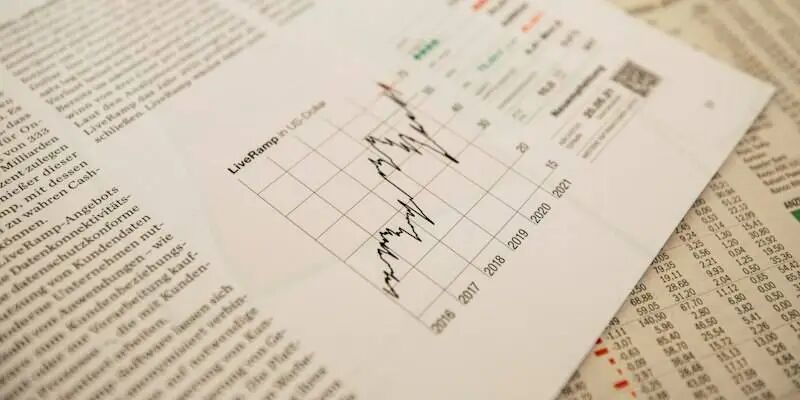
In the third quarter, Tencent's capital expenditure reached 81.4 billion yuan, a sharp increase from 52.8 billion yuan in the previous quarter. Capital expenditure payments reached 65.1 billion yuan, a year-on-year increase of 225%. At the same time, Tencent's non-IFRS operating profit fell 6% year-on-year. Excluding the impact of new AI products, operating profit rose 8% year-on-year.
These figures send a signal: Tencent is accelerating the shift of capital, talent, and organizational resources toward AI.
From data centers and computing power procurement to the Hunyuan large model, and further to WorkBuddy, Yuanbao, and Tencent Cloud, Tencent is building an AI system covering underlying infrastructure, core models, and upper-layer applications.
Pony Ma said in the financial report that Hunyuan Hy4 has reached the level of China's leading models, while Hy4 Flash further promotes the application of the model in real-world scenarios by reducing inference costs. Tencent also stated that WorkBuddy has become China's largest AI application measured by users' daily Token consumption.
Judging by these actions alone, Tencent is clearly prepared to fight a protracted war.
But I am more concerned about another question: what exactly does Tencent want in exchange for investing so much money?
Is it to become an infrastructure provider in the AI era, to become a platform that controls traffic entry points, or to truly possess a large model capable of competing at the global top level?
These three goals appear to be achievable simultaneously, but the capabilities required behind them are completely different.
And on Tencent's chessboard, one product bears an extremely critical task—Hunyuan.
Tencent has already built a sufficiently large AI stage, but whether Hunyuan can truly stand at the center of that stage determines the ultimate direction of this investment.
PART ONE: The AI Era Has Arrived, and Tencent Does Not Dare Not to Invest
To understand why Tencent must invest in AI, we must first understand the changes of the era it faces.
Over the past decade or so, China's internet industry has formed a relatively stable commercial order.
Tencent built a social ecosystem through WeChat, Alibaba controlled the transaction entry point through e-commerce, and ByteDance established a traffic advantage through algorithms and content distribution. Platforms, users, data, and commercialization capabilities together formed the moats of internet giants.
But AI is loosening this order.
In the past, users needed to open an App, look for services, and complete transactions; in the future, users may only need to present a request to an Agent, which directly calls tools, finds products, and completes payments.
In the past, enterprises needed to purchase software, recruit employees, and establish workflows; in the future, more and more work may be completed directly by AI.
This means that what AI brings is not just new products, but a re-division of labor across the entire commercial ecosystem.

Today's WeChat still has more than a billion users, and Tencent Games can still generate huge profits, but no one can guarantee that these advantages will retain their original value in the AI era.
What Tencent is truly worried about may not be making a few hundred million less today, but that one day in the future, the relationship between users and internet services will be redefined.
This is also why Tencent must invest.
From this perspective, Tencent's AI investment today is first and foremost a defensive strategy. It needs to protect its existing businesses while striving to gain the initiative in the next round of technological revolution.
The problem is that the AI industry still has no clear endgame.
OpenAI, Anthropic, Google, as well as China's DeepSeek, Alibaba, Zhipu, and Moonshot, are all continuously improving model capabilities. Reasoning, programming, Agents, and multimodality—each direction may become a breakthrough point in the next round of competition.
Everyone knows that model capabilities are important, but no one knows exactly how much computing power and capital will ultimately be needed to establish a truly stable technological advantage.
As a result, the entire industry has entered a state of investment with almost no upper limit.
Tencent is no exception.
But there is a difference here: Tencent is not an AI startup starting from zero. Behind it are WeChat, games, advertising, payments, and cloud services, as well as huge cash flow and a commercial ecosystem.
It has the ability to invest and the conditions to wait.
But the problem is that having the ability to invest does not mean having the ability to turn investment into technological advantage.
This is the question that Tencent's current AI layout truly needs to answer.
PART TWO: Hunyuan, the One Card Tencent Truly Cannot Afford to Lose
Tencent's AI layout is actually not complicated.
At the bottom is computing power and data centers, in the middle is the Hunyuan large model, and at the top are application scenarios such as WorkBuddy, Yuanbao, WeChat, games, advertising, and cloud services.
If this system can run smoothly, Hunyuan can provide intelligent capabilities for Tencent's own products, computing power can support model training and inference, and application scenarios are responsible for converting model capabilities into users and revenue.
This is an ideal closed loop.
Tencent President Martin Lau also talked about the long-term value of computing power infrastructure at the third-quarter earnings conference. He compared computing power facilities to factories, believing that after the initial construction is completed, they can continuously produce Tokens and release more capacity through improved model efficiency. Tencent hopes that investment from 2026 to 2027 will lay the foundation for subsequent business development.
There is nothing wrong with this logic.
But if you look closely at Tencent's layout, you will find a very interesting phenomenon: Tencent seems to have prepared everything, except that the most core model capability still needs time to prove itself.
WorkBuddy can access external models, Tencent Cloud can rent out GPUs, MaaS can aggregate different models, and Tencent can even share industry growth through investment and cooperation.
These businesses can all make money and can also reach a certain scale.
But they share one common feature: they do not necessarily require Hunyuan to become a world-class top model.
This raises a question: if Tencent ultimately relies only on WorkBuddy as the entry point, Tencent Cloud for renting computing power, and MaaS for aggregating external models, then what is the significance of investing huge sums in self-developing Hunyuan?
The answer is actually very simple: the initiative.
Of course, Tencent can become a landlord in the AI era, but what it truly wants is clearly not just collecting rent.
Possessing its own top model means Tencent can determine the technology route, control core capabilities, and deeply integrate model capabilities with its own commercial ecosystem.
Conversely, without a sufficiently strong self-developed model, Tencent must rely on external suppliers. Model vendors can directly launch Agents, bypassing WorkBuddy; they can also use their own cloud services and commercial channels to compete for Tencent Cloud's customers.
Tencent today appears to have many entry points, but entry points do not equal technological control.
This is also why Hunyuan is so important.
It is not an ordinary product in Tencent's AI business, but the core fulcrum through which Tencent hopes to connect computing power, applications, and the commercial ecosystem.
If Hunyuan truly breaks through, Tencent's previous investment has the opportunity to form a positive cycle; if Hunyuan remains unable to enter the ranks of the world's top models, Tencent's AI system may rely on external technology supply for a long time.
What Tencent truly wants is not to become a rent collector in the AI era, but to become someone who can set the rules. Hunyuan is its most important bargaining chip in competing for this position.
PART THREE: Hunyuan Must Break Through, but It Currently Cannot Support Tencent's Ambition
So, how is Hunyuan actually doing?
It must be acknowledged that Tencent's investment in large models over the past two years has begun to yield results.
In November 2026, Tencent released Hy4 and launched Hy4 Flash. Tencent stated that Hy4 ranked first among Chinese models at the time of its release on Agent Arena; Hy4 Flash, through model and inference optimization, significantly reduced the invocation cost of actual tasks.
This shows that Hunyuan is no longer a laggard lacking competitiveness.
But the problem is that there is still a long distance between model benchmark scores and true technological leadership.
Take third-party evaluation as an example. In the Vals Index updated by Vals AI in November, Hy4's composite score was 59.35%, ranking 15th. On the same list, Kimi K3.1 Pro scored 62.52%, DeepSeek V4.1 Flash scored 61.26%, and GLM 5.3 scored 59.85%.
This list cannot represent all model capabilities, nor can a single test determine a model's commercial value. But at least it shows that in comprehensive tests involving actual Agent tasks such as programming, finance, law, and taxation, Hy4 has not formed an obvious leading advantage.
Another noteworthy point is that Hunyuan's progress does not mean Chinese large models have caught up with the global frontier.
In areas such as reasoning, complex programming, long-horizon task planning, and Agent execution, top overseas models remain competitive.
This is not to deny Hunyuan's progress, but to see clearly a reality: Tencent already has a model capable of participating in competition, but it is still some distance from possessing a model capable of defining the rules of competition.
And this distance is exactly what Tencent most needs to cross.
Why is it not easy?
First is computing power.
On November 18, Reuters reported that Tencent management said at the earnings call that restrictions on access to advanced chips have a relatively limited impact on Tencent Cloud's current revenue, because the cloud business relies more on inference services, and improved model efficiency has eased demand for computing power.
But management also admitted that restricted access to advanced computing power may slow the training and R&D progress of next-generation models.
Because inference and training are two different things.
Existing models can reduce operating costs through architecture optimization, quantization, and improved inference efficiency. But training a more powerful next-generation model still requires large amounts of high-performance computing power, data, and engineering resources.
Second is talent and organizational capability.
Competition in large models is not simply buying more GPUs, nor is it piling up more researchers. It requires highly coordinated efforts among algorithm, data, training engineering, infrastructure, and product teams.
True technological breakthroughs often come from long-term accumulated research capabilities and engineering systems, rather than from short-term budget increases.
More importantly, China's large model industry itself is still in a stage of fierce competition.
Companies such as DeepSeek, Alibaba, Zhipu, and Moonshot are all continuing to invest, and none can easily establish a permanent technological advantage.
What Tencent faces is not a market that is already mature and can be easily solved through capital acquisitions, but a technological competition still full of uncertainty.
This puts Tencent in a delicate situation.
It must continue to invest, because AI may change the future commercial ecosystem; it must also see breakthroughs in model capabilities, because without a core model, the previous computing power and application layout will find it difficult to form a true technological barrier.
Tencent has already built a sufficiently large stage for Hunyuan, but the current question is whether Hunyuan can support this stage.
Moreover, the larger the investment, the harder it is to avoid this question.
PART FOUR: Does Tencent Have a Second Path?
As for Tencent's second path, I actually raised it in my previous article "WorkBuddy's 'Channel Victory' and the 'Landlord Dilemma' of the AI Era."
If Tencent remains unable to establish a sufficiently strong technological advantage in the large model field, then should it consider rapidly filling its model capability gap through strategic investment, deep binding, or even acquiring a large model team that already has competitiveness?
I believe this option is worth Tencent's serious consideration.
Tencent does not lack funds, nor does it lack application scenarios. If Hunyuan's breakthrough speed falls short of expectations, Tencent can absolutely use capital and industrial resources to secure a model team that has already formed certain technological advantages.
Of course, acquisition is not buying a brand, nor is it buying a set of parameters. What is truly worth acquiring is the core research team, training system, engineering capability, and organizational mechanism for continuous iteration.
This path also carries risks, but at least it can give Tencent one more choice.
After all, in the AI industry, time may be more important than money.

Tencent's greatest strengths today lie in its cash flow, ecosystem, and infrastructure—yet its greatest pressure stems precisely from the pace of technological iteration.
Computing power can be bought, data centers can be built, and entry points can be established through products and ecosystems. But truly competitive large-model capabilities are not something money can acquire overnight.
If Hunyuan succeeds, Tencent's investments today could become its technological assets for the next decade.
If Hunyuan fails to break through for a long time, these investments may largely translate into revenue from computing power leasing, cloud services, and application distribution. Tencent will remain a profitable company, but it may not truly grasp the most core technological initiative of the AI era.
And the gap between these two outcomes is far more than a few hundred million yuan more or less.
Today's Tencent is still strong. WeChat remains one of the most important infrastructures of China's internet, and its gaming, advertising, and fintech businesses are also highly competitive.
But what is special about the AI era is that no one can guarantee that today's industry position will continue indefinitely.
Of course, Tencent can afford to lose an investment, but it may not be able to afford to lose its position in the next generation of technological revolution.
Tencent has embarked on this AI gamble. Computing power is its chip, the ecosystem is its hole card, and Hunyuan is the one card it truly cannot afford to lose.
Disclaimer: This article is written based on publicly available information or information provided by interviewees, but Caigou Business Review and the article author do not guarantee the completeness or accuracy of the information mentioned or displayed in the article, and do not represent the position of any institution. If there is any infringement, please contact us for deletion. Under no circumstances does the information or opinions expressed in this article constitute investment advice to anyone.
▼
-END-
-
![]()
Tencent Can't Win on WorkBuddy Alone
-
![]()
NetEase Q3 Earnings: Pipeline Gap Syndrome Bites, With a New "Prescription" on the Way
-
![]()
DeepSeek's Quota Limits: Are Free Users Becoming the "Roadblock" to AGI?
-
![]()
Starting at 279,900 Yuan: A True Large Six-Seat Boxy SUV—Whose Nose Does the Titan 9's Price Rub in the Most?
-
Vertilite (Zonghui Xinguang) Files for IPO: The Revenue Gap Behind 900 Million Units Shipped—and What a 5 Billion Yuan New Business Could Add
-
![]()
Chinese Smart Driving Goes Global: Clearing Four Hurdles
-
![]()
Claude Goes Wild: The Overseas Mac mini Rental Craze Explained
-
![]()
Alibaba Forced to "Hold Back"