Chinese Smart Driving Goes Global: Clearing Four Hurdles
 11/20 2026
 535
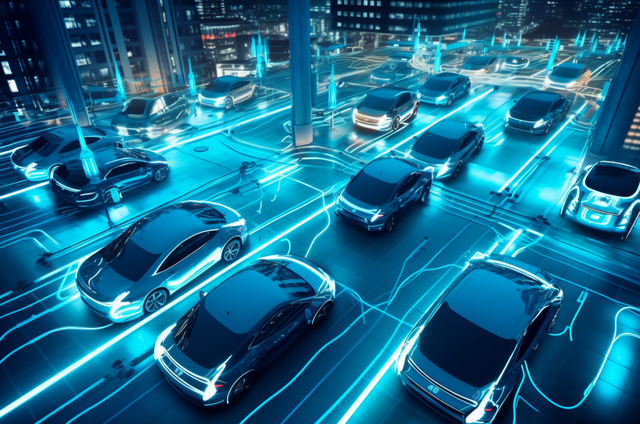
In the global Robotaxi race, Chinese companies have seized the initiative in deploying their forces.
Reporting/Chen Jiying
Editing/Wan Tiannan
Intelligent driving is emerging as the next passport for China's auto industry to go global. Multiple automakers regard 2027 as a key milestone for the large-scale overseas expansion of Chinese smart driving.
Smart driving going global roughly follows three paths. The first is going overseas together with Chinese-brand vehicles. The second is entering the global model lines and joint-venture systems of multinational automakers, with upstream chip and algorithm solution providers also integrating into the global supply chain. The third is the "road launch" of L4-level unmanned business—Robotaxi and Robovan have begun to complete testing and even paid operations in overseas cities.
From Abu Dhabi, Dubai, and Riyadh to Munich, London, Madrid, and Singapore, Chinese players such as Momenta, Pony.ai, WeRide, and Apollo Go have successively obtained local licenses and connected to mobility platforms such as Uber and Grab.
But the closer to real roads, the clearer the thresholds become. Road conditions, driving habits, traffic rules, and regulatory frameworks differ from city to city. Every time a company enters a new market, it must face multiple tests of technical adaptation, data compliance, and operating permits.
On November 18, Momenta and Uber jointly announced the launch of Robotaxi trial operations in Munich, Germany, offering free rides to passengers. This is the first time passengers on the Uber platform in Germany have had the opportunity to hail an autonomous taxi.
Not long before that, Momenta had already completed an L4-level public road test ride in Munich. Bavarian Transport Minister Bernreiter sat in the vehicle and exclaimed repeatedly: "Throughout the test ride, I felt very safe. The system handled complex traffic conditions calmly and effortlessly—even when we came upon a broken-down car in our lane with a warning triangle set up, it steered around steadily."
From a minister's advance test ride to ordinary passengers' future daily travel, in the global Robotaxi race, Chinese companies have seized the initiative in deploying their forces.
I. Chinese Smart Driving Goes Global: Getting on Vehicles and on Roads
From the perspective of cooperation models, Chinese smart driving solution providers going global roughly have two paths.
One is "getting on vehicles": providing intelligent driving solutions to vehicle manufacturers and installing algorithms into mass-production passenger cars. The other is "getting on roads": cooperating with mobility platforms such as Uber and Grab to deploy unmanned mobility businesses such as Robotaxi.
Corresponding to the stages of technology implementation, one leg is mass-production vehicle smart driving solutions, and the other leg is L4-level large-scale unmanned business, covering Robotaxi, Robovan, Robotruck, and more.
Momenta is currently advancing both lines in parallel.
In Munich, Germany, Momenta and Uber's Robotaxi project has entered trial operations, premised on Momenta having obtained a highly valuable "entry ticket."
In July this year, Momenta obtained a Germany-wide L4-level autonomous driving testing permit issued by the German Federal Motor Transport Authority (KBA). KBA is one of the world's most stringent traffic safety regulators, and this also marks the first time a Chinese company has obtained L4 testing qualification covering urban roads nationwide in Germany.
With this permit, Momenta can conduct L4 testing on urban roads across Germany without applying city by city, with safety validation standards directly aligned with the EU regulatory framework.
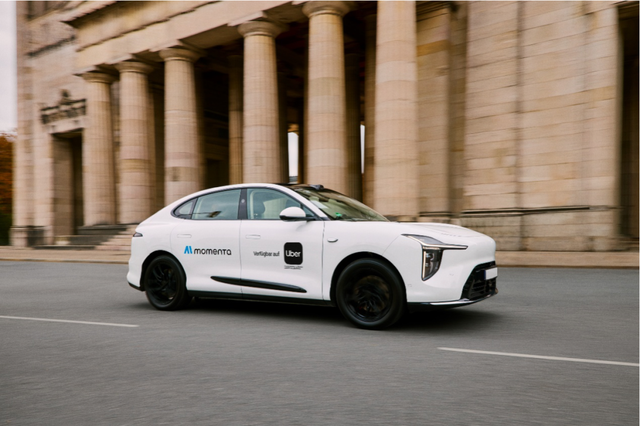
In the Robotaxi business, Momenta is not making a single-point deployment but outlining a roadmap of advancing along multiple routes domestically and internationally and landing in multiple cities.
Domestic pilots in multiple locations: Momenta has successively obtained unmanned driving demonstration operation and demonstration application licenses in Shanghai's Pudong New Area and Suzhou's Xiangcheng District; it continues to expand its testing footprint in Wuxi and Shenzhen, obtaining a manned road testing license in Wuxi's Xishan District in January 2026 and a manned road testing license in Shenzhen's Pingshan District in July; Momenta plans to jointly launch commercial operations with SAIC Mobility in Shanghai within 2026.
Landing in multiple overseas countries: In September 2025, Momenta obtained a road testing license in Abu Dhabi, taking only three months from the first vehicle arriving locally to obtaining the license—the fastest record in the local industry. In December 2025, Mercedes-Benz, Momenta, and UAE mobility operator Lumo jointly announced that an L4-level luxury Robotaxi built on the new-generation Mercedes-Benz S-Class sedan would land in Abu Dhabi, with plans to jointly launch public-facing commercial operations with Lumo within 2026.
At a performance communication meeting, Momenta disclosed a detailed timetable: the first step, by the end of 2026, is to obtain testing licenses in more than 10 cities globally, with a fleet size reaching several hundred vehicles; the second step, in 2027, is to expand to more than 30 cities globally, with the fleet size expanding to several thousand vehicles; the third step is commercialization—in 2028, to push L4-level autonomous driving from pilot trial operations to normalized large-scale commercial operations.
Getting on vehicles and getting on roads, Momenta advances both legs in parallel: mass-production vehicle smart driving solutions stabilize the revenue base, and the massive real driving data generated can in the future also feed back into algorithm iteration for L4 unmanned vehicles; the L4 large-scale unmanned business determines Momenta's medium- and long-term value ceiling and where it can stand in the global smart driving landscape.
II. Smart Driving Goes Global: Clearing Four Hurdles First
For Chinese smart driving solution providers to deploy Robotaxi business globally, they must clear at least four hurdles.
The first is the technology hurdle and the safety hurdle.
What Robotaxi passengers feel is a smooth and safe journey, but what engineers face are countless tiny and dangerous technical adjustments on the road.
A deep pothole on the road may at best affect ride comfort and at worst bring safety risks. The vehicle must not only "see" it but also judge how to pass through.
According to Momenta engineers, in order to better handle road potholes, the team collected potholes of different sizes one by one, as well as their differences in contours and edge shapes; extracted features from tens of thousands of potholes and simulated different edge shapes for world model training, allowing the model to learn repeatedly and then achieve precise recognition through pure vision capabilities, thereby solving the "pothole avoidance" problem that lidar and traditional rule-based solutions find difficult to handle.
Ultimately, the vehicle combines road surface features and passage conditions to judge risk and make reasonable responses: pass reasonably where safe passage is possible; plan the path in advance where avoidance is needed.
Second, localization adaptation must be done well.
On the technical route, Momenta adopts a pure vision, mapless end-to-end solution, reducing reliance on high-precision maps and supporting more efficient deployment in new cities; capabilities accumulated from mass production can also be directly generalized to L4 scenarios, serving different brands, models, and global markets with the same platform. Local data is responsible for "teaching" the model the specific rules of each city, while the foundation model is responsible for reusing what has been learned in the next market—combining the two allows technological accumulation to truly cover different scenario applications.
To achieve good localization adaptation, the engineering team continuously collects data on real roads in Germany and conducts training and validation for local intersections, traffic light rules, and special road forms such as non-motorized vehicle lanes and tram tracks, so that vehicles understand right-of-way priorities and leave appropriate space and time for pedestrians and bicycles when turning or merging onto main roads.
"These differences may seem trivial, but they determine how the vehicle should go and when it should wait. Letting the vehicle patiently wait when it should wait is also taking care of everyone who shares the road with it," explained a Momenta European algorithm engineer.
Only by clearing the cost hurdle can Robotaxi become a scalable business.
In the German market, Momenta is the only player using pure vision technology, mapless solutions, and world model capabilities.
Compared with other Robotaxi solutions in the industry, Momenta reuses mass-production vehicle models to conduct Robotaxi business: one technology foundation, with L2 assisted driving and L4 autonomous driving adopting a unified software algorithm architecture and a unified sensor suite, thereby enabling faster large-scale implementation and commercial closed-loop of Robotaxi.
This idea of "mass-production vehicles as Robotaxi" directly migrates the safety, comfort, and supply chain genes accumulated from passenger vehicle mass production to the unmanned business, and also allows real road data to feed back into model iteration.
To expand the scale and broaden the boundaries, it is necessary to establish an open, cooperative, win-win, and mutually beneficial cooperation network with automakers and mobility platforms.
On the industrial capital side, automakers such as SAIC, GM, Mercedes-Benz, Toyota, and BYD are both shareholders and core mass-production customers of Momenta—equity and orders are tied together, giving a stable outlet for the implementation of mass-production solutions.
On the mobility side, Momenta has established strategic cooperation with platforms such as Uber, Grab, Lumo, and SAIC Mobility, among which Grab has made a strategic investment in it, and Uber has also continued to increase its investment. Capital relationships lock in cooperation priorities, while business cooperation in turn validates technology. Only with these two layers of binding combined can the implementation of autonomous driving technology from mass production to globalization be supported.
III. Big Waves, Valuable Fish: Multiple Values
Robotaxi is a highly valuable rich mine. According to Fortune Business Insights estimates, the global Robotaxi market was worth 1.27 billion USD in 2026 and will increase to 96.31 billion USD in 2034, with a compound annual growth rate as high as 71.9%.
Chinese players entering during this window are aiming at a super-large cake worth hundreds of billions of dollars in the future, corresponding to the realization of multiple values.
The first is technological value. Running on real roads in Germany means more local road condition data enters the training loop, further feeding back into the world model. As model capabilities strengthen and smart driving solutions mature, Momenta monetizes along multiple paths with one technology foundation—mass-production solutions, Robotaxi, Robovan, and others share the same data flywheel and model capabilities, marginal costs continue to decline, and economies of scale gradually emerge.
The second is the brand value of platform endorsement. Uber is one of the world's largest mobility platforms, and choosing to deploy Robotaxi in Germany with Momenta is itself trust in the latter's technological maturity and safety. This cooperation not only opens a European window for Momenta's Robotaxi business but also provides endorsement for its mass-production vehicle business to further enter European and American markets.
Commercial value is also considerable. The Robotaxi business model is relatively clear, and companies usually charge mobility platforms fees, including monthly license fees calculated per vehicle, as well as incentive fees, profit sharing, or per-mile billing arrangements linked to fare revenue depending on the specific project.
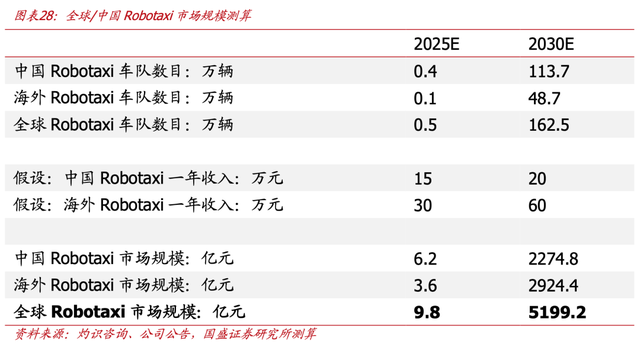
In terms of long-term space, Guosheng Securities judges that in the L4 commercial vehicle field, Robotaxi has both high technical thresholds and high commercial value. The global Robotaxi market in 2030 will be approximately 519.9 billion yuan. Assuming Momenta deploys a global Robotaxi fleet of 90,000 vehicles in 2030 and a technology take rate of 15%, the technology commission gross profit it is expected to obtain that year would be approximately 5.4 billion yuan.
At present, the Robotaxi business is still in the pilot deployment stage, with the focus on optimizing the system and verifying whether the model can be accepted by the public; the next stage is expansion from pilots to full public adoption, safely deploying tens of thousands or even hundreds of thousands of vehicles in various real environments; ultimately achieving commercial success through large-scale operations.
The long road of autonomous driving going global—technology hurdle, localization hurdle, cost hurdle, and ecosystem hurdle—comes one after another. Whether Momenta can replicate the smoothness of a stretch of Munich streets to more cities and longer cycles still depends on subsequent operational efficiency, regulatory progress, and model iteration.
Big waves, valuable fish—the global contest for Robotaxi has only just begun.
-
![]()
Tencent Can't Win on WorkBuddy Alone
-
![]()
NetEase Q3 Earnings: Pipeline Gap Syndrome Bites, With a New "Prescription" on the Way
-
![]()
DeepSeek's Quota Limits: Are Free Users Becoming the "Roadblock" to AGI?
-
![]()
Starting at 279,900 Yuan: A True Large Six-Seat Boxy SUV—Whose Nose Does the Titan 9's Price Rub in the Most?
-
Vertilite (Zonghui Xinguang) Files for IPO: The Revenue Gap Behind 900 Million Units Shipped—and What a 5 Billion Yuan New Business Could Add
-
![]()
Chinese Smart Driving Goes Global: Clearing Four Hurdles
-
![]()
Claude Goes Wild: The Overseas Mac mini Rental Craze Explained
-
![]()
Alibaba Forced to "Hold Back"