Xiaomi 18 Pro Shines: Debut Sales Eclipse Combined Total of OV
 09/30 2026
 483
483
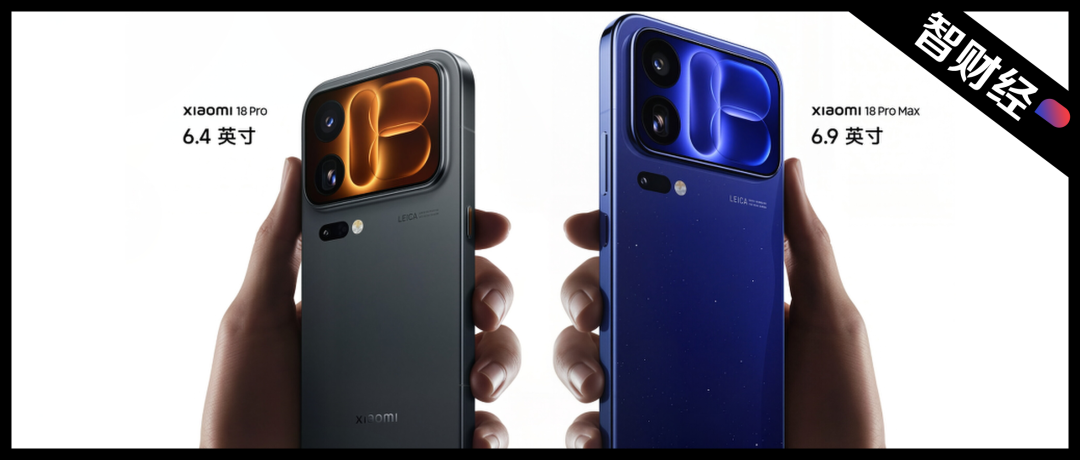
Few could have predicted the outcome of this September’s high-stakes showdown among Android flagship phones.
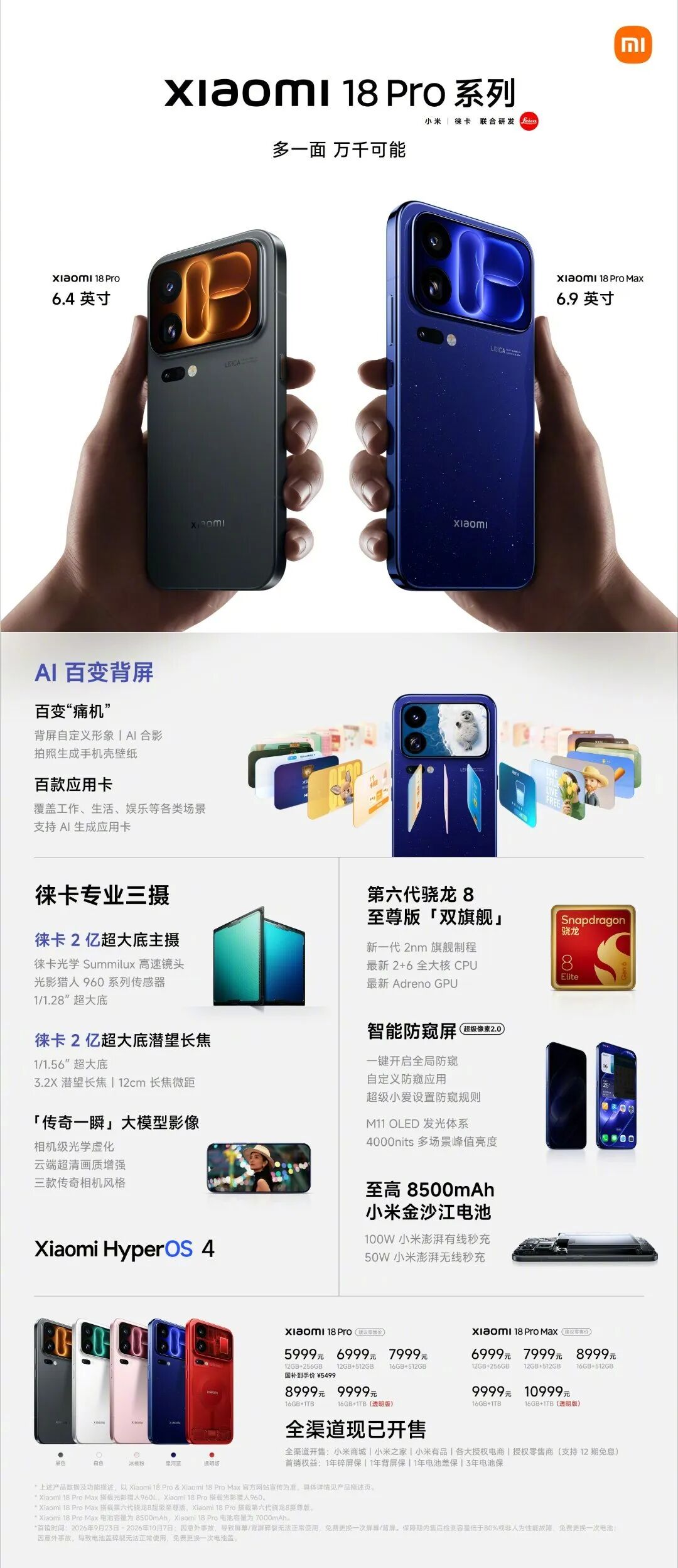
vivo and OPPO hurried to unveil their latest models, creating early buzz before their official launches. Yet, it was the Xiaomi 18 Pro series, which took the stage last, that delivered a stunning comeback. When tech influencers cross-checked the first-sale activation figures, the smartphone community was abuzz: the Xiaomi 18 Pro series outperformed OPPO and vivo’s new flagships combined in activation numbers over the first three days, with individual model sales roughly tripling those of OV’s respective offerings.
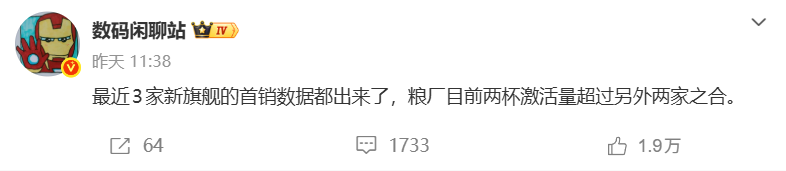
This result genuinely surprised many. Industry insiders know that the domestic high-end smartphone market lacks diversity; the online term “rookies brawling” may sound harsh, but it accurately reflects the industry’s reality. The high-end market has long been dominated by Apple and Huawei, leaving Xiaomi, OV, and other Android brands with a sliver of market share. Today, let’s explore whether this impressive debut performance signals a genuine breakthrough or is merely a fleeting surge driven by dedicated fans.
The High-End Market: A Ruthless Arena for Android Brands
To understand the futility of this intense competition, consider these hard facts.
From January to August 2026, in the domestic high-end smartphone market (priced above 6,000 yuan), Apple claimed a dominant 63.6% share, firmly establishing itself as the leader with unparalleled user loyalty. Huawei followed with 25.1%, leveraging its self-developed Kirin chips and numerous cutting-edge technologies to solidify its position in the domestic high-end segment.
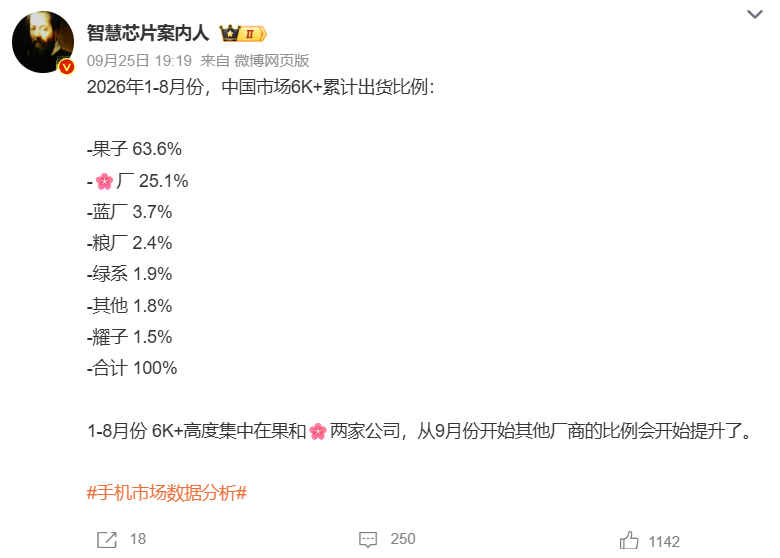
Together, these two giants gobbled up nearly 90% of the high-end market. The remaining domestic Android brands were left to vie for less than 12% of the pie. Breaking down the numbers further is sobering: vivo held 3.7%, Xiaomi 2.4%, OPPO a mere 1.9%, and Honor trailed at 1.5%.
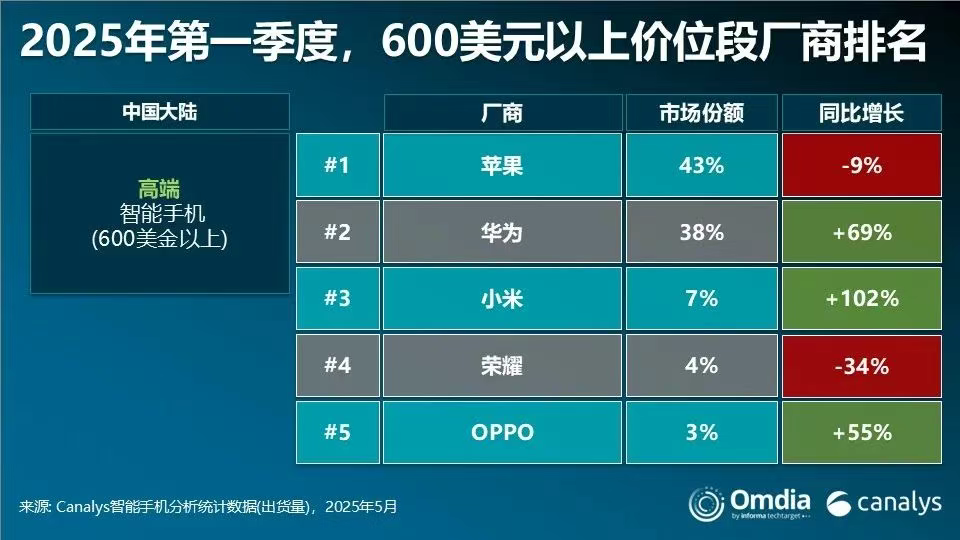
This context explains why Xiaomi’s debut performance, surpassing OV’s combined total, sparked widespread online discussion. The high-end market isn’t expanding with new users; it’s a zero-sum game for existing customers. Within this small market segment, brands fight fiercely, with each high-end device sold primarily at the expense of a competitor’s user base.
In essence, no matter how fiercely Xiaomi and OV compete, it remains an internal struggle among Android’s second tier, unlikely to shake Apple and Huawei’s grip on the high-end market.
Late Launch, Big Impact: Xiaomi Wins with “Visible Innovation”
Reviewing the September flagship launch schedule, the odds initially seemed stacked against Xiaomi. vivo X500 debuted on September 21, followed by OPPO Find X10 on September 22. Industry logic suggests early releases can plant seeds in consumers’ minds and seize the initiative, leaving latecomers to scavenge the remaining market.
Yet, the market’s verdict was the opposite. While OV’s new models boasted solid hardware foundations, with imaging and displays among the industry’s best, why did Xiaomi pull ahead in debut enthusiasm and activation volume?
The core reason boils down to one phrase: the product has strong memorability, meaning visible and tangible innovation.
In recent years, Android flagships have fallen into a trap: maxing out on specs while increasingly resembling each other in appearance. Hardcore parameters like 2nm chips, sensors, and large-aperture imaging are only closely examined by tech enthusiasts; ordinary consumers can’t grasp or intuitively feel the differences.
The Xiaomi 18 Pro addressed this pain point perfectly with its innovative back screen and physical AI button—differences users could immediately perceive and remember. This design naturally lent itself to social sharing, flooding short-video platforms and captivating passersby, driving free traffic and outpacing OV’s conventionally iterated new models in popularity.
Pricing was equally crucial. The Xiaomi 18 Pro started at 5,999 yuan, hitting the sweet spot for high-end entry-level devices—prestigious enough to be a flagship yet not so expensive as to deter most buyers, balancing high-end appeal with consumer budgets.
Analyzing user order structures, nearly half of sales were for the 16GB high-end version. This data is highly telling: users willing to pay extra for top specs aren’t swayed by a few hundred yuan difference; they prioritize long-term feel and value. This also suggests Xiaomi is gradually shedding its purely cost-effective label, attracting high-end users willing to pay for quality.
Not limited to traditional flagships, Xiaomi’s foldable devices also shone brightly. The Xiaomi 18 Fold’s debut retail volume soared 300% year-on-year, indicating strong growth in the foldable segment. Combined with the brand halo from Xiaomi’s automotive ventures, its overall brand prestige continues to rise, making this sales surge far from coincidental.
Don’t Be Fooled by Online Sentiment: The Real Consumer Market Tells a Different Story
When prices were announced at the launch event, online pessimism was rampant.
“Xiaomi has lost its original aspiration,” “Why not just buy Apple for six or seven thousand yuan,” “The brand can’t justify this pricing”—such complaints flooded screens, with many netizens declaring the new model would flop.
Yet, the debut data dealt a harsh blow to some keyboard warriors, revealing a harsh truth: online sentiment and offline consumer behavior are worlds apart.
Online smartphone discussions often devolve into brand loyalty battles and debates over positioning, focusing on emotions and brand image. However, consumers genuinely planning to spend five or six thousand yuan on a flagship rarely engage in such verbal sparring.
Ordinary users’ logic for upgrading phones is simple and pragmatic: they open e-commerce pages, compare all models at the same price point, evaluate specs, feel the handset, contrast imaging and systems, and ultimately choose what they deem worthwhile.
This year’s flagship price hikes are a broader trend, driven by rising supply chain costs from memory chips and advanced manufacturing processes, pushing up prices across the industry. Xiaomi isn’t alone in raising prices; OV and Honor’s new models have also increased in price, all facing significant cost pressures in their high-end pushes.
The thousands of “too expensive, won’t buy” comments on social media may seem overwhelming, but they don’t reflect genuine purchasing power. Many vocal critics weren’t the target audience to begin with; those willing to spend will vote with their wallets, rarely shouting slogans online.
We must also view the data objectively: compared to OV, Xiaomi led in debut activations; yet compared to its previous flagship, the Xiaomi 18 Pro series’ debut volume still declined year-on-year. The overall high-end market cooldown affects all players, not just Xiaomi.
The Honor Magic9, launched simultaneously, also posted strong debut numbers, with online platform sales across all channels jumping 194% half an hour after launch compared to its predecessor. Honor targeted content creators with its Arri cinema camera collaboration for imaging. However, this growth is compared to its own previous model, starting from a lower base, and doesn’t match Xiaomi’s absolute sales volume.
Debut Victory Doesn’t Mean High-End Breakthrough: There’s Still a Long Way to Go
Here’s a reality check for the euphoria: a short-term debut surge doesn’t equate to Xiaomi’s successful breakthrough into the high-end market.
First, the activation data that went viral came from digital influencers and third-party leaks, not Xiaomi’s official channels. This data is controversial and only useful for gauging market trends; final true sales await authoritative statistics.
Second, debut sales are essentially a concentrated release of months of pre-launch hype and online traffic, with core fans placing bulk orders—a one-time spike that doesn’t represent the model’s full lifecycle sales.
OV has deep offline roots, with stores nationwide; their strength lies in sustained offline sales and repeat purchases from loyal customers. Weak debut online performance doesn’t mean they can’t sell later; OV could still mount a comeback through offline channels.
Moreover, heavyweight flagships from iQOO 16, OnePlus 16, and other OV subsidiaries haven’t officially launched yet. Declaring Xiaomi’s victory over OV premature.
This debut competition is merely a battle among Android’s second tier. Even if Xiaomi leads temporarily, it’s unlikely to shake Apple and Huawei’s high-end dominance. Xiaomi has only secured a phased victory. To truly establish itself in the high-end market, it needs more than just initial fan-driven sales spikes—it requires long-term, stable user reputation, sustained offline conversion capabilities, and gradual accumulation through consistent product iterations.
The Flagship War Has Just Begun: The Real Heavyweights Are Yet to Arrive
This September’s flagship clash is only the opening act of the second half’s high-end smartphone battle.
Next, Huawei’s Mate90 series will debut. Leveraging its strong brand appeal and self-developed technological barriers, this new model will likely disrupt the domestic high-end market again, easily erasing Xiaomi’s slim debut advantage.
Domestic Android manufacturers have long navigated a narrow growth path between Apple and Huawei, with intense internal competition being the norm. The Xiaomi 18 Pro’s debut reversal proves that visible, differentiated innovation can indeed attract discerning high-end users. A back screen and a physical AI button—these visually apparent innovations break through more effectively than mere spec stacking.
Yet, we must remain rational. A single impressive debut performance is far from sufficient to truly establish a foothold in the high-end market. Breaking into the domestic Android high-end segment has never been a race decided by a single debut but a protracted marathon.
Interactive Topic: Do you think the Xiaomi 18 Pro’s back screen is practical innovation or a marketing gimmick? When buying a flagship phone, do you prioritize hands-on experience or paper specs? Share your thoughts in the comments!
-
![]()
AITO Unveils New Model: Pre-Sales Launch on September 30 with Native L3 Autonomous Architecture
-
![]()
Starting at 118,800 Yuan! Lynk & Co Unveils New Car Model: Official Release Set for September 28
-
![]()
Yu Chengdong’s Luxeed RX Claims Crown as Fastest Chinese SUV at Zhejiang Circuit, Outpacing Xiaomi YU7 by 0.174 Seconds!
-
![]()
Detailed Explanation of the Architecture and Training Methods of NVIDIA's VLA Autonomous Driving Model Alpamayo
-
![]()
Magic9 Teams Up with ARRI, Honor Takes Center Stage
-
![]()
Naive.AI Secures $400 Million in Funding Within Three Months: Backed by Tencent, Sequoia, IDG, and Matrix Partners, the Tsinghua-Linked LLM Startup Makes Waves
-
![]()
The World Mocks the Starship’s Explosion, Yet Overlooks Its Silent Revolution
-
![]()
Deal Sealed: Strategic Collaboration Between FAW and GAC Unveiled, Paving the Way for a New Era of Central-Local Synergy in China’s Auto Sector