Yu Chengdong’s Luxeed RX Claims Crown as Fastest Chinese SUV at Zhejiang Circuit, Outpacing Xiaomi YU7 by 0.174 Seconds!
 09/30 2026
 421
421
The year’s most thrilling showdown among Chinese SUVs has officially begun!
The September 28th Harmony Intelligent Mobility Alliance’s new product launch event was brimming with highlights. Yu Chengdong first outlined the future strategic direction of AITO, clarifying that AITO will continue to be operated by Seres and remain an integral part of the Harmony Intelligent Mobility Alliance ecosystem. All existing rights and services for previous users will remain unchanged, alleviating market concerns.
However, the true star of the event was the officially launched Luxeed RX.
Priced between RMB 259,800 and RMB 389,800, the vehicle’s price has been directly reduced by RMB 10,000 compared to its pre-sale price. The new car is available in six configurations, with a price difference of up to RMB 130,000 between the highest and lowest trims, catering to various budget ranges and directly competing with the entire Xiaomi YU7 lineup, initiating a head-to-head rivalry.
At the beginning of the launch event, Yu Chengdong set the tone for the vehicle, stating bluntly: “The Luxeed RX is the best-driving car from Harmony Intelligent Mobility Alliance, designed for driving enthusiasts.”
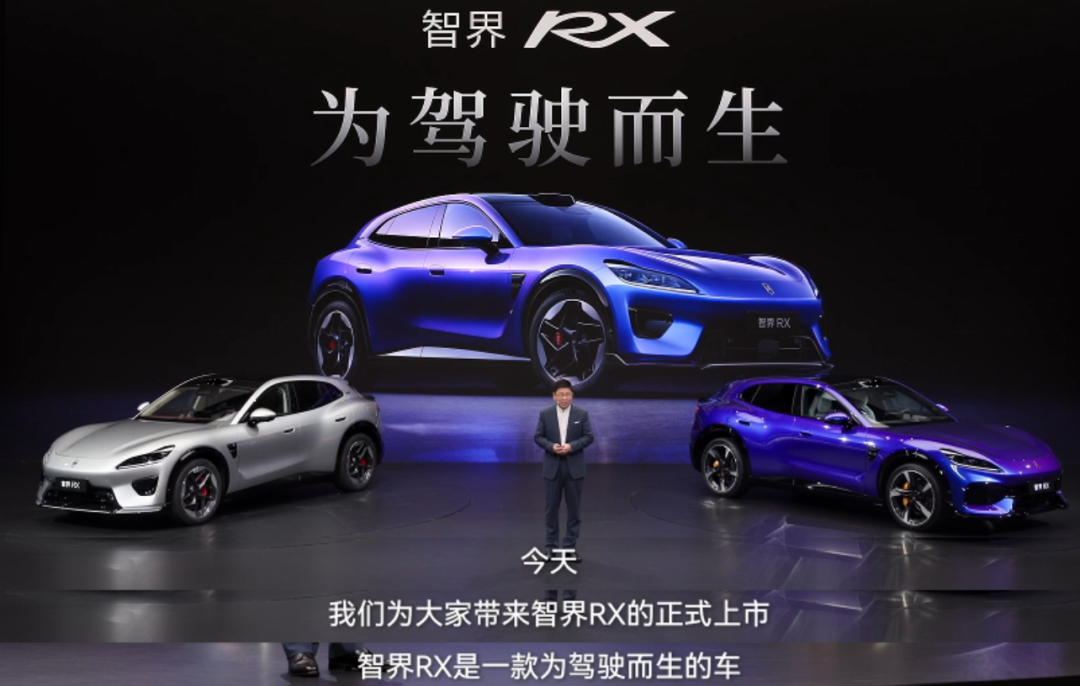
Image Source: Weibo
In his view, many current models focus solely on comfort and intelligence, neglecting a car’s core attribute—driving pleasure. Driving enjoyment isn’t exclusive to a few car enthusiasts; for ordinary users during daily commutes or highway cruising, a car with a stable chassis and high limits provides both peace of mind and enjoyment.
0.174-Second Ultimate Comeback! Luxeed RX Claims Title of Fastest Domestically Produced SUV at Zhejiang Circuit
The most explosive highlight of Yu Chengdong’s on-site presentation was the official release of the Zhejiang Circuit lap times.
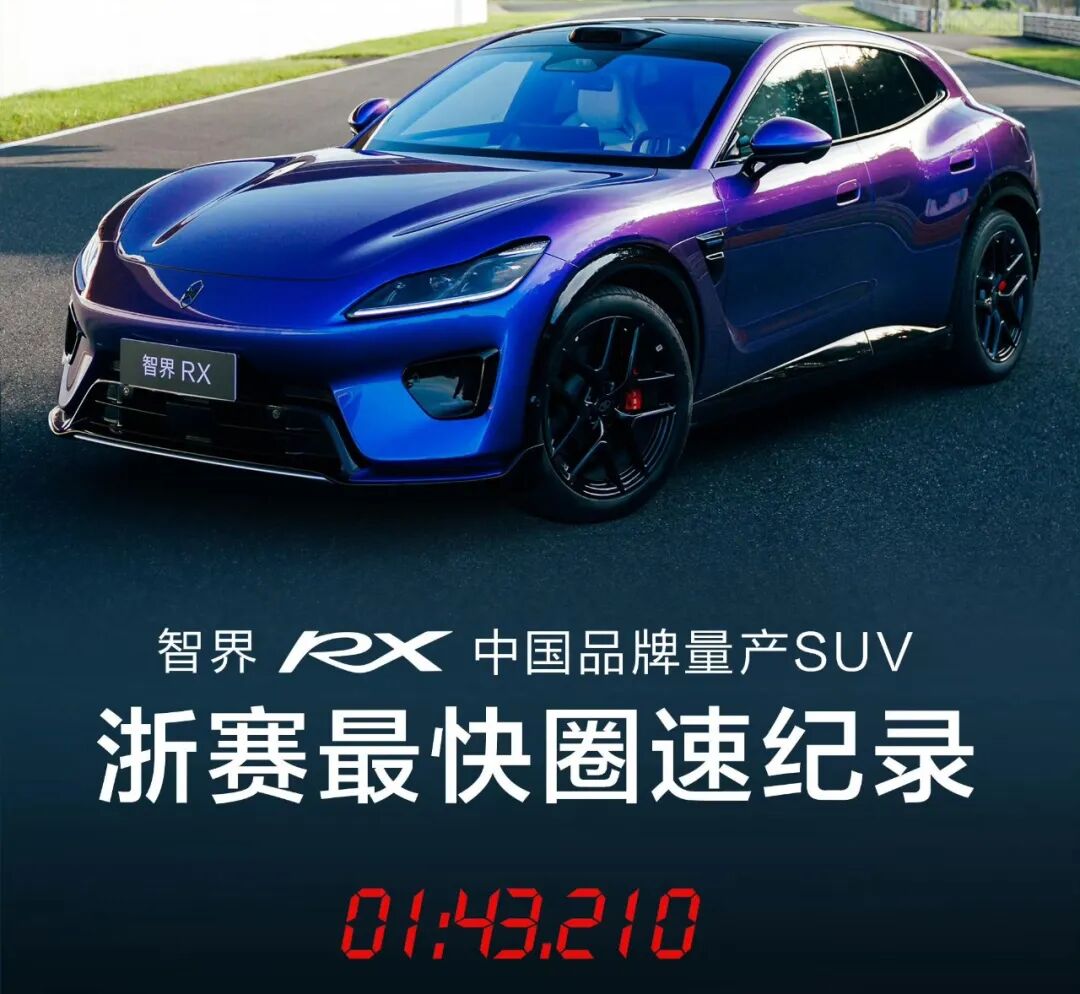
Source: Weibo
The Luxeed RX Ultra all-wheel-drive version achieved a time of 1 minute and 43.210 seconds at the Zhejiang International Circuit, setting the fastest record for a Chinese brand mass-produced SUV at the venue!
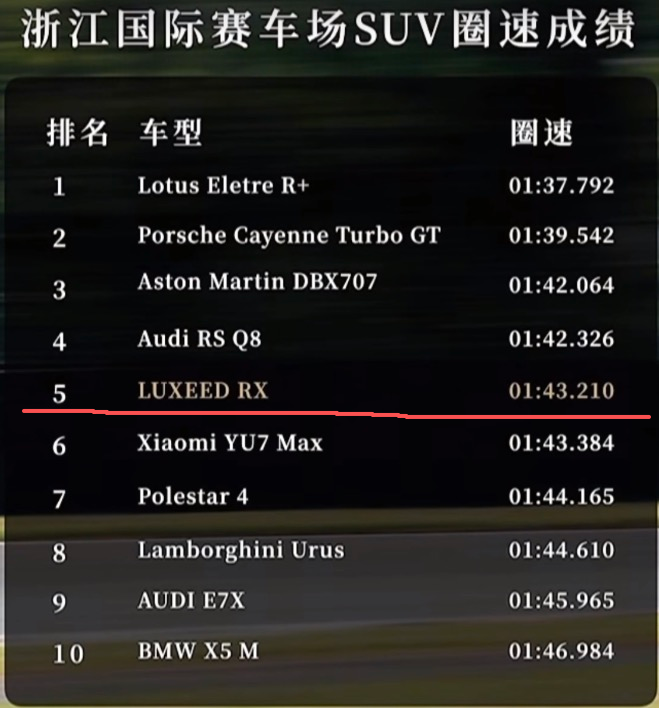 Image Source: Weibo
This record was previously held by the Xiaomi YU7 Max for 1 year and 3 days, with an original lap time of 1 minute and 43.384 seconds. In other words, the Luxeed RX surpassed it by a narrow margin of 0.174 seconds. However, Yu Chengdong had previously downplayed the significance of such comparisons, saying, “A few seconds here or there don’t matter; safety is the most important thing.”
Once the results were announced, the automotive community erupted in debate, with comments flooding in. Some directly acknowledged the result: “This is impressive, no arguments; a win is a win.” Others lamented, “Xiaomi was doing well, but now it’s being compared to Luxeed...”
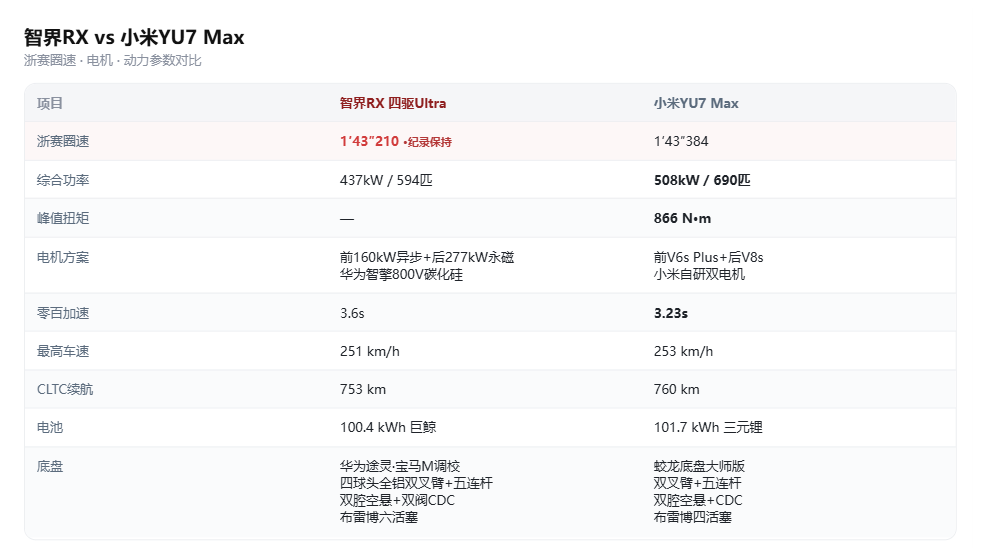 Image Source: Zhicaijing
Skepticism was rife, with netizens arguing endlessly: “Congratulations on the specially tuned car surpassing the YU7 by 0.1 seconds!” Others pointed out the contradiction between pricing and performance: “The price exceeds the YU7 GT, but the performance matches the YU7 Max.”
Many ordinary car enthusiasts felt that the 0.174-second gap was too small to notice in daily driving and was merely a marketing gimmick by automakers. However, seasoned car enthusiasts understood that the Zhejiang Circuit, with its dense corners and undulating terrain, places extremely stringent demands on a car’s body posture, steering, and chassis stability. After both cars reached the peak of mass-produced performance, every 0.01-second improvement became incredibly challenging. In high-level competition, even the smallest margin determines victory, and the industry generally believes that this domestic SUV record will be difficult to break in the short term.
Less Horsepower but Faster! Chassis Tuning is the True Game-Changer
The most subversive aspect of this comeback was achieving victory despite being at a disadvantage.
On paper, the Xiaomi YU7 Max boasts 690 horsepower, 100 horsepower more than the Luxeed RX’s 594 horsepower, with superior peak torque and zero-to-100 km/h acceleration. Logically, greater horsepower should result in faster lap times, but the Luxeed RX shattered the notion that “horsepower is everything”: despite having lower horsepower, it achieved a faster lap time.
When discussing this track performance, Yu Chengdong’s on-stage remarks sparked a wave of memes among netizens.
He said, “Lap times at the track aren’t the ultimate goal of product development; they’re just a byproduct of testing the vehicle under extreme conditions. Our extreme validation isn’t about chasing a number for its own sake but ensuring users feel confident and can enjoy the driving pleasure in daily use. Only steady speed allows for unrestrained enjoyment.”
Netizens jokingly interpreted his statement: “Yu: Those few seconds from competitors don’t matter; speed isn’t as important as safety.” Others dug up his past remarks to tease: “Sure, winning is fine. But you’re contradicting yourself again: saying tracks don’t matter.” Opposing views were equally blunt: “Mocking Xiaomi, imitating Xiaomi, wanting to be Xiaomi—think about it.”
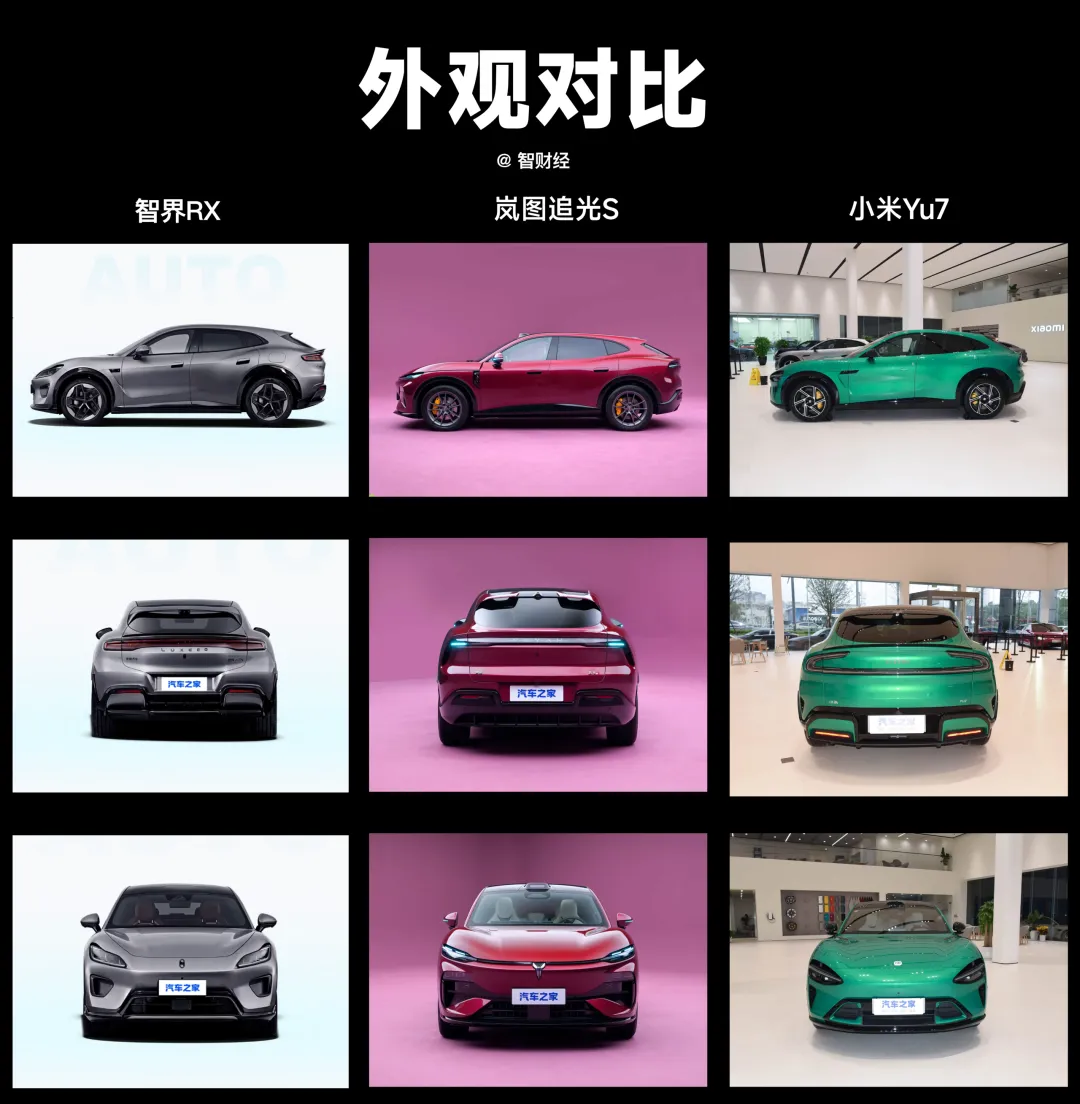 Image Source: Zhicaijing
Jokes aside, the Luxeed RX’s comeback hinged on its chassis prowess. The entire chassis was tuned by Tobias Moers, former chairman of AMG, with high-end configurations featuring a virtual kingpin four-ball-joint all-aluminum double-wishbone front suspension + five-link rear suspension, dual-chamber air suspension + dual-valve variable damping shock absorbers, paired with Huawei’s Tuling platform and motor torque response as low as 1 millisecond.
This chassis allowed the vehicle to maintain excellent body followability and braking stability through continuous corners at the Zhejiang Circuit, with more reasonable power delivery out of corners, hardening its chassis fundamentals to bridge the horsepower gap and achieve a cornering comeback.
Crucially, the Zhejiang Circuit test vehicle was in stock condition with stock performance tires, without any modifications or special tuning. With just 594 horsepower, it broke into the top five overall at the Zhejiang Circuit, ahead of only million-dollar imported performance cars. This demonstrates that paper specifications are superficial, and track lap times are the true litmus test of a vehicle’s comprehensive engineering prowess.
In today’s new energy vehicle market, many automakers blindly stack motors and horsepower, using acceleration figures to grab attention. The Luxeed RX proves that high performance doesn’t equate to hardware stacking; chassis, electronic control, braking, and body integration tuning are the true core. Harmony Intelligent Mobility Alliance’s approach has also shifted: no longer focusing solely on home comfort but delving into driving pleasure and targeting performance enthusiasts.
Beyond driving control, Yu Chengdong emphasized the safety logic of the L3 era: “Redundancy is the entry ticket to the L3 era, not simply stacking radar and cameras. L3 hinges on a complete full-link safety system with eight major system redundancies. If the primary system fails, the backup system can take over to ensure travel safety.”
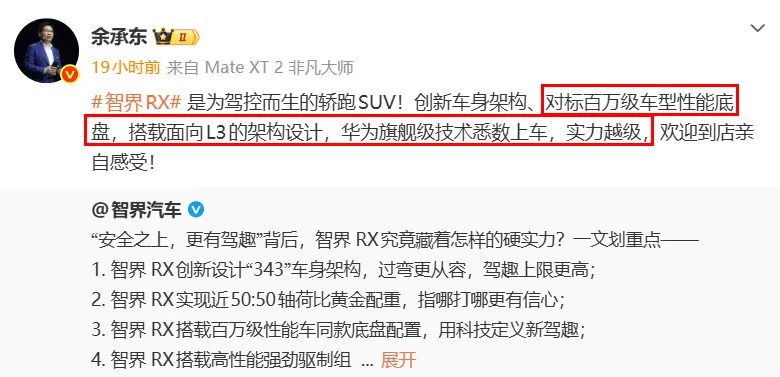
Image Source: Weibo
The Luxeed RX is the only model in Harmony Intelligent Mobility Alliance’s RMB 300,000 range to pre-install a full L3 redundancy architecture, with hardware fully in place. Once regulations permit, it can unlock advanced autonomous driving via OTA, showcasing remarkable foresight.
Priced from RMB 259,800! Style, Configurations, and Family Attributes Fully Delivered
After discussing its hardcore performance, let’s examine the car’s overall product strength.
The six configurations offer a clear gradient, covering family commuting to extreme performance:
Max version: RMB 259,800 – 81 kWh battery, in-cabin LiDAR, Tuling intelligent driving, with complete basic family configurations;
Long-range version: RMB 289,800 – upgraded to 100 kWh battery, CLTC range of 822 km, alleviating range anxiety;
Ultra version: Starting at RMB 319,800 – the entry-level high-trim, equipped with four LiDARs, dual-chamber air suspension, and a complete L3 pre-installation architecture;
Top-trim Ultra+: Fully loaded with 100 kWh battery, 21-inch staggered tires, aerodynamic kit, constant-temperature refrigerator, and dual-lens rearview mirrors.
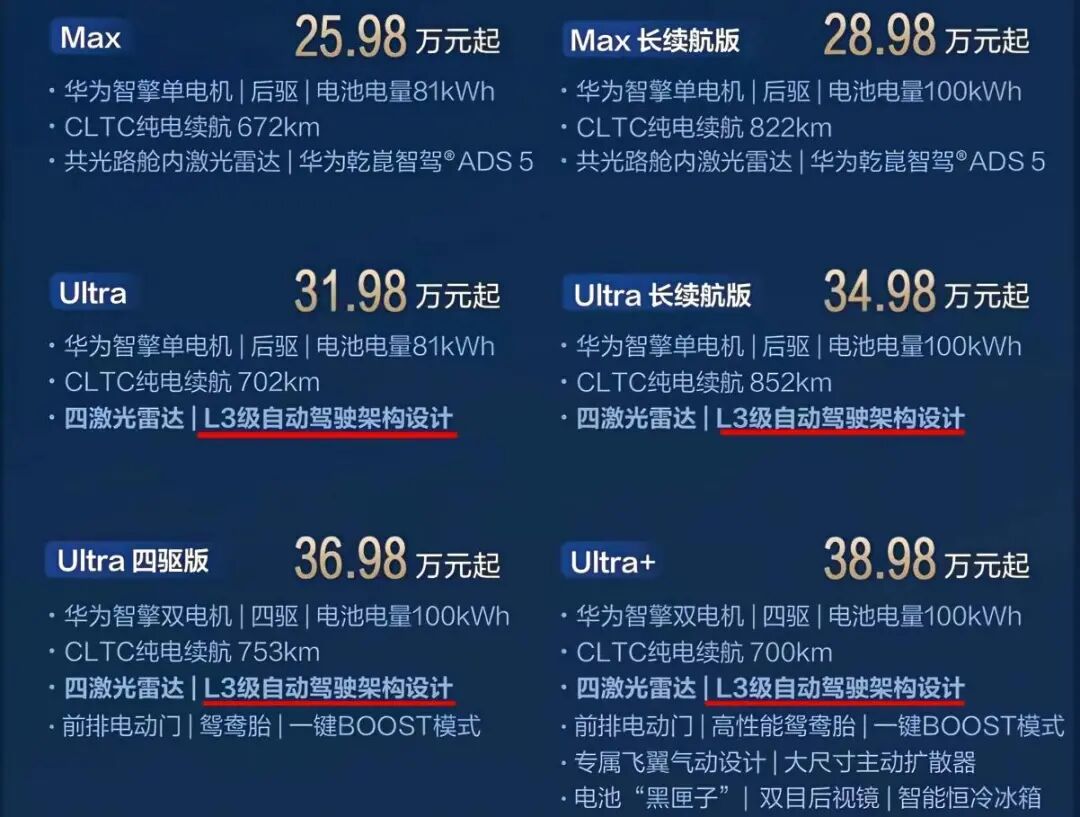 Image Source: Zhicaijing
The exterior was designed by a former Ferrari exterior designer, featuring a low-slung, wide, and fastback silhouette with a body height 12mm lower than the Xiaomi YU7 GT, exuding a strong coupe stance. The Blue Morpho blue paint employs nano-bionic structural color technology, displaying a blue-to-purple gradient at different angles, with an optional price of RMB 10,000. The only drawback is the higher cost of touch-up paint later.
Many fastback models sacrifice lighting for aesthetics, but the Luxeed RX uses a sandwich-layer sunroof with the sunshade built between two layers of glass, standard across all trims, preserving the fastback look while ensuring headroom and heat insulation.
The cabin offers many highlights: a dual-zone smart air conditioning system with fresh air delivery on the upper layer and temperature control on the lower layer, cooling faster in summer and saving power in winter; the industry’s rare dual-lens rearview mirrors, combining physical and electronic views for better visibility in rain or fog; 94-sensor smart contour seats, a responsive central display, hands-free tailgate, and an in-car constant-temperature refrigerator, all showing generous configuration choices.
The powertrain features an 800V high-voltage platform, with 30%-80% fast charging taking just 15 minutes. The all-wheel-drive version supports a one-touch BOOST mode, with a braking distance of 32.4 meters, completing stable high-speed lane changes at 251 km/h, with extreme stability verified.
All-New Models Unveiled! Harmony Intelligent Mobility Alliance’s Product Lineup Takes Shape
This launch event wasn’t limited to the Luxeed RX; two other models rounded out the brand’s lineup.
The refreshed Luxeed R7 was launched, priced between RMB 239,800 and RMB 319,800, with a RMB 500 million upgrade. The interior features a dual-screen setup, a D-shaped steering wheel, new hip massage, and singing bowl relaxation modes. The same dual-zone air conditioning and in-car refrigerator from the RX are included, with a CLTC maximum range of 855 km and an entry price reduced by RMB 10,000, targeting family all-rounders and competing with the Model Y.
The all-new MPV Xiangjie V8 opened pre-orders, priced between RMB 329,800 and RMB 449,800, available in extended-range and pure electric versions. The pure electric version features a 120 kWh battery with a CLTC range of 830 km; ±12° rear-wheel steering allows a 5.3-meter-long vehicle to achieve a turning radius of just 5.09 meters, balancing family and business use.
Now, Harmony Intelligent Mobility Alliance’s positioning is clearer: the Luxeed R7 secures the family SUV base, the Luxeed RX targets the high-end performance segment, and the Xiangjie expands into the MPV market. Each model serves a distinct purpose, reducing internal competition and solidifying a complete product lineup.
Track Performance is Just the Starting Point; Real-World Reputation is the Ultimate Goal
Finally, the question on everyone’s mind: Does the 0.174-second Zhejiang Circuit record hold any practical significance?
For daily commuting, this gap is nearly imperceptible to the human body. However, in today’s fiercely competitive new energy vehicle market, track performance is the most intuitive proof of an automaker’s chassis tuning and overall vehicle engineering capabilities. While Xiaomi stands out with high horsepower and specifications, the Luxeed RX proves that high-end performance doesn’t rely on mindless hardware stacking—refined vehicle tuning is the core.
Of course, track performance is just a bonus. Market competition ultimately depends on delivery, production capacity, and real user reputation. The Luxeed RX has received over 50,000 pre-orders, with high-trim L3 pre-installed models accounting for over 90% of orders, reflecting market enthusiasm.
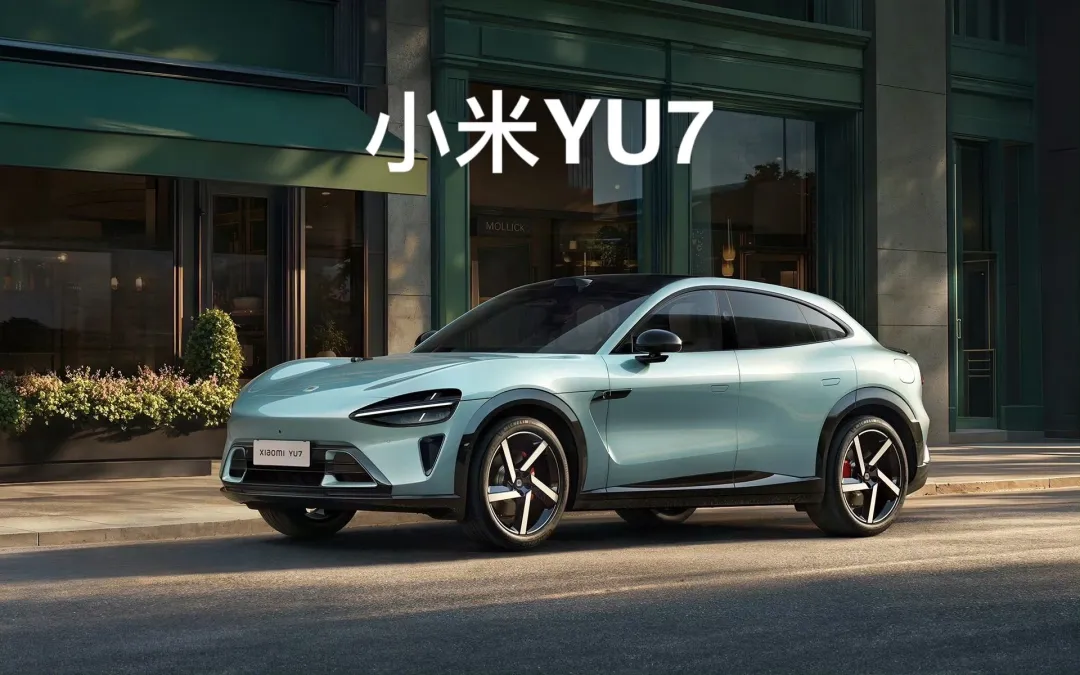
This showdown among Chinese performance SUVs has no absolute loser. The Xiaomi YU7 pioneered the domestic high-horsepower performance SUV segment, while the Luxeed RX raised the bar for handling in domestic SUVs through chassis tuning.
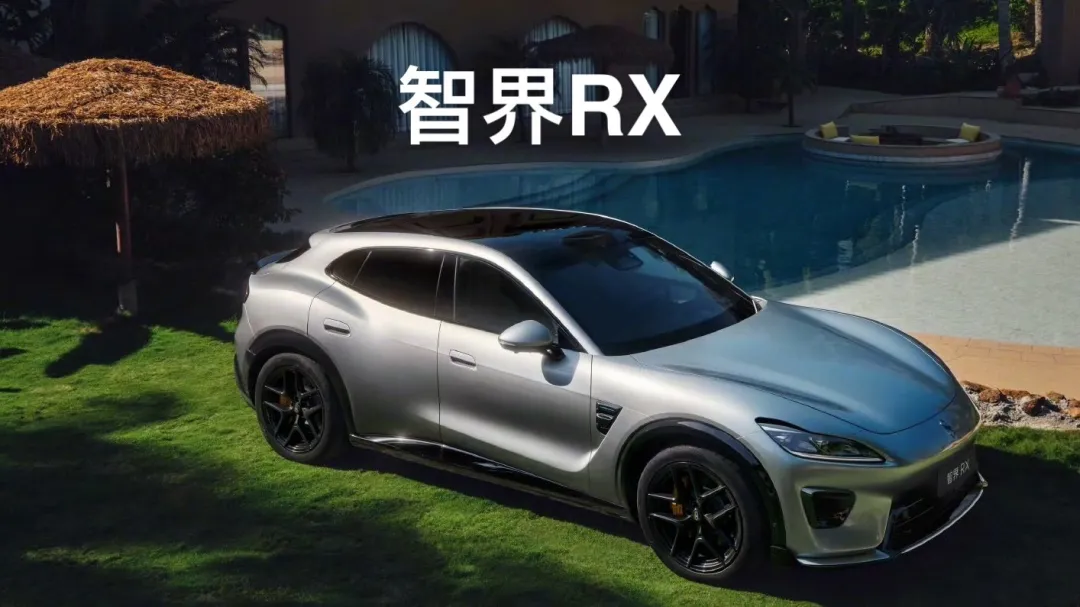
Next, the question is whether the Luxeed RX can translate its track-proven extreme capabilities into daily driving scenarios, fulfilling Yu Chengdong’s promise of being “the best-driving car from Harmony Intelligent Mobility Alliance.”
Interactive Topic:
Do you think the 0.174-second track gap holds weight? Between the Luxeed RX and Xiaomi YU7, which market performance do you favor? Share your thoughts in the comments!
Disclaimer: This article is solely a commentary by Dachang Finance and does not constitute any investment advice. All corporate data and regulatory events mentioned are sourced from public information and are for reference only, subject to official announ
-
![]()
AITO Unveils New Model: Pre-Sales Launch on September 30 with Native L3 Autonomous Architecture
-
![]()
Starting at 118,800 Yuan! Lynk & Co Unveils New Car Model: Official Release Set for September 28
-
![]()
Yu Chengdong’s Luxeed RX Claims Crown as Fastest Chinese SUV at Zhejiang Circuit, Outpacing Xiaomi YU7 by 0.174 Seconds!
-
![]()
Detailed Explanation of the Architecture and Training Methods of NVIDIA's VLA Autonomous Driving Model Alpamayo
-
![]()
Magic9 Teams Up with ARRI, Honor Takes Center Stage
-
![]()
Naive.AI Secures $400 Million in Funding Within Three Months: Backed by Tencent, Sequoia, IDG, and Matrix Partners, the Tsinghua-Linked LLM Startup Makes Waves
-
![]()
The World Mocks the Starship’s Explosion, Yet Overlooks Its Silent Revolution
-
![]()
Deal Sealed: Strategic Collaboration Between FAW and GAC Unveiled, Paving the Way for a New Era of Central-Local Synergy in China’s Auto Sector