Lenovo's PC Shipments Plunge 22% Year-on-Year: The AIPC Narrative Faces Challenges
 10/10 2026
 449
449
According to the latest IDC data, Lenovo shipped 14.9 million units in the third quarter of 2026, down from 19.3 million units during the same period last year, marking a 22.6% year-on-year decline. Its market share also dropped from 24.6% to 23.8%.
A year earlier, also based on an IDC report, Lenovo shipped 19.4 million units in the third quarter of 2025, representing a 17.3% year-on-year increase and a 25.5% market share, leading the second-place competitor by 5.7 percentage points.
The transition from a 17% growth to a 22% decline in just one year has been remarkably swift.
IDC partly attributes this downturn to supply chain issues and high prices, with the memory crisis still lingering.
However, Zhang Dongwei, a senior technology/internet expert, suggests that more profound shifts are at play: enterprise-level demand is shifting towards cloud computing, while personal-level demand is moving towards smart devices like mobile phones.
While Lenovo's business volume remains substantial, its growth prospects are becoming increasingly less compelling.

I. ThinkPad's Evolution
The rationale behind corporate PC procurement is undergoing a transformation.
Traditionally, providing each new employee with a top-of-the-line, latest model was standard practice.
Nowadays, an increasing number of CIOs are reevaluating this approach: deploying computing power in the cloud and equipping employees with low-cost thin clients is deemed sufficient.
Companies are cutting back on computer procurement expenditures and transitioning to cloud desktops. By shifting the computing load to the cloud, businesses no longer need to outfit every employee with a high-performance PC. Devices can be more affordable, and replacement cycles can be extended.
From a total cost of ownership perspective, cloud terminal solutions can help companies reduce hardware procurement costs by over 50% and maintenance costs by over 85%. Gartner predicts that by 2027, 95% of employees will work through virtual desktops.
Now, let's examine the data. From 2021 to 2025, global commercial PC shipments declined by approximately 15% cumulatively, while the average unit price increased by about 30% during the same period. The decline in volume coupled with the rise in price indicates a decrease in procurement willingness. Those still making purchases are opting for higher-end, more durable devices, with reduced frequency.
Commercial PCs are transitioning from consumables to durable goods, and the overall market size is expected to continue shrinking.
In fact, this is not just a Lenovo issue—Dell and HP are facing similar challenges.
All three industry giants have experienced declines exceeding 20%. It's not that any of them have made missteps; rather, corporate spending on enterprise computing is shifting from purchasing PCs to acquiring cloud services. The global cloud computing market is projected to grow from $832.8 billion in 2025 to $959.7 billion in 2026, with a compound annual growth rate of 15.24%.
The rise of the cloud and the decline of PCs are not coincidental.
Companies are still investing, but their budgets are being redirected from hardware to the cloud and services.

II. The PC's Demotion
While the corporate market is shrinking, the consumer market is faring even worse.
In 2025, the number of mobile internet users in China reached 1.116 billion, accounting for 99.4% of all internet users. For the generation born after 2000, the mobile phone is their primary—and possibly only—computing device.
Homework, video watching, socializing, and shopping are all conducted on mobile phones. The PC is no longer a daily tool but a specialized device for specific scenarios.
A 2025 CNET survey revealed that 52% of American adults still use laptops to create and view documents, but for organizational and management tasks, 66% already complete them on mobile phones.
PCs are being relegated from personal computing centers to specialized task tools, much like printers—you need them, but you don't think about them often.
Global PC shipments peaked at 365 million units in 2011.
The pandemic brought a brief rebound, followed by a return to decline. In 2022, shipments were 293 million units, a 16% drop; in 2023, they fell to 254 million units, below 2019 levels; in 2024, they barely recovered to 263 million units. By the third quarter of 2026, quarterly shipments plummeted by 20.1% year-on-year.
It's not that PCs are no longer useful; it's that users no longer require such high-performance PCs.
Watching short videos, replying to emails, attending meetings—even creating PowerPoint presentations can be done on mobile phones, albeit less efficiently.
Everything a PC can do, a mobile phone can basically accomplish as well, albeit on a smaller screen and with lower efficiency. But for most people, that's sufficient.
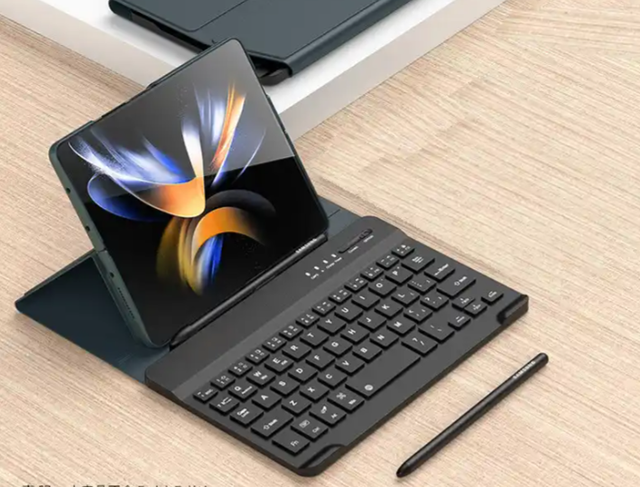
PCs haven't been rendered obsolete by mobile phones, but they have been pushed from the daily center to the professional periphery.
III. The Alluring AI Narrative, Yet Profitability from Computing Power Remains Elusive
Faced with the decline of its core PC business, Lenovo is placing its bets on AI.
The direction is correct, but the journey will be arduous.
First, let's examine the latest figures. In the first quarter of the 2026/27 fiscal year, Lenovo's AI-related revenue grew by approximately 60% year-on-year, accounting for 35% of total group revenue. In the 2025/26 fiscal year, AI-related business revenue grew by 105% year-on-year, with total revenue reaching $83.1 billion, a 20.3% year-on-year increase. Since April 2025, Lenovo's Hong Kong stock has surged by over 60%.
However, two issues remain unavoidable.
First, is there truly a demand for AI PCs?
The figures require clarification: according to Microsoft's May 2026 disclosure, Lenovo once held a 31% share in the Windows AI PC market. According to Lenovo's first-quarter disclosure for the 2026/27 fiscal year, its global AI PC market share was 25.1%.
However, for now, ordinary users' perception of AI PCs remains vague. It seems more like a selling point manufacturers use to stimulate upgrades, and the duration of this effect is uncertain.
Second, AI servers are essentially working for NVIDIA.
NVIDIA's gross margin for the 2026 fiscal year was 71.1%, down from 75.0% in the previous fiscal year but still above 70%.
In contrast, midstream assemblers' gross margins are suppressed to single digits or low double digits: Foxconn Industrial Internet's AI server gross margin was 7.15%, Quanta Computer's was 5.02%, and Wistron's was 5.66%.
Lenovo's ISG business had an annual operating profit margin of just 3.6%. The gross margin for chipmakers is 71%, while for complete machines, it's 5%—a gap exceeding fourteenfold.
No matter how large the assembly volume is, it's just hard-earned money from contract manufacturing.
The Next Platform analysis states that nearly all profits from building AI systems flow to NVIDIA.
Organizational changes are also underway. In late 2025, Lenovo's ISG China region reportedly laid off hundreds of employees in Shanghai, with the entire team disbanded. The China region's software, firmware, and OS teams were all cut. Lenovo recorded $285 million in restructuring expenses in the latest fiscal quarter, related to its AI server division.
Analysts point out that ISG China faces pressure from domestic alternatives and low-margin challenges, with the core reason for layoffs being a pursuit of profitability and structural optimization.
Between the comfort zone of PCs and the deep waters of AI, Lenovo is using organizational restructuring to secure its ticket for the next decade. But the return on investment remains uncertain.

Lenovo's AI narrative is progressing, but pricing power and ecosystem dominance are not entirely in its own hands.
Dong Cha
PCs won't disappear. Companies need them, professionals need them, and in certain scenarios, they remain irreplaceable.
But as a mass consumer product category, the golden age of PCs has passed. Corporate demand is migrating to the cloud, and personal demand is shifting to mobile devices. The combination of these two forces constitutes long-term downward structural pressure.
Lenovo remains the world's largest PC vendor, a position that won't be shaken in the short term.
But being the "largest" and being the "most investable" are never the same thing. Kodak was once the world's largest film company, and Nokia was once the world's largest mobile phone vendor. When the underlying logic of a category changes, being the "largest" can become the biggest burden for transformation.
Lenovo's AI布局 (bùjú, meaning "strategy") is evident, and the two-pronged approach of AI PCs and AI servers is the right direction. But the demand for AI PCs has yet to be validated, and the core value of AI servers remains in NVIDIA's hands.
Being a middle-layer business means scale when done right, but inventory when done wrong.
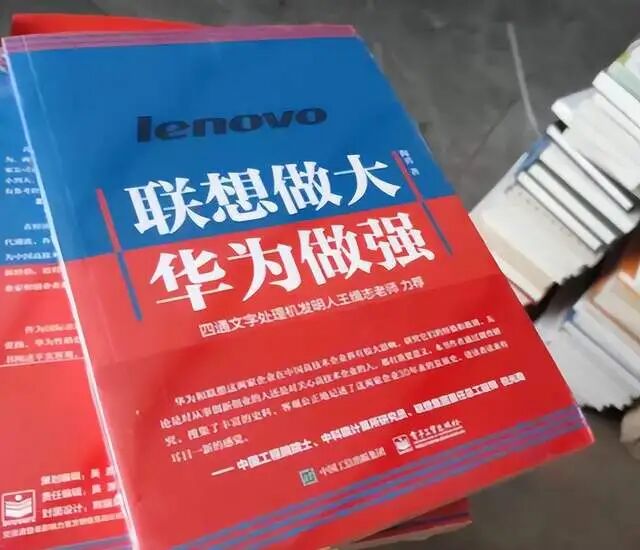
The golden age of PCs is over. Lenovo still holds the top spot, but it must prove it can shift from being first in shipments to first in profits.
Otherwise, the larger the scale, the slower the turnaround.
-
![]()
Zhixiang Future Secures 2.1 Billion Yuan in Three Months of Financing, Yet Founder Maintains: 'We Haven't Achieved World-Model Status'
-
11 Days, Five Launch Events: The Battle Behind the 2026 Domestic Flagship Smartphones
-
![]()
Lenovo's PC Shipments Plunge 22% Year-on-Year: The AIPC Narrative Faces Challenges
-
![]()
Why Hasn't Deepal Produced a Blockbuster Model One Year After Deng Chenghao and Jiang Hairong Joined Forces?
-
![]()
Meta’s New AI Unveiled: Claims of Fully Automated Calls Belied by Human Operation
-
![]()
Multinational Restrictions on Smart Glasses: Policy Changes and Three Types of Overseas Risks to Watch For
-
![]()
The Rise of AI Travel in a New Era | WeTides
-
![]()
Huawei Mate 90 Pro Max Review: Stellar Imaging, HarmonyOS Ecosystem Excels