Sub-$150 Entry-Level Smartphones on the Brink of Vanishing: When Will the Storage Shortage Ease?
 10/12 2026
 391
391
I still recall the days when Xiaomi revolutionized the smartphone market by slashing prices, sparking widespread excitement about the dawn of an era filled with affordable phones. The subsequent rise of sub-brands like Redmi, Honor, iQOO, and realme seemed to make ever-cheaper smartphones a tangible reality. However, since late last year, smartphone prices have been inching upwards. Nowadays, entry-level smartphones priced below $150 are almost a rarity, prompting us to ponder: How long will this smartphone storage crisis persist?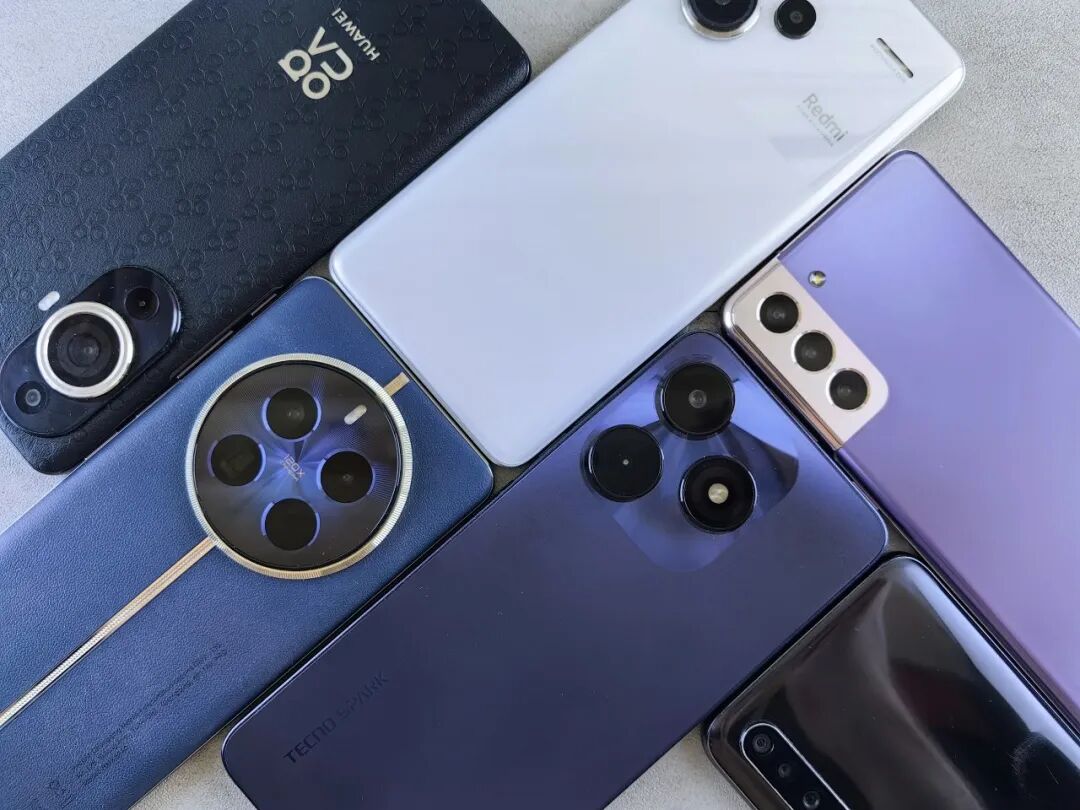
I. Are Sub-$150 Entry-Level Smartphones Nearly Vanishing?
According to a report by Kuaikeji, Micron cautioned in its latest earnings call that the supply-demand imbalance for storage will intensify in 2027 and 2028 compared to 2026. Even if all new DRAM cleanroom facilities come online, they will fall short of meeting the soaring demand, with no clear timeline for when supply and demand will align.
Micron noted that customers are eagerly signing long-term contracts, not in anticipation of price drops—quite the contrary. The situation is expected to deteriorate in 2027 and 2028, with demand growth far outpacing capacity expansion.
Even with new capacity additions, the timeline for achieving supply-demand equilibrium remains uncertain due to robust demand trends and additional customer orders.
The entry-level smartphone market is bearing the brunt of this crisis. Counterpoint Research recently forecasted a 40% decline in the budget phone market, with competitive pressures shifting towards mid-range devices, compelling consumers to opt for higher-priced options—a trend anticipated to persist until 2030.
The PC market is also feeling the pinch, with vendors introducing configurations boasting less memory and smaller SSDs to mitigate price hikes. According to some ODM data, notebook shipments in the recently concluded third quarter still plummeted by over 25%.
Lenovo had initially projected a roughly 15% decline, while Microsoft cited percentages in the "high teens" (17–19%), but the actual figures are worse than anticipated.
II. How Long Will the Storage Crisis Last?
When we previously discussed sub-$150 smartphones, they seemed like the 'champions of value' in the smartphone market: adequate configurations, generous memory, and prices hovering around $150, making decent smartphones accessible to budget-conscious consumers. But now, these devices are becoming increasingly scarce—almost extinct. What led to this transformation?
Firstly, the cost structure that once sustained sub-$150 smartphones has crumbled. Why were these phones competitive before? The rise of domestic sub-$150 smartphones began with Xiaomi's $199 pricing and Redmi's emergence, setting a trend for extreme value in this segment. The real foundation, however, was a relatively stable supply chain formula: Processors didn't need to be top-tier, just sufficient for daily use; memory and storage were abundant, giving users a sense of getting their money's worth; while screen, imaging, and battery configurations were moderately scaled back.
As long as upstream component prices remained stable, manufacturers could maintain a profit margin at the $150 price point—or at least avoid significant losses—by leveraging scale to capture market share. But now, that formula has faltered. Storage chip and core component costs have skyrocketed, particularly for critical parts like memory and flash storage, with price pressures directly impacting overall device costs. For flagship phones, cost increases can be absorbed through brand premium and high-end pricing, but for sub-$150 models, every dollar of cost rise could be the final nail in the coffin for profits.
More critically, the primary allure of sub-$150 phones was their 'upgrade feeling.' Users spent $150 to get more storage and smoother performance than expected—this psychological satisfaction was their core existence. But now, with storage costs rising, manufacturers face a dilemma: If they maintain generous memory, prices cannot stay at $150; if they hold the price, they must slash memory and configurations. Either way, the original selling points are weakened. Consequently, sub-$150 phones are no longer as 'generous' as before but have become increasingly cautious. It's not that manufacturers suddenly became miserly—it's economics at play: When upstream factor costs undergo structural changes, downstream product forms must inevitably restructure.
Secondly, this storage crisis is fundamentally different from past cyclical downturns. Over the past decades, storage industry fluctuations were driven by inventory cycles in consumer electronics like PCs and phones, with demand concentrated in consumer markets and capacity expansions by the three major storage giants primarily targeting consumer and traditional servers. Combined with Moore's Law driving continuous advancements in integration circuits and performance improvements, we witnessed new models launching while older ones quickly dropped in price. Once prices rose, manufacturers increased consumer-grade storage capacity, swiftly balancing supply and demand and lowering prices again. But today's market landscape is vastly different.
After the generative AI boom, AI servers' demand for storage has grown exponentially, with a single AI server consuming far more storage resources than traditional servers. The vast profit gap has prompted Samsung, SK Hynix, and Micron—the three storage oligopolies—to shift capital spending towards high-margin AI products like HBM and server-grade storage. To secure capacity, overseas computing giants have signed multi-year long-term agreements with storage manufacturers, locking in new capacity in advance.
This has created a highly unfavorable situation for consumer electronics: Overall storage industry capital investment is rising, but new capacity is not flowing to phones and computers. Consumer-grade DRAM and NAND flash can only compete for shares of existing capacity. This is the core of the AI siphoning effect—it's not a short-term shortage but a global reallocation of storage resources based on revenue priority. As long as AI computing construction continues at pace, the three majors' capacity allocation logic will not reverse, and tight consumer electronics storage supply will persist. We can no longer rely on past cycle experiences to predict storage price inflection points—the old analytical framework cannot explain today's industrial realities.
Thirdly, relief remains elusive in the short term. Many institutions point to late 2027 as the supply-demand inflection point, but based on our research, I believe this is somewhat optimistic. Some manufacturers even internally expect shortages to extend to 2028 or beyond. Why? Because constructing a new memory fab from decision to mass production typically takes two to three years, while HBM capacity expansion lags far behind AI demand growth. More troublingly, storage manufacturers are locking up more and more capacity for long-term agreement clients, leaving less for the spot market. For instance, after Changxin Technology's IPO, despite rapid capacity expansion, most of its output has been snapped up by major phone vendors, leaving very little for the broader market.
The rise of domestic storage is indeed accelerating—YMTC has emerged as a global leader in NAND, while Changxin continues to make strides in DRAM. But realistically, it will take considerable time for domestic capacity to fully catch up and effectively fill the supply-demand gap. We cannot pin our hopes for relief on a capacity increase that has not yet fully materialized, nor expect storage chipmakers to change strategic direction due to downstream vendors' pleas. In the AI computing arms race, smartphone storage has been deprioritized. This is the harsh industrial reality.
To truly bridge the consumer-side supply-demand gap, two conditions must be met simultaneously: On one hand, new wafer production lines must stabilize mass production; on the other, the domestic storage chip industry must continue to innovate, providing effective supply capacity. Only when domestic storage can sustainably scale up, forming stable supply capabilities in the consumer storage market and breaking the overseas trio's control over high-end storage capacity allocation, will the consumer electronics storage supply-demand landscape see substantive improvement. Until then, high storage costs will remain the norm, forcing phone makers to adjust product strategies in this high-cost environment, with low-end products bearing the brunt.
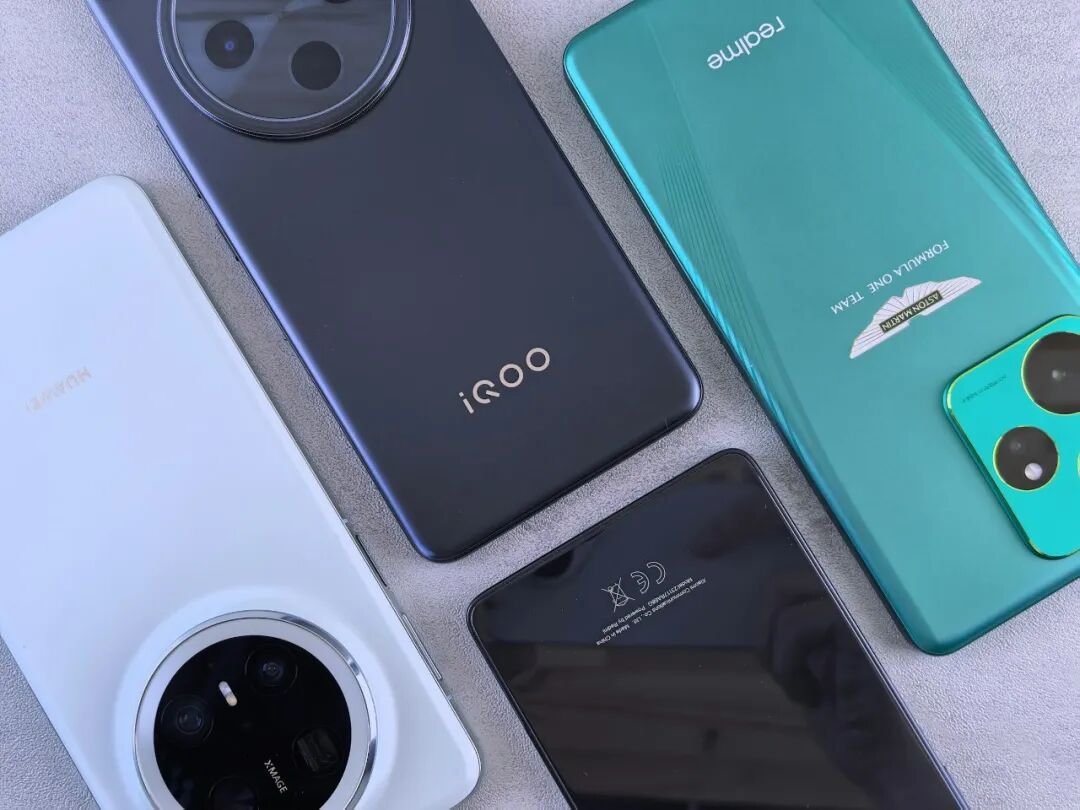
Fourthly, sub-$150 phones reverting to feature phone-era capabilities will become a trend. Future sub-$150 devices will more closely resemble equipment meeting minimum digital lifestyle needs: They can make calls, scan codes, watch short videos, and run essential apps like WeChat, navigation, and payments. But in terms of configurations, they will make extreme cuts. Large memory will no longer be standard, while high refresh rate screens, premium imaging, waterproofing, metal frames, fast charging, and other 'upgrade experiences' will be gradually stripped away. They will remain smartphones but no longer serve the role of 'getting more for less.'
This reflects a broader reshaping of phone market stratification. High-end phones will continue to drive technological innovation, brand premium, and profitability. Mid-range models will cater to mainstream users' performance, imaging, and experience demands. Meanwhile, sub-$150 phones will retreat to the bottom market, serving price-sensitive, configuration-indifferent groups. The era when 'sub-$150 phones could also upgrade' relied on low storage costs, a loose supply chain, and manufacturers' willingness to trade scale for reputation. Now, all these conditions are changing, and the role of sub-$150 phones must evolve. They will not disappear but will become simpler, more basic, and more utility-focused.
Arguably, the end of the traditional sub-$150 smartphone era signifies more than just the disappearance of a price segment—it marks the conclusion of an era of universally accessible smart terminals. The golden age of sub-$150 phones may become history, with their logic potentially rewritten entirely.
END
Daily Inspiration: Cultivating yourself matters more than anything else. Your growth and strength are your strongest assets. When you can only rely on yourself, you'll realize: Who is present or absent, who matters more or less, makes no difference. This world is, in essence, just you. As long as you exist, everything exists; when you vanish, everything vanishes. So, appreciate and love yourself.
-
![]()
Sub-$150 Entry-Level Smartphones on the Brink of Vanishing: When Will the Storage Shortage Ease?
-
![]()
September Brings Seismic Shifts to China’s Independent Auto Market: SAIC and Leapmotor Join Elite Ranks, Top 5 Expands to Top 7! Three Firms Report Negative Growth Year-to-Date | Mirror Pro
-
![]()
The Era of Lightweight Integration in Existing Assets Arrives! GAC's Entry into FAW-Toyota Holds Multiple Implications
-
![]()
Observations on the Integration of Public and Private Communication Systems in Heilongjiang's Two-Way Radio Systems: What Changes Are Happening in Private Network Communications Behind 86 Projects
-
![]()
The Truth Behind the Surge in Smartphone Prices: Will the Trend Persist Beyond Autumn?
-
![]()
AITO Auto Sets Sights on European Market Entry by 2027: EU Whole Vehicle Type Approval Process Underway
-
Reflection on the AI Evolution of TCL, Hisense, Skyworth, and Others: How to Trigger High-Frequency User Demand?
-
![]()
[Electric Equipment] Great Wall Heavy Industry’s GT105E All-Electric Wide-Body Truck Makes Its Debut in Hainan Mining Region