The Era of Lightweight Integration in Existing Assets Arrives! GAC's Entry into FAW-Toyota Holds Multiple Implications
 10/12 2026
 389
389
Independent, Scarce, Penetrating

Reshaping the Integration Paradigm of China's Automotive Industry
Editor: Li Mu
Contributor: Chen Chen
Source: Rao Cai - Rao Cai Research Institute
Another major development has emerged in the domestic joint venture automotive sector! GAC plans to acquire a 50% stake in FAW-Toyota, achieving deep integration between the two automakers through an equity swap without resorting to massive cash outlays or vying for corporate control. In an era of existing assets where complete vehicle (vehicle) profits have plummeted to a decade-low, this 'lightweight integration' may reshape the integration paradigm of China's automotive industry.
On September 28, GAC Group disclosed a major asset restructuring plan, proposing to acquire a 50% stake in FAW-Toyota held by FAW Corporation through the issuance of shares. After the transaction is completed, GAC will stand alongside the Toyota Group as the two major shareholders of FAW-Toyota; FAW Corporation, in turn, will acquire shares in GAC Group, becoming its second-largest shareholder with strategic influence. On September 29, GAC Group's share price surged by the daily limit after resuming trading, and it rose another 4.29% on the 30th.
Against the backdrop of industry capacity reshuffling, structural realignment, and collective pressure on joint venture brands, this 'lightweight integration' centered on equity swaps is far from an ordinary asset transaction. It can be viewed as a pragmatic exploration of collaborative and sustainable development for China's automotive industry through industry cycles.
01 Dual Policy and Market Windows Enhance Industrial Integration and Efficiency LAOCAI
For a long time, the 'dual joint venture model' of Toyota in China has been a classic case during the era of automotive market expansion. GAC Toyota and FAW-Toyota operated independently, with parallel product layouts, supply chains, and sales channels. During the period of rapid market expansion, this model could fully unleash production capacity and quickly seize incremental market share.
However, as the market shifts to a inventory (existing asset) competition phase, coupled with rapid iterations in electric and intelligent technologies, contradictions such as resource dispersion, redundant investments, and internal competition among similarly positioned models have gradually surfaced. The once-advantageous growth model has gradually become a burden on development.

Thus, this restructuring transaction precisely coincides with dual policy and market windows. On September 11, nine departments including the Ministry of Industry and Information Technology issued the '15th Five-Year Plan for the Development of the Intelligent Connected New Energy Vehicle Industry,' explicitly proposing to promote mergers and reorganizations of automakers in accordance with the law, cross-regional integrations, and deepen group-based reforms of automakers, providing clear directions for breaking down geographical and entity barriers in the industry.
From a market perspective, data from the China Association of Automobile Manufacturers (CAAM) shows that the average profit margin of domestic vehicle manufacturing fell to 1.5% in the first half of 2026, reaching a new decade-low. This dramatic shift sends a clear signal: the old logic of relying on multiple platforms and brands to seize market share is no longer valid. The industry urgently needs collaborative efforts to reduce internal friction and enhance overall competitiveness.
02 Lightweight Integration, High Returns, and Synergistic Potential LAOCAI
Compared to past complex group restructuring cases in the industry, GAC and FAW have chosen a highly pragmatic path of lightweight integration: without altering the actual control of both enterprises or making large cash payments, they achieve deep binding of joint venture vehicle assets solely through equity swaps. This approach stabilizes the interests of all parties involved, relies on equity ties to bind the benefits and risks of both sides, effectively avoiding the common pitfalls of 'formal mergers, substantive divisions' in traditional reorganizations, and facilitates the rapid release of synergistic effects.
The benefits of integration are first reflected in enhanced efficiency in the joint venture sector. For a long time, Toyota's dual joint ventures in China have had numerous sister models on the same platform and with similar positioning, such as the Camry and Avalon, RAV4 and Wildlander, competing within the same price bands. During the market expansion phase, such internal friction was manageable; however, in a inventory (existing asset) market, it directly translates into profit erosion.
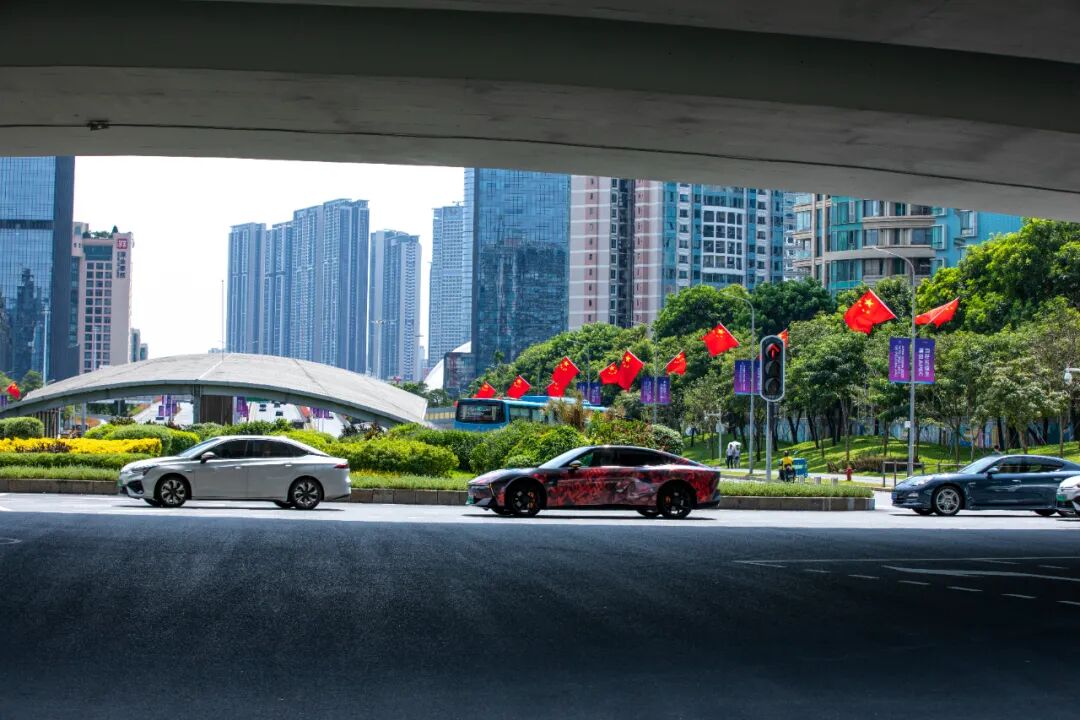
After the transaction is completed, both parties can coordinate localized R&D, supply chains, production base resources, and sales channels, reduce redundant investments, share technological innovation costs, and consolidate dispersed production capacity, channels, and R&D resources. CAAM data shows that in 2025, the combined sales of Toyota's dual joint ventures in China accounted for over 17% of the total sales of joint venture passenger vehicles, firmly positioning them among the top joint venture brands. If resources can be effectively integrated, this vast market base will possess stronger resilience against risks.
More notably, the integration of the joint venture sector is just the starting point. The differentiated resources of both parties can also empower their independent brands. GAC has deep accumulations in the new energy sector, with a complete independent R&D system encompassing magazine batteries, Inpower batteries, and all-solid-state battery technologies. FAW, on the other hand, excels in independent luxury brands, commercial vehicle chassis, government and enterprise markets, and northern channel layouts. Their collaboration can avoid homogeneous internal competition in product and technology R&D, activate high-quality resources, reduce redundant R&D investments, and facilitate the transformation and upgrading of independent brands. It is indeed a cost-effective, high-return, and mutually beneficial deal.
03 Targeting Profit Resilience, Opening Up New Horizons for Industrial Upgrading LAOCAI
Viewed within the history of China's automotive industry, the significance of this transaction extends far beyond the two companies involved. Over the past decades, China's automotive industry has evolved from 'trading market access for technology' to establishing the world's most complete automotive industry chain, shifting its goal from scale leadership to quality leadership. As the industry bids farewell to rapid growth, how to navigate through cycles and achieve high-quality development has become a common challenge for all automakers.
The exploration by GAC and FAW does not pursue a formal mega-merger of groups. Instead, it starts with the joint venture assets with the greatest collaborative potential, relying on market-driven equity ties to achieve interest alignment, creating a low-resistance, highly feasible integration model with significant industry demonstration (demonstration) effects.
Taking intelligent connected new energy vehicles as an example, the industry chain is lengthy, covering various segments such as vehicles, components, automotive-grade chips, and industrial software. It is challenging for a single enterprise to independently establish a complete and mature technological ecosystem. Industry competition is no longer about individual enterprises going it alone but increasingly about the speed of ecosystem response and error-correction capabilities across the industry chain. The collaboration between GAC and FAW aligns with this industrial trend, integrating dispersed forces through resource reallocation, safeguarding the foundation of their joint venture businesses while creating greater space for technological breakthroughs in their independent brands.
Of course, the integration will not be achieved overnight. The sales systems, product planning, and supply chain management differences that have developed over the years between Toyota's dual joint ventures in China will require long-term alignment. How to upgrade from simple equity binding to deep-seated ecological collaboration remains a question that both parties need to provide clearer answers to the market. However, it cannot be denied that this transaction opens up new ideas for cross-automaker collaboration.
After achieving scale leadership, the most challenging issue for China's automotive industry is profitability. As more enterprises break away from the traditional mindset of isolated operations and form complementary and efficiency-enhancing synergies across the industry chain, China's automotive industry can truly navigate through cycles, enhance profit resilience, and establish a firm foothold in global competition.
This article is original to Rao Cai.
For reprints, please leave a message.
-
![]()
Sub-$150 Entry-Level Smartphones on the Brink of Vanishing: When Will the Storage Shortage Ease?
-
![]()
September Brings Seismic Shifts to China’s Independent Auto Market: SAIC and Leapmotor Join Elite Ranks, Top 5 Expands to Top 7! Three Firms Report Negative Growth Year-to-Date | Mirror Pro
-
![]()
The Era of Lightweight Integration in Existing Assets Arrives! GAC's Entry into FAW-Toyota Holds Multiple Implications
-
![]()
Observations on the Integration of Public and Private Communication Systems in Heilongjiang's Two-Way Radio Systems: What Changes Are Happening in Private Network Communications Behind 86 Projects
-
![]()
The Truth Behind the Surge in Smartphone Prices: Will the Trend Persist Beyond Autumn?
-
![]()
AITO Auto Sets Sights on European Market Entry by 2027: EU Whole Vehicle Type Approval Process Underway
-
Reflection on the AI Evolution of TCL, Hisense, Skyworth, and Others: How to Trigger High-Frequency User Demand?
-
![]()
[Electric Equipment] Great Wall Heavy Industry’s GT105E All-Electric Wide-Body Truck Makes Its Debut in Hainan Mining Region