Observations on the Integration of Public and Private Communication Systems in Heilongjiang's Two-Way Radio Systems: What Changes Are Happening in Private Network Communications Behind 86 Projects
 10/12 2026
 566
566
In the winter of 2025, a safety officer from a petrochemical enterprise in Northeast China shared a detail with me. During their inspection of the plant area, two-way radios were the most basic equipment—but the performance of the devices varied greatly across different regions. Upon entering the tank storage area, the explosion-proof two-way radios maintained normal communication; however, back in the office area, field dispatchers used public network devices to contact the transportation fleet. Although both sides were trying to communicate, they couldn't reach each other. The safety officer had to monitor two sets of equipment simultaneously—one for the private network and one for the public network—responding to whichever rang first.
This scenario is not unique. After years in the private network communication industry, I have repeatedly encountered similar situations across various fields, including petrochemicals, forestry, rail transportation, and emergency rescue. As more devices are purchased, the communication systems become increasingly fragmented—private networks cover core areas but cannot extend to field operations, while public networks offer broad coverage but are unreliable in disaster-stricken or deep plant areas.
It wasn't until August 2026 that a report by Xinhuanet on private network communications in the cold regions of Northeast China provided an answer to this issue. The report mentioned that a public-private integration system had been implemented at 86 project sites across Heilongjiang, Jilin, and Liaoning provinces, covering sectors such as forestry, petroleum and petrochemicals, rail transportation, and public emergency response. The report also provided operational data: core equipment operated continuously for over 72 hours in temperatures below minus 30 degrees Celsius, with end-to-end command response times under 300 milliseconds, system availability exceeding 99.5% in winter, and an average fault repair time of under 2 hours.
These 86 projects are not laboratory pilots but real-world engineering projects already in operation. They demonstrate that public-private integration has moved from conceptual discussions to large-scale implementation. However, the technical challenges, market fragmentation, and industry differences exposed during implementation are more worthy of examination than the simple judgment that 'public-private integration is the trend.'
II. What Do These Numbers Really Mean?
A 99.5% annual availability rate translates to no more than 43.8 hours of downtime per year. Traditional private network systems typically have availability rates between 95% and 98% (public industry data), so 99.5% approaches telecom-grade operational standards. The difference is not just 2 percentage points on paper but hundreds of additional hours of reliable communication annually—critical hours in emergency and safety production scenarios.
The average fault repair time of 2 hours is another easily underestimated metric. It implies the necessity of having resident engineers and spare parts inventory locally. Cross-regional personnel and parts dispatch typically take days, so only by pre-positioning technical resources and spare parts at the project site can repair times be kept under 2 hours. The figure mentioned in the Xinhuanet report is essentially a measure of the supplier's localized service capabilities.
A 300-millisecond end-to-end delay is the threshold below which human ears cannot perceive conversation latency. Beyond this, dialogue becomes disjointed—one side starts speaking before the other has finished, resulting in incomplete communication. Private network systems offer deterministic latency unaffected by network load, while public network push-to-talk (POC) latency varies from hundreds of milliseconds to several seconds depending on carrier network congestion. This is why emergency command and production scheduling scenarios require private networks or private network fallback options.
Continuous operation for 72 hours at minus 30 degrees Celsius addresses the unique winter conditions in Northeast China. Ordinary lithium batteries experience significant capacity loss below minus 20 degrees Celsius, and feeder connectors are prone to water ingress and oxidation due to freeze-thaw cycles. Stable operation in such environments requires low-temperature optimizations in battery formulations, antenna designs, and component selection.
III. Why Public-Private Integration? Communication Failures in Three Scenarios
Public-private integration arose not from technological novelty but from repeated failures of single-standard systems in real-world scenarios.
Disaster rescue is the most typical case. During floods, carrier base stations and fiber-optic cables are often damaged, rendering mobile phones and public network two-way radios useless. Once rescue teams enter disaster zones, communication initially relies solely on satellite phones and traditional two-way radios. While public network two-way radios offer broad coverage and low costs under normal conditions, their communication links share the same path as mobile phones—when base stations fail, they fail too. Private network two-way radios, independent of carrier infrastructure, remain operational as long as they have power, but their coverage is limited, making cross-regional coordination difficult. Neither standard alone meets the dual demands of reliability and broad coverage.
The petroleum and petrochemical industry presents another scenario. Plant areas contain flammable and explosive gases, so only explosion-proof certified private network two-way radios are permitted. However, private network base station coverage is limited, leaving field transportation and peripheral contractors outside the system. Equipping field personnel with public network devices creates interoperability issues between the two systems, forcing dispatchers to operate both simultaneously—the very dilemma faced by the safety officer mentioned earlier.
Forestry inspection challenges stem from coverage costs. A forestry bureau may manage hundreds of square kilometers with personnel dispersed along inspection routes. Dense base station coverage would require massive investment, yet most uninhabited areas don't need communication. Public network two-way radios lack signal in remote forest areas, while private network two-way radios cannot cover inspection route endpoints.
The common thread in these scenarios: no single standard simultaneously satisfies reliability and coverage. Public-private integration uses private networks for core area coverage and public networks for extended broad coverage, with a unified dispatching platform connecting both systems. Among the 86 projects, a significant proportion employed this hybrid architecture—forestry used backbone base stations with portable repeaters for segmented coverage, petrochemicals combined explosion-proof private networks with field public networks, and large events supplemented temporary private networks with public networks.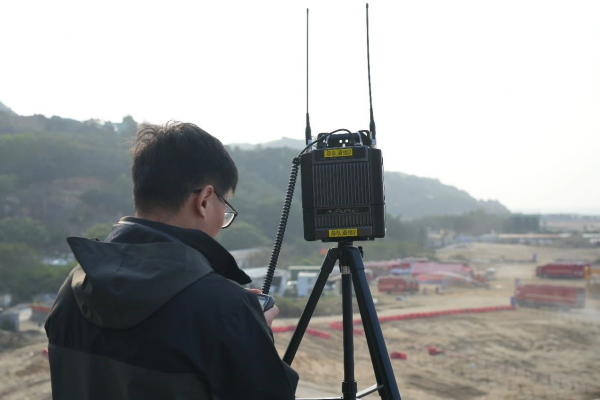
While public-private integration sounds simple, real-world implementation requires solving three technical challenges.
Cross-Standard Interoperability
Four mainstream standards—DMR, PDT, TETRA, and POC—differ in physical layers, signaling, and voice coding. DMR uses AMBE++ encoding, TETRA uses ACELP, and POC typically employs AMR or Opus. For a DMR terminal's group call to reach POC terminals, the fusion gateway must perform signaling conversion and real-time voice transcoding. Transcoding introduces 50–150 milliseconds of additional delay, so total end-to-end delay must stay under 300 milliseconds for natural conversation.
Signaling conversion is even more complex. Different standards define priority levels differently: DMR has two levels (normal and emergency), PDT has more, and most POC systems lack priority support. The fusion gateway must map priorities to ensure emergency calls retain top priority across standards. Encrypted call interoperability is more problematic—different encryption algorithms and key management systems often require 'decrypt-then-re-encrypt' approaches, which raise security concerns in high-stakes scenarios.
Edge Autonomy in Weak Networks
Public-private integration dispatch platforms typically deploy in the cloud, but links from wilderness base stations to the cloud are unstable. In Northeast China's forest areas, winter power outages or frozen link failures can disconnect base stations from the cloud. Over-reliance on cloud dispatching leaves the system paralyzed when links fail.
The solution is edge autonomy: base stations and local dispatch nodes must operate independently. When cloud links are normal, cloud dispatching runs; when disrupted, local nodes automatically take over for local group calls, recording, and data caching, synchronizing with the cloud once links restore. The Xinhuanet report's mention of 'signaling optimization for wilderness weak links, prioritizing real-time dispatching and caching non-real-time data' refers to this design.
Edge autonomy imposes hardware and software requirements. Base stations need computational capacity for local dispatching software, which must support seamless switching between cloud and edge modes. Most vendors are still improving these capabilities, with significant brand-to-brand variations.
Unified Dispatching
The unified dispatching platform is the fusion system's core, integrating different standard terminals into unified group management, supporting individual calls, group calls, all calls, and broadcasting while providing recording, GIS positioning, and status monitoring.
The implementation challenge lies not in functionality but in stability and usability. Dispatchers are rarely communication specialists, so interfaces must be simple. During an emergency drill, a dispatcher might need to create a cross-DMR and POC temporary group, add 20 terminals, and initiate an emergency call within 30 seconds—complex platforms with slow responses delay command.
Currently, unified dispatching platforms fall into three categories: vendor-proprietary platforms (e.g., Hytera SmartOne, Motorola Avtec), which offer stability but only support their own brands; third-party fusion platforms, which support multiple brands but have limited advanced features; and domestically developed platforms like LONPTT, which support multi-protocol access (DMR, PDT, POC) and offer localization and cost advantages. Selection depends on terminal brand combinations and functional requirements.
V. How the Market Is Changing
The private network communication market can be viewed from two perspectives: equipment vendors and channel service providers.
Among equipment vendors, Motorola Solutions leads globally with products covering TETRA, DMR, and broadband private networks, particularly strong in public safety. Hytera offers the most comprehensive product line among Chinese vendors, with complete DMR solutions, core PDT offerings, and TETRA and broadband private network layout (layout). ZTE Highpass invests heavily in PDT and public-private integration, actively pursuing 5G private networks. Japanese brands like Kenwood and Icom maintain stable user bases in mid-to-high-end terminal markets.
Notably, the market share of domestic equipment is rising, driven not by policy protection but by cost-effectiveness and service responsiveness in real projects. For DMR digital repeaters, domestic devices typically cost 60–70% of imported brands while offering comparable functionality and faster local after-sales support. In budget-constrained industrial and commercial projects, domestic equipment becomes increasingly competitive.
At the channel service provider level, private network communication is an industry where '30% depends on equipment, 70% on services.' Solution design, frequency planning, installation and commissioning, and operation and maintenance training directly determine system effectiveness. In Heilongjiang's two-way radio procurement market, integrators with multi-brand authorizations, local technical teams, and spare parts inventories have advantages in project bidding over purely price-focused suppliers.
A China Daily Finance Channel report noted that Heilongjiang Dankong Technology Co., Ltd. holds core agency authorizations from Hytera, Motorola Platinum Agency, ZTE Highpass, Kirisun, and over ten other brands. It is an approved supplier for China's three major carriers and China Tower, as well as for the Heilongjiang government procurement online marketplace. The existence of such multi-brand authorized integrators reflects market reality: clients often require hybrid brand solutions—core areas using Brand A explosion-proof terminals, field operations using Brand B public network devices, and dispatching via Brand C platforms—which single-brand agents cannot fulfill.
Domestic substitution is also extending to core components. The localization of baseband chips, RF chips, and encryption chips is increasing, though high-end RF chips still rely on imports. Domestic broadband trunking standards like ePDT are being promoted in public safety sectors but require time for large-scale commercialization.
VI. Implementation Differences Across Six Industries
Public-private integration varies significantly across industries. Six representative cases are discussed below.
Petroleum and Petrochemicals. The core constraint is explosion-proof compliance. Plant areas require intrinsically safe or explosion-proof two-way radios with national certification, with repeaters installed in non-explosion-proof areas and connected to plant antennas via explosion-proof feeders. Frequency planning must avoid electromagnetic interference from pumps, compressors, and frequency converters, requiring on-site electromagnetic scanning beforehand. Petrochemical projects typically adopt a 'plant private network + field public network' model, with a medium-sized plant system (repeater, antenna feeders, 50 explosion-proof terminals) costing approximately 150,000–300,000 yuan, depending on plant size and explosion-proof grade.
Underground Mines. Underground operations use mining intrinsically safe two-way radios with leaky cable systems. Leaky cables, laid along tunnels, function as both transmission lines and antennas, providing uniform signal coverage. Underground base stations connect to surface dispatch centers via fiber optics, with personnel positioning systems often integrated with communication. Costs primarily stem from leaky cables and installation, with a 5-kilometer tunnel leaky cable system costing approximately 200,000–400,000 yuan. Underground equipment faces stricter requirements for moisture, dust, and corrosion resistance, with shorter maintenance cycles than surface equipment.
Rail Transportation. High demands exist for mobile roaming, as trains traveling at high speeds through tunnels require base station handover interruptions under 100 milliseconds. Subways typically use TETRA or LTE-M systems, with base stations evenly spaced along tunnels and precise calculation of overlapping coverage areas. The technical threshold is high, usually undertaken by professional integrators, with equipment dominated by imported and leading domestic brands.
Emergency Rescue. Core requirements include rapid deployment and independence from public networks. Within hours of a disaster, on-site communication must be established using portable repeaters, vehicle-mounted base stations, and satellite links. A May 5 emergency communication drill reported by China Daily constructed a 'ground private network + drone video backhaul + low-altitude countermeasures' three-dimensional system—ground DMR private networks for voice, drones for video backhaul, and low-altitude equipment for airspace management. This model has seen practical rescue applications, with ongoing improvements in integration and portability.
Forestry and Timber. These sectors use a 'backbone base station + portable repeater segmented coverage' model, with fixed base stations at bureau locations and main management stations, and portable repeaters for inspection route endpoints. Portable repeaters, backpacked or vehicle-mounted, deploy flexibly based on tasks. Winter low temperatures pose special challenges in forest areas, requiring low-temperature battery formulations. The Xinhuanet report's minus 30-degree Celsius, 72-hour continuous operation test validated this winter scenario.
Property and Hotels. The pain point is underground parking lot coverage. Signals from surface repeaters struggle to penetrate reinforced concrete to underground areas, requiring distributed antennas or separate repeaters in parking garages, with directional antennas or leaky cables for elevator shafts. Property projects, typically small-scale and budget-constrained, often use single-repeater plus distributed antenna setups costing approximately 30,000–80,000 yuan. User-friendliness is a key selection factor—security and cleaning staff, not communication specialists, may find complex features prone to misoperation.
VII. Current Real-World Challenges
Several unavoidable issues arise in public-private integration implementation.
Frequency Resource Constraints. Available frequencies in the VHF and UHF bands are dwindling, with new frequency license approvals taking months in some regions. Frequency reuse planning for multi-base station networks is complex, requiring professional software simulation plus on-site testing. Frequency limitations constrain project expansions in some cases.
Network Security. IP-based architectures expose private network systems to increased cyberattack risks. Interconnections between private and public networks and integration with other business systems create potential security entry points. Currently, most projects allocate a low proportion of budgets to network security, with incomplete deployments of firewalls, intrusion detection, and data encryption.
Costs. A medium-sized public-private integration system (base stations, fusion gateways, dispatch platforms, 50 terminals) costs approximately 200,000–500,000 yuan, with large-scale trunking systems reaching millions. Some small-to-medium enterprises and institutions face budget pressures, preferring low-cost public network two-way radios. Standardization and modularization are cost-reduction directions, but limited interoperability between vendors locks clients into specific brands.
O&M talents. Private network O&M requires skills in multiple areas such as radio frequency, networking, and dispatching systems, yet there is a shortage of supply for professional talents. Many party A's lack dedicated O&M personnel and can only rely on suppliers when issues arise. Remote O&M and intelligent alarms can provide relief, but on-site failures (such as antenna feeder damage and base station power outages) still require manual presence.
Eight, Three Ongoing Changes
5G private network slicing. 5G slicing can carve out dedicated industry slices within the public network, providing isolated bandwidth and low latency, suitable for scenarios requiring broadband data (video, IoT). However, it still relies on operator base stations, and its reliability in disaster scenarios cannot match that of self-built private networks. In the future, 5G slicing is more likely to serve as a "public network enhancement" layer within a public-private integration architecture rather than as a replacement for private networks.
AI-powered intelligent dispatching. Applications of AI in dispatching include automatically assigning communication links based on personnel location, automatically generating dispatch records through speech recognition, and triggering alarms upon detecting abnormal behavior. Some vendor platforms already have prototypes, but project deployment rates are not high. The value of AI dispatching depends on the depth of integration with business processes; simply stacking functions is of limited significance.
Satellite communications. The construction of low-Earth orbit constellations has reduced the cost and latency of satellite communications. In the future, satellite communications may serve as a backup for remote areas and disaster scenarios. The integration of satellites with private networks is still in its early stages, with terminal costs and service fees being the main obstacles.
All three directions are developing, but none will replace existing architectures in the short term. Public-private integration is a gradual evolution, with new technologies being added as new layers rather than overhauling the entire system. 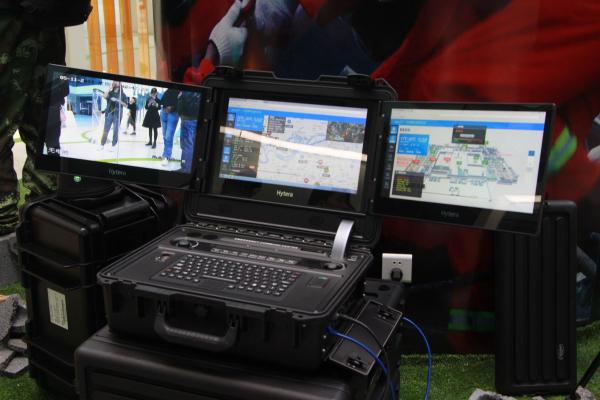
The 86 projects demonstrate that public-private integration has successfully transitioned from concept to implementation. However, success in implementation does not equate to optimal performance—cross-standard interoperability issues such as latency and encryption, stability of edge autonomy, scarcity of frequency resources, and shortage of O&M talents are all real obstacles.
For government and enterprise units considering building or upgrading private network communication systems, here are some practical suggestions: Conduct on-site radio frequency surveys and Requirement analysis (demand analysis) before selecting equipment and solutions; calculate comprehensive costs (initial investment + O&M + annual fees) rather than focusing solely on terminal unit prices; choose suppliers with local service capabilities, as 2-hour fault repair cannot be achieved through remote phone support; leave interfaces for capacity expansion and technological evolution to avoid being locked in after a single investment.
In the Harbin two-way radio procurement market, more and more customers are shifting from "price-based procurement" to "solution-based procurement," conducting surveys first, then developing solutions, and later evaluating long-term O&M costs. Behind this shift is a cognitive upgrade gained through real-world experience and financial investment by enterprises.
The value judgment standard for private network communications is simple: Can instructions be conveyed at critical moments? In the face of disasters and on the production frontlines, this standard outweighs any technical parameters.
Reference Sources:
-
![]()
Sub-$150 Entry-Level Smartphones on the Brink of Vanishing: When Will the Storage Shortage Ease?
-
![]()
September Brings Seismic Shifts to China’s Independent Auto Market: SAIC and Leapmotor Join Elite Ranks, Top 5 Expands to Top 7! Three Firms Report Negative Growth Year-to-Date | Mirror Pro
-
![]()
The Era of Lightweight Integration in Existing Assets Arrives! GAC's Entry into FAW-Toyota Holds Multiple Implications
-
![]()
Observations on the Integration of Public and Private Communication Systems in Heilongjiang's Two-Way Radio Systems: What Changes Are Happening in Private Network Communications Behind 86 Projects
-
![]()
The Truth Behind the Surge in Smartphone Prices: Will the Trend Persist Beyond Autumn?
-
![]()
AITO Auto Sets Sights on European Market Entry by 2027: EU Whole Vehicle Type Approval Process Underway
-
Reflection on the AI Evolution of TCL, Hisense, Skyworth, and Others: How to Trigger High-Frequency User Demand?
-
![]()
[Electric Equipment] Great Wall Heavy Industry’s GT105E All-Electric Wide-Body Truck Makes Its Debut in Hainan Mining Region