Q3 Mobile Phone Market Undergoes Major Shift: Price Increases Pose Daunting Challenges, Huawei and Apple Shine as Top Performers
 10/21 2026
 454
The equilibrium in the mobile phone market has been disrupted.
Recently, market research firm Counterpoint unveiled mobile phone shipment data for the third quarter of this year. In essence, both the global and domestic mobile phone sectors experienced a relatively sluggish performance during this period, with overall shipments declining amid the pressure of escalating storage costs.
Simultaneously, the mobile phone market has witnessed further internal fragmentation. Previously, a handful of leading brands dominated the majority of the market share, maintaining a somewhat balanced landscape.
Nowadays, dominant players like Apple and Huawei are encroaching upon the market share of other brands, intensifying the phenomenon of one brand's gain at another's expense. In other words, the group of five or six leading brands we once knew has now been stratified into 'tiers,' with the gap between the top two and the third, fourth, and fifth places widening rapidly.
Mobile Phone Shipments Plummet, Yet Huawei and Apple Thrive
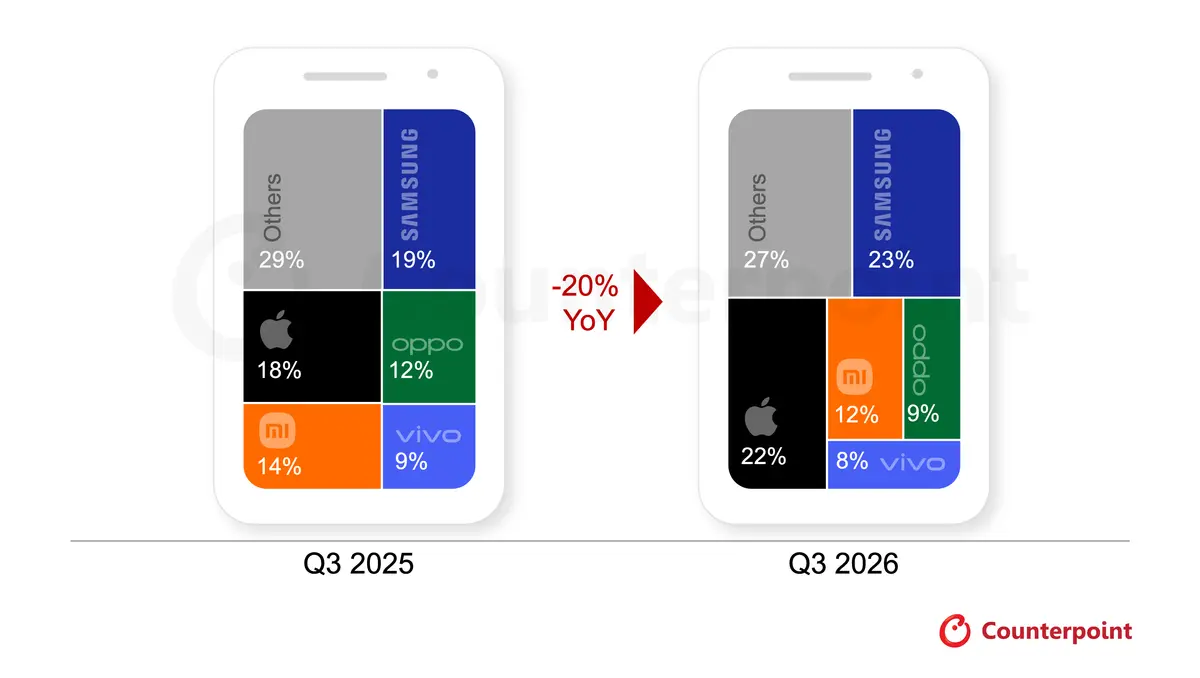
Examining the global data first, Counterpoint's official website release reveals that global mobile phone shipments in the third quarter of this year plummeted by 20% year-on-year, marking the worst third-quarter performance since 2012. Counterpoint attributes this sharp decline primarily to the rampant price hikes in memory and flash storage, which have exerted significant cost pressures on terminal manufacturers. Once this pressure is transferred to consumers, their willingness to purchase new phones naturally diminishes sharply.
The top five brands in Q3 mobile phone shipments remain Samsung, Apple, Xiaomi, OPPO, and vivo, with market shares of 23%, 22%, 12%, 9%, and 8%, respectively. The combined market share of these five brands reached 74%, a 2 percentage point increase compared to Q3 last year. While the five major brands face substantial pressure from rising storage costs, the survival space for smaller 'Others' brands has been further squeezed.
Comparing the data from Q3 2025, it is evident that the market share changes among the five major brands vary. Samsung's market share increased from 19% to 23%, and Apple's share rose from 18% to 22%. However, Xiaomi, OPPO, and vivo all experienced declines in their market shares.
(Image source: Counterpoint)
The overall scenario in the domestic mobile phone market in Q3 is similar, albeit with some variations in specific data. Firstly, overall shipments declined by 10%, which, while certainly not favorable, is still more optimistic than the global market. The 'leading brand effect' is more pronounced in the domestic market, with the combined market share of six brands reaching a staggering 97.3%.
Secondly, Counterpoint identified six major brands: Huawei, Apple, vivo, OPPO, Xiaomi, and Honor, with market shares of 21.3%, 19.5%, 15.2%, 15.1%, 13.5%, and 12.7%, respectively. From this data, it is clear that the secondary fragmentation of leading brands in the domestic market mirrors the global trend, except that the two 'super-leading' brands are now Huawei and Apple, which together command over 40% of the market share.
Compared to Q3 last year, Huawei and Apple both witnessed significant growth in their domestic market shares, while the other four brands experienced declines. Moreover, in Q3 last year, the market shares of the six major brands were relatively close, effectively 'splitting' the domestic market. However, in Q3 this year, the mobile phone industry landscape has shifted towards Huawei and Apple dominance, with the other four brands left with minimal market share.
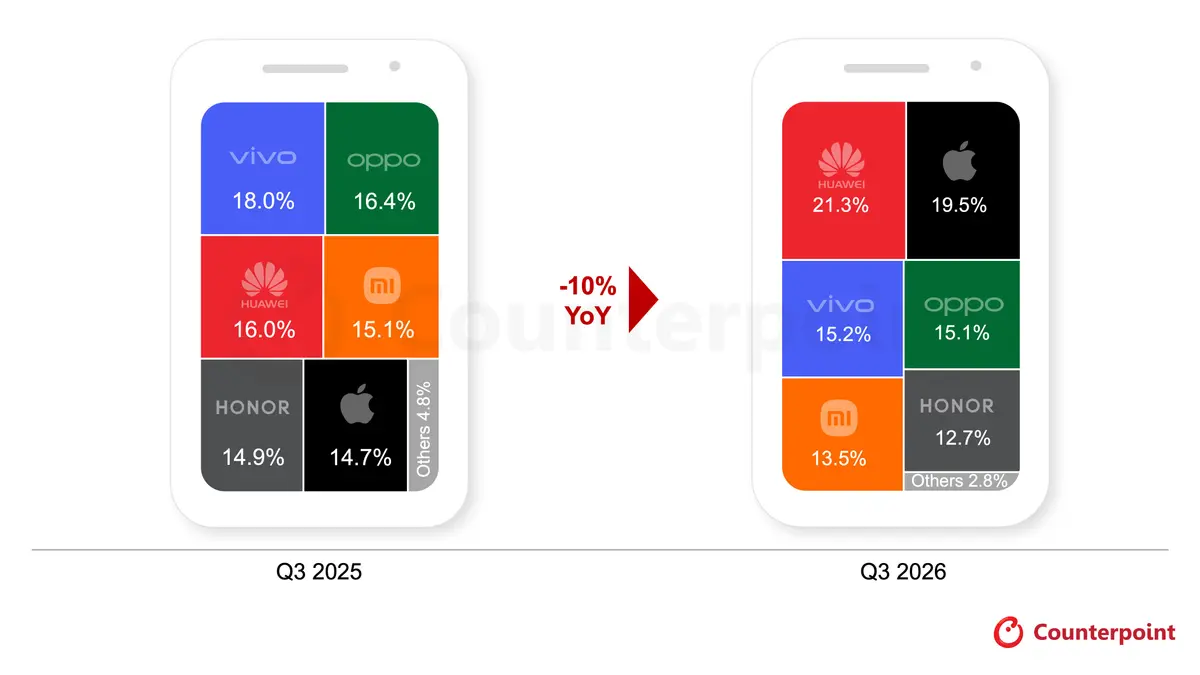
(Image source: Counterpoint)
Overall, the impact of rising storage costs on the mobile phone industry has been profound, with most brands experiencing declines in their market shares. However, super-brands like Huawei and Apple have successfully absorbed much of this pressure and even achieved counter-trend growth in shipments and market share.
Leading Brands Flock to High-End Market, Intensifying Flagship Competition
As we mentioned in a previous article, rising storage costs have the most significant impact on mid-range and low-end phones, which have lower profit margins and target users who are more price-sensitive. Consequently, mobile phone manufacturers have unanimously shifted their focus to high-end products with larger profit margins.
However, the situation of rising storage costs has deteriorated, with prices fluctuating multiple times a month. Moreover, the new generation of flagship chips is also experiencing price hikes. As a result, the cost of flagship phones has surged, with storage accounting for an unprecedentedly high proportion of material costs.
The impact on new flagship models has been catastrophic, compelling manufacturers to adjust their product strategies.
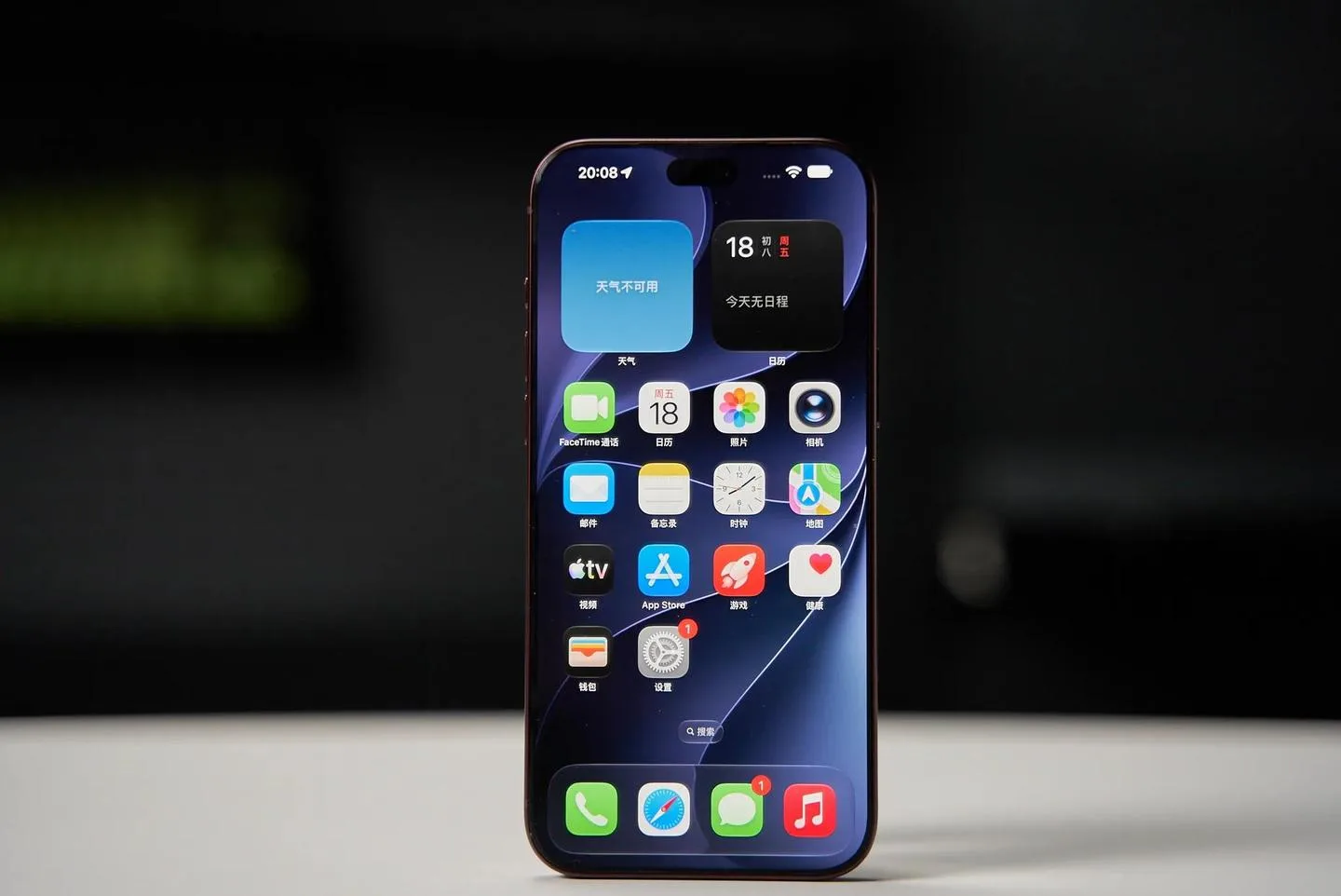
Firstly, the simplest and most direct approach is to raise prices. Nearly all new flagship models have seen price increases this year. The starting price of the iPhone 18 Pro has risen by 1,000 yuan, with the 1TB high-capacity version seeing an increase of 2,500 yuan. Among Android brands, the starting price of the OPPO Find X10 standard version is 1,100 yuan higher than that of the Find X9 standard version at launch. The vivo X500's starting price is also 1,100 yuan more expensive than the X300, while the Xiaomi 17 Pro's starting price is 1,000 yuan higher than its predecessor.
Of course, to minimize the 'pain' of price hikes for users, the increases in starting prices of flagship models have been controlled at around 1,000 yuan. In reality, the price hikes for high-capacity versions like 512GB and 1TB are much more exaggerated, significantly affecting users' willingness to upgrade to these versions.
(Image source: Leitech)
Secondly, manufacturers are adjusting the release pace and product mix of new flagship models in terms of standard, high, and ultra-high versions. It can be observed that nearly all new flagship models released this autumn have undergone changes in this regard. Apple and Xiaomi directly delayed the release of their standard digital versions, initially launching only the Pro models. This is primarily to prioritize the supply of limited storage and other resources to models with higher profit margins. Recently, Apple even planned to cut orders for the iPhone 18 Pro to prioritize production of the iPhone Duo, simply because foldable phones offer higher profits.
Some manufacturers have also introduced new models like 'small cup' versions within their flagship series. For example, the OPPO Find X10 series now includes an X10E model powered by the lower-tier Dimensity 9500s chip. The addition of 'small cup' models serves two purposes: on the one hand, it lowers the starting price of the entire flagship series, weakening the impact of price hikes; on the other hand, these models use older chips, making cost control more manageable.
Before the storage price hike trend, most brands, except Apple, relied on mid-range and low-end models for volume sales. However, now, the storage pressure has forced everyone to engage in fierce competition in the high-end flagship market, where inventory is scarcer and competition is even more intense.
Apple and Huawei's ability to stand out and expand their market advantages is closely tied to their own strengths. They are among the few brands in the mobile phone industry that can independently control their self-developed chips and system ecosystems, giving them a stronger ability to absorb the pressure of rising storage costs. At the same time, their long-term presence in the high-end market has also cultivated stronger user loyalty and product advantages.
According to data disclosed by @RD Observation, a tech blogger who has long followed mobile phone sales, as of October 11, domestic shipments of the iPhone 18 Pro series have exceeded 4.08 million units, less than a month after its official release. In its first week of sales, the iPhone 18 Pro series sold nearly 1.3 million units, 15% more than the iPhone 17 Pro series during the same period last year.
Relatively speaking, Huawei's flagship models are more diverse and fragmented, but individual series have also performed strongly. As of October 11, cumulative sales of the Huawei Pura 90 series have exceeded 1.63 million units, the Mate 90 series has surpassed 430,000 units, and the Huawei Pura X View, released in September, has sold over 550,000 units.
The continuous success in creating best-selling flagship models is key to super-leading brands dominating the market.
Can Double 11 Promotions Revive the Market?
Typically, Double 11 is a crucial period for mobile phone promotions, with many consumers choosing to buy new phones during this time. However, frankly speaking, the discounts offered by manufacturers during this year's Double 11 are not as substantial as before. On the one hand, autumn's new models have just been released, leaving little room for price reductions. On the other hand, the rising storage costs have not yet eased, and some models have already seen price hikes, making it difficult to offer significant discounts under cost pressures.
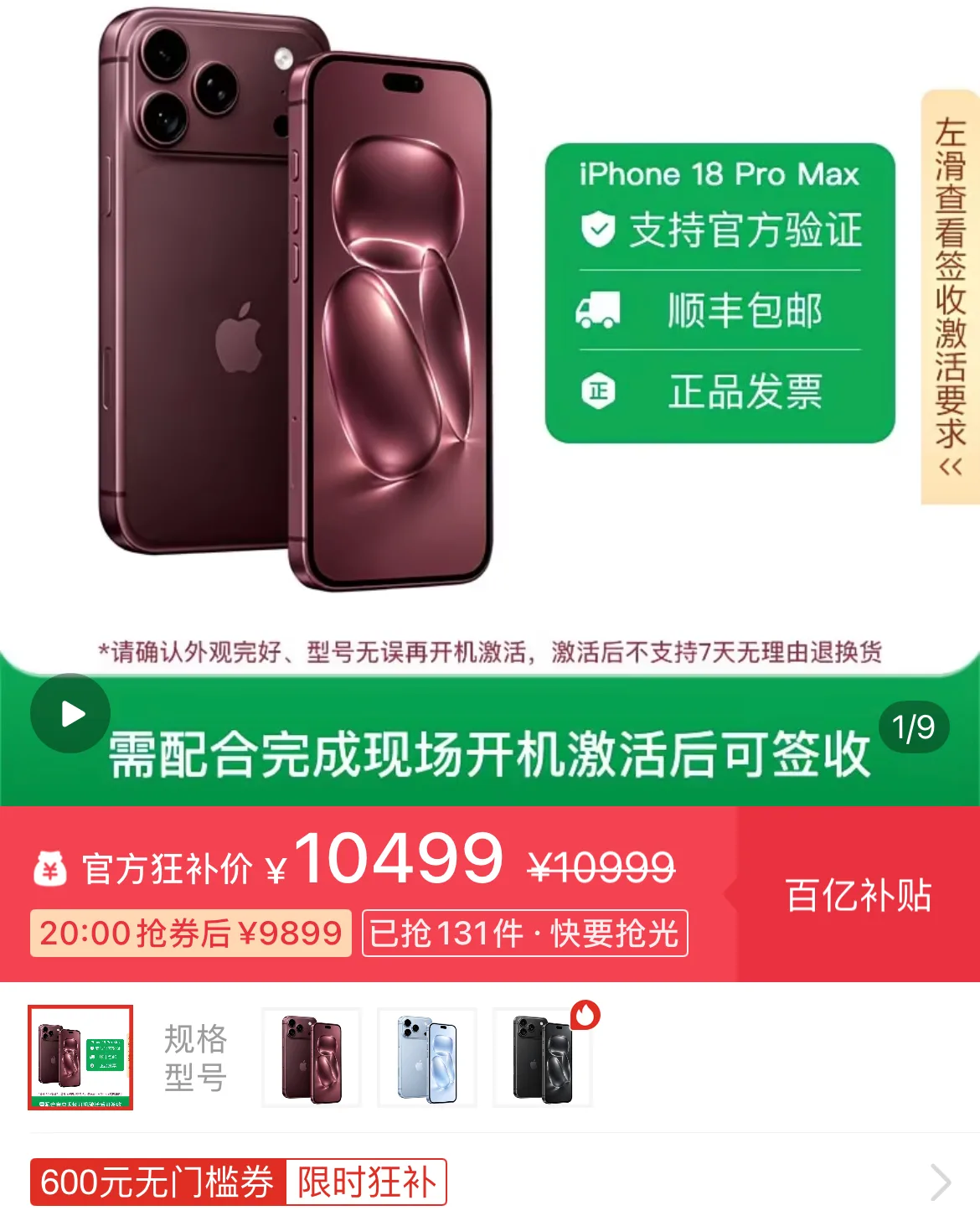
Currently, Double 11 promotions related to mobile phones mainly fall into several categories. Firstly, there are platform subsidies, similar to the 'billion-dollar subsidies,' where e-commerce platforms release coupons that can be used for mobile phone purchases during Double 11. For example, on Pinduoduo, the iPhone 18 Pro Max 256GB version is available for 9,899 yuan after coupons, 1,100 yuan cheaper than the official price. If you plan to buy a new flagship model, you can keep an eye out for such discounts.
(Image source: E-commerce platform)
Secondly, some older models are being discounted for clearance. For example, the Xiaomi 15 standard version is priced at just over 2,000 yuan. While its performance may not match the latest flagship models, it is comparable to mid-range models priced at three to four thousand yuan. OPPO, vivo, Honor, and others also offer similar models. However, when purchasing such phones, pay attention to the sales channel and after-sales service, and try to buy from self-operated or official stores.
For mobile phone manufacturers, the overall sluggishness of the mobile phone market makes it difficult to boost shipments through a single, temporary promotion like Double 11. In the past, Double 11 was a period for manufacturers to boost sales and clear inventory, but now, with the high costs of core components like chips and storage, it is difficult for manufacturers to exchange market share through promotions as they did in previous years.
For the entire mobile phone industry, the chain reaction triggered by rising storage costs is also accelerating the industry reshuffle. In the past few years, several leading brands were able to maintain a relatively balanced situation within their respective comfort zones.
However, with the continuous shrinkage of the overall market, competition among brands has intensified, and fragmentation has occurred. The mobile phone industry has shifted from a multi-power standoff to a situation where a few super-leading brands dominate. As for when this situation will change, it depends on when the current wave of rising storage costs subsides.
Source: Leitech
Images in this article come from: 123RF Royalty-Free Image Library Source: Leitech
-
![]()
Ant Group Sets Sights on AI Financial Agent; Entropy Simple Technology Secures Series C Financing
-
![]()
Deep Blue Aerospace Advances, While Nebula-1 Awaits Its Maiden Flight
-
![]()
Why does the same intelligent driving solution require readjustment when applied to a different vehicle model?
-
AI Revenue Surges 830%! SpaceX's Q3 Revenue Reaches $14.575 Billion, Turning Losses into Profits Year-Over-Year
-
![]()
Yuanbao Search Undergoes a Significant Upgrade! Tencent Keeps Investing in AI Search, But What Are Its Real Intentions?
-
![]()
Preparing for Listing? HiCar Pursues Independent Automobile Manufacturing Qualification, Speeding Up Restructuring Efforts within Harmony Intelligent Travel
-
From 'Separate North and South' to 'Integrated North and South': The 22-Year Transformation of Toyota China's Structure
-
![]()
Q3 Mobile Phone Market Undergoes Major Shift: Price Increases Pose Daunting Challenges, Huawei and Apple Shine as Top Performers