Why does the same intelligent driving solution require readjustment when applied to a different vehicle model?
 10/21 2026
 423
Why might driving performance still differ when the same intelligent driving solution is installed on different vehicle models?
A vehicle may turn smoothly, while another may exhibit steering response deviations; similarly, the same deceleration command may produce different braking sensations across different models.
Such variations do not imply changes in algorithmic capability.
Ultimately, the intelligent driving system controls a real vehicle, not an ideal model in a simulated environment. Changes in vehicle hardware configurations, motion characteristics, and control interfaces can all affect the system's actual performance.
Therefore, the true challenge in reusing an intelligent driving solution across different vehicle models is not whether the software can be installed, but whether the original solution can adapt to new vehicle conditions while maintaining expected driving performance.
01 Why do the same algorithms perform differently across different vehicle models?
The intelligent driving system must translate perception results into driving decisions, which are then executed through the vehicle's steering, braking, and drive systems.
This process involves the coordination of perception, planning, control, and vehicle hardware; changes in any of these areas can affect the final outcome.
First, consider the sensors.
Even if two vehicle models use the same camera model, differences in mounting height, pitch angle, and orientation may exist.
The relationship between the sensor coordinate system and the vehicle coordinate system must be calibrated; otherwise, systematic deviations may occur in information such as target positions and road boundaries.
Multi-sensor fusion also requires addressing spatial relationships and time synchronization between different sensors.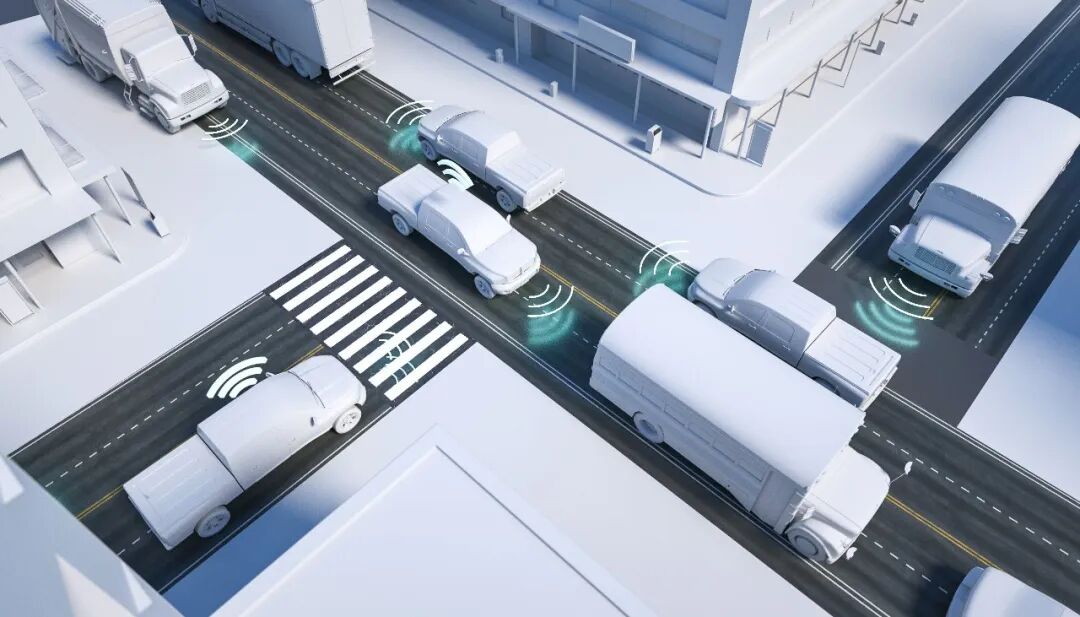
Image source: Internet
Now, consider the vehicle itself.
Differences may exist in wheelbase, vehicle mass, tire characteristics, and steering system response across models. Even if the planning module provides identical target trajectories, the vehicle's actual motion may differ.
For example, if the system intends for the vehicle to follow a curve, the control module must calculate steering commands based on vehicle state.
If the steering system's actual response deviates from the original model, the vehicle may not accurately follow the intended trajectory.
The same applies to longitudinal control, where power response, brake application, and vehicle mass can all affect actual acceleration and deceleration.
This means that the relationship between the algorithm's driving intentions and the vehicle's executed actions is not simply one-to-one.
After migrating the solution to a new model, it is necessary to recalibrate sensor extrinsic parameters, identify vehicle dynamics parameters, adapt control parameters and strategies, and validate their applicability under new vehicle conditions through closed-loop real-vehicle testing.
02 What exactly needs to be adjusted for cross-model adaptation?
Cross-model adaptation of intelligent driving systems requires consideration of three aspects: parameter calibration, system adaptation, and vehicle validation.
Parameter calibration primarily addresses the accuracy of the system's descriptions of the vehicle and sensors, as well as whether actuator characteristics and control parameters match.
For example, sensor mounting parameters, relevant parameters in the vehicle motion model, and certain calibration values in steering and longitudinal control may need recalibration or parameter identification for the new model, with confirmation during subsequent control adaptation and vehicle validation.
System adaptation involves broader tasks.
Different models may adopt varying sensor layouts, computing platforms, and vehicle interfaces; differences may also exist in the definitions of vehicle state signals, the transmission of control commands, and feedback mechanisms.
The development team must confirm whether the original software architecture and interfaces can be directly reused, which modules require modification, and which functions need reintegration.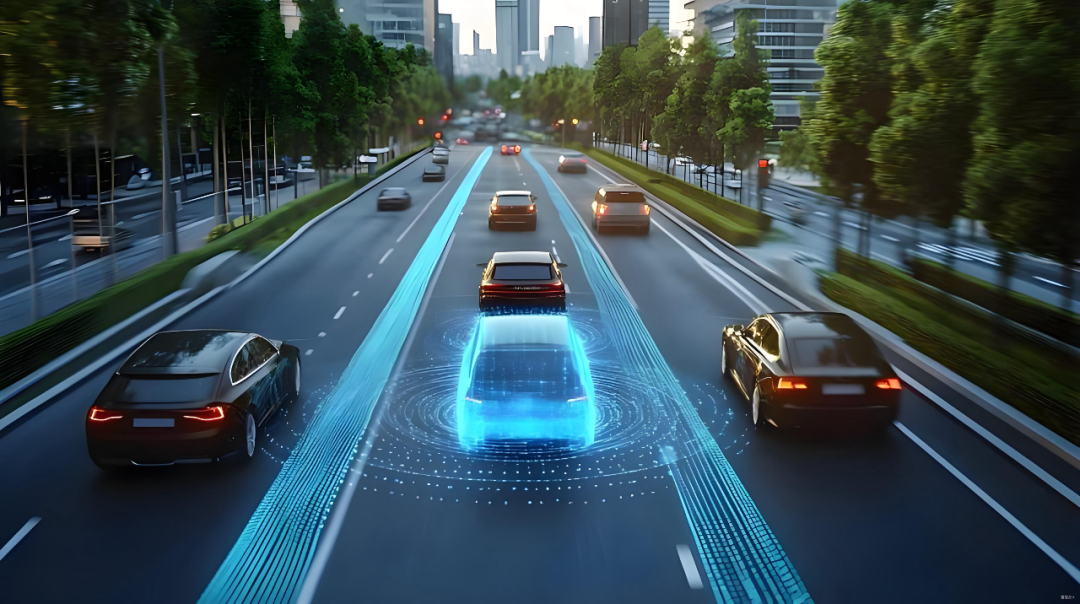
Image source: Internet
Finally, vehicle validation is essential.
Even if sensors are correctly calibrated and control interfaces function properly, this does not guarantee expected performance under all real-world conditions.
The development team must also conduct tests to evaluate trajectory following, steering response, acceleration and deceleration performance, and system behavior under different speeds and road conditions.
These three tasks are interconnected but cannot replace one another.
Calibration ensures parameter accuracy, system adaptation ensures software compatibility with the vehicle, and vehicle validation confirms that the entire system meets requirements on the target model.
Of course, not every model change necessitates complete redevelopment of all modules, nor does it require retraining the entire intelligent driving model.
If model platforms, sensor configurations, and control interfaces are similar, existing software, models, and parameters may be largely reused; greater differences typically require more adaptation and validation work.
03 Why do automakers participate in joint tuning of intelligent driving solutions?
The importance of model adaptation is also evident in the collaboration between intelligent driving suppliers and automakers.
In September 2026, Dongfeng Peugeot Citroen Automobile Company Ltd and Momenta announced a global strategic partnership.
Public information from both parties mentioned adapting core parameters such as steering, braking, and power response by combining Vehicle R&D (vehicle R&D) and chassis tuning capabilities, with joint development tailored to the characteristics of models from brands like Peugeot and Jeep.
The key takeaway from this case is not the specific algorithms used but the issues that automakers and intelligent driving technology suppliers must address together.
The driving decisions of the intelligent driving system must ultimately be realized through the chassis and actuators of specific models; vehicle motion characteristics and brand-specific driving experience requirements can all influence system adaptation.
For automakers, intelligent driving functions must not only operate but also coordinate with the vehicle's power, steering, braking, and other control systems.
For intelligent driving suppliers, solution reusability cannot be judged solely by software deployment speed but also by its ability to adapt, validate, and deliver under different hardware and vehicle conditions.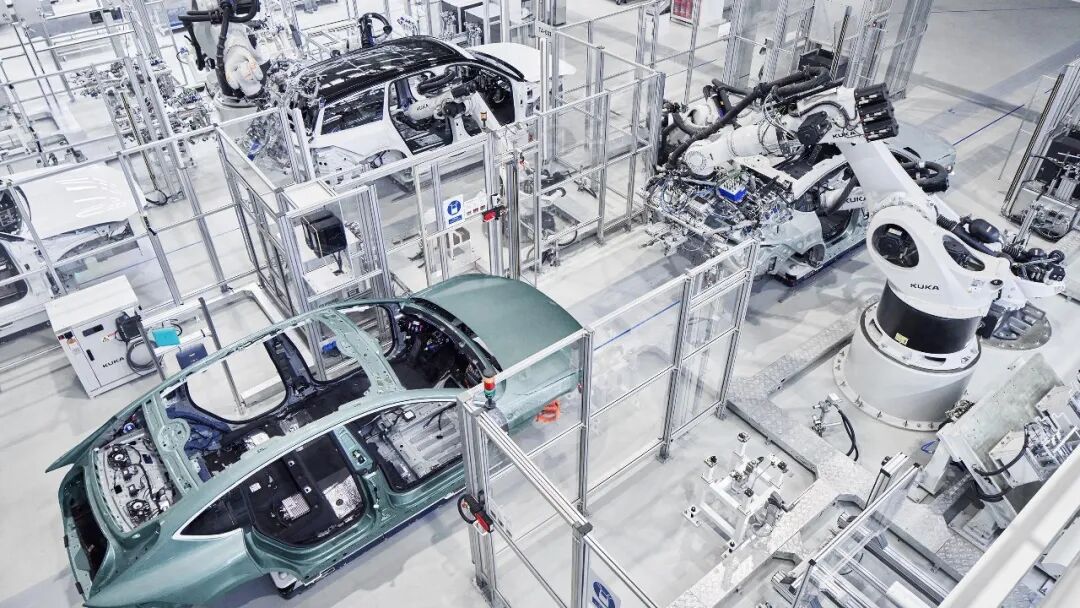
Image source: Internet
This highlights the value of platform-based development, which aims to unify reusable software architectures, toolchains, and interfaces as much as possible, reducing the need for Developing from scratch ( Developing from scratch ) for each model while preserving necessary adaptation space for different models.
Horizon Robotics' publicly disclosed solutions also emphasize supporting the development, validation, and deployment of different models and partners through standardized computing platforms, toolchains, and sensor schemes.
However, platform-based development does not mean using identical parameters for all models, nor does it imply that a single validation can cover all models.
The more reusable components exist, the greater the potential for efficiency in cross-model development; nevertheless, identifying, adapting, and validating vehicle differences remains an indispensable step in mass production development.
Expanding from one model to more models tests not only the intelligent driving algorithm itself but also the portability of the entire technical solution.
A truly mature mass production solution must enable the reuse of core capabilities while allowing the system to correctly interpret vehicle states, accurately execute driving commands, and confirm actual performance through vehicle validation across different models.
The reuse of intelligent driving solutions does not aim to make different models identical but to enable the same technology to adapt to their differences. #AutonomousDriving #IntelligentDrivingSystemReuse
-
![]()
Ant Group Sets Sights on AI Financial Agent; Entropy Simple Technology Secures Series C Financing
-
![]()
Deep Blue Aerospace Advances, While Nebula-1 Awaits Its Maiden Flight
-
![]()
Why does the same intelligent driving solution require readjustment when applied to a different vehicle model?
-
AI Revenue Surges 830%! SpaceX's Q3 Revenue Reaches $14.575 Billion, Turning Losses into Profits Year-Over-Year
-
![]()
Yuanbao Search Undergoes a Significant Upgrade! Tencent Keeps Investing in AI Search, But What Are Its Real Intentions?
-
![]()
Preparing for Listing? HiCar Pursues Independent Automobile Manufacturing Qualification, Speeding Up Restructuring Efforts within Harmony Intelligent Travel
-
From 'Separate North and South' to 'Integrated North and South': The 22-Year Transformation of Toyota China's Structure
-
![]()
Q3 Mobile Phone Market Undergoes Major Shift: Price Increases Pose Daunting Challenges, Huawei and Apple Shine as Top Performers