iPhone Duo Hits the Shelves! Shorter Lines, Steady Prices: A Luxury Gadget for Affluent Apple Aficionados?
 10/26 2026
 554
The 'LV' of smartphones has made its debut.
On October 23rd, Apple unveiled its inaugural foldable smartphone, the iPhone Duo, to the market.
As one of Apple's most eagerly awaited new products in recent memory, the iPhone Duo has garnered significant attention from users since its initial reveal. After all, with competitors like Samsung, Huawei, and Honor already having released multiple generations of foldable phones, Apple has finally stepped into the ring in 2026.
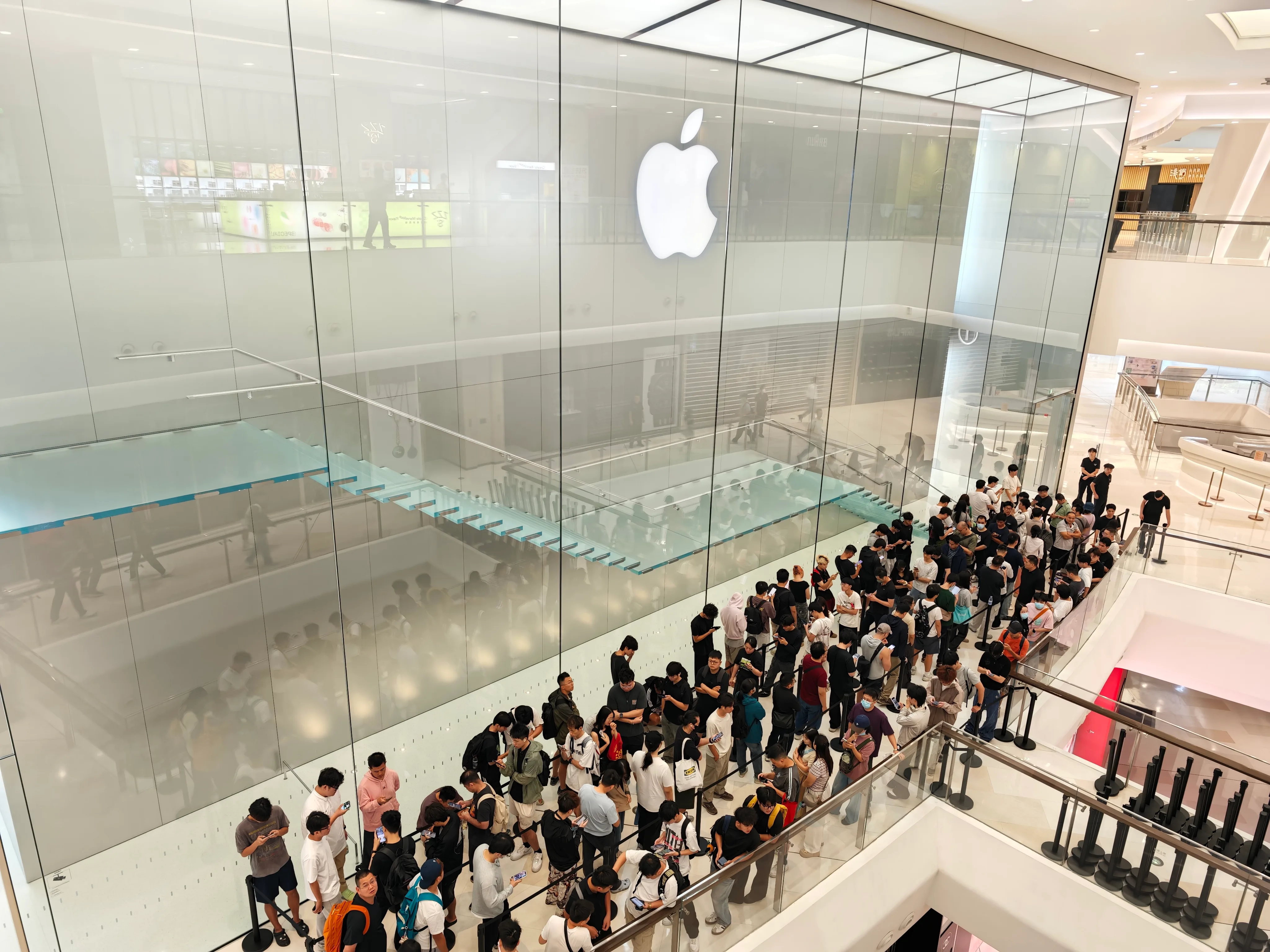
At 7:30 AM, Leitech (ID: leitech) arrived at the Guangzhou Tianhuan Apple Store. Much like last month's iPhone 18 series launch, although the store doors were yet to open, a substantial crowd of users who had pre-ordered for in-store pickup, along with scalpers eager to snap up new devices, had already gathered. However, in contrast to the lively atmosphere during the first sale of the iPhone 18 Pro series last month, the iPhone Duo's debut was notably more subdued.
(Image Source: Leitech)
Half the Crowd: Is the iPhone Duo's Launch Facing a Cool Reception?
A cursory glance revealed that the number of people queuing outside the store this time was less than half of last month's turnout, and the presence of scalpers had also dwindled significantly. While many still arrived early to collect their pre-ordered devices, the overcrowding witnessed last month was nowhere to be seen.
Of course, it would be premature to conclude that the iPhone Duo is floundering based solely on the queue length. Firstly, the iPhone Duo's positioning is starkly different from that of regular iPhones. As Apple's first foray into foldable phones, its price tag is considerably higher than that of the iPhone 18 Pro series, thus limiting its potential user base. Even some editors within the Leitech team, who are avid Apple followers, are hesitant to splurge on this new device.
Secondly, this marks Apple's inaugural venture into the foldable phone arena, and concerns linger regarding the product's durability, the visibility of creases, and the overall hand feel, all of which require further validation. Rather than rushing to place orders, many users may opt to test the device first at offline stores or await genuine feedback from the initial batch of users before making a purchase decision.
Moreover, the foldable phone market is no longer devoid of mature offerings, and Apple's entry is somewhat tardy. While Apple boasts strong brand appeal, for users already acquainted with foldable phones, whether the iPhone Duo offers substantial advantages may only become apparent after hands-on experience.

(Image Source: Leitech)
In light of this, it's unsurprising that the on-site turnout is significantly lower than last month. After all, regular iPhones cater to a much broader audience, whereas users willing to shell out a premium for a foldable iPhone at the earliest opportunity represent only a niche segment.
However, despite the reduced queue length, market enthusiasm for the iPhone Duo remains intact, particularly in the scalper market, where the product still commands a certain premium.
Up to 3,800 Yuan Markup? Scalpers Might Be Taking a Hit This Time
Scalpers are a familiar sight at iPhone launches. Especially in the initial days following a new iPhone's release, popular colors and high-capacity versions often command varying degrees of price premiums. Many users even pre-order new devices with the sole intent of reselling them immediately to profit from the price differential.
Although the number of scalpers on-site is much lower than last month, after scouting around outside the store, I still gained insights into the current market scenario for the iPhone Duo. According to morning quotes from several scalpers, the 512GB version generally requires a markup of 2,000 to 2,500 yuan, while the 1TB version's premium hovers around 3,000 yuan.
However, the iPhone Duo market evolved faster than anticipated. By 3 PM, the premium for the 512GB version had plummeted to around 1,000 yuan, and some scalpers had even ceased acquiring the 256GB version. In just a few hours, the premium for popular versions had more than halved, meaning scalpers who had stockpiled at high prices days earlier are likely facing losses this time around.
At first glance, these prices may seem exorbitant. After all, reselling a phone for a profit of two to three thousand yuan equates to half a month's expenses for most users. However, considering the market dynamics in the preceding days, I believe scalpers may not be faring as well as everyone assumes.

(Image Source: Leitech)
From what I've gathered, before the official sale of the iPhone Duo, many scalpers had already started acquiring pre-order slots at inflated prices, with some even purchasing the 256GB version at a markup of 3,800 yuan. Bear in mind, this is only the lowest-capacity version. Based on market expectations at the time, some scalpers clearly believed that the iPhone Duo's price would surge further post-release, justifying their high acquisition costs.
Besides scalpers, numerous ordinary consumers who had pre-ordered the iPhone Duo were also present, hoping to capitalize on the launch. I learned that the earliest users planning to resell had psychological expectations of markups exceeding 3,000 yuan. Some even stated bluntly that if the markup was only one to two thousand yuan, they would rather keep the device for themselves. After all, having secured the first batch of stock, they naturally hoped to sell at a lucrative price.
However, when it came time to trade, the reality differed from their expectations. As more people inquired about prices on-site, the acquisition prices offered by scalpers were not as high as anticipated. Users who had initially insisted on a markup of over 3,000 yuan eventually sold their phones at premiums of less than 2,000 yuan. Those who had hoped to earn four to five thousand yuan effortlessly from the iPhone Duo found that being able to sell at a markup of one to two thousand yuan on the first day was already a decent outcome.
For scalpers who had acquired stock at high prices earlier, the situation is precarious. Especially for those who had purchased the 256GB version at a 3,800 yuan markup, there are now fewer scalpers willing to continue acquiring stock, making it difficult even to sell these devices at cost, let alone turn a profit.

(Image Source: Leitech)
Given that different scalpers have varying acquisition channels, costs, and actual transaction prices, it's challenging to pinpoint exactly how much they've lost. However, based on the current market scenario, the iPhone Duo has not become the "money-making machine" that scalpers had envisioned.
This reminds me of the situation during last month's iPhone 18 series launch. Although scalpers also marked up prices then, due to the more stable demand for regular iPhones, popular versions often found buyers quickly. The scenario with the iPhone Duo is different; before its release, the market had high expectations for Apple's first foldable phone, but prices started to soften as soon as it went on sale.
For users who originally intended to purchase the device, waiting might be a prudent strategy.
Die-Hard Affluent Apple Fans: The Target Audience for the iPhone Duo
Before the official release of the iPhone Duo, I was curious about who Apple's first foldable phone would appeal to.
After all, foldable phones are not a novelty in the domestic market. Domestic foldable phones have matured considerably, with many users already relying on them as their primary devices. Apple's entry at this juncture feels somewhat delayed.
However, Apple also possesses an advantage that other manufacturers find challenging to replicate: its vast iPhone user base. Over the past few years, many friends around me have shown interest in foldable phones but ultimately decided against switching because they were already entrenched in the Apple ecosystem, using iPhones, Apple Watches, and MacBooks. Switching to Android would necessitate readjusting to device interoperability, data synchronization, and certain app experiences. Now that the iPhone Duo is officially available, these users finally have an option to remain within the Apple fold.
Moreover, for users who have been using multiple generations of iPhones, the novelty offered by the iPhone Duo is more pronounced than regular upgrades.
In recent years, while iPhones have continued to improve in terms of performance, imaging, and screens, their form factor has remained largely unchanged. Even upgrading from an iPhone 15 Pro Max to an iPhone 18 Pro Max offers little difference in daily experience. In contrast, the iPhone Duo enables users to experience two distinct screen forms on a single device, which holds a certain allure for users accustomed to traditional iPhones.
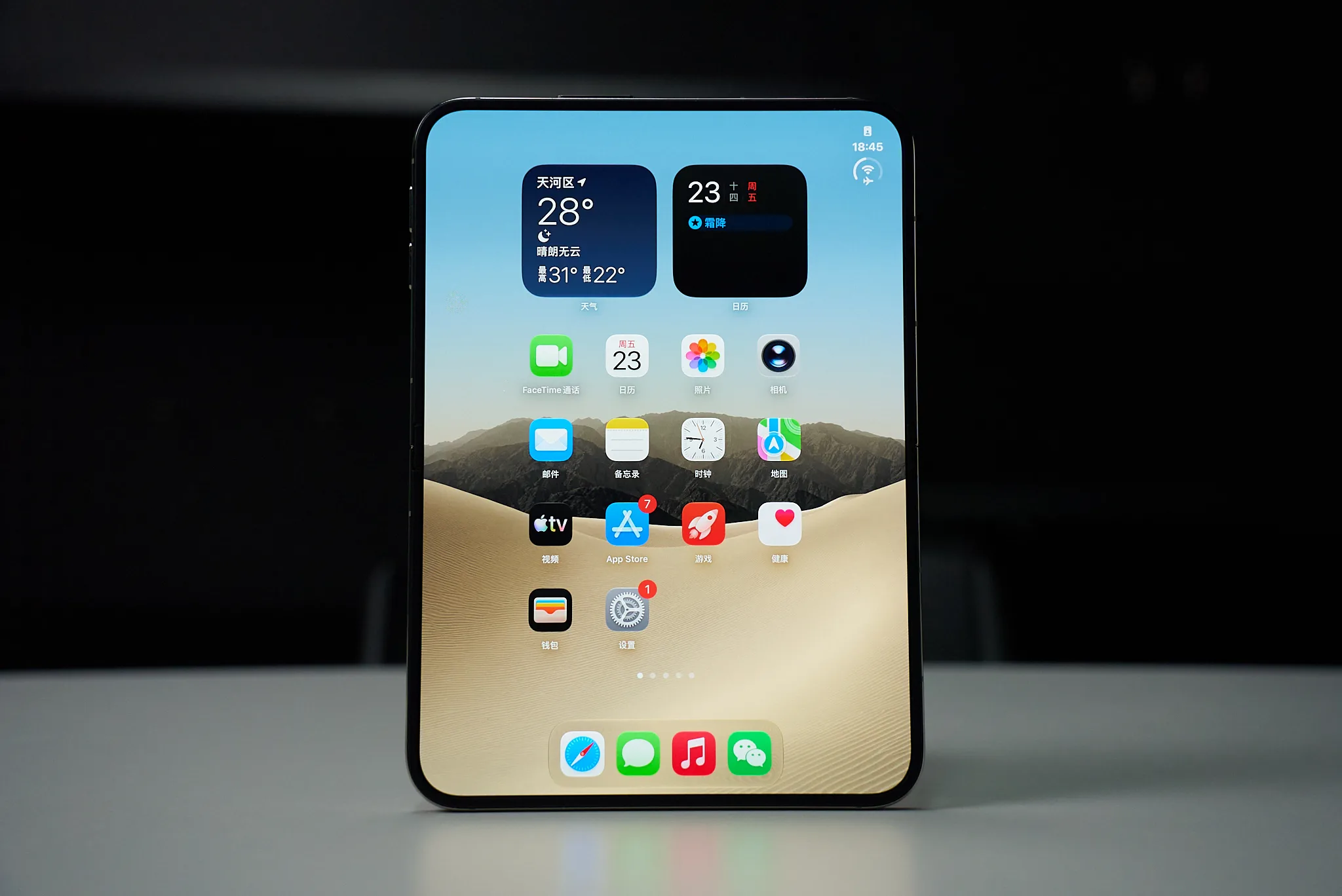
Especially for affluent Apple fans, they are likely to purchase an iPhone Duo, even if not as their primary device, simply for its "status symbol" value. Firstly, the iPhone Duo is highly recognizable, unlike recent iPhones where the release year is hard to discern, diminishing their status symbol value over time. Secondly, with a starting price of 15,999 yuan (for the Chinese version), comparable to LV, the iPhone Duo can be considered the "LV of smartphones," offering both functional and emotional value, making it an electronic luxury item. Its "status symbol" value alone will lead many to choose it, and it will also circulate in the gift market.
(Image Source: Leitech)
I've previously tested numerous foldable phones, and my biggest takeaway is that while large screens are convenient, they're not indispensable in all scenarios. For instance, when reading e-books, browsing the web, or processing documents, the expanded display area offers a significant boost. However, for simply replying to WeChat messages, watching short videos, or taking a few photos, the external screen is often sufficient. For some users, they might unfold their device multiple times a day when they first buy it, but once the novelty wears off, how many usage scenarios truly leverage the advantages of the inner screen becomes worth considering.
Moreover, Apple is entering a fiercely competitive market. After years of iteration, domestic foldable phones no longer focus solely on making devices thinner or reducing crease visibility; imaging, battery life, lightweight design, and large-screen interactions have become key competition points. For iPhone users who haven't experienced foldable phones before, the iPhone Duo may offer enough novelty, but for consumers who have already used several generations of foldable phones, Apple needs to present more competitive advantages.
Looking back at Apple's past product strategies, whether with the Apple Watch or AirPods, Apple was not the first to enter these markets but still established its dominance through subsequent product iterations and ecosystem integration. Whether the iPhone Duo can replicate this path remains to be seen, but Apple clearly has sufficient resources to continue refining this product line.
As for market acceptance, I believe there may be significant differentiation in the short term. For users who have long wanted to experience foldable phones but were reluctant to leave the Apple ecosystem, the iPhone Duo holds considerable appeal. However, for those accustomed to the Pro series who don't have many use cases for a large screen, there doesn't seem to be a compelling reason to switch yet.
After all, foldable phones have evolved over the years, and consumers are no longer willing to pay a premium simply because a phone can fold. While Apple has finally hopped on this bandwagon, convincing more ordinary iPhone users to switch to foldable phones will likely not be an easy feat.
Source: Leitech
Images in this article are from the 123RF licensed image library. Source: Leitech
-
![]()
Another 2,500 Jobs Axed! Luxury Car Giant Volvo Slashes 5,000 Positions in a Year, Anticipates Challenging Two Years Ahead in China
-
![]()
Market Value Plummets by Over 100 Billion Yuan from Peak: What Ails Insta360?
-
![]()
Is the Audi A8 to Be Manufactured by Huawei? Traditional Automakers Face Hurdles in Transitioning to New Energy, Self-Sufficiency More Vital Than External Support
-
![]()
Kimi K3.1 Pro Model Unveiled: Featuring 3 Trillion-Level Parameters and Supporting a 1 Million-Token Context
-
In Q3 2026, Global Mobile Phone Sales Plummet by 70 Million Units, Valued at 300 Billion Yuan: Who's to Blame?
-
![]()
iPhone Duo Hits the Shelves! Shorter Lines, Steady Prices: A Luxury Gadget for Affluent Apple Aficionados?
-
AI’s Secret Struggle in the Double 11 Shopping Carts
-
![]()
How Well Are Apps Adapting to the iPhone Duo? Our Tests on 10 Car Apps Reveal Surprising Results