Insta360's Q3 Report: Expansion Continues Amid Dual Pressures on Cash Flow and Financing
 10/29 2026
 487

By: Hou Yu
Edited by: Sun Congying
Just a week ago, Insta360 (688775.SH) made headlines as its stock price rebounded, sparking expectations among investors and institutions for its Q3 2026 performance. On the evening of October 27, the company officially released its Q3 report.
Following the financial disclosure, market sentiment shifted: while revenue continued to surge, profits and cash flow weakened, failing to meet heightened expectations.
Revenue performance remained impressive, with Q1-Q3 2026 revenue (RMB 9.436 billion) nearly matching last year's full-year total (RMB 9.74 billion). Undoubtedly, Insta360 remains a leading player in the global handheld smart imaging sector.
However, the profit and loss statement and cash flow statement painted a different picture: net profit attributable to shareholders plunged year-on-year, and operating cash flow turned negative, declining sharply.
As revenue rose, financial strain intensified. Where did the money go, and how will the company bridge the gap?
Revenue Surges Amid Profit and Cash Flow Pressures
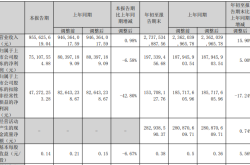
Profit contraction was significant. Q3 2026 net profit attributable to shareholders was RMB 17.43 million, down 93.59% YoY; Q1-Q3 net profit was RMB 47.84 million, compared to RMB 790 million in the same period last year, with total profits turning to -RMB 210 million.

Figure: Q3 2023 earnings report screenshot.
The company explained the profit decline in its Q3 report: primarily due to proactive increases in strategic R&D investment and market expansion, leading to higher expenses, along with rising storage component costs and intensified competition in the imaging industry, which reduced gross margins.
The core cost pressure came from inventory. Cash spent on procurement and contract manufacturing reached RMB 11.093 billion in Q1-Q3, compared to just RMB 3.985 billion in the same period last year.
Finished goods inventory also surged: as of end-September, inventory balance reached RMB 7.154 billion, up ~145% from RMB 2.919 billion at the start of the year.
This means significant working capital was tied up in warehouse materials and goods, yet to be converted into cash through sales during the reporting period.
The company attributed this to proactive strategy: amid high storage chip prices, it locked in core component supplies and increased new product stockpiles to secure supply chain safety, expecting this inventory to support future operations.
From a supply chain security perspective, this strategy is reasonable. Locking in prices and volumes during a price hike cycle is not unreasonable.
However, terminal product prices remained weak. Take the Luna series, which features Leica-co-developed imaging tuning and detachable screens, offering unique Picture quality (image quality) and shooting modes.
Despite this, its terminal price continued to decline post-launch, facing direct competition from DJI's gimbal models in the same price tier, with significant pricing pressure.
Additionally, as initial product hype faded, channel discounts persisted to drive sales and consolidate (consolidate) market share, further pressuring terminal prices.
Thus, the rationale for stockpiling becomes clear, but the costs are notable: substantial operating cash was converted into inventory, temporarily weakening the company's self-generated cash flow from operations.
While raw material price hikes posed external pressures, another portion of profit pressure stemmed from the company's proactive increases in R&D and marketing investments for long-term growth.
Q1-Q3 R&D spending reached RMB 1.675 billion, up 54.29% YoY, accounting for nearly 18% of revenue; selling expenses rose to RMB 1.617 billion from RMB 1.130 billion.
These investments aim to solidify long-term technological moats, capture market share, and support emerging product categories still in their infancy.
Based on public data, Q1-Q3 combined gross margin was ~38.2%, down from ~49.7% YoY, a decline of over 11 percentage points in a year; operating costs reached RMB 5.830 billion, up ~77% from RMB 3.330 billion YoY. Thus, cost growth significantly outpaced revenue and gross profit growth. Rising costs, coupled with sustained strategic investments, narrowed profit margins.
Meanwhile, new products like panoramic drones are still in the market cultivation phase, with upfront investments yet to achieve scale, temporarily dragging on current profits.
While the profit and loss statement reflects book profitability, the cash flow statement more directly illustrates corporate fund flow dynamics.
Q1-Q3 net cash flow from operating activities was -RMB 4.264 billion, compared to +RMB 930 million YoY; the first half saw -RMB 2.761 billion, with weakness persisting into Q3.
Cash flow is a core indicator of a company's endogenous operating capacity. Combining multiple financial metrics, the multiple (multiple) profit pressures in the current development stage have led to sustained cash consumption by the core business.

Figure: Insta360's largest flagship store (Shenzhen).
Multi-Channel Financing Supports Stage-Specific Development
For any company, when operating cash flow is insufficient for turnover, external financing becomes inevitable.
A notable detail in Insta360's financials: Q1-Q3 financial expenses were RMB 135 million, compared to just RMB 11.43 million YoY, with interest expenses surging to RMB 63.826 million from RMB 1.191 million.
Though small in absolute terms, this indicates Insta360's reliance on debt to sustain operations.
Reviewing announcements over the past six months confirms this judgment. In Q1-Q3 2026, Insta360's financing pace was "intense":
· In April, the company applied for a RMB 6.5 billion comprehensive credit line for 2026.
· In July, the board approved a proposal to issue up to RMB 2 billion in Technology Innovation Bond (science and technology innovation bonds).
· A month later, in late August, the board approved an additional RMB 5.5 billion, raising the total to RMB 12 billion.
· By mid-October, the prospectus disclosed plans to use up to RMB 700 million to repay interest-bearing liabilities.
In just six months, credit lines nearly doubled, and bond financing progressed simultaneously.
Such dense (intense) financing activities clearly signal the company's urgent need for working capital.
Of course, the bonds are still in the registration and issuance phase, with funds not yet received. The actual borrowed funds mainly came from banks. Q1-Q3 "cash received from borrowings" was RMB 3.704 billion, compared to just RMB 73 million YoY.
Reflected in the balance sheet, short-term borrowings surged to RMB 1.622 billion from RMB 123 million at the start of the year, while long-term borrowings rose from zero to RMB 1.905 billion. Combined with RMB 1.405 billion from investment proceeds, Q1-Q3 net cash inflows from financing activities totaled RMB 5.109 billion, with net financing cash flow of RMB 4.664 billion. Total liabilities rose from RMB 5.286 billion at the start of the year to RMB 10.545 billion, nearly doubling.
Combining these financial metrics, the company's current liquidity is partially supported by new borrowings and redemptions of wealth management products. Comparing operating and financing cash flows, the net financing inflow of RMB 4.664 billion largely covers the RMB 4.264 billion net operating outflow, indicating high reliance on external financing for current operations, with the core business yet to establish a sustained positive cash cycle.
Notably, the financing structure remains under pressure.
Most funds raised are debt-based, with RMB 1.622 billion in short-term borrowings due within a year; the RMB 12 billion bank credit line is only a ceiling, with funds not yet disbursed, and the RMB 2 billion sci-tech bond still under issuance. While financing channels are expanding, significant inventory continues to tie up funds, with financial pressure not yet significantly alleviated.
Market Influence Remains Strong, Expansion Enters Cautious Phase
Returning to the original question: how should this Q3 report be evaluated?
On the positive side, the core business remains intact. Amid slowing growth for many tech hardware firms, a 42.73% revenue increase strongly validates the global market acceptance of Insta360's products, with overseas operations and channel systems demonstrating resilience.
New categories like panoramic drones and AI imaging ecosystems are still in the investment phase, but the second growth curve is advancing.
These strategic reserves of core components serve dual functions: cost locking and supply chain security.
In other words, the company shows no signs of decline; rather, it appears to be making a strategic choice: sacrificing short-term profits and cash flow for long-term technological reserves and market share.
However, short-term pressures are real. Negative operating cash flow and reliance on short-term debt mean every marketing campaign, new product stockpile, and channel expansion must proceed under tight financial constraints.
Inventory impairment risks are not distant concerns. Q1-Q3 asset impairment losses were RMB 123 million, compared to just RMB 43.326 million YoY; as long as high-cost inventory remains, gross margins will struggle to recover, and inventory-related profit pressures will persist.
Overall, Insta360 is encountering a temporary bottleneck. Undeniably, after over a decade of development, its flagship products lead the global panoramic camera market, with overseas channels and brand recognition delivering consistent revenue growth.
However, profit pressures are mounting, and expansion is increasingly constrained by funding conditions.
In the short term, both profitability and cash gaps are unlikely to narrow quickly. The medium-term outlook hinges on three factors: when storage chip prices decline, when new categories achieve scale effects, and whether the RMB 2 billion sci-tech bond is successfully issued.
This Q3 report does not indicate a fundamental deterioration in fundamentals. Rather, it reflects the temporary growing pains of a company still expanding amid concentrated strategic investments.
Only by observing the evolution of these variables over time can we gradually discern the contours of the company's long-term growth potential, awaiting Insta360's subsequent growth answers.
References:
Insta360 Q3 Report:
https://static.sse.com.cn/disclosure/listedinfo/announcement/c/new/2026-10-28/688775_20261028_69XU.pdf
SSE Feedback on Insta360's Sci-Tech Bond Application:
https://static.sse.com.cn/bond/bridge2/disclosure/announcement/c/202609/00d7e0_20260914_0731.pdf
2026 Public Issuance Prospectus for Science and Technology Innovation Corporate Bonds:
http://static.sse.com.cn/bond/bridge2/disclosure/announcement/c/202610/00d7e0_20261014_E71A.pdf
-
![]()
Blogger Exposes iPhone Air 2 Specifications: Equipped with 2nm A20 Chip, Adds Ultra-Wide Lens
-
Insta360's Q3 Report: Expansion Continues Amid Dual Pressures on Cash Flow and Financing
-
![]()
Ofilm's Patent for Eight-Lens Variable Aperture Granted!
-
![]()
Q3 Net Profit Excluding Non-recurring Gains and Losses Plummets by 42.8%! Yutong Optics' Profitability Quality Alarm Sounds
-
![]()
Google Cloud Revenue Doubles, Why Did the Stock Price Still Drop?
-
Will the New Li Auto i6 Sustain the Triumph of Its Predecessor?
-
![]()
Fuyao Glass Reports 14.97% Drop in Net Profit to 6.006 Billion Yuan for First Three Quarters, While Dimming Glass Yield Soars from 10% to 90%
-
![]()
GPS is Vulnerable to Interference, This Startup Aims to Provide a Centimeter-Level Alternative with 258 Satellites