Luo Yonghao Publicly Takes Aim at Dongfang Zhenxuan
 09/28 2026
 464
464

Luo Yonghao has once again found himself at the center of online buzz, with a recent product mishap in the realm of livestream e-commerce thrusting Dongfang Zhenxuan into the spotlight.
Late in September, a consumer took to social media with a disassembly video, unveiling yet another flaw in the livestream e-commerce landscape.
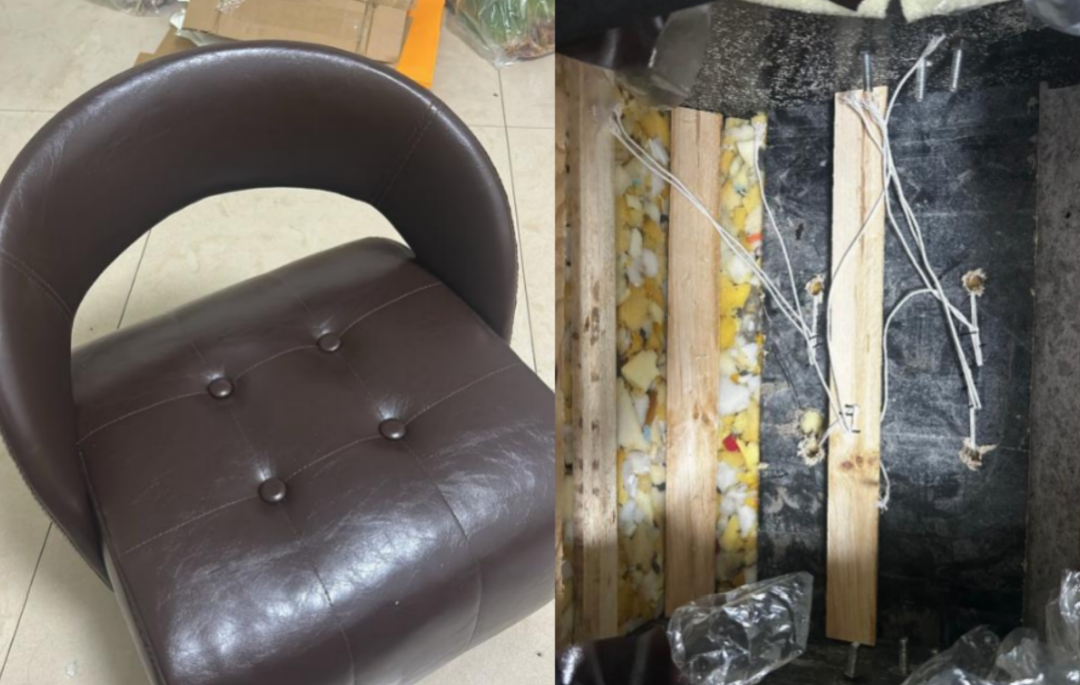
The video revealed that a "swivel stool with wheels," priced at 89.9 yuan during a livestream sale, was found to contain moldy wood and discarded sponge within its casing, emitting a strong, unpleasant odor. The video swiftly amassed over 100,000 likes.
While the incident itself may not have been extraordinary, it was Luo Yonghao's response that truly ignited public outrage.
On September 25, Luo took to Weibo with a lengthy statement, directly addressing the swivel stool incident. He acknowledged it as a "serious quality management accident" and admitted negligence on the part of his operations team.
However, Luo didn't stop there. He shifted his critique towards Dongfang Zhenxuan.
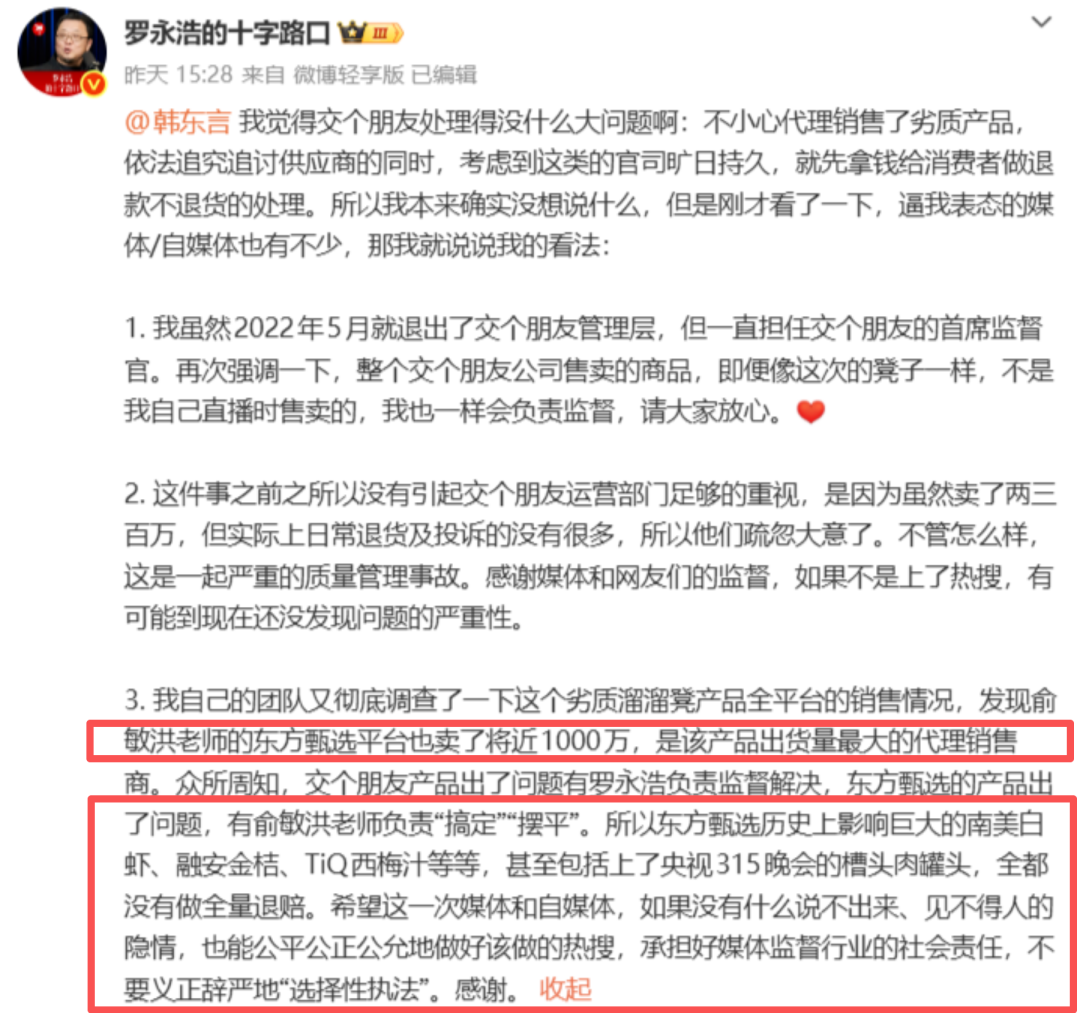
Luo revealed that his team had conducted a thorough investigation into the product's sales across all platforms and discovered that Yu Minhong's Dongfang Zhenxuan had sold nearly 10 million yuan worth of the stools, making it the largest reseller.
He also brought up past issues involving Dongfang Zhenxuan, including problems with South American white shrimp, Rong'an kumquats, TiQ prune juice, and even the Goutou Meat (a type of meat product) that was featured on CCTV's 315 Gala—none of which, he claimed, had been fully refunded or compensated.
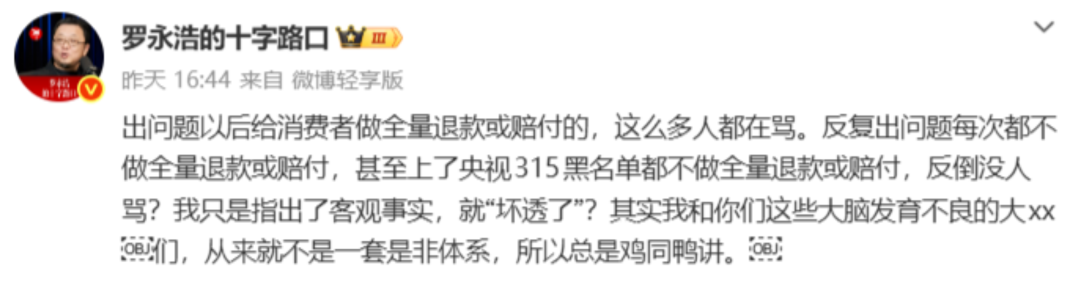
In essence, Luo's message could be paraphrased as: "I sold a faulty product, offered refunds without returns, and admitted fault. Your Dongfang Zhenxuan also sold it—and was the biggest seller—so why isn't anyone holding you accountable?"
This isn't the first time Luo Yonghao has publicly criticized Yu Minhong.
Since Dongfang Zhenxuan rose to prominence, Luo has occasionally taken jabs at it during his livestreams.
Last year, during a public rift between Dong Yuhui and Dongfang Zhenxuan, Luo posted several Weibo messages calling Yu Minhong "stingy" and accusing him of "bullying young people." The swivel stool incident merely provided him with a fresh opportunity to voice his criticisms.
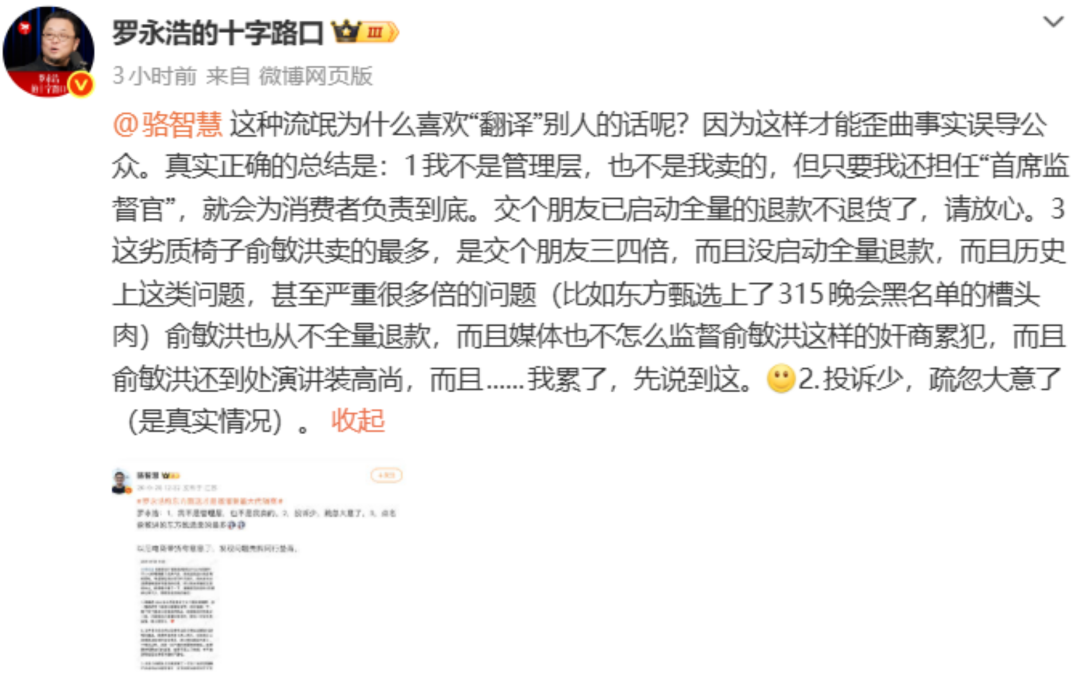
Why are there such different approaches to handling the same resold product?
The most intriguing aspect of the swivel stool incident isn't the poor product quality itself, but rather the starkly different responses from two leading livestream e-commerce platforms that share equal responsibility.
According to media investigations, the same swivel stool model sold by both "Jiao Ge Peng You" (Make Friends) and Dongfang Zhenxuan was sourced from the same vendor: "Holiday Childhood Yunqi Furniture Store." The actual seller registered with authorities is Xiamen Yunqi Furniture Co., Ltd., which was established on June 11, 2026, with a registered capital of just 100,000 yuan.
A small company, founded less than three months ago with a mere 100,000 yuan in capital, managed to supply products to two top livestream platforms simultaneously. This sheds light on the realities of supply chains in the livestream e-commerce industry.
Luo Yonghao's approach was straightforward: "Make Friends" allocated funds to offer consumers refunds without returns while pursuing accountability from the supplier. Once the incident was exposed, the product was promptly removed from shelves.

Source: AI-generated, not a real image
What about Dongfang Zhenxuan? The swivel stools in its showcase were quietly removed, and related promotional videos were deleted.
No public statement was issued, no compensation plan announced, and no accountability expressed toward the supplier.
One company publicly admitted fault with fanfare; the other silently deleted links.
This highlights fundamental differences in the operational logic of the two companies.
Consider a comparative data analysis:
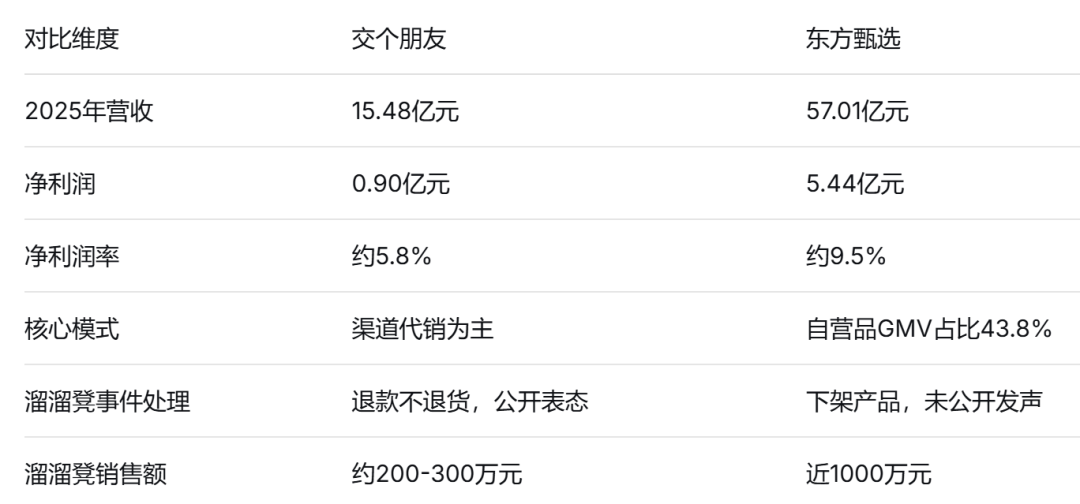
Data Sources: "Make Friends" 2025 Annual Performance Report, Dongfang Zhenxuan 2025 Fiscal Year Performance Announcement
Dongfang Zhenxuan's revenue is nearly four times that of "Make Friends," and its swivel stool sales were more than three times higher. Despite selling the most and earning the most, it remained the most silent when issues arose.
Luo Yonghao's remark that "when a product from 'Make Friends' has issues, Luo Yonghao oversees resolving them; when Dongfang Zhenxuan's products have issues, Teacher Yu Minhong handles 'fixing' and 'smoothing things over'" may be crude but not without merit.

A livestream room earning nearly 100 million yuan in half a year
Why can't it even ensure the quality of a stool?
The most disheartening aspect of the swivel stool incident is that it exposes not just a product quality issue but also the fragility of quality control systems across the entire livestream e-commerce industry.
"Make Friends" generated 1.548 billion yuan in revenue and 90.225 million yuan in net profit in 2025—hardly a poor performance. Dongfang Zhenxuan fared even better, with its self-operated products and livestream e-commerce business reaching a total GMV of 8.7 billion yuan in the 2025 fiscal year, while its comprehensive gross profit margin for ongoing operations rose from 25.9% to 32%.
But how much has been invested in product selection and quality control behind these impressive figures?
The swivel stool incident provides a troubling answer. A product filled with moldy wood and discarded sponge was sold for over 12 million yuan across two top livestream platforms before being exposed by a consumer-led disassembly. After the supplier was exposed, it called consumers to demand video deletion, claiming this was "standard industry practice."
The phrase "standard practice" is the most chilling revelation of the entire incident.
It implies that this is not an isolated case but rather an unspoken norm within the industry.
Dongfang Zhenxuan launched 732 self-operated products in the 2025 fiscal year, a 50% increase from 488 the previous year.
Self-operated products are Dongfang Zhenxuan's core competitiveness and Yu Minhong's proud "moat." However, the swivel stool was not a self-operated product but a consigned one.
Dongfang Zhenxuan's attitude toward quality control for consigned products clearly does not match that for self-operated ones.
A 5+ trillion-yuan market
37% of sales pitches violate advertising laws
An 89.9-yuan stool failed, but it is far from the only failure. In 2025, the total transaction scale of livestream e-commerce across platforms exceeded 5 trillion yuan.
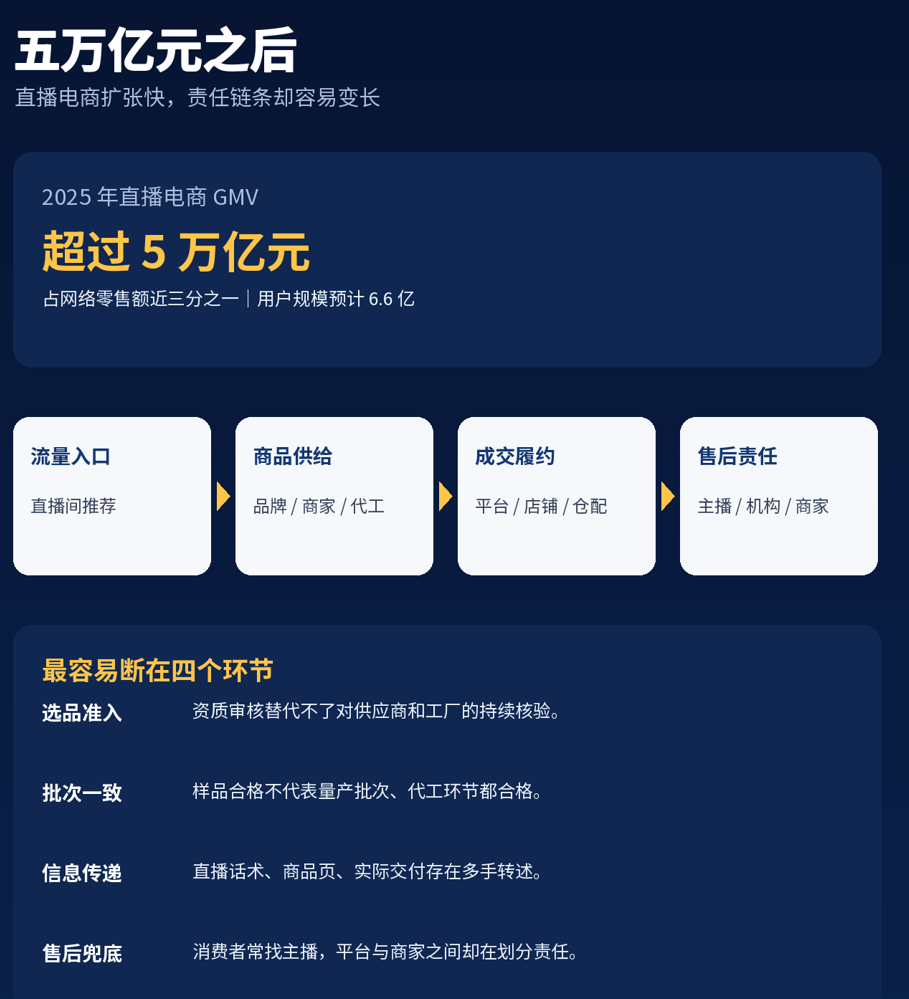
In the first half of 2026, the total transaction scale of livestream e-commerce across platforms surpassed 3.2 trillion yuan, involving over 80 million entities including anchors, merchants, MCNs, and platforms. The market is vast.
However, in the second quarter of 2026, there were 387,000 valid consumer complaints about livestream e-commerce nationwide, accounting for 29.4% of all e-commerce complaints across platforms—a 27.8% year-on-year increase.
The types of complaints were distributed as follows:
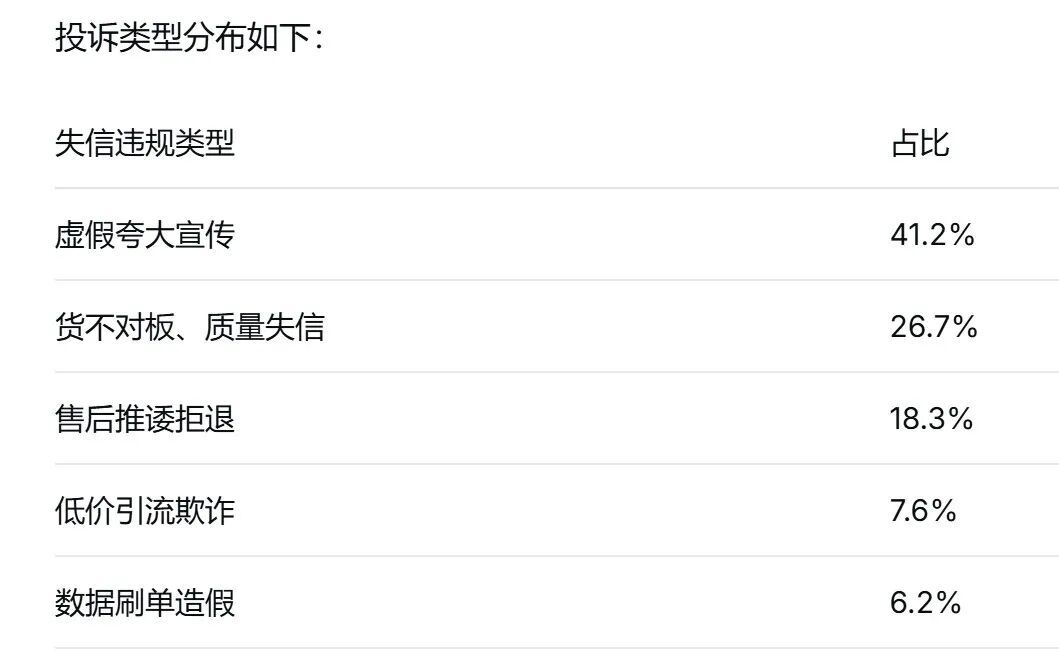
Data Source: China Consumers Association's "2026 Livestream E-commerce Consumer Rights Protection Sentiment Analysis Report"
Monitoring data from the State Administration for Market Regulation is even more direct: Over 37% of livestream e-commerce sales pitches currently carry risks of violating advertising laws.
What does this figure mean?
If you randomly enter three livestream rooms, at least one is using non-compliant wording (non-compliant sales pitches) to sell products.
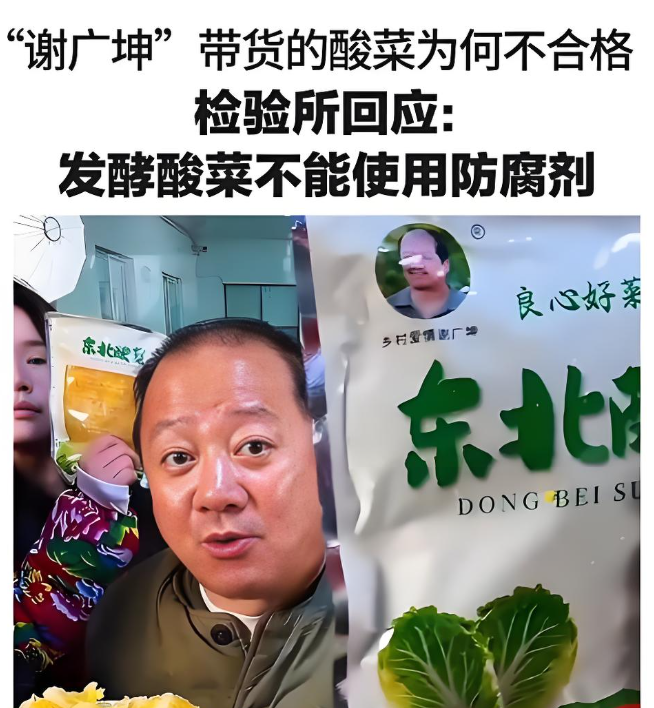
In the second quarter of 2026, the Cyberspace Administration of China handled 124,000 violation (non-compliant) livestream rooms, banned 37,000 anchor accounts for dishonesty, and removed 896,000 links to non-compliant products.
Against a transaction scale of 3.2 trillion yuan, these figures seem like a drop in the ocean.
According to the "2026 Livestream E-commerce Consumer Satisfaction Survey Report" by the Beijing Sunshine Consumer Big Data Institute, 62.39% of consumers have encountered "unclear responsibilities among parties, with mutual shirking," while 43.21% faced "difficulty in fixing evidence."
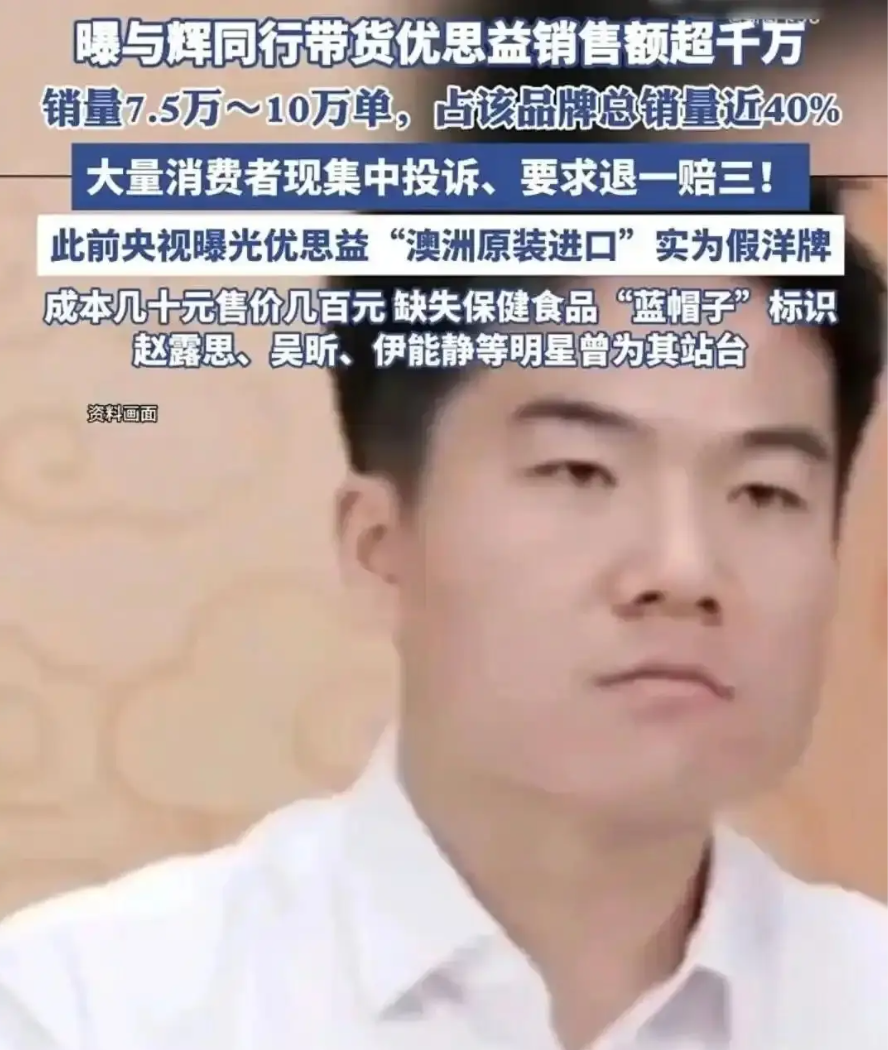
When purchasing, anchors promise "full refunds if unsatisfied," but when issues arise, they refer consumers to merchants, who refer them to platforms, who refer them to manufacturers. After being passed back and forth, the issue vanishes.
On February 1, 2026, the "Measures for the Supervision and Administration of Livestream E-commerce" officially took effect.
This is China's first dedicated regulation for the livestream e-commerce sector, clarifying responsibilities among platforms, livestream operators, and marketing personnel.
The measures require platforms to implement "prior compensation" and "first-question accountability" principles while innovatively incorporating traffic control into regulatory tools—non-compliant livestream rooms can face traffic restrictions, suspension, or account closure.
The direction is sound; the issue lies in enforcement.
With 80 million market entities and 124,000 quarterly non-compliance disposals, the proportion is less than 0.2%. Regulatory efforts cannot keep pace with industry expansion.
The swivel stool incident perfectly illustrates this dilemma.
Did consumers complain? According to Luo Yonghao, daily returns and complaints were "not numerous," so the operations team "overlooked" the issue.
In other words, as long as complaint volumes remain low, the quality control system automatically enters "selective blindness" mode. Issues are only "discovered" when they trend on hot searches.
On September 20, 2026, Shu Wei, deputy director of the State Administration for Market Regulation, stated at a State Council Information Office press conference that efforts would focus on addressing prominent consumer rights violations during the "15th Five-Year Plan" period, continuously regulating online sales, livestream e-commerce, and other business activities.
The signal is clear, but between policy statements and concrete implementation lie countless "swivel stools."
The wild west era of livestream e-commerce
Must end
Looking back at Luo Yonghao's "public confrontation" this time, there is both truth and theatrics.
The truth lies in his pointing out the double standards: "Make Friends" was thrust into the hot search for selling a faulty product, while Dongfang Zhenxuan escaped unscathed. The selective attention from media and the public is indeed worth reflecting on.
The theatrics lie in his own admission that "if it hadn't trended on hot searches, we might not have realized the severity of the issue until now."
In other words, without exposure, "Make Friends" likely would not have proactively investigated the swivel stool either.
Two top livestream platforms, one faulty product, over 10 million yuan in sales—and neither discovered it proactively.
Luo Yonghao rightly said, "Livestream e-commerce
-
![]()
Luo Yonghao Publicly Takes Aim at Dongfang Zhenxuan
-
![]()
Finally, Someone Has Found the Achilles' Heel of European Automobiles
-
![]()
Joint Venture New Energy Counterattack
-
![]()
Qijing GX7’s Success Will Shape GAC’s Year-End Narrative
-
![]()
Executives Secretly Turn to AI Before Making Big Decisions
-
![]()
Priced from 1.988 Million Yuan! Bentley, the Century-Old Ultra-Luxury Brand, Places Its Bets on 'Price Reductions' to Secure a Spot in the Electric Vehicle Era
-
![]()
August’s Luxury Car Sales Report: Porsche and Land Rover Battle It Out, BYD Breaks into the Top 20!
-
![]()
How Much Hardware Business Can Be Fueled by the Explosive Popularity of AI Applications?