Joint Venture New Energy Counterattack
 09/28 2026
 452
452
Lead-in
Introduction
Stay at the table first, then talk about other things.
“For those who used to drive joint venture vehicles, this should be the ‘least bad’ option when switching to new energy.”
On the evening of the 20th, as FAW-Volkswagen announced the price of the ID. AURA T6, a friend left this comment in the comment section of the author's WeChat Moments.
The so-called ‘least bad’ refers to a stable option for traditional car owners who are concerned about vehicle quality and reliability but also want to experience better pricing and cutting-edge intelligent features in this era of accelerated new car launches, intense competition in specifications, and price wars.
Later that evening, the author inquired with a friend working at Volkswagen China about the reasons behind the T6's aggressive pricing. After hesitating for a few minutes, the friend replied with just four words: full of sincerity.
“Do you mean... they’re going all in, just for market share?” “My personal understanding (not representing any corporate viewpoint) is that it’s time to fight.” “After all, Volkswagen’s 34 years of achievements in China... they must stay at the table.”
With the phrase ‘stay at the table’ spoken, the conversation seemed to reach its end. The friend sent a ‘fighting’ emoji and didn’t continue.
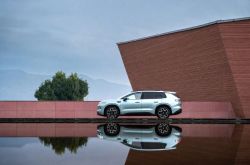
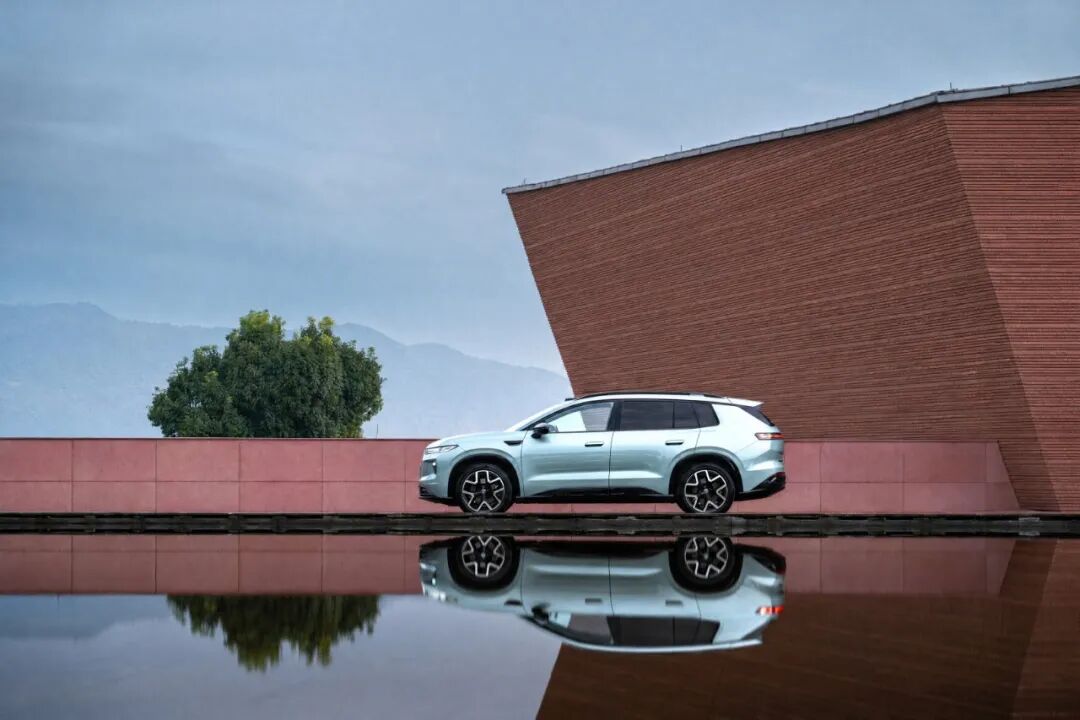
With a starting price of less than 130,000 RMB and a laser radar-equipped version priced under 150,000 RMB, the T6, a mid-size pure electric SUV bearing the Volkswagen badge, signifies that joint venture brands are once again accepting the mainstream pricing rules in China's NEV market at key price points. The term ‘once again’ is used because GAC Toyota's bZ4X had already brought laser radar-equipped models into the 140,000 RMB range in 2025. However, unlike GAC Toyota's approach of upgrading existing models within the GAC system, FAW-Volkswagen's T6 represents a complete ground-up development.
Time is of the essence. By August 2026, the retail penetration rate of new energy passenger vehicles had reached 65.2%, with Chinese brands at 83.9%, luxury brands at 38.9%, and mainstream joint ventures at only 13.4%. In terms of NEV retail share, Chinese brands accounted for 63.7%, new forces 26.0%, and mainstream joint ventures just 4.3%. The task for joint ventures is no longer just achieving double-digit penetration but reclaiming seats in a market where Chinese brands and new forces dominate nearly 90% of consumer mindshare.
The phrase ‘least bad’ reflects both consumers' decision-making logic and what joint venture brands can immediately offer when facing strong competitors. Similar situations are evident at GAC Toyota and Changan Mazda and represent the direction other joint venture brands must strive for.
01 A Few Blockbusters, Not an Overall Turnaround
GAC Toyota's bZ4X maintains stable monthly retail sales of over 9,000 units, Dongfeng Nissan's N series collectively maintains sales in the thousands, the plug-in hybrid version of the Buick GL8 family surpasses its gasoline counterpart for the first time within the family, and the ID. family's cumulative scale exceeds that of most new forces.
Domestic joint venture brands have gradually moved beyond mere rhetoric and lack of new products in the first phase. However, with the launch of many new-generation products, the current situation only proves that a few joint venture NEVs can ‘sell,’ but their scale is insufficient to reverse the trend. It should be noted that although the ID. family has Cumulative (accumulated) about 230,000 units, the old ID. series has been discontinued. From the perspective of domestic market results, FAW-Volkswagen's first electrification transformation can be considered a failure. The current T6, while still derived from the ID. family, represents a secondary transformation.
However, even with these achievements, mainstream joint ventures still hold only a single-digit share in NEV retail. Joint venture blockbusters are sporadic, while Chinese brands and new forces are pervasive. Chinese brands have a complete product matrix and faster pricing mechanisms in the 100,000-200,000 RMB range, allowing them to quickly replace a failed model with another from the same platform. In contrast, a failed model for joint ventures often means a long gap before replacement.
To gauge whether joint venture NEVs are gaining momentum, one should not look at order numbers at press conferences but at stable scale over 6-12 months, whether terminal transaction prices can be maintained, and whether software promises are fulfilled on time. Orders represent traffic; deliveries represent capability; price discipline reflects system health. Most joint venture blockbusters have only proven themselves in the first aspect.
Joint ventures still hold real advantages, though these are depreciating. Mature vehicle validation systems, nationwide after-sales networks, large gasoline vehicle bases, and manufacturing experience are assets that new forces cannot replicate in the short term, but their value highly depends on the scale of gasoline vehicles. As the base shrinks, service frequency declines, and young consumers lack identification with joint ventures, the larger the scale, the heavier the burden of transformation. What disappears is not the capabilities themselves but the scale carrier (carriers) they rely on.
Considering scale, localization depth, supply chain efficiency, and shareholder coordination, each company's position varies, roughly divided into four groups.
Only GAC Toyota has truly stood out. The bZ4X has consistently ranked first in monthly sales among joint venture NEVs, and the bZ series has surpassed 10,000 monthly sales. The hybrid base continues to contribute sales and profits, effectively supporting each other. However, we must also recognize that the bZ7, which fell from around 4,500-5,600 units in its second month to just over 2,000 units in August, does not bode well. Thus, the question of whether this approach can be replicated has already been tested once by GAC Toyota, with limited success.
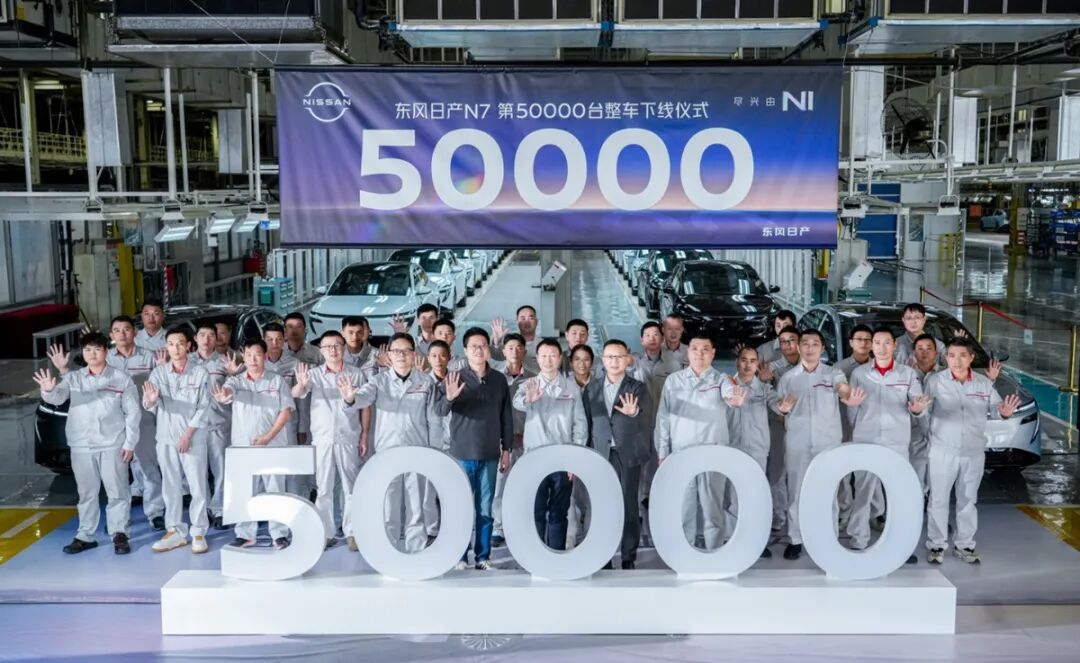
Figure | Since its launch in April last year, the N7's monthly sales surged to five digits in August last year but failed to sustain that level.
Dongfeng Nissan was initially highly anticipated, but the N7's sales peaked at 10,000 units in August 2025 before declining, with last month's sales falling below 1,000 units. The N6 also dropped from nearly 7,000 units to just over 1,000 units. Whether the latest NX8 can truly take over remains a question mark.
The second group has opportunities but requires validation. FAW-Volkswagen, with the official launch of the ID. AURA T6, has demonstrated that it can initially integrate Chinese architecture, intelligent driving solutions, pricing, and after-sales. SAIC Volkswagen and SAIC Audi have more room for Chinese-led initiatives, but the challenge lies in product line boundaries. Beijing Hyundai, Yueda Kia, and Jiangling Ford seem to be playing a different card, with exports supporting factory utilization, though it remains uncertain whether China-defined models can sell globally. Changan Mazda's opportunity lies in niche markets, but channel coverage is a weakness.
The third group is already in a difficult position. FAW Toyota, GAC Honda, and Dongfeng Honda are still constrained by global architectures, stuck in decision-making power and cost control. SAIC-GM's mainstream pure electrics, along with Chevrolet and Cadillac's electrification, only have bright spots in individual niche markets; Changan Ford and Dongfeng Peugeot Citroën have limited presence and sales domestically.
Finally, the BBA can only hold onto local markets. Luxury NEV penetration remains at 38.9%, much higher than mainstream joint ventures, and brand foundations persist, but the premium logic is failing. SAIC Audi's AUDI E7X is an exception, priced from 270,000 RMB and delivering 4,017 units in its first month, making it the first truly ‘volume-oriented’ pure electric SUV in the BBA lineup. This demonstrates that luxury brands can also achieve volume in the pure electric sector with sufficiently localized products. However, it also proves that traditional pure electric platforms cannot rely solely on brand logos to sell.
02 How Far Have Joint Ventures ‘Caught Up’?
Volkswagen has chosen the most arduous yet noteworthy path: integrating Chinese partners' ‘software’ into its global system.
The essence of the ID. AURA T6 is that it is based on the MEB platform but equipped with the CEA (China Electronic Architecture) electronic and electrical architecture. Developed jointly by Volkswagen China Technology Company, CARIAD China, and XPeng Motors, the CEA is planned to cover all domestically produced pure electric models starting this year. Its significance lies in using regional control and quasi-central computing to redesign the vehicle's electronic topology, reducing costs while increasing speed. The SAIC Volkswagen ID.ERA 9X, launched during the Beijing Auto Show earlier this year, is the first model equipped with CEA.
Both the ID.ERA 9X and the ID. AURA T6 point to a single direction: in this counterattack, Volkswagen's Chinese operations will completely abandon the globally dominated model led by Volkswagen Germany.
The success of this path depends on replicability. If CEA is implemented in only a few models and software remains dominated by overseas teams, the T6's localization will be merely a project-level experiment. Volkswagen will only gain a long-term cost and iteration foundation if CEA can be platformized and R&D cycle (development cycles) compressed to 18-24 months from the global car rhythm.
Toyota and Nissan offer a more pragmatic solution: Chinese teams define the products, while the global system oversees quality control. The bZ4X sequence achieved scale not through a specific battery technology but by integrating Chinese intelligent solutions, local product definitions, rapid iteration, and pricing systems. The FAW Toyota bZ sequence also covers sedans and SUVs, with a complete product mix, but is constrained by the global platform and overseas rhythm, leading to lower sales. The difference in outcomes between the two Toyotas hinges on decision-making power.
Nissan's GLOCAL model is similar, emphasizing ‘in China, for China.’ It expands Chinese R&D teams while collaborating with local intelligent and battery partners to compress development cycles to under 20 months. However, a multi-pronged approach reduces the risk of wrong bets but increases the complexity of platforms, supply chains, and channel training. The lesson is already clear: as seen with the N7, initial sales can rely on brand base and channel reach, but heat fades quickly. Ultimately, maintaining scale requires a systematic product matrix, extensive user word-of-mouth, and continuous OTA optimizations, not just brute-force channel expansion.
In contrast, Hyundai-Kia and Ford are targeting the global market. Beijing Hyundai and Yueda Kia are transforming their Chinese factories from domestic sales to global production, with exports improving factory utilization and preserving a combat-ready workforce. Changan Ford alleviates pressure by producing in China for the Middle East and ASEAN markets. However, exports improve survival quality but do not equal NEV competitiveness. If export mainstays remain gasoline vehicles, consumers will not change their perceptions of joint venture NEVs. Only when China-defined pure electric and extended-range platforms become global models and are exported in reverse will they truly stand out. This is the dividing line between Korean and American brands.
Notably, the catch-up in specifications is complete, but the real gap lies in iteration rhythm. Joint venture new products can now match rivals in hardware and even pricing, but the current Chinese market demands a major upgrade every 12-18 months. Keeping pace with this rhythm determines whether today's hurried catch-up will lead to tomorrow's renewed lag.
However, the flip side of this issue is that some things cannot be rushed. ‘Quick-fix cars’ have become a buzzword in the auto circle in recent months. The T6 launch emphasized that it completed two winters and two summers of real-world testing and over 400 battery tests before launch. This ‘slow and steady’ approach ensures quality but is indeed slow. The real challenge is how to accelerate iteration while maintaining validation cycles, as the two are inherently contradictory.
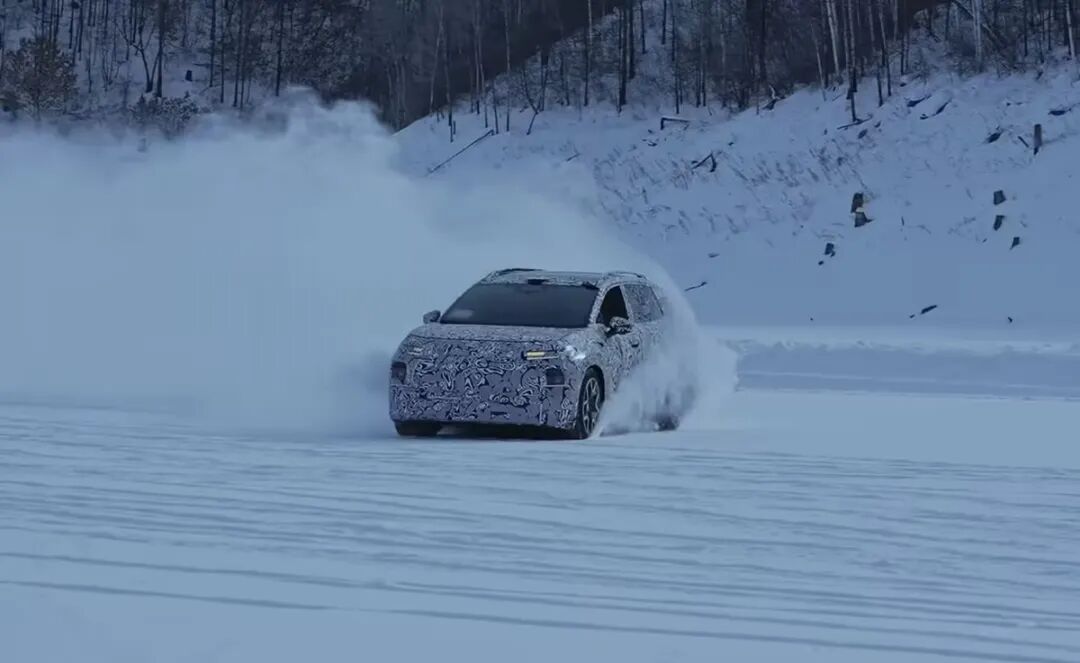
Figure | Two winters and two summers of real-world testing
Whether these can be highlighted as product advantages and promotional focuses depends on the broader public opinion environment. With the growing attention to ‘quick-fix cars,’ the timing seems right.
Localization also brings a new challenge: supplier lock-in and validation pressure. Introducing Chinese batteries, chips, and intelligent driving algorithms indeed reduces costs and speeds up development, but using multiple suppliers increases interface complexity, leaving joint ventures caught in the middle. Adhering to original validation cycles slows down the process, while relaxing reliability standards for speed damages reputation. The true capability lies not in creating a completely independent local supplier system but in maintaining global safety and durability standards while using local suppliers—this is the premise for the ‘least bad’ approach to work.
03 The Real Challenge: Cost Accounting
Technology can be purchased or collaborated on, but organizational structures and interests (interests) are harder to change. Joint ventures cannot avoid the decision-making chain between Chinese and foreign shareholders. Previous global platforms could amortize R&D costs and ensure quality consistency, but the trade-off was the inability to keep up with the current Chinese market rhythm of a new generation every 12-18 months.
As long as foreign parties hold final veto power over platforms, software, branding, and procurement, Chinese parties can only achieve superficial localization, resulting in lagging configurations and conservative pricing. The divergence between Toyota's two joint ventures and the differing paces of Honda and FAW-Volkswagen ultimately stem from differences in Authorization (authorization) depth. The bZ4X's speed is attributed to it being the first model in the Toyota system entirely defined by a Chinese team without Layered approval (multiple levels of approval) from Japan headquarters. Just before launch, intelligent driving features were delegated to lower-range versions, involving reconfiguration of over 600 parts—a process that would have been impossible under the old decision-making chain.
Channel management is another increasingly tight cost issue. Joint ventures previously relied on vast 4S networks for sales, after-sales, and brand reach, but in the era of low-margin NEVs, direct sales, and commercial touchpoints, store renovations, inventory financing, and declining service frequencies simultaneously squeeze cash flow. If dealers cannot shift from vehicle sales margins to delivery, finance, insurance, charging, and after-sales services, the more outlets they have, the harder it is to pivot. FAW-Volkswagen's dealer network has shrunk from around 1,000 stores in 2020 to about 700 today, a nearly 30% reduction.
The most awkward aspect of this transformation is that it requires companies to dismantle their once-core competencies.
The dilemma of pricing and residual values is equally thorny. Chinese brands price extremely quickly in the 100,000-200,000 RMB market. If joint ventures frequently officially reduce prices for volume, existing owners' residual values suffer, and dealers can only compensate through insurance, finance, and decorations. A more hidden cost lies in consumer perception: frequent price cuts train consumers to wait six months before buying, compressing new car cycles into promotional cycles and causing price wars to bleed profits at both ends.
As product lineups expand, internal competition also grows. FAW-Volkswagen plans 10 ID. AURA series models covering pure electric, plug-in hybrid, and extended-range. SAIC Volkswagen runs multiple NEV lines like the ID. ERA, while Toyota parallels the bZ and bZ4X sequences, and Buick launches both the Enclave and GL8 NEVs. Multiple lines help cover price bands but dilute brand recognition, create channel conflicts, and spread R&D resources thin. When market share is in single digits, internal competition is more damaging than external rivals.
The most typical example of internal competition is Toyota. In China, it has long operated with dual entities and dual channels, launching sister models on the same platform—Corolla vs. Levin, RAV4 vs. Wildlander—with separate R&D, marketing, and dealer networks. This approach worked well during expansion but became internal competition in a mature market. In the first half of 2026, FAW Toyota sold 273,700 units, down 27.4% year-on-year, while GAC Toyota sold 341,100 units, roughly flat. The result: the bZ4X held its ground, but the bZ sequence underperformed.
So, I am cautiously optimistic about the prospects of Toyota's joint venture. The reasons for optimism are tangible. The current integration of FAW Toyota and GAC Toyota directly eliminates redundant investments and internal price undercutting. Once the channels are connected, GAC Toyota's new energy models can enter FAW Toyota's network, and a single system allows for faster decision-making than two separate systems.
The reasons for caution are equally solid. This plan is being strongly pushed forward by Toyota Japan. It is rumored that Toyota will hold a 50% stake in the new unified sales company, pointing toward a concentration of power on Toyota's side. Therefore, while the integration addresses internal inefficiencies and channel redundancies, it may not resolve the issue of product definition rights. The latter still relies on the China Chief Engineer system pioneered by bZ4X. Originally, GAC Toyota and FAW Toyota were at opposite ends of the spectrum; after the merger, whether the standard will be raised to match the higher end or averaged out to the lower end depends on whether this system can cover FAW Toyota's product lineup. This is a more difficult question to answer than equity distribution.
Ultimately, the biggest risk for joint ventures is not technological backwardness but using price cuts to mask systemic deficiencies. Swapping out to a Chinese battery and adding a LiDAR sensor can level the playing field on the specification sheet, but it doesn't address fundamental issues like decision-making chains, channel profitability, and software iteration. Merely addressing surface-level problems will trap products in a cycle of leading in specifications, losing pricing power, and declining residual value. A unified channel cannot replace competitive new products. The key to determining the ultimate success or failure of Toyota and other joint venture brands still lies in whether the bZ4X approach can be replicated or whether products like the ID. AURA T6 can withstand market validation.
04 Conclusion: Staying at the Table is Already the Beginning of Victory
Returning to the achievements of the past thirty-four years.
What the joint venture system has accumulated over these decades is not just brand recognition but also vehicle verification standards, supply chain management, precision manufacturing processes, nationwide after-sales service, and hundreds of thousands of jobs. These capabilities will not disappear due to declining market share but will lose their foothold if they remain absent from the main battlefield of electrification for too long.
The significance of the counteroffensive is, first and foremost, to provide reassurance. Products like the bZ4X 3X, Dongfeng Nissan N7, and FAW-Volkswagen ID. AURA T6 may not be the brightest on the new car specification sheet or the lowest-priced options, but they must prove that joint ventures can simultaneously maintain quality standards and price their products competitively against the most aggressive players. The systemic reconstruction and supply chain reshaping capabilities demonstrated behind this are more meaningful than creating one or two blockbuster products.
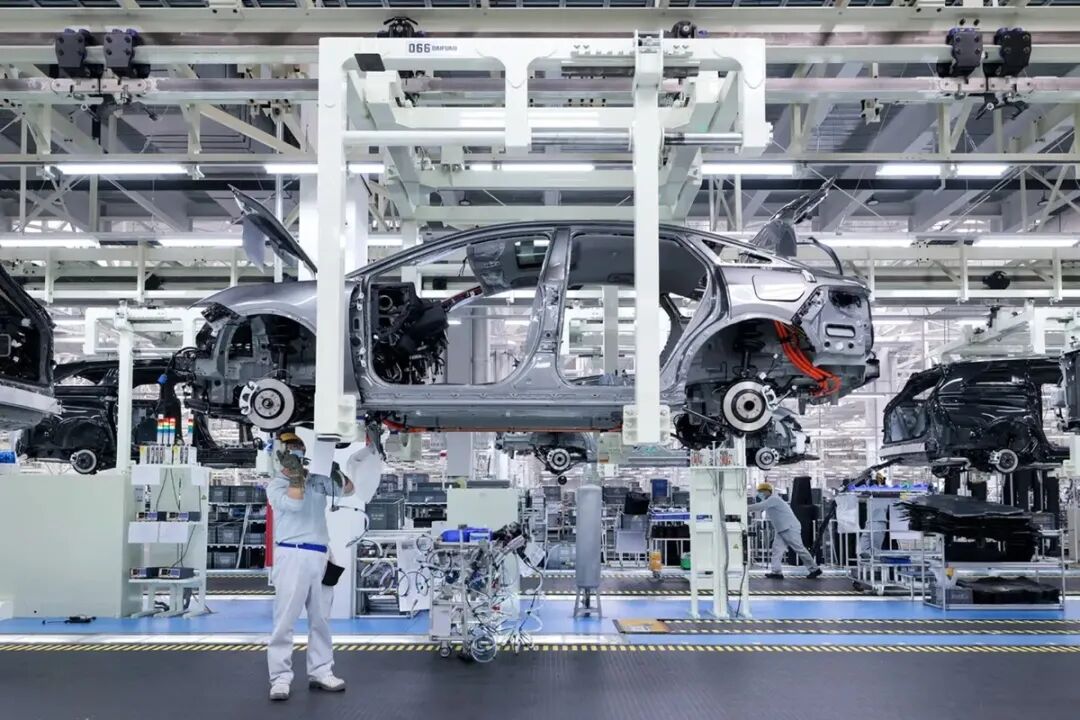
Figure: Market experience so far proves that brand value from the fuel era does not directly transfer to new energy products. But what if joint ventures can prove they can build good electric vehicles?
The scale of bZ4X, GLOCAL authorization, and CEA implementation represent three proven localization approaches, demonstrating that the shortcoming of joint ventures is not their inability to build good cars but rather that decision-making is too far removed from the market. Once definition rights truly sink closer to the market and the balance between iteration cycles and verification cycles is managed well, the originally rigorous quality management system may even become a unique advantage. In a phase where everyone is racing against time, reliability itself is a rare commodity, and consumers are willing to pay for certainty. This is the weight behind the phrase 'the least bad option.'
The Chinese new energy vehicle market will not end in a winner-takes-all scenario. It features the world's fiercest competition, the most complete supply chain, and the most discerning consumers, leaving room for multiple technological routes and organizational forms. If joint venture brands can transition from adapting to China to defining in China, they can not only hold their ground but also have the opportunity to export the capabilities honed in China globally.
For Volkswagen, Toyota, Nissan, and others, the most pressing task right now is not to win the price war but to ensure they still have a seat at the table two years from now. As long as they remain at the table, the accumulations of decades will always find a way to be monetized. Such a future may seem somewhat constrained, but for companies undergoing the most intense industrial transformation, simply staying at the table marks the beginning of a new victory.
Editor-in-Chief: Cao Jiadong Editor: Wang Yue

THE END
-
![]()
Luo Yonghao Publicly Takes Aim at Dongfang Zhenxuan
-
![]()
Finally, Someone Has Found the Achilles' Heel of European Automobiles
-
![]()
Joint Venture New Energy Counterattack
-
![]()
Qijing GX7’s Success Will Shape GAC’s Year-End Narrative
-
![]()
Executives Secretly Turn to AI Before Making Big Decisions
-
![]()
Priced from 1.988 Million Yuan! Bentley, the Century-Old Ultra-Luxury Brand, Places Its Bets on 'Price Reductions' to Secure a Spot in the Electric Vehicle Era
-
![]()
August’s Luxury Car Sales Report: Porsche and Land Rover Battle It Out, BYD Breaks into the Top 20!
-
![]()
How Much Hardware Business Can Be Fueled by the Explosive Popularity of AI Applications?