Can a Tiny Metal Patch Really Boost Your Phone’s Signal from 1 Bar to 3 Bars?
 10/26 2026
 390
Ever struggled with streaming videos in the basement, answering calls in elevators, or getting reliable navigation in mountainous areas? Then, an e-commerce platform might have something “miraculous” to offer.
A nail-sized metal patch—merchants claim that by simply sticking it on the back of your phone, your signal will instantly leap from 1 bar to 3 bars, promising improved connectivity in all scenarios and compatibility with all three major carriers. Prices range from a few dollars to hundreds.
It sounds tempting, doesn't it? But this product has been rigorously tested by CCTV, Xinhua News Agency, and multiple laboratories. Does it really deliver on its promises?
01
The Principle It Claims
Doesn’t Stand Up to Scientific Scrutiny
Sellers of these signal-boosting patches often provide a seemingly technical explanation: they claim to enhance the signal by extending the wavelength received by the phone’s built-in antenna, even going so far as to mention the use of Qualcomm technology, with version numbers varying from single to double digits across different shops.
However, this principle is fundamentally flawed.
Mobile signals are essentially electromagnetic waves, and their reception strength hinges on the quality of the radio link between the base station and the phone.
The three core factors influencing this link are the distance to the carrier’s base station, the population density in your area, and the phone’s internal antenna design.
A passive metal patch affixed to the back of your phone cannot relocate the base station, alleviate network congestion, or replace the phone’s precisely tuned internal antenna system.
It generates no energy of its own and lacks the capability to amplify the signal.
If enhancing the signal were as simple as lengthening the antenna’s wavelength with a patch, the massive R&D investments phone manufacturers make in RF engineers and antenna design would be rendered meaningless.
Phone antennas are part of an overall electromagnetic simulation, with their position, shape, and material requiring co-design with the motherboard, metal frame, and camera module. They cannot be reinforced by simply slapping on an external aluminum film.
02
Not Only Useless, But Potentially Harmful
This patch can sometimes backfire.
Testing conducted by the Tail Terminal Laboratory of the China Academy of Information and Communications Technology concluded that signal booster patches have no measurable impact on mobile signal strength or network speed.
Tests by the Zhejiang Weilike Communication Laboratory revealed that after applying the patch, signal fluctuations remained within the normal range of ±3dB, with virtually no signal enhancement capability. In scenarios like subways, open fields, and elevators, signal strength even decreased. 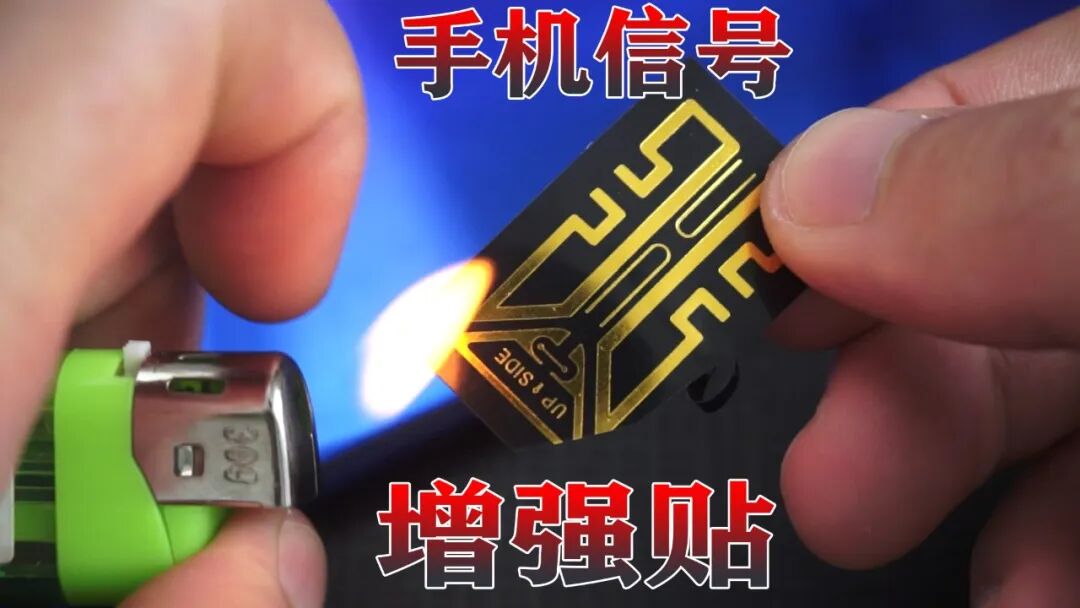
Image source: Internet
This occurs because the metal patch on the phone’s back disrupts the electromagnetic field distribution around the antenna.
Phone antennas already incorporate grounding, tuning, and isolation designs. Foreign metal objects alter the antenna’s resonant characteristics, at best rendering it ineffective and at worst reducing reception sensitivity.
If you perceive a slight signal improvement after applying the patch, it’s likely due to toggling airplane mode once or your phone coincidentally connecting to another base station—unrelated to the patch itself.
Merchants have scripts prepared for this scenario as well.
They instruct users to stick the patch vertically, horizontally, try the top-left, top-right, and bottom corners in rotation, and even require restarting the phone and waiting 1-3 days for it to take effect.
The longer the waiting period, the harder it is for users to attribute the lack of effect to the product itself; you’ll only suspect you stuck it in the wrong position.
03
Real Solutions to Poor Signal
Don’t Rely on Patches
If you frequently encounter signal issues, several far more reliable methods exist than using patches.
(1) Toggle Airplane Mode Once
Phones don’t always proactively switch to less congested base stations. Manually disconnecting and reconnecting often forces it to re-search and connect to a less crowded network.
(2) Lock to 4G in Fixed Weak-Signal Areas
5G frequently switches between 4G and 5G at signal edges, causing brief interruptions each time. In fixed locations like your desk or bedroom, locking to 4G provides more stability. 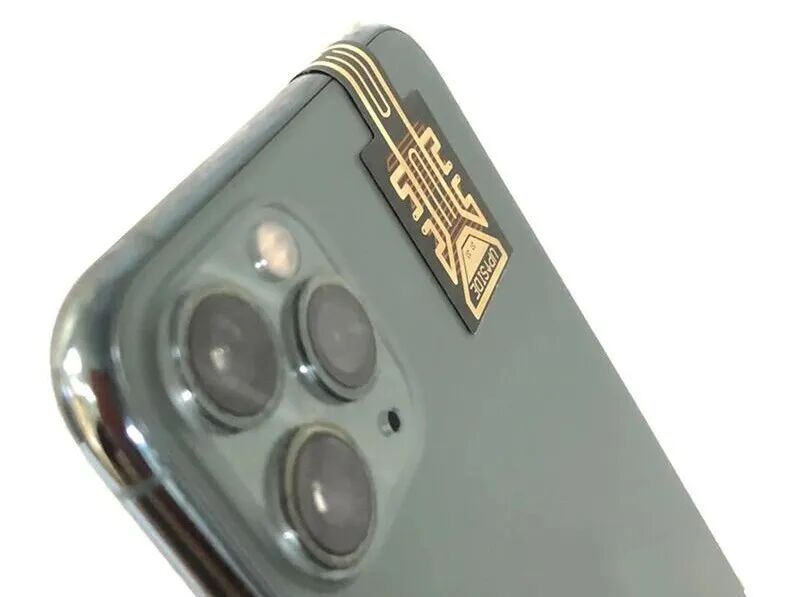
Image source: Internet
(3) Check Background Auto-Sync
Cloud backups, photo syncs, and silent app store updates don’t show notifications but consume upload bandwidth, making your internet feel sluggish.
If none of these work, consider switching carriers or locations.
Base station distance and environmental population density are physical bottlenecks, while antenna design differences represent hardware limits. None can be altered by a patch.
Signal booster patches have been repeatedly exposed as pseudo-technology by CCTV, Xinhua News Agency, and the Internet Joint Debunking Platform.
They don’t sell technology—they sell your anxiety about poor signal strength. #MobileSignalBooster
-
![]()
Massive Exchange Losses! Lens Technology’s Profits Plummet in First Three Quarters—Will the iPhone Duo Mark a New Turning Point?
-
![]()
2026 World Intelligent Connected Vehicles Conference: Transitioning from Spec Benchmarking to Safety Benchmarking, the Industry Steps into a New Era of Regulatory Oversight
-
![]()
Hundreds of Billions Fully Invested in AI, Yet No Returns in Sight
-
![]()
ByteDance's Automotive Ambitions Come to the Fore
-
![]()
$12.9 Billion: Nvidia Buys an 'Insurance Policy'
-
![]()
iPhone Duo: Is It a Thorn in Ternus's Side?
-
![]()
Why Does the Great Wall Gain More Recognition Abroad Than at Home?
-
![]()
Mercedes-Benz Refuses to Be a Bystander and Revolutionizes Itself