Mercedes-Benz Refuses to Be a Bystander and Revolutionizes Itself
 10/26 2026
 415
'We cannot afford to be bystanders.'
The phrases 'China speed' and 'deepening cooperation in China' have become key slogans frequently echoed by Mercedes-Benz in the Chinese market. Ola Källenius, the head of Mercedes-Benz, is also enthusiastically endorsing the remarkable pace of progress in China.
'Few places in the world embody ambition and speed quite like China, where innovative ideas swiftly transition from conception to reality. Technology firms, suppliers, researchers, and policymakers are all aligned in their efforts. To remain at the cutting edge of technology, one must actively engage with the Chinese market as a participant.'
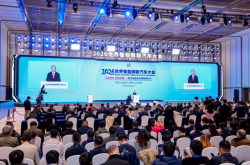
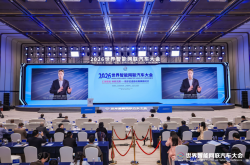
On October 21, at the 2026 World Intelligent Connected Vehicles Conference, Ola Källenius, Chairman of the Board of Management of Mercedes-Benz Group AG, delivered a speech titled 'From Capability to Trust: Mercedes-Benz's Vision for Intelligent Development'.
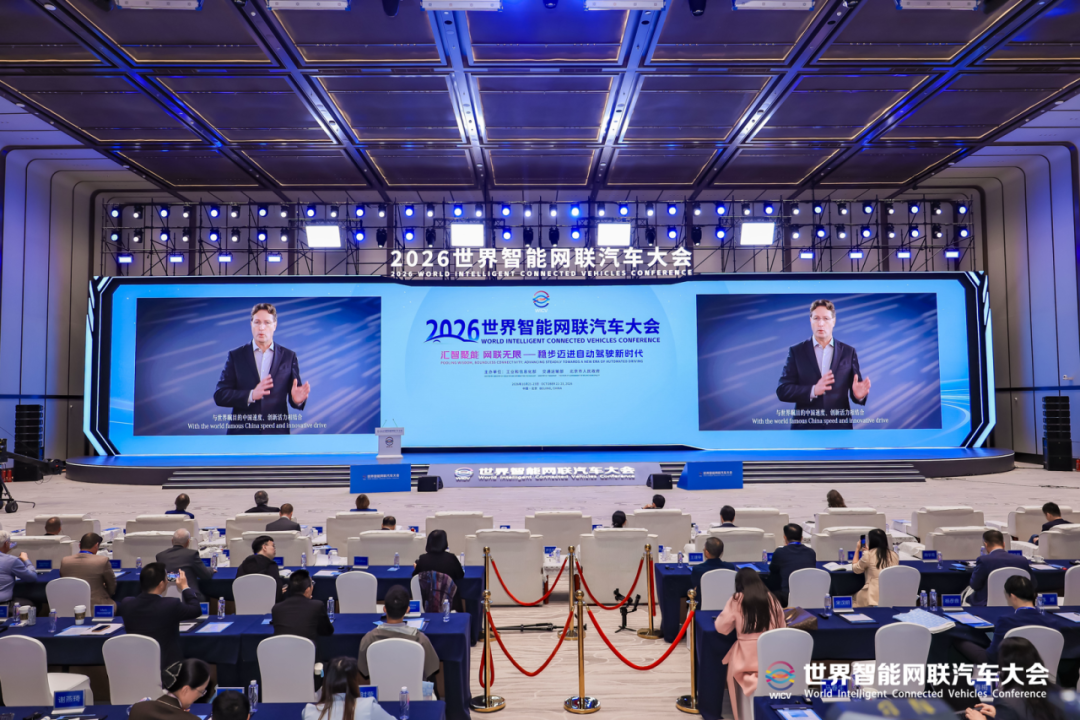
In essence, China is not just a vital market for Mercedes-Benz; it is also a hub for learning, research and development, innovation, and investment. He repeatedly stressed, 'We cannot afford to be bystanders.'
However, the challenge for many automakers lies in how to effectively integrate. Transforming models and mindsets has become a top priority.
To address this, Ola Källenius announced that Mercedes-Benz would overhaul its traditional vehicle manufacturing model by adopting a 'building block' approach, breaking down the vehicle body into modular components and abandoning multi-platform production.
This approach is not entirely new.
Mercedes-Benz plans to implement the 'building block' principle, dividing the front, rear, sides, and chassis of the vehicle into independent modules, allowing for flexible production based on the size requirements of different models. This modular and scalable research and development path will eliminate the need for separate platforms for different vehicle sizes in the future.
Mercedes-Benz refers to this as the 'technology stack,' which will serve as the product architecture for the next generation of models to be launched in the 2030s. The research and development cycle is expected to be reduced by 30%, with lower associated costs.
'This is absolutely essential to ensure that Mercedes-Benz maintains extremely high production flexibility in the face of multiple powertrain forms and different vehicle sizes,' said industry insiders.
Currently, Mercedes-Benz employs a multi-platform vehicle manufacturing approach, which lacks optimal research and development cycles and production efficiency. Compact models utilize the MMA platform, which can also accommodate the production of fuel-powered vehicles. However, for mid-size models like the GLC SUV or large models like the S-Class, two platforms are required—one for fuel-powered vehicles and one for pure electric vehicles.
This model is somewhat outdated in today's fiercely competitive global market. Moreover, for an international automaker operating across multiple market segments, modular production is a crucial step in reducing costs, increasing efficiency, and significantly boosting speed, as well as a core factor in future competition.
The transformation of the production system is a monumental task and is regarded as one of Mercedes-Benz's most ambitious plans.
For an automotive brand with over 140 years of history, the challenges are immense. This project not only requires reshaping Mercedes-Benz's research and development logic but also overturning its original production model that has been in place for over a century.
A double-edged sword, indeed. However, Mercedes-Benz has decided to forge ahead and not remain a bystander; it must first 'overthrow' itself.
As the old saying goes, 'An egg broken from within signifies the birth of new life; broken from without, it becomes mere food.'
Clearly, no corporate giant, including Mercedes-Benz, wants to become 'food for the times of change' or remain a bystander. Mercedes-Benz is eager to engage, participate in the battle, and more importantly, emerge victorious.
Therefore, Ola Källenius has positioned China as the core battleground. In multiple interviews, the phrase 'winning in China means succeeding globally' has been repeatedly emphasized.
Ola Källenius has stepped away from the traditional 'accustomed' perspective and instead adopted a panoramic view of the development of the Chinese automotive market, where he has discovered that 'the speed of innovation here is awe-inspiring.'
He has also identified some of the key issues. In the Chinese market, local brands are closing in on the price range of RMB 300,000 to RMB 500,000. The market segment where BBA (Mercedes-Benz, BMW, Audi) operates is facing unprecedented pressure, with traditional luxury brands gradually losing their technological edge and product pricing power for fuel-powered vehicles.
The reason is that new brands, with their generational advantages in vehicle intelligence, are launching aggressive upward assaults. The impact is fierce, and Mercedes-Benz feels it acutely.
If, in the previous few years, traditional luxury brands' integration into electrification in the Chinese market was hindered by their inability to let go of their established luxury 'stances,' the underperformance of the EQ series also once shook Mercedes-Benz's confidence and determination to fully advance its electrification transformation.
In 2023, Mercedes-Benz decided to abandon its goal of 'full electrification by 2030' and instead proposed a parallel strategy of 'electrification + fuel-powered vehicles.' This can be seen as a timely strategic adjustment based on market realities. Taking two paths is always more stable than going 'all in.'
However, as the wheels of progress continue to turn, Mercedes-Benz still needs to demonstrate corresponding development speeds in electrification and intelligence. The Chinese market is both a testing ground and a source of innovation for Mercedes-Benz.
There exists a contradiction between the 'brand-centric' approach of the industrial era and the 'user sovereignty' of the digital era, but they can be reconciled because 'meeting user needs' remains an unchanging principle.
Today, Mercedes-Benz is proactively responding to automotive market changes through measures such as collaborating with CATL, investing in Momenta, and introducing ByteDance's Doubao large model.
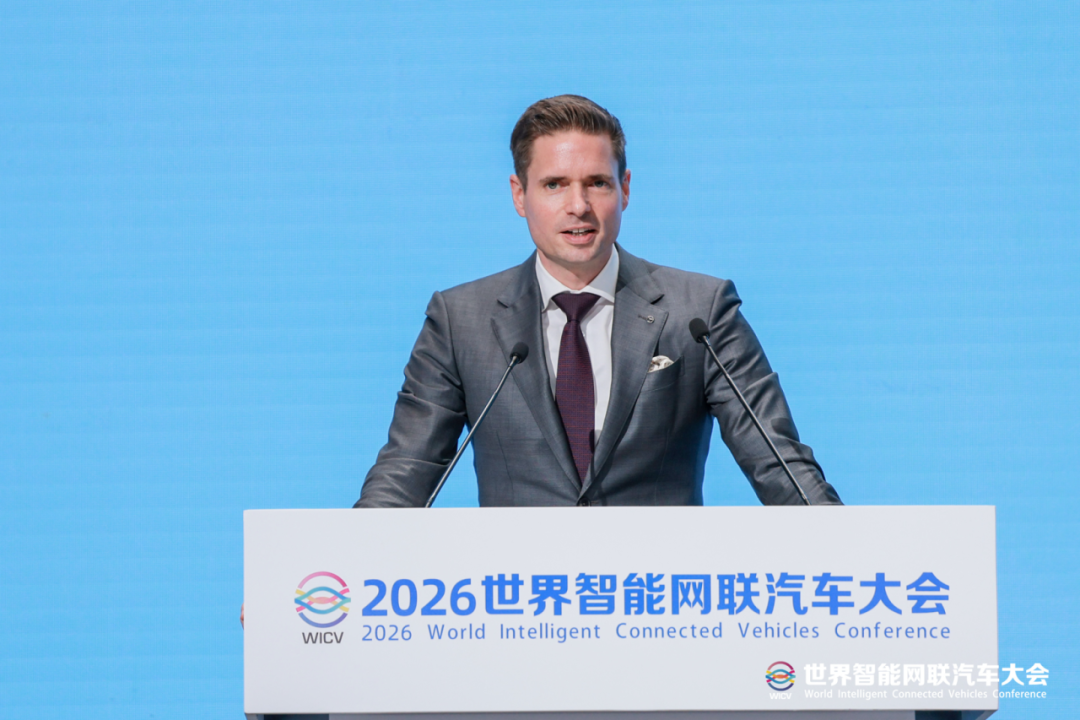
According to Tung Olaf, who is responsible for Greater China business, Mercedes-Benz has over 2,000 engineers involved in local research and development, continuously promoting system upgrades and jointly developing assisted driving products that meet local needs with Chinese partners.
In other words, companies, including Mercedes-Benz, have a clearer understanding of the new trends. For the next generation of products, allowing Chinese engineers and technology to take center stage can be seen as a 'tectonic shift' in Mercedes-Benz's global strategy.
Many foreign automakers have been touting the slogan 'In China, For China' for years, but few have truly delegated leadership to the Chinese market. However, to win the market, one must dive in headfirst.
Tung Olaf admitted that Mercedes-Benz still needs to quicken its pace in the Chinese market. Standing at the dual milestones of 140 years since the invention of the automobile and 40 years since entering China, he defined Mercedes-Benz's long-term direction in China as 'infinite opportunities.'
It is revealed that in Europe, orders for the pure electric versions of the GLA, GLB, GLC, and CLA have been fully booked until the end of the year, indicating that Mercedes-Benz has the capability to sell electric vehicles.
Therefore, what Mercedes-Benz needs to find are the key factors to 'meet the needs of Chinese consumers.' To this end, a range of models from sedans and SUVs to high-performance sports cars, and even some entirely new segment models that have never appeared before, have been scheduled for release by Mercedes-Benz.
'This is the largest product launch plan in Mercedes-Benz's history,' said Ola Källenius. The market feedback for the new all-electric GLC also indicates that Mercedes-Benz can 'understand' the needs of Chinese consumers.
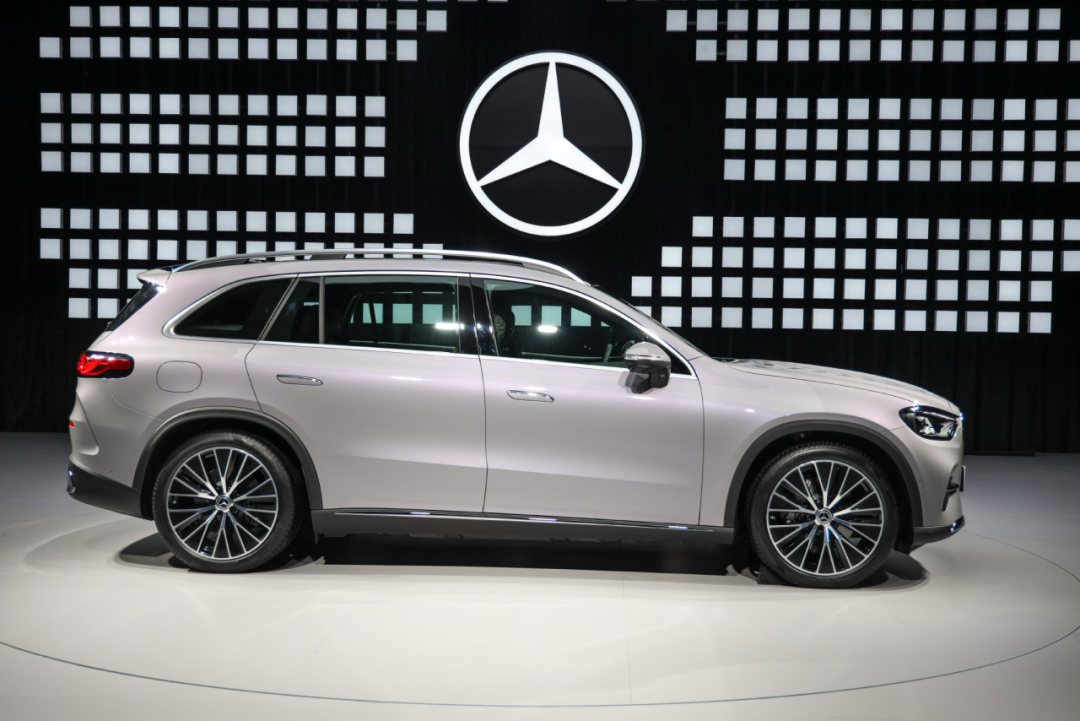
However, product realization still requires time, and whether it can deliver a stable performance remains to be seen. The mission of the new all-electric GLC to 'pave the way for subsequent electric vehicle models and provide stable expectations for the distribution channel' also needs to overcome more market tests.
In September this year, the penetration rate of new energy vehicle retail sales in the domestic market reached 62.8%, while Mercedes-Benz's penetration rate for new energy vehicles in China was approximately 5.8%. This data means that to avoid being a bystander and become a mainstream participant, Mercedes-Benz must first break down the barriers constructed by brands such as AITO, Zeekr, Li Auto, and NIO in the high-end new energy vehicle market, requiring more models and efforts.
Mercedes-Benz, which has already put in a lot of hard work, needs to 'aim' and 'shoot' even faster. Therefore, whether it can successfully change its vehicle manufacturing model will be crucial.
Note: Some images are sourced from the internet. If there is any infringement, please contact us for deletion.
-END-
-
![]()
Massive Exchange Losses! Lens Technology’s Profits Plummet in First Three Quarters—Will the iPhone Duo Mark a New Turning Point?
-
![]()
2026 World Intelligent Connected Vehicles Conference: Transitioning from Spec Benchmarking to Safety Benchmarking, the Industry Steps into a New Era of Regulatory Oversight
-
![]()
Hundreds of Billions Fully Invested in AI, Yet No Returns in Sight
-
![]()
ByteDance's Automotive Ambitions Come to the Fore
-
![]()
$12.9 Billion: Nvidia Buys an 'Insurance Policy'
-
![]()
iPhone Duo: Is It a Thorn in Ternus's Side?
-
![]()
Why Does the Great Wall Gain More Recognition Abroad Than at Home?
-
![]()
Mercedes-Benz Refuses to Be a Bystander and Revolutionizes Itself